Typhoon beat Gripen NG, F-16 B70, SH B3, and old Mig-35 in India's MMRCA. Rafale lost to the Typhoon too 'cause the RFP was tilted in favor of kinematics, but was enough to make the cut and scored first in cost which led to its selection.
SH was beaten by Rafale M for the IN's carrier tender. It failed to make the cut in the IAF's competition. If we remove airframe and kinematics out of the equation, I think Rafale and SH are very similar to each other. SH lost the IN tender due to inferior airframe and lost the IAF tender 'cause of inferior airframe and kinematics.
New Mig-35, we know very little about it, and it's still immature. It's unlikely to be anywhere near the Eurocanards anyway.
F-15EX is the worst of the lot. The cost vs capability gap is too high, and the capability is extremely mediocre for what you're paying. Silent Eagle could have had a fighting chance, but the standard Strike Eagle isn't gonna do it. Good radar and EW suite, but that's about it. All other metrics are effectively 4th gen standards. It's a duplicate of an MLU'd Su-30MKI.
F-35... Surpasses all jets mentioned, but only on paper. Real world impact of TR3 is negligible today.
There are many ways to "win."
Take the Turkish air defense missile tender, for example. The contenders were the Patriot PAC-3, the S-400, and the HQ-9. In the end, the HQ-9 won—leaving aside the fact that China itself buys the S-400, and it is honestly hard to see what advantages the HQ-9 even has over the S-400.
Another example is China's next-generation nuclear power plant tender. The winner was the Toshiba-Westinghouse AP1000, which back then existed only on paper. Meanwhile, Russia’s VVER, which commanded over half of the global market, was eliminated before it even cleared the primary selection. Inevitably, the AP1000 faced massive schedule overruns and severe budget blowouts, with operating costs far exceeding what was promised. On top of that, out of the two nuclear plants and eight reactors the US promised to build on its own soil, only a single unit was ultimately approved.--------------then The AP1000 reactors currently operating in China were barely completed, and only by drastically lowering acceptance standards. For instance, the VVER standard for reactor main coolant pumps required 8,000 hours of continuous operation to grant a design modification license; for the AP1000, it was deemed a pass after running for just 500 hours. Ultimately, over a hundred officials ended up in prison (known in Chinese circles as the "Toshiba Bribery Scandal"), and the Chinese government had to swallow its pride and go back to beg Russia for the VVER.
Then there was the Greek tank trials, where the T-80U demonstrated absolute superiority. The excessive fuel consumption rate of the T-80U's gas turbine engine was, in fact, the Soviet military's single greatest grievance against the tank.. The Russian official claim was a 340-kilometer range, but during Greek testing, it actually managed around 416 kilometers, leading the pack by a wide margin. On the exact same test route, the Leopard 2A5—which officially claimed a 500-kilometer range—only achieved 375 kilometers, while the M1A2 managed just 365 kilometers despite a claimed 426-kilometer range. In other events, the Challenger 2E failed to climb the 30-degree slope altogether, while the M1A2 managed to make it up but was unable to come back down. The Leopard 2A5 went so far as to refuse to participate in the test, using the excuse that it was 'fitted with rubber track pads.' Yet, despite all of this, Greece still ultimately chose not to purchase the T-80U.
The Reality of European Fighters
Returning to the main topic, the core issue with European weaponry is that it is overhyped. Back when I was young, around the 1990s and 2000s, military magazines always described the Rafale and the Typhoon as "new alternatives" that were on par with the MiG-29. In reality, by the time they finally entered service, they had been almost forgotten. Then, all of a sudden, they started bragging about being "4.5-generation" fighters. (Crucially, European countries used to use the same 4-generation classification system as the US, where the F-22 is a 4th-generation fighter).
In terms of timeline, the MiG-29, Typhoon, and Rafale were all developed around the same era. Advanced conceptual research for the MiG-29 began in 1973, while the Typhoon and Rafale started around 1979. In fact, the Rafale’s maiden flight was in 1986—at a time when the Su-27 had just barely entered service.
In short, both the Typhoon and Rafale are Cold War aircraft projects that lagged severely behind schedule due to failed project management and insufficient state funding. In their later stages, as they neared operational status, they were repackaged and embellished with some "trendy" weapons, radar configurations, and composite materials. For light aircraft, they are twin-engine; yet for twin-engine fighters, they are too light.
Furthermore, being "over-mature" (stuffed with all of today's trendiest electronic and weapon systems) means their upgrade potential is incredibly small—or rather, non-existent. The Su-30MKI or F-15E can continue to serve as bomb trucks for another 20 years. (And considering the performance of 150–200 km range glide bombs demonstrated by the Su-34 on the Ukrainian battlefield, serving another 30 years wouldn't be an issue at all). The Typhoon and Rafale clearly cannot compete with this. If you spend a little money to upgrade the fire control system of a Su-30MKI and swap in a 117S engine—or even just use the AL-31F-M2—the overall performance achieved would surpass the absolute ceiling of both the Typhoon and the Rafale.
It's difficult to guess how things will go in the future and what sort of leverage the US will want over India at the time to counter Indian leverage over the US.
Unlike Turkey, India is not just a direct competitor but has far greater potential than the US. Would the US like India as a friend or an enemy by then? That's the decision that will determine the future course of events.
The American Track Record: Lessons for India
Finally, regarding the issues inherent to the United States itself, China is the perfect textbook example. As a "traitor to the socialist camp," China once enjoyed a "honeymoon period" with the US, during which Washington provided Beijing with various forms of military-technical "assistance."
The list of dizzying projects is endless:
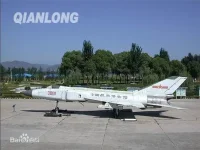
J-7M Fighter (The Super-7 Project)
J-8II Fighter (The Peace Pearl Program)
Z-9A Helicopter
YJ-91 Missile
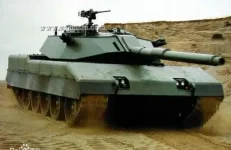
Type 59 Tank (Jaguar version)
NFV-1 Infantry Fighting Vehicle
LM2500 Gas Turbines for the Harbin-class destroyers
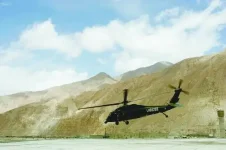
UH-60 Black Hawk Helicopters (which led to the Z-20)
L-100-30 Hercules Transport Aircraft
TOW Anti-Tank Missiles (which influenced the HJ-8)
AN/TPQ-37 Firefinder Weapon Locating Radars
MK-46 Torpedoes (which became the Yu-7)
CH-47 Chinook Helicopters
AIM-7 Sparrow Missiles
Even commercial aviation projects like the McDonnell Douglas MD-82
And yet, out of all those dazzling projects listed above, not a single one avoided being canceled or ruined in the end. This even includes China's KJ-2000 AWACS (which was actually the Beriev A-50I fitted with Israeli systems).This project was entirely a three-way collaboration between Russia (responsible for the design and prime contracting), Israel (handling construction and equipment supply), and China (the buyer), with no direct involvement from the United States whatsoever. Yet, the US went ahead and forced Israel's hand anyway, ruining the project entirely—to the point where the Israeli radar systems that had already been installed were completely stripped out before the airframe was handed back to China.
Back then, China's pro-American crowd was also riding high, ecstatically hyping up narratives like 'the US and China are one big happy family,' 'China deserves major credit for the collapse of the Soviet Union,' and 'win-win cooperation.'
If that is how the United States treated China, how do you think it will treat India?
All of this is just a cash grab. The United States will absolutely never tolerate any country gaining the capability to match its own power. There are just too many examples of this: the 'US-China honeymoon,' the crushing of Japan's semiconductor industry, Russia’s 1990s Westernized economic 'reforms,' and so on.