

NATO : News & Discussion
- Thread starter RISING SUN
- Start date
You are using an out of date browser. It may not display this or other websites correctly.
You should upgrade or use an alternative browser.
You should upgrade or use an alternative browser.

NATO launches new cooperation initiative with experts from partners in the Indo-Pacific region
On 25 January 2023, NATO launched an initiative named ''Futures in the Indo-Pacific''. This endeavour has been developed through the NATO Science for Peace and Security (SPS) Programme, and will consist of a series of discussions amongst experts from Belgium, Australia, France and Japan, for the...
Statement by the North Atlantic Council on the New START Treaty
The NATO Invitees associate themselves with this Statement.

- NATO Allies agree the New START Treaty contributes to international stability by constraining Russian and U.S. strategic nuclear forces. Therefore, we note with concern that Russia has failed to comply with legally-binding obligations under the New START Treaty.
- Russia’s refusal to convene a session of the Bilateral Consultative Commission (BCC) within the treaty-established timeframe, and to facilitate U.S. inspection activities on its territory since August 2022 prevents the United States from exercising important rights under the Treaty, and undermines the United States’ ability to adequately verify Russian compliance with the Treaty’s central limits. The United States is in compliance with the New START Treaty.
- NATO Allies continue to view effective arms control as an essential contribution to our security objectives. The New START Treaty remains in the national security interest of all states, including NATO Allies. NATO Allies welcomed the February 2021 agreement between the United States and the Russian Federation to extend the New START Treaty for five years. However, Russia’s noncompliance undermines the viability of the New START Treaty.
- We call on Russia to fulfil its obligations under the Treaty by facilitating New START inspections on Russian territory, and by returning to participation in the Treaty’s implementation body, the BCC.

Statement by the North Atlantic Council on the New START Treaty
The NATO Invitees associate themselves with this Statement.

NATO team holds talks with Indian officials in ‘closed door’ meet
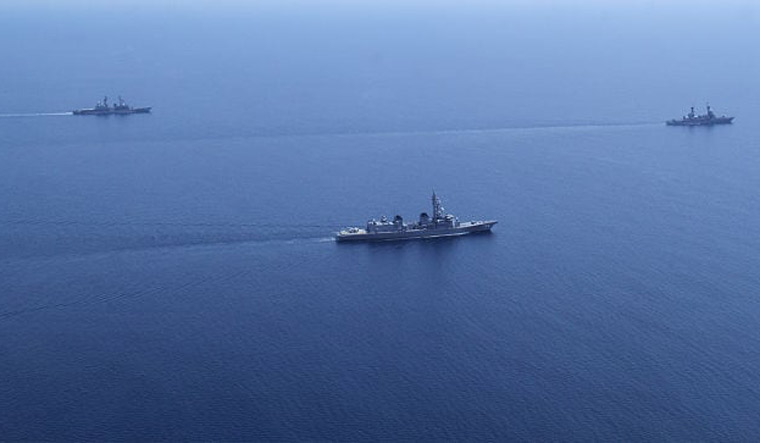
With India’s assumption of the G20 and Shanghai Cooperation Organisation (SCO) presidencies, all roads are leading to New Delhi, more so, with the ongoing Raisina Dialogue, the Indian foreign ministry’s flagship event.
On the sidelines of the ongoing event in the national capital and far from the probing eyes of an intrusive media, a delegation of the North Atlantic Treaty Organisation (NATO) met with an Indian team comprising both serving and retired officials, including those from the military, on Thursday, sources have told THE WEEK.
“It was an interesting meeting between the two entities in the sense that it is the first of its kind being held in India. The meeting was a closed-door session. The NATO delegation included a minister from Poland,” one of the sources closely familiar with the development said, adding that the meeting could be described as part of Track 1.5 diplomacy.
The interaction was facilitated by the Berlin-headquartered Konrad-Adenauer-Stiftung Foundation, which describes itself as working for the promotion of liberal democracy and a social market economy, of peace and freedom, transatlantic relations and European unification.
The sources said that the meeting explored a roadmap and avenues for India-NATO cooperation with the Indo-Pacific being the main area of focus. “One could sense a deep concern of the NATO delegation at the growing relationship between China and Russia. Other topics that were discussed included the Russia-Ukraine conflict.”
There is a sense that the US wants NATO to chart out its presence in the Indo-Pacific in order to counter China's growing military might and strategic depth.
Interestingly, on Thursday, US defense secretary Llyod Austin, in a message to the US military, called for prioritising China as a “Pacing Challenge”. He said: “An increasingly aggressive China is trying to shape the international rules-based system to suit its authoritarian preferences… We are strengthening our deterrence posture in the Indo-Pacific by developing new concepts and capabilities, deepening our alliances and partnerships, and expanding our activities and operations.”
On the other hand, NATO’s new Strategic Concept describes Russia as the “most significant and direct threat to Allied security” while China is named as a challenge to “interests, security and values”.
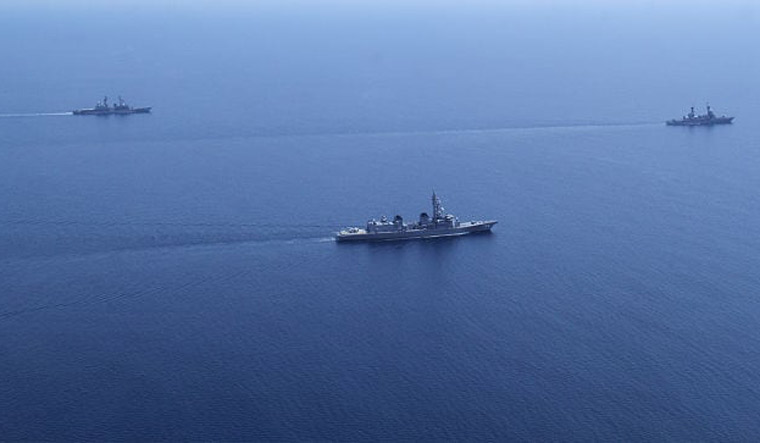
NATO team holds talks with Indian officials in ‘closed door’ meet
US wants NATO to chart out its presence in Indo-Pacific to counter China, sources say