
Alright then, nothing can be done about itthe user base didn't seem very big and they aren't allowing new users to join for over a year since I skimmed over some of their topics.
PAK-FA / Sukhoi Su-57 - Updates and Discussions
- Thread starter Ashwin
- Start date
You are using an out of date browser. It may not display this or other websites correctly.
You should upgrade or use an alternative browser.
You should upgrade or use an alternative browser.


From what I've observed across a Russian defence forum, a significant portion of the Russian online community who may or may not be Russians appears far less forgiving of India's recent decisions than the Russian government itself. I'll share some screenshots for those interested, though I should warn that some of the comments are quite hostile and occasionally racist, so those who would rather avoid that content may wish to skip them.
Looking at the matter objectively, I can understand some of the concerns being raised. Every nation is ultimately expected to pursue its own interests, and India is no exception. That said, Russia has been a long-standing and strategically important partner that has contributed substantially to India's defence and technological development over the decades. While safeguarding our national interests must remain the priority, I believe there is also value in managing this relationship with greater sensitivity and diplomatic finesse, especially given the historical depth and significance of the partnership.
I don't think they are Russians, but they are communists living in west. Yes, there is a resentment Russians have because India abandoned them and did not became a part of FGFA program, they felt like India ditched them. But all this happened after Adm. Gorshkov when the cost was revised by the Russians everytime.
Jet engine technology is the most important feature in stealth. Russians and Chinese have spent billion to develop and acquire that. Only the Americans have a real stealth engine deployed on F22 and B2 stealth so far. This is why Russians concentrated more on developing anti stealth technology which is S400 and S500.
They have high hopes on Idz30 which is F119 level engine but then there is always a funding issue.
This line of reasoning of yours can be copy-pasted onto every single engine out there—from the F110-GE-129 to the 132, or from the AL-31F to the AL-31FM2. If doing that could actually solve the root problems, we wouldn't even need to bother researching and developing new engines in the first placeBoth M88-4E and F414 come with redesigned cores.
F414 has a new fan, new compressor design with blisk, and FADEC compared to F404, not just new materials.
M88-4E also comes with a new compressor stage and advanced cooling compared to 2.

I remember one of your earlier statements of Chinese Pilots not being very good which I agree while having the same opinion for Indian pilots which I don't, various operations, training exercises etc have already shown this not be the case but I would like to hear your side on why you think so? Its always nice to hear a fresh perspective, right or wrong.This line of reasoning of yours can be copy-pasted onto every single engine out there—from the F110-GE-129 to the 132, or from the AL-31F to the AL-31FM2. If doing that could actually solve the root problems, we wouldn't even need to bother researching and developing new engines in the first place

This line of reasoning of yours can be copy-pasted onto every single engine out there—from the F110-GE-129 to the 132, or from the AL-31F to the AL-31FM2. If doing that could actually solve the root problems, we wouldn't even need to bother researching and developing new engines in the first place
129 to 132 did not see a new compressor design though. All they did is change the fan for more afterburner thrust.
129 can be upgrded to 132. F404 cannot be upgraded to F414.
In the eyes of the Chinese, it was India who failed and walked away from the Su-57E program, wasting years of spinning their wheels only to end up right back where they started. Yet, it always ends up being a case of eating their own words. Take the Rafales, for instance—what was even the point of buying those? If they had just stuck to upgrading the Su-30MKI, they would have saved themselves a mountain of trouble.I don't think they are Russians, but they are communists living in west. Yes, there is a resentment Russians have because India abandoned them and did not became a part of FGFA program, they felt like India ditched them. But all this happened after Adm. Gorshkov when the cost was revised by the Russians everytime.
Jet engine technology is the most important feature in stealth. Russians and Chinese have spent billion to develop and acquire that. Only the Americans have a real stealth engine deployed on F22 and B2 stealth so far. This is why Russians concentrated more on developing anti stealth technology which is S400 and S500.
They have high hopes on Idz30 which is F119 level engine but then there is always a funding issue.
At the end of the day, whether it's highly integrated warships like the Project 22350, next-generation tanks with radical architectures like the T-14, or formidable light tank destroyers like the 2S25—countries are eventually forced to swallow their pride and fall back on buying them. This applies to everyone, China included: they possess ambitions as high as the heavens, but a destiny as thin as paper.
This exact Indian phenomenon is now being faithfully replicated in China. If you line up the Type 99, 99A, Type 15, and Type 100, all of their gimmicks combined cannot match a single T-64B upgraded with a new main gun and some modern electronics.
The entire evolutionary lineage of the Type 051B, 052C, 052D, and Type 055 destroyer combined still falls short of a Project 22350 frigate stretched by 10 meters to carry an extra 300 tons of fuel.
The J-20 and JH-XX combined are inferior to the Su-57.
And the entire progression of service rifles—from the Type 81 to the Type 03, the Type 95, and now the QBZ-191—all lumped together, cannot hold a candle to the AK-74M
In the grand scheme of things, they can't even sort out the most fundamental engineering problems, yet they churn out new projects one after another. They burn through astronomical amounts of cash, only for their final, prized achievements to get absolutely curbstomped by second-hand Soviet relics
None of these details you’re obsessing over even matter. No matter how much you modify the F110, it will never match the F119, just as no matter how much you tweak the F404, it can never surpass the F110. That is precisely why the new generation of fighter jets relies on a single F135 engine rather than two F414s.129 to 132 did not see a new compressor design though. All they did is change the fan for more afterburner thrust.
129 can be upgrded to 132. F404 cannot be upgraded to F414.
Last edited:
The Chinese military introduced the Su-27SK in the early 1990s, but the accompanying training manuals weren't translated and printed until 2004. Prior to that, they were just winging it, running their training regimens completely based on existing J-7 or J-8 syllabus protocolsI remember one of your earlier statements of Chinese Pilots not being very good which I agree while having the same opinion for Indian pilots which I don't, various operations, training exercises etc have already shown this not be the case but I would like to hear your side on why you think so? Its always nice to hear a fresh perspective, right or wrong.
Anyway, nobody ever took it seriously. The truth is that from the very beginning to the bitter end, the military leadership never truly believed that a real war would actually break out
I heard they later had retired British Pilots train them? Irony is that, now Indian Pilots are now training British Pilots.The Chinese military introduced the Su-27SK in the early 1990s, but the accompanying training manuals weren't translated and printed until 2004. Prior to that, they were just winging it, running their training regimens completely based on existing J-7 or J-8 syllabus protocols
Anyway, nobody ever took it seriously. The truth is that from the very beginning to the bitter end, the military leadership never truly believed that a real war would actually break out

The United States, South Africa, the United Kingdom, Russia, Ukraine, East Germany, Australia—the list goes on and on. This isn't just about training pilots; across all military programs, particularly in the R&D of naval and air force hardware, engineering teams have always been heavily populated by foreign nationalsI heard they later had retired British Pilots train them? Irony is that, now Indian Pilots are now training British Pilots.
Oh, right—and let's not forget the Japanese. Take the AG600 amphibian, for instance: it was the Japanese who stepped in to help pull it off

I understand your point about late Soviet designs being extremely robust and often underestimated. I do not deny that. A modernized T-64, AK-74M, Su-27 family aircraft or Soviet-derived air defence system can still be very dangerous.In the eyes of the Chinese, it was India who failed and walked away from the Su-57E program, wasting years of spinning their wheels only to end up right back where they started. Yet, it always ends up being a case of eating their own words. Take the Rafales, for instance—what was even the point of buying those? If they had just stuck to upgrading the Su-30MKI, they would have saved themselves a mountain of trouble.
At the end of the day, whether it's highly integrated warships like the Project 22350, next-generation tanks with radical architectures like the T-14, or formidable light tank destroyers like the 2S25—countries are eventually forced to swallow their pride and fall back on buying them. This applies to everyone, China included: they possess ambitions as high as the heavens, but a destiny as thin as paper.
This exact Indian phenomenon is now being faithfully replicated in China. If you line up the Type 99, 99A, Type 15, and Type 100, all of their gimmicks combined cannot match a single T-64B upgraded with a new main gun and some modern electronics.
The entire evolutionary lineage of the Type 051B, 052C, 052D, and Type 055 destroyer combined still falls short of a Project 22350 frigate stretched by 10 meters to carry an extra 300 tons of fuel.
The J-20 and JH-XX combined are inferior to the Su-57.
And the entire progression of service rifles—from the Type 81 to the Type 03, the Type 95, and now the QBZ-191—all lumped together, cannot hold a candle to the AK-74M
In the grand scheme of things, they can't even sort out the most fundamental engineering problems, yet they churn out new projects one after another. They burn through astronomical amounts of cash, only for their final, prized achievements to get absolutely curbstomped by second-hand Soviet relics
None of these details you’re obsessing over even matter. No matter how much you modify the F110, it will never match the F119, just as no matter how much you tweak the F404, it can never surpass the F110. That is precisely why the new generation of fighter jets relies on a single F135 engine rather than two F414s.
But the Ukraine war also shows the limit of this argument.
Russia entered the war with a huge stockpile of Soviet legacy systems, many of them modernized or upgraded. If the superiority of these “old Soviet relics” were sufficient by itself, Russia should have achieved a decisive victory very quickly. It did not.
The problem is not whether a single Soviet design can still be good. Many of them are good. The problem is whether the whole military system can generate sustained combat effect: logistics, maintenance, training, ISR, secure communications, precision weapons, electronic warfare, sortie generation, industrial replacement, doctrine and command quality.
That is precisely why India did not just need “more upgraded Su-30MKI”. The Rafale gives India a different ecosystem: better availability, lower operational burden, SPECTRA, Meteor, SCALP/HAMMER, sensor fusion, modern EW, and a politically reliable upgrade path outside both Russian and American dependency.
So I would be careful with the argument that everyone eventually returns to old Soviet platforms. Russia had the largest stock of them, and the war has shown that stockpiles alone do not equal modern combat power.
First, I contend that the Russian military has demonstrated and validated a formidable combat capability on the Ukrainian battlefield. When placed in cross-comparison with other conventional conflicts of comparable scale since World War II—such as the Korean and Vietnam Wars—Russian weapon systems and their command-and-control architecture have displayed a glaringly obvious advantage.I understand your point about late Soviet designs being extremely robust and often underestimated. I do not deny that. A modernized T-64, AK-74M, Su-27 family aircraft or Soviet-derived air defence system can still be very dangerous.
But the Ukraine war also shows the limit of this argument.
Russia entered the war with a huge stockpile of Soviet legacy systems, many of them modernized or upgraded. If the superiority of these “old Soviet relics” were sufficient by itself, Russia should have achieved a decisive victory very quickly. It did not.
The problem is not whether a single Soviet design can still be good. Many of them are good. The problem is whether the whole military system can generate sustained combat effect: logistics, maintenance, training, ISR, secure communications, precision weapons, electronic warfare, sortie generation, industrial replacement, doctrine and command quality.
That is precisely why India did not just need “more upgraded Su-30MKI”. The Rafale gives India a different ecosystem: better availability, lower operational burden, SPECTRA, Meteor, SCALP/HAMMER, sensor fusion, modern EW, and a politically reliable upgrade path outside both Russian and American dependency.
So I would be careful with the argument that everyone eventually returns to old Soviet platforms. Russia had the largest stock of them, and the war has shown that stockpiles alone do not equal modern combat power.
Second, the superiority of any given system can only be demonstrated through objective, horizontal comparisons, Look no further than recent events: Israel, deploying an advanced arsenal of F-15s and F-35s against Hezbollah and Hamas—who are armed primarily with RPG-7s and drones—has dropped tens of thousands of tons of precision-guided munitions on Gaza, a territory comparable in geographic scale to Mariupol. The sheer tonnage of ordnance dropped has already far exceeded the destructive intensity of the Dresden bombings or the Tokyo air raids. Yet, they have failed to neutralize these irregular forces wielding standard automatic rifles. This inevitably forces one to question: Is the combination of modern F-35s and JDAMs somehow less effective than WWII-era B-17s and 500-pound free-fall bomb, or are the defensive resilience and fortifications of these fighters simply superior to those of the Waffen-SS? Furthermore, the underwhelming results of the Western coalition's naval operations in the Persian Gulf and Red Sea corridors since March offer empirical evidence of the sheer efficiency of Soviet-designed and Russian-operated weaponry in Ukraine, the systemic correctness of their technical doctrine, and the profound limitations of Western military technology. Most crucially, it exposes a decades-long stagnation in Western strategic thought—specifically, the flawed doctrinal assumption that decisive military victory can be secured without sustaining casualties or committing substantial boots on the ground.This reflects a condescending illusion, akin to historical expeditions conducting hunts in the Inca Empire equipped with early firearms. However, in the contemporary era of the 2020s, advanced military hardware, strategic doctrines, and operational theories are far from being the exclusive domain of Western nations or any single participant in a conflict.
Third, European defense procurement does not represent a viable 'alternative framework for political credibility.' European nations operate effectively as geopolitical dependencies of the United States—a reality that was demonstrated with absolute clarity following the reintegration of Crimea into the Russian Federation in 2014. The most damning case study of this systemic lack of autonomy was the fate of the two Mistral-class amphibious assault ships contracted by France for export to Russia: the Vladivostok and the Sevastopol. The forward hull sections of these two warships were manufactured by France, while the aft sections were built by Russia, with final structural integration taking place in French shipyards. Ultimately, the French government impounded these two vessels. To align itself with the strategic mandates of the White House, Paris willingly endured massive economic and reputational sacrifices. Yet, this unilateral deference bought them no loyalty: just a few years later, the United States summarily dismantled the multi-billion-dollar submarine contract between Australia and France, diverting Canberra to purchase American nuclear-powered alternatives instead. This erosion of credibility extends naturally to the 'Schrödinger’s neutrality' of the Swiss banking sector—a 300-year-old institutional gold standard that has now proven to be entirely illusory.
To this, we can add yet another ironic case study: the hollow proclamation that 'Olympic sportsmanship knows no borders.'
The adage—'either the East Wind prevails over the West Wind, or the West Wind prevails over the East Wind'—has been perfectly demonstrated

Russia has demonstrated its capacity for resilience, adaptation, mass production, artillery, electronic warfare and attrition warfare. But it has not demonstrated decisive superiority. It has failed to take Kyiv, lost Kherson, lost a large part of its Black Sea fleet, seen its tactical air force largely contained, suffered deep strikes on its refineries, airfields, depots and ports, and after more than four years it has still not conquered the four oblasts it claims to have annexed.First, I contend that the Russian military has demonstrated and validated a formidable combat capability on the Ukrainian battlefield. When placed in cross-comparison with other conventional conflicts of comparable scale since World War II—such as the Korean and Vietnam Wars—Russian weapon systems and their command-and-control architecture have displayed a glaringly obvious advantage.
Second, the superiority of any given system can only be demonstrated through objective, horizontal comparisons, Look no further than recent events: Israel, deploying an advanced arsenal of F-15s and F-35s against Hezbollah and Hamas—who are armed primarily with RPG-7s and drones—has dropped tens of thousands of tons of precision-guided munitions on Gaza, a territory comparable in geographic scale to Mariupol. The sheer tonnage of ordnance dropped has already far exceeded the destructive intensity of the Dresden bombings or the Tokyo air raids. Yet, they have failed to neutralize these irregular forces wielding standard automatic rifles. This inevitably forces one to question: Is the combination of modern F-35s and JDAMs somehow less effective than WWII-era B-17s and 500-pound free-fall bomb, or are the defensive resilience and fortifications of these fighters simply superior to those of the Waffen-SS? Furthermore, the underwhelming results of the Western coalition's naval operations in the Persian Gulf and Red Sea corridors since March offer empirical evidence of the sheer efficiency of Soviet-designed and Russian-operated weaponry in Ukraine, the systemic correctness of their technical doctrine, and the profound limitations of Western military technology. Most crucially, it exposes a decades-long stagnation in Western strategic thought—specifically, the flawed doctrinal assumption that decisive military victory can be secured without sustaining casualties or committing substantial boots on the ground.This reflects a condescending illusion, akin to historical expeditions conducting hunts in the Inca Empire equipped with early firearms. However, in the contemporary era of the 2020s, advanced military hardware, strategic doctrines, and operational theories are far from being the exclusive domain of Western nations or any single participant in a conflict.
Third, European defense procurement does not represent a viable 'alternative framework for political credibility.' European nations operate effectively as geopolitical dependencies of the United States—a reality that was demonstrated with absolute clarity following the reintegration of Crimea into the Russian Federation in 2014. The most damning case study of this systemic lack of autonomy was the fate of the two Mistral-class amphibious assault ships contracted by France for export to Russia: the Vladivostok and the Sevastopol. The forward hull sections of these two warships were manufactured by France, while the aft sections were built by Russia, with final structural integration taking place in French shipyards. Ultimately, the French government impounded these two vessels. To align itself with the strategic mandates of the White House, Paris willingly endured massive economic and reputational sacrifices. Yet, this unilateral deference bought them no loyalty: just a few years later, the United States summarily dismantled the multi-billion-dollar submarine contract between Australia and France, diverting Canberra to purchase American nuclear-powered alternatives instead. This erosion of credibility extends naturally to the 'Schrödinger’s neutrality' of the Swiss banking sector—a 300-year-old institutional gold standard that has now proven to be entirely illusory.
To this, we can add yet another ironic case study: the hollow proclamation that 'Olympic sportsmanship knows no borders.'
The adage—'either the East Wind prevails over the West Wind, or the West Wind prevails over the East Wind'—has been perfectly demonstrated
Russia has demonstrated strong military resilience; it has not demonstrated operational superiority.
For Israel/Hamas/Hezbollah, air superiority and guided munitions are not enough to bring about a political decision or to eradicate a deeply entrenched irregular force. Bombing gives the impression that action is still being taken. But this does not prove that Russian equipment is superior. Above all, it proves that firepower is no substitute for ground strategy, human intelligence, political control and the reconstruction of a stable order.
Gaza, Hezbollah, the Red Sea, Ukraine, Dresden, Tokyo, the Inca Empire. The common thread you wish to establish is “Western technology fails”. But the real common thread is rather this: no technology alone can resolve a complex political-military problem. What applies to Israel also applies to Russia: bombing Ukrainian cities has not broken Ukraine.
The Mistral affair showed that France could bow to Western political and strategic pressure. AUKUS showed that the United States could ruthlessly sacrifice a French ally. Europe lacks strategic autonomy. But to conclude that Europe is merely a dependency of the United States is too simplistic. France did not deliver the Mistrals to Russia following the annexation of Crimea, but it continues to sell Rafale jets to India, to support Taiwanese Mirage aircraft, to maintain an independent nuclear deterrent, to reject certain forms of American dependence, and to sell systems without going through the US Foreign Military Sales (FMS) programme.
The Mistral affair showed that France could bow to Western political and strategic pressure. AUKUS showed that the United States could ruthlessly sacrifice a French ally. Europe lacks strategic autonomy. But to conclude that Europe is merely a dependency of the United States is too simplistic. France did not deliver the Mistrals to Russia following the annexation of Crimea, but it continues to sell Rafales to India, to support Taiwanese Mirages, to maintain an independent nuclear deterrent, to reject certain forms of American dependence, and to sell systems without going through the US FMS.
You are confusing imperfect autonomy with a total lack of autonomy.
And above all, if the old, modernised Russian systems are so superior, why should India regret having bought the Rafale? Ukraine, on the contrary, shows that dependence on Russia has become a major risk: availability of spare parts, sanctions, massive loss of prestige, limitations of the platforms, difficulty in modernising, and above all Moscow’s inability to guarantee its own needs in wartime.
Russia has shown resilience, not decisive superiority. Western airpower has shown its limits, but Russian bombardment has shown the same limits. And Europe has limited autonomy, but dependence on Russia is not a better alternative for India.
Russia has achieved its positioning without even initiating a general wartime mobilization, mounting a sufficient counterweight to a Ukraine heavily subsidized by the collective West. Consequently, a trajectory of irreversible decline for both Ukraine and broader Europe appears structurally predetermined. The attrition inflicted by the Russian military on Ukrainian forces and Western volunteer detachments already eclipses the aggregate active military strength of Western Europe—a feat sustained primarily on the back of the military infrastructure and strategic reserves inherited by these post-Soviet states.Russia has demonstrated its capacity for resilience, adaptation, mass production, artillery, electronic warfare and attrition warfare. But it has not demonstrated decisive superiority. It has failed to take Kyiv, lost Kherson, lost a large part of its Black Sea fleet, seen its tactical air force largely contained, suffered deep strikes on its refineries, airfields, depots and ports, and after more than four years it has still not conquered the four oblasts it claims to have annexed.
Russia has demonstrated strong military resilience; it has not demonstrated operational superiority.
For Israel/Hamas/Hezbollah, air superiority and guided munitions are not enough to bring about a political decision or to eradicate a deeply entrenched irregular force. Bombing gives the impression that action is still being taken. But this does not prove that Russian equipment is superior. Above all, it proves that firepower is no substitute for ground strategy, human intelligence, political control and the reconstruction of a stable order.
Gaza, Hezbollah, the Red Sea, Ukraine, Dresden, Tokyo, the Inca Empire. The common thread you wish to establish is “Western technology fails”. But the real common thread is rather this: no technology alone can resolve a complex political-military problem. What applies to Israel also applies to Russia: bombing Ukrainian cities has not broken Ukraine.
The Mistral affair showed that France could bow to Western political and strategic pressure. AUKUS showed that the United States could ruthlessly sacrifice a French ally. Europe lacks strategic autonomy. But to conclude that Europe is merely a dependency of the United States is too simplistic. France did not deliver the Mistrals to Russia following the annexation of Crimea, but it continues to sell Rafale jets to India, to support Taiwanese Mirage aircraft, to maintain an independent nuclear deterrent, to reject certain forms of American dependence, and to sell systems without going through the US Foreign Military Sales (FMS) programme.
The Mistral affair showed that France could bow to Western political and strategic pressure. AUKUS showed that the United States could ruthlessly sacrifice a French ally. Europe lacks strategic autonomy. But to conclude that Europe is merely a dependency of the United States is too simplistic. France did not deliver the Mistrals to Russia following the annexation of Crimea, but it continues to sell Rafales to India, to support Taiwanese Mirages, to maintain an independent nuclear deterrent, to reject certain forms of American dependence, and to sell systems without going through the US FMS.
You are confusing imperfect autonomy with a total lack of autonomy.
And above all, if the old, modernised Russian systems are so superior, why should India regret having bought the Rafale? Ukraine, on the contrary, shows that dependence on Russia has become a major risk: availability of spare parts, sanctions, massive loss of prestige, limitations of the platforms, difficulty in modernising, and above all Moscow’s inability to guarantee its own needs in wartime.
Russia has shown resilience, not decisive superiority. Western airpower has shown its limits, but Russian bombardment has shown the same limits. And Europe has limited autonomy, but dependence on Russia is not a better alternative for India.
Critics often rely on flawed metrics of success. The coalition in the Gulf War did not occupy Baghdad, let alone Mosul; NATO’s campaign against Serbia involved no occupation of Belgrade. Tehran remains entirely beyond Western reach, and as current events demonstrate, even the complete subjugation of Gaza remains unachieved. If one assumes that the non-occupation of Kyiv equates to a Russian failure, then by that same logic, a Western victory would require the physical occupation of Moscow. Following this flawed baseline, the Gulf War would be classified as a failure for failing to secure Baghdad, and the United States’ campaign in the Pacific would be deemed a failure for not occupying Tokyo prior to capitulation. To argue that decisive victory is contingent upon the total administrative occupation of capitals like Tehran, Gaza, or Belgrade is to fundamentally misunderstand the nature of modern conflict.
This broader structural dynamic is further evidenced by a history of deep, yet ultimately asymmetric, technological and economic integration. Consider the proliferation of Russian aerospace technology, such as the SPT-100 plasma thruster, which was exported to France and served as the direct technological precursor for the PPS-1350 engines utilized in European lunar missions, alongside procurement by British defense contractors like QinetiQ. Conversely, Russia historically engaged in the acquisition of Western hardware, including Thales Catherine thermal imaging systems, the Mistral-class amphibious assault ships, and Italian Lince armored vehicles.
In the industrial sector, Western automotive giants deeply embedded themselves in the Russian market, exemplified by Renault’s vast production footprints in Moscow and Tolyatti, and Volkswagen’s facilities in Kaluga and Nizhny Novgorod. Russia represented Renault’s second-largest profit center globally outside of France—an automotive empire meticulously constructed over two decades, only to be structurally dissolved in a single day through a forced divestment valued at a nominal single ruble.
When observed alongside the sudden abandonment of Finland’s long-standing non-alignment policy and the dissolution of Switzerland's 'perpetual neutrality,' these precedents offer irrefutable empirical evidence regarding where the true locus of sovereign authority over Europe resides.
--------No further proof is required.
If the Americans were to declare, 'We are going to hang you!'
the Europeans, summoning what little courage they possess, would respond with timid deference: 'Very well, but… could we at least use a rope manufactured here in Europe?'
To which the immediate, flat refusal would be: 'Absolutely not! Selling you the rope allows us to turn yet another profit
This reality extends directly to defense procurement and political credibility. If New Delhi harbors no strategic regrets regarding its acquisition of the Rafale, it begs the question as to why Indian defense officials have once again initiated exploratory talks regarding the Su-57 platform.
This pattern exposes not merely a widening gap in technological independence, but a profound, systemic erosion of Western political reliability.
Returning to the core issue of European weaponry, as encapsulated by the Dassault Rafale platform,
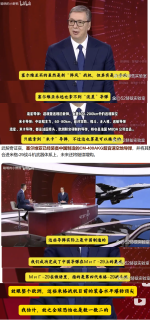
Even the President of Serbia stated openly during his recent hat Belgrade would never have opted for the Rafale had it not been under intense, coercive Western geopolitical pressure—noting further that the transaction was restricted to the older MICA missile system rather than the advanced Meteor capability.
Ultimately, they have no choice but to return to the path of upgrading the MiG-29. Your assessment is entirely correct—owing to acute geopolitical constraints regarding the procurement of more potent Russian weapon systems, they opted instead to integrate Chinese-manufactured subsystems and components to modernize their MiG-29 fleet.

武契奇谈购买中国导弹的前因后果,信息非常多!被欺负惨了。_哔哩哔哩_bilibili
武契奇谈购买中国导弹的前因后果,信息非常多!被欺负惨了。, 视频播放量 259727、弹幕量 813、点赞数 7218、投硬币枚数 1539、收藏人数 1514、转发人数 486, 视频作者 幽默老熊, 作者简介 专注外网实事&趣事,优盯日...
It perfectly validates the ultimate geopolitical maxim: “Incomplete loyalty is equivalent to absolute disloyalty.”
Western weapon systems possess no meaningful political credibility to speak of.
Undeniably, Russian and American weapon systems occupy the premier tier of global defense technology, maintaining a substantial and clear generational lead.
In comparison, European and Chinese defense exports function merely as transitional, secondary options—comparable to 'snacks' rather than a sustaining staple. They sit in a strategic middle ground: insufficient to secure comprehensive defense autonomy, yet capable of serving as temporary geostrategic stopgaps to satisfy niche operational requirements or minor defense-diversification curiosities. Absent significant financial inducements, underlying kickbacks, or institutional access such as Ivy League admissions for the elites of purchasing nations, these systems would command little to no market viability. Consequently, when a sovereign state does commit to procurement within this secondary tier, the transaction must, at a bare minimum, mandate the transfer of complete assembly lines and core technologies; otherwise, the purchasing nation positions itself merely as an irrational premium-payer
Last edited:
Your argument is strongest when you say that a sovereign buyer must not depend blindly on any supplier. I agree. But that is precisely why India is not simply buying Rafales off the shelf. India is demanding local production, ICDs, weapon integration authority, MRO, and a long-term industrial ecosystem.
The Rafale deal is not a sign of European political dominance over India. It is the opposite: India is taking a European platform and turning it into an Indian-controlled ecosystem.
Russia has shown resilience in Ukraine, but not decisive superiority. If Soviet/Russian legacy systems were enough to guarantee operational success, Russia would not still be fighting for Donetsk after more than four years.
The lesson for India is not “buy Western blindly” or “return to Russia blindly.” The lesson is: choose the system that offers the best combination of combat capability, availability, upgrade path, industrial control and political freedom. That is why Rafale makes sense.
The Rafale is not a choice that makes Europe dependent; in fact, the Indian contract shows that the Rafale is being transformed into a tool for Indian autonomy.
The Rafale deal is not a sign of European political dominance over India. It is the opposite: India is taking a European platform and turning it into an Indian-controlled ecosystem.
Russia has shown resilience in Ukraine, but not decisive superiority. If Soviet/Russian legacy systems were enough to guarantee operational success, Russia would not still be fighting for Donetsk after more than four years.
The lesson for India is not “buy Western blindly” or “return to Russia blindly.” The lesson is: choose the system that offers the best combination of combat capability, availability, upgrade path, industrial control and political freedom. That is why Rafale makes sense.
The Rafale is not a choice that makes Europe dependent; in fact, the Indian contract shows that the Rafale is being transformed into a tool for Indian autonomy.
It bares its fangs at weak nations, forcing them to buy second-hand, low-spec junk, still acting as if it were a colonial overlord.It perfectly validates the ultimate geopolitical maxim: “Incomplete loyalty is equivalent to absolute disloyalty.”
Western weapon systems possess no meaningful political credibility to speak of.
When it meets a slightly stronger country, it says, "Don't you worry. We don't care what the Americans think, and we don't care what the Russians think. Go ahead and use it with confidence — whatever happens, we'll take the blame."
But when it actually runs into the Americans, it instantly snaps to attention and hollers, "Daddy, we'll do exactly as you say!"
And at the sight of Jews, its legs start trembling so hard it looks ready to drop to its knees.
--------------------------That's European goods.
picture this — it's M1A2s, Leclercs, Rafales, Marders, and a whole rainbow brigade of LGBT infantry rolling into the Donetsk four oblasts. By now, they'd probably be defending Moscow itself.Russia has shown resilience in Ukraine, but not decisive superiority. If Soviet/Russian legacy systems were enough to guarantee operational success, Russia would not still be fighting for Donetsk after more than four years.
I mean, come on — Europe tagged along with America messing around in Afghanistan for over a decade, and in the end, didn't they all get politely, ever-so-dignifiedly escorted out by the Taliban right at Kabul Airport?
The lesson for India is not “buy Western blindly” or “return to Russia blindly.” The lesson is: choose the system that offers the best combination of combat capability, availability, upgrade path, industrial control and political freedom. That is why Rafale makes sense.
The Rafale is not a choice that makes Europe dependent; in fact, the Indian contract shows that the Rafale is being transformed into a tool for Indian autonomy.
What is the "best" choice for the Indian government?
—Self-reliance, independent production — there is simply no other way. Security cannot be bought, and core technologies are things others will never sell to you. Historically speaking, the only truly wholehearted, full-chain technology transfers since World War II have been from the Soviet Union to China, and, in a few specific fields, from the United States to Japan. In other words, if you're talking about a "credit score" in this game, only those two countries have any real credibility. No other nation has set such a precedent. You'd be lucky if they didn't fleece you dry and strip you bare — and you're hoping to dig up blueprints from Europe's shallow little bookshelf?
Play it straight — just buy the Sukhois and MiGs. If push comes to shove, reverse-engineer the damn things, bolt for bolt. That's how you shave decades off the detour.
— That's the Chinese experience,
Of course, you can pay to negotiate; it can be sold to Chinese people, but it's impossible that it won't be sold to Indians.
Specifically regarding India, they could simply replicate the F-15 or F-16.
plain and simple.You want to politely ask others to sit tight and wait obediently while you overtake them — that's about as real as dreaming with your eyes open.Especially Americans
Last edited:

Does anybody here think GoI (a coalition one at that) would approve a single source/G2G purchase of Su-57 after the opposition's vicious smear campaign against Rafale 1.0?
On the other hand, the US could also make F-404/F-414 deliveries/ToT contingent on 'market access' or a level playing field for the F-35 in India. In my view, GoI will find it hard to push back without a competitive evaluation of Su-57 vs F-35 at the very least.
The US holds many cards against us (taxes on remittances, cap on H1B, access to Anthropic LLM, FDI curbs, etc) that could make GoI more willing to negotiate. Adani recently struck an investment deal in exchange for US DoJ dropping fraud charges. That's how cut throat things are atm between the US and India.
I guess the outcome of the interim trade deal should give us a clearer picture.
OMG, this thread expanded so fast.

DoD/security plans & deals're supposed to appear tricky, so that enemies can't adapt prematurely.
> IM
 In short,
- Looking at USA's arm twisting, no F-35 or any future jet &/or engine. After 80% F414 ToT also be mentally prepared for 20% arm twisting.
- Few squads of Su-57 50-50 chance. Although Su-57 has many cool stuff but we should not see Su-57 as true 5gen but 4.5-5gen gap filler better than any 4.5gen jet. Hence getting it or not, i'm neutral.
- We can take 1 of the new Russian engines & inflate AMCA like LCA to MWF, similar to Kaan. Ultimately our own domestic/JV engines matter.
..
.
Expanding the short lines -
- USA makes good quality products but in return expects world submission/domination.
- Jets remain for 40-60 years but Regimes can change every few years, so to avoid further arm-twisting & delays, we should limit our purchases from them to auxilliary systems & products like helicopters, cargo planes, equipments, etc for which alternatives are there globally & locally. That would be enough for international trade & diplomacy. So we shouldn't even dream of F-35 or even export variant of NGAD, F/A-XX, their CCAs.
> Action speak more than words, for US & us too. World is already pointing to most populous nation's bureaucratic management & delays.
- Indians succeed abroad but struggle locally & with AI/ML there'll be global impact & forcing priority on local employment, so many NRIs will have to return to India.
- Expanded DoD employement & PPP need to absorb the talent. It's not good to keep going to shopping abroad even to friendliest nations like Russia, France, israel, etc.
- AMCA plan A with F414 along with inflated plan-B. Citizens are already in shock after 15 years thinking earlier that the prototype is half way under construction until this PPP news disclosed the real state of progress.
- Bcoz new airframe & engine design take 10-15 years at least hence just like GTRE's effort & JV engine, we also need our own heavy class 5+gen airframe along with appropriate engine to be officially started immediately, later upgraded to 6gen when DRDO making RAM, RAS, DEW, TVC, etc. We don't need a complete capitalistic GCAP, FCAS system, just some of their components & technology which EU'll agree or not is tentative. If ADA can't design new airframe then PPP should do it.
> We've to be carefull with products of EU & Russia too bcoz friendly politicians can't remain in power indeinitely & every nation's defence products' export variant is supposed to be inferior to its domestic variant, to maintain a leading strategic & industrial advantage & business continuity.
- Although Su-57 has many +ve points like flatter fuselage, DIRCM, levcons, TVC, IRST, multi-band DAS-MAWS, side & rear looking radars, multi-band RF antennas, new HMDS, glass cockpit, etc, but its RCS is not satisfactory from 5gen PoV, contributed by many aspects like round engine bays, round IRST, IFRP, canopy arc, etc.
- Regular citizens/enthusiasts are not historians, journalists, so as per internet search & chatter on other foreign forums, Russians don't seem to claim Su-57 front RCS lower than 0.1m2, that's just 1 decimal place lower than the Western MLUed 4.5gen jets with 1m2 RCS in clean config.
- So for public understanding -
F-22 - 0.0001m2
Domestic F-35 - 0.001m2 or b/w 0.001 & 0.0001 m2.
Exported F-35 - <=0.001m2
Domestic Su-57 - <=0.1m2
Exported Su-57 - ??
MLUed 4.5gen clean config - 1-5m2
Initial 4gen - 5-25m2
- So <=0.1m2 RCS Su-57 can kill 1+m2 RCS 4.5gen jets, but even if world's best avionics is put inside a fuselage which's still visible 1st could be vulnerable to enemy 5gen jet & SAM, then the incoming BVR-AAM/SAM has to be decisively jammed to survive. Some missiles have HoJ (Home on Jam) capability so that has to be countered by ECCM.
- In next few years when AMCA full scale RAM+RAS+EW model will be tested in anechoic chamber & RCS range, then DoD'll know its RCS which'll be desired to be at most 0.001m2 like F-35.- If we intend to use networked fusion then enemy can also use it.
- LR-AAMs/SAMs R&D or import also seen on both sides.
> Some points on engine performance -
- It does vary as per weather, geography, giving 5-10% more dry thrust in cold/dense sea level areas & 5-20% less dry thrust in hot/thin air sea level areas. There'll be some trade-offs.
- Russia is cold region, Europe is also very cool. USA has diversified geography & climate. Their jets & engines have been used globally,
- Engines thrust're quoted as per testing in chamber with conditions of sea level STP, also tested in heated & cold air to simulate real world, keeping a cap or flat-rating limit to avoid damage.
- In hot areas bcoz the air is pushed up, as altitude rises the performance differences decrease. Hence the hurdle is the initial takeoff at higher runway &/or hot climate.
- Important IAF bases like Gwalior, Ambala, Bikaner, etc used in Op-Sindoor for example, in summer can have 10-20% loss of air density, dry thrust & lift compared to STP.
- In lower air density, by rule of conservation of mass, the velocity(volume) needs to increase to compensate for lower air density, means higher T/o & flight speeds, means longer runways.
- And lift also needs sufficient air density.
- So when enough runway, Afterburner can be lit when jet is stationary bcoz it's direct fuel injection & fuel's calorific value is very high giving big KE to air molecules compensating for dry thrust loss, provided the engine thermal materials are good & a jet can still t/o with full MTOW.
- But if runway is limited then any jet can t/o with 80% of MTOW, more payload, less fuel then do mid-air-refuelling.
- But if airfield is higher like in Tibet then it's bigger problem bcoz air density drops by 35-40%, dry thrust drop by 40%, T/o speed increases by 30%, the runway length to like 5 Kms.
- IDK exactly how much AB's wet thrust can compensate this loss of dry thrust but internet search shows J-20 or any jet can still t/o with around 70-80% of MTOW with AB, 46% empty, remaining 24-34% weapons+internal fuel.
- So if 18.4 tons empty Su-30MKI carrying Brahmos & many AAMs with AL-31FP engine is manageable with longer T/o distance, then 18.5 tons empty Su-57 with any higher thrust engine'll also be manageable.
- If Russia allows airframe modification then we can use it for 6gen TD.
Appreciate the raw, no-BS take on European suppliers and the hard truths about tech transfers. That "fangs at the weak, knees at the strong" line is sharp, it really captures how political reliability often overrides specs in this game. And yeah, pointing to the USSR-to-China model as the rare genuine full-chain precedent makes sense historically. It wasn't just crates of hardware; it was experts on the ground, training, standards, and systemic know-how through those "156 Projects" in the 1950s. Studies (like Giorcelli & Li) show the plants that got both machinery and deep training saw productivity gains compounding for decades, up to 50% cumulative after 40 years, with real spillovers. Hardware alone faded fast after the split. That's the absorption + iteration playbook China rode into broader industrial muscle, including aviation lineages from Su-27s onward.It bares its fangs at weak nations, forcing them to buy second-hand, low-spec junk, still acting as if it were a colonial overlord.
When it meets a slightly stronger country, it says, "Don't you worry. We don't care what the Americans think, and we don't care what the Russians think. Go ahead and use it with confidence — whatever happens, we'll take the blame."
But when it actually runs into the Americans, it instantly snaps to attention and hollers, "Daddy, we'll do exactly as you say!"
And at the sight of Jews, its legs start trembling so hard it looks ready to drop to its knees.
--------------------------That's European goods.
picture this — it's M1A2s, Leclercs, Rafales, Marders, and a whole rainbow brigade of LGBT infantry rolling into the Donetsk four oblasts. By now, they'd probably be defending Moscow itself.
I mean, come on — Europe tagged along with America messing around in Afghanistan for over a decade, and in the end, didn't they all get politely, ever-so-dignifiedly escorted out by the Taliban right at Kabul Airport?
What is the "best" choice for the Indian government?
—Self-reliance, independent production — there is simply no other way. Security cannot be bought, and core technologies are things others will never sell to you. Historically speaking, the only truly wholehearted, full-chain technology transfers since World War II have been from the Soviet Union to China, and, in a few specific fields, from the United States to Japan. In other words, if you're talking about a "credit score" in this game, only those two countries have any real credibility. No other nation has set such a precedent. You'd be lucky if they didn't fleece you dry and strip you bare — and you're hoping to dig up blueprints from Europe's shallow little bookshelf?
Play it straight — just buy the Sukhois and MiGs. If push comes to shove, reverse-engineer the damn things, bolt for bolt. That's how you shave decades off the detour.
— That's the Chinese experience,
Of course, you can pay to negotiate; it can be sold to Chinese people, but it's impossible that it won't be sold to Indians.
Specifically regarding India, they could simply replicate the F-15 or F-16.
plain and simple.You want to politely ask others to sit tight and wait obediently while you overtake them — that's about as real as dreaming with your eyes open.Especially Americans
Your advice for India to lean into Sukhois/MiGs with serious reverse-engineering tracks with patterns that worked before. Russia's Su-57 offers to India have moved into pretty advanced technical talks, joint production at HAL lines (building on Su-30MKI), significant localization, source code access, engines, avionics, stealth elements, and integration of Indian stuff like BrahMos/Astra. Putin himself pitched co-development recently. It's not the full 1950s blank-check model, but it's closer to meaningful transfer than most Western deals come with.
On India's side, Atmanirbhar isn't just talk. Defense production hit a record ₹1.54 lakh crore in FY 2024-25, with indigenous output around ₹1.27 lakh crore (huge jump from 2014 levels). Exports are climbing fast too (tens of thousands of crore, to 100+ countries). Tejas indigenous content is rising, DRDO/private sector ecosystem is expanding, and policies are pushing private/MSME involvement. Full fighter self-reliance (engines, materials, timelines) is still a grind, AMCA and Tejas Mk2 are progressing but not there yet. So the hybrid bridge via Russian platforms + domestic R&D makes pragmatic sense, exactly as the Chinese experience showed.
Serbia's hedging is a live case study for your point: Rafale buy came with restrictions (MICA instead of full Meteor due to Western sensitivities), while they've integrated Chinese CM-400 supersonic missiles on upgraded MiG-29s. Diversification in action.
Russian systems have held up in Ukraine's grind, mass fires, EW, glide bombs, adaptations without full general mobilization, validating resilience in protracted attrition. But it's come at steep costs (high losses, slow gains), and both sides have innovated hard with cheap drones/FPVs. PLA analysts have pored over this: pushing attritable swarms, EW cat-and-mouse, resilient logistics, info dominance, and accepting long fights over quick wins. It builds on that Soviet foundation into today's J-20, Type 055, hypersonics, and mass output. The "East Wind" shift feels real in multipolarity, but it depends on execution speed in the drone/EW/artillery age.
European examples (Mistral cancellation, AUKUS killing the French sub deal, Rafale strings) do expose the dependency risks you called out. Secondary-tier options often stay stopgaps unless you extract full lines/tech.
With Russia's Su-57 pitch offering decent absorption potential for India, and China evolving that old Soviet base while digesting Ukraine realities, what do you see as the real game-changers today for climbing tiers, depth of initial transfer, scaling domestic R&D + ecosystem (India's DRDO + private talent pool + diaspora), mass/asymmetric doctrines, or something else? India's manufacturing base and innovation push might tweak the classic Chinese script in interesting ways in the 2020s.
This kind of straight comparative analysis is gold for the forum. Keeps things grounded instead of the usual echo chambers. Drop the next one whenever, always good to chew on.
The Su-57 is the most powerful fifth-generation fighter — and it's not even close.- Few squads of Su-57 50-50 chance. Although Su-57 has many cool stuff but we should not see Su-57 as true 5gen but 4.5-5gen gap filler better than any 4.5gen jet. Hence getting it or not, i'm neutral.
Its air-to-air missile range is 170% that of the F-22, or 200% that of the J-20.
Its air-to-ground and anti-ship missiles leave the J-35 in the dust, never mind any other aircraft.
Its agility is supreme — no need to elaborate.
As for this "RCS" issue you bring up — the F-35's underside is just as bad, and one just got shot down, by the way. And the J-20 is the worst of them all, with those ridiculous ventral fins. It's laughable. And when it comes to facing the Su-57, the F-22 is also missing an L-band radar and side-mounted blind-spot radars.
- IDK exactly how much AB's wet thrust can compensate this loss of dry thrust but internet search shows J-20 or any jet can still t/o with around 70-80% of MTOW with AB, 46% empty, remaining 24-34% weapons+internal fuel.
The J-20 has a normal air-combat takeoff weight of 29 tons. Its empty weight is undisclosed but exceeds that of the F-22. Maximum payload is also undisclosed. Taking 20 tons as the empty weight estimate, with an air-to-air combat load of 9 tons — six missiles accounting for roughly 800 kilograms — that leaves just over 8 tons for fuel.

.....sure mate. The su57 has its own advantages but it was designed to fight under friendly AD protection hence the relatively poor IR stealth from the back. It might get better if the flat nozzles are introduced but even the Its basic RCS shape is not as optimal. the J20 idk but the F22 and F35 are vastly better in terms of pure stealth via airframe.The Su-57 is the most powerful fifth-generation fighter — and it's not even close.
Its air-to-air missile range is 170% that of the F-22, or 200% that of the J-20.
Its air-to-ground and anti-ship missiles leave the J-35 in the dust, never mind any other aircraft.
Its agility is supreme — no need to elaborate.
As for this "RCS" issue you bring up — the F-35's underside is just as bad, and one just got shot down, by the way. And the J-20 is the worst of them all, with those ridiculous ventral fins. It's laughable. And when it comes to facing the Su-57, the F-22 is also missing an L-band radar and side-mounted blind-spot radars.