

October Updates:

How this achieved is described in this FT article, basically Pak Army behaved like a Mafioso and pressured the companies to end the deal:

 www.ft.com
Now Germans (minority stakeholder in one of the company) are complaining about the new deal to terminate initial IPP agreements saying they were coerced and not sufficiently compensated:

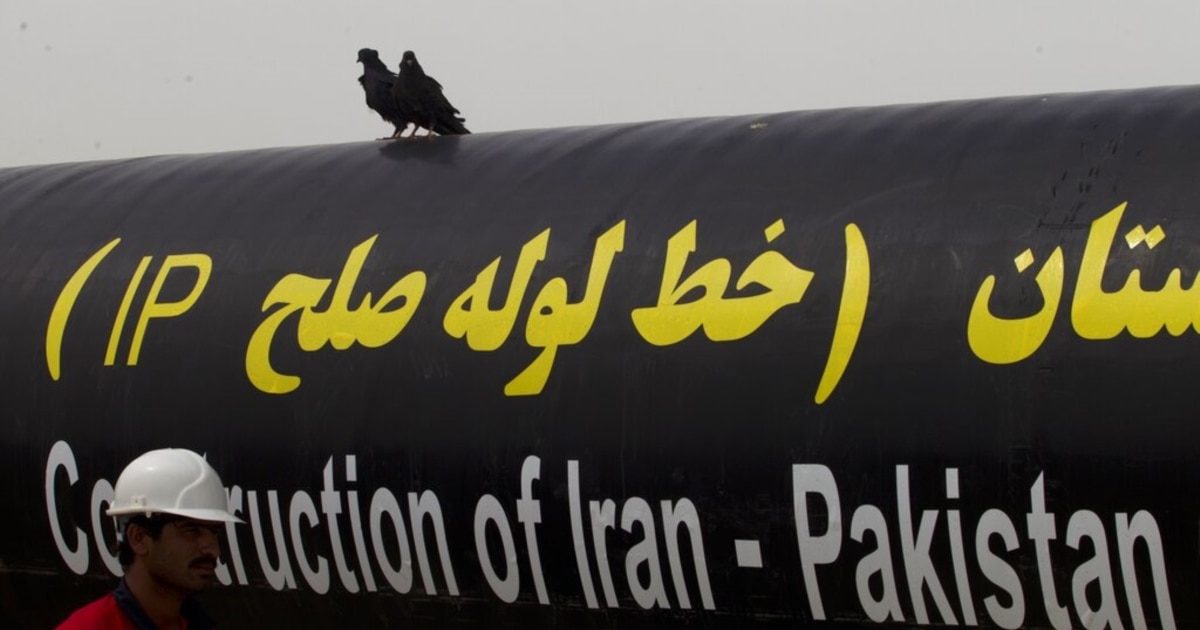
Parallely Iran is pursuing the Iran-Pakistan pipeline case
 www.voanews.com
Pakistan Renegotiates Costly Contracts With 5 Private Power Producers
Similar deals with other Independent Power Producers, including some set up under CPEC, are in the pipeline. Will China agree?
thediplomat.com
How this achieved is described in this FT article, basically Pak Army behaved like a Mafioso and pressured the companies to end the deal:
Pakistan security services pressured utilities over government power deal
Pakistan’s powerful security services used heavy pressure to coerce five local utility companies to end electricity supply contracts with the government early, according to people familiar with the talks.
Pakistan’s power ministry has said agreements that were announced on Thursday to end the contracts will save the cash-strapped government Rs411bn ($1.48bn) and help it cut electricity prices for households and businesses.
Prime Minister Shehbaz Sharif’s office said the power companies had “prioritised national interest over personal interest” and “voluntarily agreed” to terminate their contracts.
But energy sector businesspeople said the agreement with the five publicly listed “independent power producers” followed weeks of pressure from security services.
“We will go to any measure even beyond our imaginations to get the issue settled,” one military officer told an energy executive in a text message seen by the Financial Times. “Time has come to give a final blow to such IPPs.”
Senior executives were called to meetings with senior security officials, according to three people in the energy industry familiar with the conversations. Nadeem Anjum, head of the Inter-Services Intelligence, Pakistan’s powerful spy agency, attended some of the meetings before he retired in late September, they said.
One businessman involved in the process said the talks had been more an “execution than a negotiation”. Security service and government officials threatened to investigate energy investors’ ventures in other sectors if they did not comply with the government’s demands, said the businessman, who like others familiar with the talks asked not to be identified because of their sensitivity.
“Coercion and threats worked. At the end, all sponsors and investors are human and take decisions to ensure their physical and business interests’ wellbeing,” he said.
“The negotiations took place in a cordial and constructive environment, and the allegations of harassment are completely unfounded and baseless,” Pakistan’s power ministry said in statement. The Pakistan Armed Forces also denied any use of threats or intimidation.
The share prices of the five utilities slumped over the past month as investors anticipated the premature demise of their contracts.
Hub Power Company, the country’s largest energy producer, agreed to end early a contract under which the government had committed to buy electricity from one of its power plants until 2027.
In a statement to Pakistan’s stock exchange on Thursday, Hub Power, which is also a partner for a number of Chinese ventures in the country including electric vehicle giant BYD, said its decision was made “in the greater national interest”.
By close of trade on Friday, shares in Hubco had fallen more than 30 per cent since September 18, while those in Lalpir Power, another utility that agreed to end its contract early, were down 32 per cent.
In order to end widespread electricity shortages a decade ago, the Pakistani government used promises of sovereign-backed, dollar-indexed returns as well as purchase commitments to attract billions of dollars from lenders into the country’s power sector.
The move eased crippling blackouts. However, power tariffs in Pakistan have more than doubled over the past three years, as the heavily indebted government cut subsidies and passed capacity payments for about 40,000MW of installed generating capacity — much of it sitting idle — on to consumers.
The surge in electricity bills to some of the highest levels in the region turned independent power producers into public villains and spawned protests demanding their lucrative contracts be cancelled.
In August, Sharif appointed a task force co-ordinated by a military general to find solutions to the country’s spiralling power costs.
Awais Leghari, Pakistan’s power minister, told the Financial Times that the government and the power companies held multiple talks to revise the terms of the agreements and to take into account the companies’ objections.
There was a shared understanding between the parties that a solution was needed “to keep the entire power sector from going bankrupt”, he said, adding: “In spite of the termination of the contracts, they [the power companies] will have still made far higher returns than they would have in any other country.”
He has said the government is still negotiating with other power producers to revise their contracts.
Power minister Awais Leghari said the government and companies agreed that a solution was needed ‘to keep the entire power sector from going bankrupt’ © Salahuddin/Reuters
The tough tactics are the latest sign of the creeping influence of Pakistan’s military in managing the crisis-stricken country’s turbulent economic affairs, analysts say.
“Power sector debts are ruining the country’s finances . . . and the military didn’t trust that the civilians, with their own ties to the power industry, could get a deal done,” said Ayesha Siddiqa, author of Military Inc, a book on the military’s business affairs, and a senior fellow at King’s College, London.
But analysts warned the state’s approach risked deterring investors from taking part in the government’s planned privatisation of Pakistan’s debt-laden flag-carrier airline and power distribution companies.
“This gain has come at the cost of breaking investors’ trust,” said Uzair Younus, a principal at The Asia Group consultancy in Washington, adding he believed the savings would be much less than the government expected.
“However, the military will chalk this up as a success, meaning that they’ll increase their interventions even more in the months to come,” Younus said.
Pakistan security services pressured utilities over government power deal
Talks that led to expected state savings of nearly $1.5bn described as ‘more an execution than a negotiation’
Now Germans (minority stakeholder in one of the company) are complaining about the new deal to terminate initial IPP agreements saying they were coerced and not sufficiently compensated:
Deals with IPPs: Govt faces backlash from foreign govts
ISLAMABAD: The government has reportedly started receiving disturbing messages from different foreign governments over ‘one-sided’ deals with some Independent Power Producers (IPPs) through the energy task force, well-informed sources told Business Recorder.
Sources said the German government has conveyed reservations of M/s Rousch Power Project Limited (RPPL), a power company owned by the family of former Minister Commerce and Industries Abdul Razak Dawood.
Under the Negotiated Settlement Agreement (NSA) with M/s Rousch Power, in addition to the outlined principles the following was agreed: (i) Being on BOOT basis, the Company will transfer the Complex to Government of Pakistan or its designated entity at one USD which will be paid in equivalent PKR at the prevailing exchange rate; (ii) the Company will be paid Rs 5.5 billion in lieu of OFME period due to early termination; and (iii) the Company will be paid Rs 2.8 billion for preservation of the Complex till the transfer to government of Pakistan or its designated entity.
According to sources, Georg Klussmann, Head of Division for Pakistan at German Federal Foreign Office, in a communication with Pakistan’s Embassy in Germany stated that German Government remains concerned about the manner of the negotiations with RPPL and shareholder i.e. Siemens.
M/s Siemens views the Settlement Agreement as unacceptable to foreign investors in its present form but is willing to negotiate in good faith in order to come to a resolution.
“Berlinis concerned that the protracted matter may overshadow future bilateral relations. Germany is aware of the risk this matter poses to the trust of German enterprises and investors and thereby broader Pakistan-German business relations,” the sources continued.
German side reiterated previous concerns about negotiations in connection with RPPL and sought intervention from decision-makers, the sources said, adding that Pakistan’s Charge d’Affaires in Berlin has proposed further engagement with German side to reach an amicable solution.
Deals with IPPs: Govt faces backlash from foreign govts
Sources say German government has conveyed reservations of M/s Rousch Power Project Limited (RPPL), a power company owned by the family of former Minister Commerce and Industries Abdul Razak Dawood
www.brecorder.com
Parallely Iran is pursuing the Iran-Pakistan pipeline case
Pakistan hires 2 law firms to fight Iran's pipeline delay claim
Islamabad is trying to avoid a hefty penalty for delaying the project
www.voanews.com


