
I said the same thing a few days on another thread. Pralay is cheaper and faster than brahmos, and carries a bigger warhead. Pralay, along with Nirbhay and Pinaka should be our bulk strike options, where as brahmos can act as tip of the spear for DEAD/HVTs, assuming it remains non-interceptable.Say no to BrahMos. Its cost north of 11 million.
Anyways, in land attack for stationary target, a quasi ballistic missile like Pralay is equally hard to intercept as BrahMos.
Russo-Ukrain war have show that Iskandar is extremely hard to intercept.
We better focus on Pralay insted of money pit BrahMos
IMO, no new BrahMos missiles should be bought for hitting stationary target, and may be only navel use justify its stupidly high cost(coastal batteries and in ship VLS).
Pinaka Multi Barrel Rocket Launching System
- Thread starter Gautam
- Start date
You are using an out of date browser. It may not display this or other websites correctly.
You should upgrade or use an alternative browser.
You should upgrade or use an alternative browser.

Indeed. If calculated for this version, the cost in USD comes out around 10.8 million USD.
Drones, Missiles, Radars, Fighter jets: Indian armed forces to get nearly 1 lakh crore infusion for game-changer tech
The Cabinet Committee on Security approved several major defense deals, worth over Rs 92,000 crore, to strengthen the armed forces. Hindustan Aeronautics Limited (HAL) will upgrade Su-30MKI fighter jets, incorporating new radars, mission control systems, and weapon systems. The Indian Navy will...m.economictimes.com
Dollar to inr was around 82-83 , it was 2024, which was above 10 million in deb 2024, obv its cost now is easily be over 11 million.
View attachment 52283
I wonder what the package included. The lot ordered in 2022 was reported to cost around 5 million. It was also for the IN.

For the first time, evidence from the Ministry of Defence (MoD) reveals that the latest and most advanced variant of one of India’s most closely-guarded weapon systems – the indigenous, dual-role, extended-range BrahMos cruise missile – works out to about Rs 34 crore ($4.85 million) each.
On Thursday, the MoD announced that the navy had ordered the ship-borne version of the supersonic BrahMos “at an overall approximate cost of ₹1,700 crore under the Buy-Indian category.”
The announcement revealed that the BrahMos missile systems being acquired were “dual role capable,” meaning that they could destroy targets on land, while also having the ability to strike enemy warships.
The MoD did not reveal the number of missiles procured through the latest contract. However, this information was inadvertently revealed through an official MoD photograph that accompanied the announcement.

I don't think the price would dramatically increase by more than 100% in just 2 years. 2024 deal probably included some support systems as well. My guess it would be now 5.5-6 million $ probably..Indeed. If calculated for this version, the cost in USD comes out around 10.8 million USD.
I wonder what the package included. The lot ordered in 2022 was reported to cost around 5 million. It was also for the IN.
For the first time, evidence from the Ministry of Defence (MoD) reveals that the latest and most advanced variant of one of India’s most closely-guarded weapon systems – the indigenous, dual-role, extended-range BrahMos cruise missile – works out to about Rs 34 crore ($4.85 million) each.
On Thursday, the MoD announced that the navy had ordered the ship-borne version of the supersonic BrahMos “at an overall approximate cost of ₹1,700 crore under the Buy-Indian category.”
The announcement revealed that the BrahMos missile systems being acquired were “dual role capable,” meaning that they could destroy targets on land, while also having the ability to strike enemy warships.
The MoD did not reveal the number of missiles procured through the latest contract. However, this information was inadvertently revealed through an official MoD photograph that accompanied the announcement.
Yep, I am pretty sure that is a package cost or could be program unit cost if its a new Block. The package costs include integration, long-term maintenance spares, and specialised storage infrastructure. The flyaway cost for the missile should not have an erratic jump in 2 years. Cannot comment on the flyaway cost as unlike the Business Standard article, I could not find one that specifies the unit cost. It most likely hovers around a similar range as before.I don't think the price would dramatically increase by more than 100% in just 2 years. 2024 deal probably included some support systems as well.
Last edited:
So for clarification - This is a vast simplification of the deal where the cost has been spread to the missile itself. This never happens as the flyaway cost of the unit is calculated using a separate BOM. The BOM for the missile does not include services and support infrastructure. The missile is most likely costing MoD a similar price per unit as early 2020s.Indeed. If calculated for this version, the cost in USD comes out around 10.8 million USD.
I wonder what the package included. The lot ordered in 2022 was reported to cost around 5 million. It was also for the IN.
Be like the chad French poilus, who would gladly pay multiple times more for a domestic product just to support their own country, rather than the virgin Indian import bahadurs, who would rather pay more for "foren maal" instead of buying domestic.Time to Stop Mockery of Atmanirbharta in Defence
Post-Operation Sindoor, the armed forces noted some gaps in the capabilities required for a short, sharp conflict. Accordingly, they began scouting for platforms to address the deficiencies, despite some products failing to make the mark during last year’s war with Pakistan.
Provisions under the Emergency Procurement (EP), granted by the government, address immediate requirements and seemed to work fine for a couple of years, from 2022-23 until some well-connected firms started importing designs and ‘white labelling’ them as indigenously made platforms.
For instance, a recent EP procurement case has drawn heavy criticism from the Indian Army for showing undue haste.
As Swarajya magazine reported: “On 23 May 2026, Defence Minister Rajnath Singh and the then Chief of Defence Staff General Anil Chauhan inaugurated the 200-acre Nibe Defence manufacturing complex at Shirdi. Pride of place at the event went to the Suryastra Universal Rocket Launcher, the platform for which the Indian Army has just signed an emergency procurement contract worth Rs 292.69 crore for long-range precision rockets at 150 and 300 kilometres.”
Speaking to BharatShakti, defence sources have flagged several aspects that point to what is derogatorily referred to as ‘screwdriver giri’ (meaning assembled only in India, with hardly any value addition to the imported platform). The technology, they say, is definitely not Indian.
What has further evoked surprise is the speed with which the platform has been delivered. As military officials point out, the entire process was completed in less than six months. The contract was apparently signed in January 2026. The flight test of the system was conducted at the Integrated Test Range (ITR), Chandipur, on 18-19 May by the DRDO, and the first lot of the rocket launchers was flagged off on 23 May, perhaps an Indian record for procurement! There is no information on whether user trials, which usually follow a DRDO-conducted test, were carried out by the Indian Army.
Now, less than a month later, sources say, in one of the four test flights carried out on 18-19 May, the missile (called Predator Hawk in Israel) broke into pieces in less than 15 km at a height of 7 km minutes after the launch, when its claimed range is in the vicinity of 300 km. Moreover, DRDO officials say they are not privy to the telemetry data from these tests, as they did not carry out the process. The question is: who was processing the data, then?
That and other troubling questions (what was the compulsion in procuring a basic system in such a great hurry, and if the cost of each rocket, said to be in the vicinity of Rs 14 crore, apart), it must be noted, of course, that this may not be the only case where the manufacturers have been economical with the truth.
The case also highlights the disincentivisation of other defence firms in India, which are willing to invest money and time in research and development to create their own IP for defence platforms.
There is also a risk in following this shortcut in inducting white-labelled goods into the military in the current, uncertain global environment. Just as the United States government ordered Anthropic to withdraw its most powerful artificial intelligence models, there is every possibility of a foreign OEM abruptly cutting off supply in crunch situations.


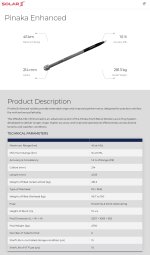



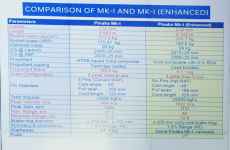


Defence Research & Development Organisation (DRDO) conducted a successful flight-test of Pinaka Long Range Guided Rocket (LRGR) at the Integrated Test Range (ITR), Chandipur on July 08, 2026. The rocket was tested for a user defined minimum range of 60 kms. Demonstrating all in-flight manoeuvres as planned, the LRGR impacted on the target with textbook precision exactly following the predicted trajectory. All the deployed range instruments tracked the flight throughout its trajectory.

Second test for the LRGR. The earlier one was in Dec, 2025.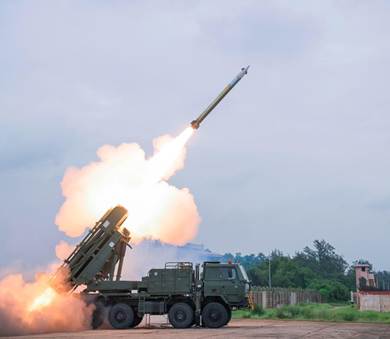
Defence Research & Development Organisation (DRDO) conducted a successful flight-test of Pinaka Long Range Guided Rocket (LRGR) at the Integrated Test Range (ITR), Chandipur on July 08, 2026. The rocket was tested for a user defined minimum range of 60 kms. Demonstrating all in-flight manoeuvres as planned, the LRGR impacted on the target with textbook precision exactly following the predicted trajectory. All the deployed range instruments tracked the flight throughout its trajectory.
ELRGR - Extended Long Range Guided Rocket - 200 to 300km range - mentioned in the last section of video

Is there any info on the terminal velocity of these or any other pinaka varients(guided/LRGR) ?
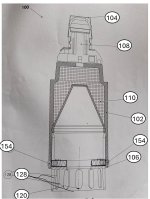

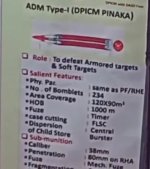
Attachments


Are these guys talking about Pinaka Extended Long Range Guided Rocket.
Last edited:

Seems new?
ELRGR is in a good stage, 370mm rocket motor diameter
Are these guys talking about Pinaka Extended Long Range Guided Rocket.
Earlier plans showed only up to 300mm:
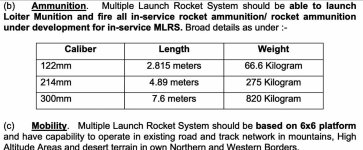
IMHO:
LRGR (300mm) is equivalent to EXTRA
and ELRGR (370mm) is equivalent to Predator Hawk
I wonder how much the French refusal played into accelerating it...
Last edited:
Basically Pinaka Mk4, 370mm calibre rocket with a range of 300km.
ELRGR is in a good stage, 370mm rocket motor diameter
Are these guys talking about Pinaka Extended Long Range Guided Rocket.
Interesting article from AD.

 alphadefense.in
A range of around 250–300 km places such a weapon in a very different operational category.
At approximately 30–50 km, rocket artillery is primarily a tactical battlefield fire-support system.
At 100–120 km, it becomes a deep tactical fires capability.
At around 250–300 km, it begins to overlap with the deep-strike mission traditionally associated with tactical ballistic missiles.
This distinction is important because rocket artillery can potentially provide a relatively mobile and scalable precision-fire capability without requiring every target to be engaged by a much more expensive missile.
India’s Long-Range Guided Rocket: The Next Evolution of Pinaka - AlphaDefense.in
India’s rocket artillery capability is entering a new technological phase. The evolution of the Pinaka family has progressively moved from…
alphadefense.in
A range of around 250–300 km places such a weapon in a very different operational category.
At approximately 30–50 km, rocket artillery is primarily a tactical battlefield fire-support system.
At 100–120 km, it becomes a deep tactical fires capability.
At around 250–300 km, it begins to overlap with the deep-strike mission traditionally associated with tactical ballistic missiles.
This distinction is important because rocket artillery can potentially provide a relatively mobile and scalable precision-fire capability without requiring every target to be engaged by a much more expensive missile.
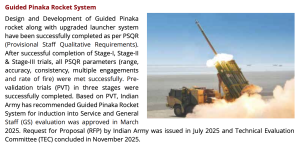


So Armenia is the first customer of guided pinaka..
Another feather in the hat of aand forces.
