
Footage of the new Russian "Plastun-TT" army all-terrain vehicle. The "Plastun-TT" is a two-section wheeled all-terrain vehicle (ATV) developed by the company "Russian ATVs Plastun" (Russkie Vezdekhody Plastun); it is designed for transporting personnel and cargo, evacuating the wounded, and mounting various weapons. There are three versions of the vehicle—the "Plastun-T," "Plastun-TT," and "Plastun-TTM"—available in various configurations. The vehicle is built without doors, allowing a five-person assault team to exit quickly. If necessary, the vehicle can be fitted with standard 6.3 mm thick assault armor panels. Test results showed the "Plastun-TT" performing better than the popular UAZ "Bukhanka" vehicles; high reliability was also noted. The "Plastun-TTM" army transport version utilizes an engine and some transmission components from the "Niva" vehicle, along with axles from "Gazel" trucks. The "Plastun-TTM" has a payload capacity of up to 2,000 kg and a top speed of 100 km/h. It can climb slopes exceeding 30 degrees and ford water obstacles up to 80 cm deep.
Russian Military Technology : Updates and Discussions
- Thread starter Ashwin
- Start date
You are using an out of date browser. It may not display this or other websites correctly.
You should upgrade or use an alternative browser.
You should upgrade or use an alternative browser.

The Kalashnikov Group has upgraded the Russian Vikhr anti-tank guided missile, adapting it to engage UAVs. The Vikhr missile is successfully deployed on Russian Ka-52 helicopters. According to the group's head, Alan Lushnikov, the missile was upgraded because armored vehicles are being used less frequently in combat operations. The missile has been fitted with a proximity fuse and is now used against aerial targets. The Vikhr is guided by a laser beam, with the operator providing target designation.
Russia has ceased production of the "Geran-3" kamikaze drone, switching instead to the "Geran-4." Ukrainian media reported this, citing Ukrainian military intelligence. While "Geran-3" jet-powered kamikaze drones remain in use, they are drawn from existing stockpiles; new units are no longer being manufactured. The "Geran-3" served as a transitional model between the piston-powered "Geran-2" and the jet-powered "Geran-4." Based on the "Geran-2" design, the "Geran-3" was equipped with a Telefly JT80 jet engine, enabling flight speeds of up to 370 km/h. The "Geran-4" features the more powerful Telefly LX-WP-160 engine, resulting in increased flight range and cruising speed.
Footage showing the launch of "Forpost" strike UAVs belonging to the Russian Pacific Fleet's naval aviation. During fleet exercises, the "Forpost" UAVs detected simulated enemy amphibious assault ships and relayed their coordinates for strikes by "Oniks" and "Uran" missiles.

The Russian company Aqua-Volga has unveiled the "Avatar 001" unmanned catamaran. According to the developers, the "Avatar 001" is difficult to sink thanks to its specialized hull design and internal architecture. The "Avatar" unmanned vessel can be used for river monitoring, cargo delivery, and patrolling waterways. Currently, it is controlled via a radio link and utilizes GPS/GLONASS navigation, with the capability to return to base autonomously. The vessel is constructed using 90% Russian-made components. The "Avatar" is produced in various versions; technical specifications are displayed on the screen. The AVATAR 01.4 model weighs 350 kg and reaches speeds of up to 20 km/h. It has a payload capacity of 350–500 kg, an operating time of up to 20 hours, and a range of up to 30 km. The propulsion system consists of either a gasoline or electric engine with a power output of up to 8 kW. Prices for "Avatar" vessels start at $13,000.
Russian drone operators have showcased a new version of the BM-35 UAV powered by a jet engine; previously, the drone was equipped with a piston engine. It remains unclear whether the UAV will continue to be produced in two variants, but the emergence of interceptor drones has led other manufacturers to introduce jet-powered UAVs as well. Details about the drone are scarce; it is known to feature a jet engine, a flight range of approximately 200 km, and a 10 kg warhead. The engine is believed to be of foreign manufacture.
Rare footage shows a stationary version of the Russian Pantsir-S1M air defense system mounted on a tower in the Moscow region. The Pantsir system employs four compact TKB-1055 "Gvozd" guided missiles designed to engage drones. Notably, TKB-1055 missiles have even been used to intercept cruise missiles. The Pantsir system also utilizes 57E6 missiles and 30mm 2A38M cannons.
The High Precision Systems holding has delivered a batch of Pantsir-S air defense systems and stationary Pantsir-SMD systems to the Russian Ministry of Defense. Reportedly, the Pantsir systems have undergone successful testing and have been accepted into service by military units. The Pantsir has proven to be one of the most effective means of countering aerial targets. It is worth noting, however, that both the Pantsir and its foreign counterparts struggle to engage small-sized or plastic UAVs.
Rare footage captured by a Russian FPV drone showing the Danish *Stormborn* maritime drone in the Baltic Sea on June 25. The Danish unmanned surface vessel also filmed the drone and the maneuvers of the Russian Project 20380 corvette *Soobrazitelny*.
Exercises focused on repelling an attack by a sabotage and reconnaissance group were conducted by Russia's Baltic Fleet. The drills practiced tactics for countering saboteurs along the Baltic coast in the Kaliningrad region. According to the exercise scenario, an enemy group landed on the coast and advanced inland, launching a nighttime attack on a military facility. The "enemy" attempted to break through to the aircraft parking area by breaching a checkpoint and perimeter fencing at one of the region's airfields.
Rare footage showing missile launches by the Russian S-300V4 air defense system. The S-300V4 entered service in 2014, incorporating a number of technologies from the older and more widely known S-400 air defense system. The S-300V4 complex is designed to defend military and state assets, as well as army formations. The S-300V4 can engage targets at ranges of up to 400 kilometers and altitudes of up to 37 kilometers. In actual combat operations, the S-300V4 successfully shot down Su-27 and Su-24 fighter aircraft at a range of 217 kilometers. It was developed by the Almaz-Antey concern.
S-300V4 Air Defense System — Key Specifications:
Engagement range (aerodynamic targets): up to 400 km (40N6 missile); up to 250 km (48N6DM); up to 100 km (9M83)
Target engagement altitude: 0.025–37 km
Engagement range (ballistic targets): 30 km (9M82), 40 km (9M83)
Ballistic target engagement altitude: 1–25 km
Number of targets engaged simultaneously (by a battalion): 24
Number of missiles guided simultaneously (by a battalion): 48
Firing interval (per launcher): 1.5 sec
Launch preparation time: 15 sec
Transition time from standby to combat mode: 40 sec
Deployment time from march: 5 minutes
Missiles used:
9M83 (light): range up to 75–100 km, speed up to 1,700 m/s, 4 missiles per launcher. 9M82 (heavy) — range up to 100 km, speed up to 2,400 m/s, 2 missiles per launcher.
9M82MV — range up to 350 km, guided warhead, active maneuvering at exoatmospheric altitudes, speed Mach 9.
48N6DM — semi-active radar homing with radio-command correction, speed Mach 7.27, range up to 250 km.
40N6 — range up to 400 km, over-the-horizon trajectory, capable of engaging targets at extremely low altitudes.
Probability of target destruction by a single missile:
"Lance" ballistic missile: 0.5–0.65
Aircraft: 0.7–0.9
"Pershing" missile warhead: 0.4–0.6
SRAM missile: 0.5–0.7
The S-300V4 system comprises:
9S15MD ("Obzor-3") all-round surveillance radar — for detecting aerial targets within a 360° field of view
9S19M1 ("Imbir") programmable-scan radar — for detecting ballistic missile warheads, aeroballistic missiles, and loitering jammer aircraft at ranges of up to 100 km
9S457-2 command post — analysis of the aerospace situation, target allocation, target designation, and combat operations control
9S32M1 multi-channel missile guidance station (MSNR)
9A83M2 launchers — up to six units
9A84-2 launcher-loader units — up to six units
9T82M transport vehicle — for transporting two 9M83M missiles or one 9M82M missile in a transport container
S-300V4 Air Defense System — Key Specifications:
Engagement range (aerodynamic targets): up to 400 km (40N6 missile); up to 250 km (48N6DM); up to 100 km (9M83)
Target engagement altitude: 0.025–37 km
Engagement range (ballistic targets): 30 km (9M82), 40 km (9M83)
Ballistic target engagement altitude: 1–25 km
Number of targets engaged simultaneously (by a battalion): 24
Number of missiles guided simultaneously (by a battalion): 48
Firing interval (per launcher): 1.5 sec
Launch preparation time: 15 sec
Transition time from standby to combat mode: 40 sec
Deployment time from march: 5 minutes
Missiles used:
9M83 (light): range up to 75–100 km, speed up to 1,700 m/s, 4 missiles per launcher. 9M82 (heavy) — range up to 100 km, speed up to 2,400 m/s, 2 missiles per launcher.
9M82MV — range up to 350 km, guided warhead, active maneuvering at exoatmospheric altitudes, speed Mach 9.
48N6DM — semi-active radar homing with radio-command correction, speed Mach 7.27, range up to 250 km.
40N6 — range up to 400 km, over-the-horizon trajectory, capable of engaging targets at extremely low altitudes.
Probability of target destruction by a single missile:
"Lance" ballistic missile: 0.5–0.65
Aircraft: 0.7–0.9
"Pershing" missile warhead: 0.4–0.6
SRAM missile: 0.5–0.7
The S-300V4 system comprises:
9S15MD ("Obzor-3") all-round surveillance radar — for detecting aerial targets within a 360° field of view
9S19M1 ("Imbir") programmable-scan radar — for detecting ballistic missile warheads, aeroballistic missiles, and loitering jammer aircraft at ranges of up to 100 km
9S457-2 command post — analysis of the aerospace situation, target allocation, target designation, and combat operations control
9S32M1 multi-channel missile guidance station (MSNR)
9A83M2 launchers — up to six units
9A84-2 launcher-loader units — up to six units
9T82M transport vehicle — for transporting two 9M83M missiles or one 9M82M missile in a transport container

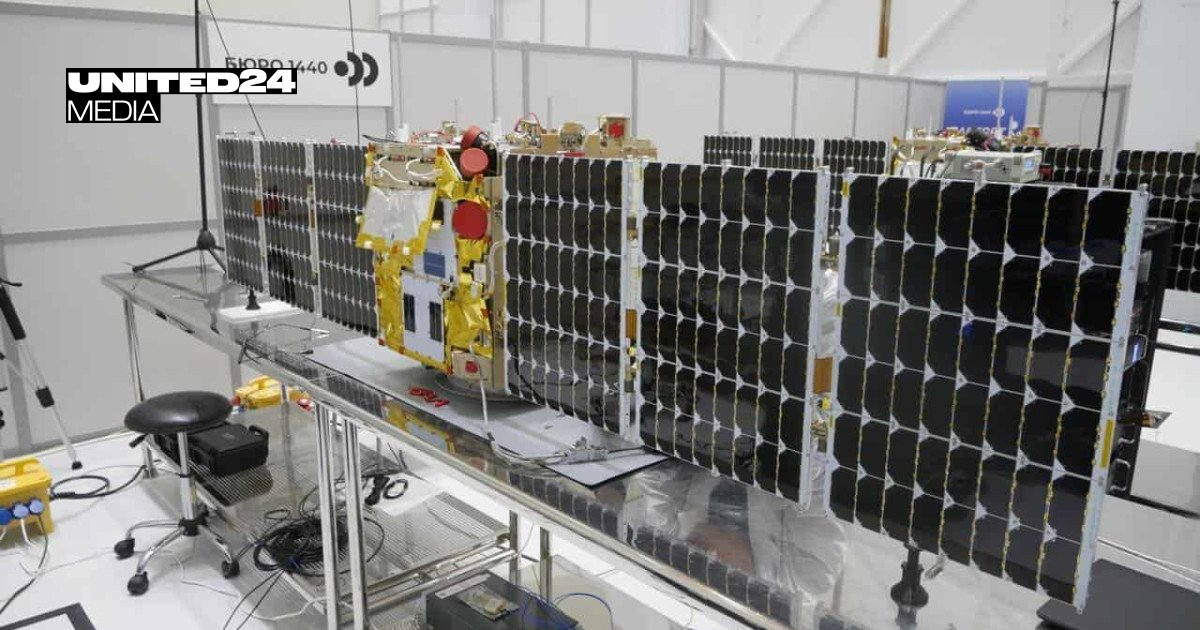
Russia’s Starlink Rival “Rassvet” Is Falling—One Satellite Gone, Two More May Be Next
Technical setbacks and a missile strike on the Progress Rocket Center threaten Bureau 1440's Russia Starlink alternative timeline and launch capacity.
 united24media.com

Footage has been released showing tests of the new Russian "Baryer" laser system, designed to intercept aerial targets. The video demonstrates the laser being tested against a UAV. Technical specifications for the "Baryer" laser air defense system have not been disclosed, and the system's name may change in the future. It is worth noting that the "Baryer" laser system is already in successful operation, protecting a Russian strategic facility from drones. The air defense unit is housed in a container and receives target designation data from an unspecified type of radar. A test engineer for the system stated that the laser requires an engagement time ranging from a few seconds to a minute to disable a drone. The laser system features a high level of automation; it automatically acquires the aerial target and tracks it until it is disabled. The laser's power is sufficient to cause the drone to lose control, trigger the detonation of its warhead, or cause it to crash to the ground.
@randomradio, @Parthu, @Picdelamirand-oil, @Bon Plan, @Amarante
 war-sanctions.gur.gov.ua

The weight of the 3M22 warhead is about 120 kg, which is an extremely small figure for the most expensive missile among all Russian strike weapons. For example, even the small-class cruise missile - “Banderol” has a warhead weighing 150 kg.
*Not so advanced after all.After the starter motor is separated, the main propulsion motor is started. Both engines (boost and propulsion) are solid-fuel.*
The enemy has stated that at certain stages of the flight the missile can reach a speed of Mach 9, however, the currently recorded maximum flight speed of the 3M22 missile does not exceed Mach 6.8 and is not maintained throughout the flight.
The entire tail section of the 3M22 rocket is made of titanium.
Балістична ракета 3М22 "Циркон"
Тисячі електронних компонентів, які мали б покращувати життя та слугувати розвитку, агресори перетворюють на інструменти для вбивств. Їх зброя залежить від іноземних компонентів. Без них вони не можуть продовжувати воювати, окуповувати та вбивати.
war-sanctions.gur.gov.ua

Russian "Supercam S350" and "Knyaz Oleg Veshchy" reconnaissance UAVs have begun to be equipped with a new active protection system designed to counter interceptor drones. When an interceptor drone approaches, the UAV fires a net at it. It is worth noting that interceptor drones can also be equipped with nets; examples of this can be found on the channel.
The Russian army has begun using the new "ROI-F1" anti-aircraft drone, which features a fixed-wing design. The "ROI-F1" is based on the Chinese ZOHD Talon GT Rebel drone. Operated by a pilot, it is successfully used to intercept UAVs, including "Hornet" drones. The drone carries a 0.8 kg warhead and has a foam airframe; it is produced in two versions that differ in speed capabilities. The standard model reaches speeds of up to 140 km/h, while the upgraded version—featuring a new engine and a modified fairing—achieves a top speed of approximately 200 km/h.