
South Korea
- Thread starter RISING SUN
- Start date
You are using an out of date browser. It may not display this or other websites correctly.
You should upgrade or use an alternative browser.
You should upgrade or use an alternative browser.

South Korea is preparing emergency measures to prevent a possible labour strike at Samsung Electronics, the world’s largest memory chip maker. According to Reuters, the South Korean government may even invoke emergency arbitration to stop industrial action that could severely impact the country’s economy and global semiconductor supply chains. Prime Minister Kim Min-seok warned that even a single day of disruption at Samsung’s semiconductor plants could cause direct losses of nearly $670 million. The bigger concern is that semiconductor production lines are extremely sensitive and may take months to fully recover after a shutdown. Samsung accounts for a major share of South Korea’s exports, making the situation critical for the country’s economy. In this video, we explain why the Samsung strike matters, how it could affect AI and global chip markets, and why governments are closely watching the situation. Stay tuned for the latest Samsung and semiconductor industry updates.

Called Off.
South Korea is preparing emergency measures to prevent a possible labour strike at Samsung Electronics, the world’s largest memory chip maker. According to Reuters, the South Korean government may even invoke emergency arbitration to stop industrial action that could severely impact the country’s economy and global semiconductor supply chains. Prime Minister Kim Min-seok warned that even a single day of disruption at Samsung’s semiconductor plants could cause direct losses of nearly $670 million. The bigger concern is that semiconductor production lines are extremely sensitive and may take months to fully recover after a shutdown. Samsung accounts for a major share of South Korea’s exports, making the situation critical for the country’s economy. In this video, we explain why the Samsung strike matters, how it could affect AI and global chip markets, and why governments are closely watching the situation. Stay tuned for the latest Samsung and semiconductor industry updates.

South Korea Unveils $880 Billion AI and Chip Investment Push
Samsung, SK Hynix and Naver back at least 1,350 trillion won for chips and AI data centers.
 finance.yahoo.com
South Korea is preparing a massive AI infrastructure push, with companies including Samsung Electronics (SSNLF), SK Hynix (HXSCL) and Naver (NHNCF) expected to invest at least 1,350 trillion won, or about $880 billion, across chips and data centers. Samsung Group and SK Group plan to build two chipmaking plants each in the southwest, creating a combined 800 trillion won investment aimed at expanding production capacity as AI-driven demand continues to rise. Another 550 trillion won is expected to come from companies including Naver to build 8.4 gigawatts of AI data-center capacity by 2029.
South Korea's SK Hynix launching $28 billion US listing to ride global AI wave
South Korean chipmaker SK Hynix will launch a U.S. listing on Monday to raise about $28 billion, according to regulatory filings, as it capitalises on the global artificial intelligence boom with one of the world's largest new share sales. Ten ADRs will represent one common share and the stock...
finance.yahoo.com
South Korean chipmaker SK Hynix will launch a U.S. listing on Monday to raise about $28 billion, according to regulatory filings, as it capitalises on the global artificial intelligence boom with one of the world's largest new share sales.
Seoul has been investing in better rainfall management systems. AI is increasingly finding use in its local municipalities. SK has been subjected to erratic patterns as climate change continues enlarge the scope of its challenges.
Flooding of low lying urban areas remains a challenge.
Flooding of low lying urban areas remains a challenge.

S. Korea Backs 50 Startups to Develop Military Technologies
South Korea is seeking about 50 industry partners for its “Challenge for All – Defense” open innovation program, increasing support for emerging businesses developing technologies for the defense sector.
 thedefensepost.com
South Korea’s Ministry of SMEs and Startups (MSS) is seeking about 50 industry partners for its “Challenge for All – Defense” open innovation program, increasing support for emerging businesses developing technologies for the defense sector.
The program connects selected firms with other established enterprises to build and validate tactical solutions, supplying up to 100 million won ($67,597) for proof-of-concept projects and prototype development.
They may also qualify for follow-on government research and commercialization programs worth up to 600 million won ($405,582, depending on project requirements.
The selection process includes document screening, one-on-one meetings with the military and suppliers, and an evaluation of proposed collaboration plans before finalists are chosen.
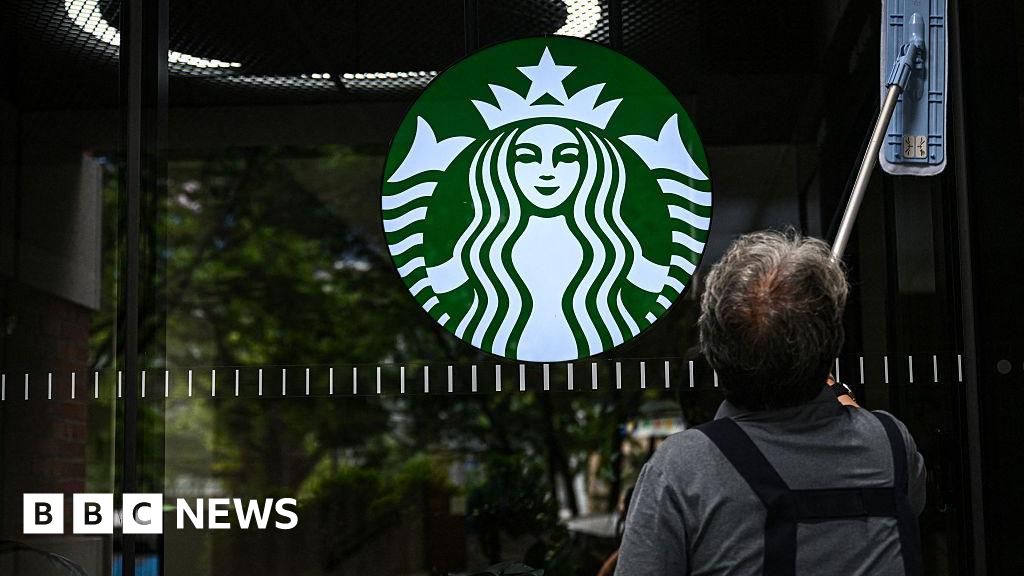
Police raid Starbucks Korea headquarters over 'Tank Day' fiasco
People have filed complaints against Starbucks for allegedly making light of the deadly Gwangju Uprising.
 www.bbc.com
South Korean police have raided the national headquarters of Starbucks over defamation claims surrounding a controversial marketing campaign.
Starbucks Korea had in May launched a coffee tumbler promotion called "Tank Day" on the anniversary of the 1980 Gwangju Uprising, where hundreds were believed to have been killed by military forces.
Many felt the "tank" was a reference to vehicles deployed to crush pro-democracy protesters and the promotion sparked a mass boycott movement.
Starbucks quickly rolled it back, saying it was unintentional but civic groups filed a criminal complaint against the company, demanding the police investigate it for defaming victims of the military dictatorship.
Shinsegae Group, which operates Starbucks in Korea, said it had launched an internal investigation into the campaign and concluded that the mistake was unintentional.
Trump says US scaling back joint military operations with South Korea
Trump cites his "very good relationship" with North Korea's leader in deciding to downsize the exercises.
 www.bbc.com
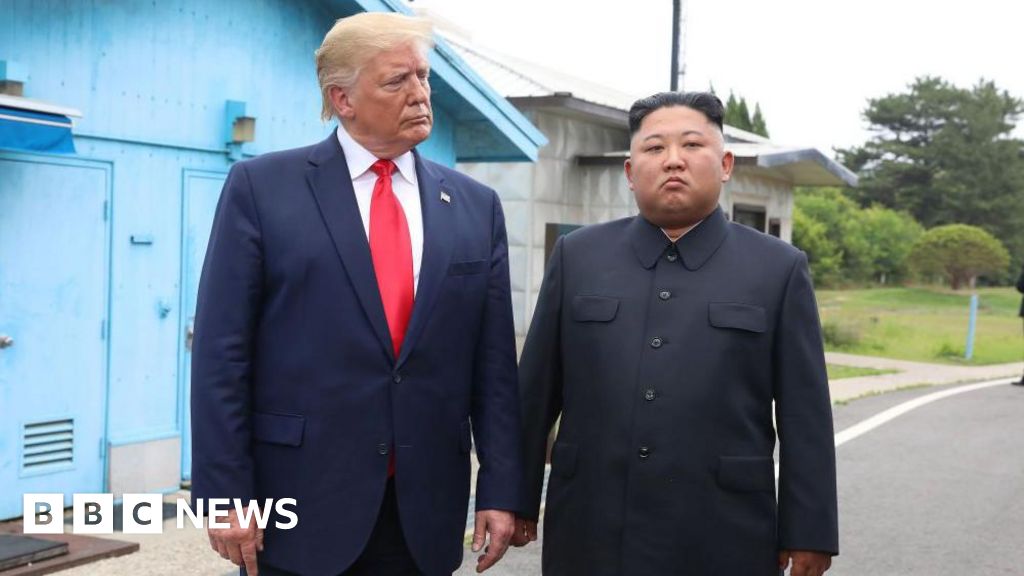
President Donald Trump has said the US will "substantially reduce" joint military exercises with South Korea, citing his "very good relationship" with North Korea's leader Kim Jong Un.
He also noted on Truth Social that South Korea had recently declined to join the US in the "denuclearisation" of Iran.
"These exercises are not only costly, with much of these costs paid for by the United States of America (as usual!), but send a signal that is totally inappropriate and hostile," Trump posted.
Seoul said it was reviewing Trump's comments, adding it hoped a favourable relationship between Washington and Pyongyang could lead to meaningful talks. Pyongyang has not yet commented.
Earlier, South Korea said the drills with the US would proceed "as scheduled".
It comes after North Korea this month conducted ballistic missile tests banned by the United Nations.
Trump said in his social media post on Sunday that it was "too late to cancel", as the US and South Korea were due to start their annual military exercises on Monday.
He added: "While somewhat unrelated (?), I recently asked the President of South Korea if they would like to join us in the Denuclearization of the Islamic Republic of Iran, and they said, 'No thanks!'"
Trump's announcement came less than 24 hours after he posted an old photograph of himself and Kim from 2019, writing the two were great friends "despite the unfriendly look on this particular picture".
In its statement, South Korea's presidential Blue House said it would continue diplomatic consultations on US-Korea military cooperation related to the Strait of Hormuz, while discussing details on joint military drills with the United States.
South Korea is currently caught in a severe diplomatic and security dilemma between US military pressure and Iranian threats of “serious consequences" over the ongoing US-Iran conflict.
As Washington demands that its allies back its maritime blockade in the Strait of Hormuz, Seoul is trying to walk a tightrope to safeguard its economy, energy security, and long-standing alliances, according to Al Jazeera and other reports.
Iran’s Foreign Ministry and security officials have explicitly warned that any South Korean military involvement in the Strait of Hormuz—even for maritime security—will be treated as direct support for US aggression. Tehran has threatened to target South Korea’s economic and military assets in the Persian Gulf if Seoul capitulates to US demands, say reports.
South Korea is highly vulnerable to the conflict. It relies on the Strait of Hormuz for 61% of its crude oil imports. Dozens of South Korean ships have already faced being stranded or rerouted due to closures in the waterway.

Inside South Korea’s university programs offering a direct route to Samsung and SK Hynix
Companies are helping universities develop courses, provide financial support and create pathways through which qualifying students can join them.
AI disruption has led several prominent entrepreneurs to question the value of traditional college graduate programs. But top South Korean tech companies continue to ascribe value to degrees.
In fact, they are helping craft university courses that fast-track entry into the AI sector, with some offering guaranteed jobs to graduates.
Jung Chae-rin is a second-year student at Sogang University’s Department of System Semiconductor Engineering, a four-year degree established in partnership with memory-chip maker SK Hynix.
Her course comes with a guarantee of employment in SK Hynix upon graduation.
At Sungkyunkwan University, or SKKU, third-year student Kim Tae-rin is at the Department of Intelligent Software, a five-year integrated bachelor’s and master’s program in AI software, created in partnership with Samsung Electronics.
Her route also increases the chances of employment, but she must first clear a separate Samsung hiring process.
The corporate programs belong to a category within South Korea’s university system known as “contract departments.” Companies help universities develop courses, provide financial support and create pathways through which qualifying students can join them.
SK Hynix has partnerships with several South Korean universities including Korea University and Hanyang University.
Rival Samsung Electronics collaborates with institutes such as Yonsei University, the Korea Advanced Institute for Science and Technology, as well as the Ulsan Institute of Science and Technology.
Kim and Jung told CNBC that these programs offered them financial support and greater certainty of securing a job. For the companies, the programs create a pipeline of skilled workers.
Data from Seoul-based Jongro Academy showed that the number of applicants to contract departments with tie-ups to large companies increased by more than 38% from a year earlier, which also include courses linked to companies such as automaker Hyundai Motor and mobile network operator LG Uplus.
For those looking to ride the AI boom, these programs are particularly lucrative, as Samsung and SK Hynix offer its workers massive pay packets.
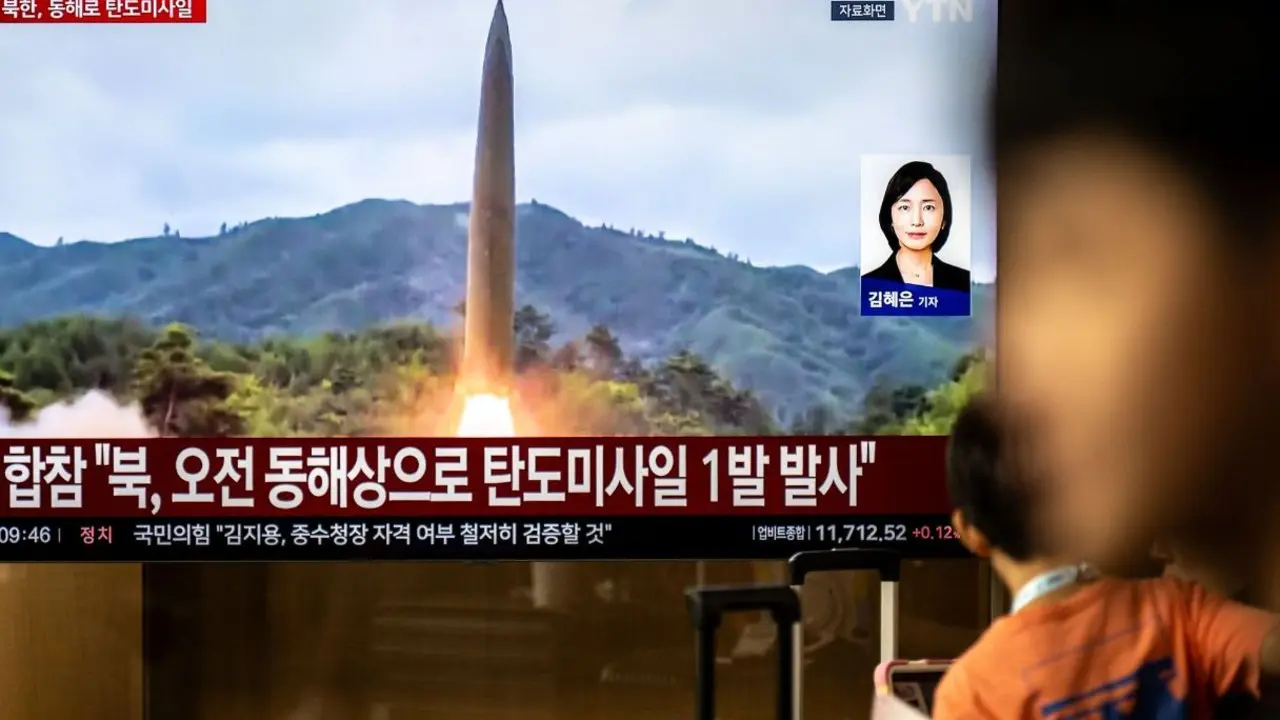
North Korea fires missile after South Korea demands apology over DMZ landmine blast
North Korea fired at least one ballistic missile, Seoul`s military said on Saturday, after blaming Pyongyang for an explosion in the Demilitarised Zone (DMZ)
 www.mid-day.com
North Korea fired at least one ballistic missile, Seoul's military said on Saturday, after blaming Pyongyang for an explosion in the Demilitarised Zone (DMZ) that wounded three South Korean soldiers.
Seoul's military demanded an official apology over the landmine blast, but Pyongyang denied responsibility, calling South Korea “despicable”.
Seoul and the US-led United Nations Command found that last month's explosion inside the DMZ — the heavily mined buffer zone dividing the two Koreas since their 1953 armistice — was caused by North Korean mines laid on the South Korean side of the border.
Early Saturday, “our military detected a ballistic missile launched from the Wonsan area of North Korea towards the East Sea,” Seoul's Joint Chiefs of Staff said, referring to the body of water also known as the Sea of Japan.
“South Korea, the US and Japan are maintaining a robust defence posture through close information sharing regarding North Korean ballistic missiles,” it added.
South Korea's dovish President Lee Jae Myung urged Pyongyang on Thursday to return to dialogue, despite his military demanding an apology a day earlier.
Pyongyang's military has laid mines and built anti-tank barriers along the frontier as part of efforts to permanently seal it off since Kim Jong Un designated South Korea his country's “principal enemy” in 2024.
The mines responsible for last month's blast were believed to have been laid as part of Pyongyang's border fortification work, according to South Korean Defence Minister Kang Shin-chul.
Unification Minister Chung Dong-young proposed talks with Pyongyang on Friday to address issues along the border.
Kim Yo Jong, the powerful sister of North Korea's leader, called Seoul “despicable” later on Friday and again denied that Pyongyang was behind the blast.
She also ridiculed Lee's latest overture, calling it “the climax of the farce that everyone should watch”.
In a separate report carried by Pyongyang's official Korean Central News Agency, Kim Yo Jong was quoted as saying it was “quite ridiculous” for South Korea to demand an apology.
She also dismissed Minister Chung's overture for talks as a “wild dream and unilateral jargon”.
The flare-up comes at a sensitive time.
US President Donald Trump's recent overtures to Pyongyang have raised concerns that Seoul, an ally of Washington, could be sidelined in potential nuclear talks involving North Korea, which is backed by Russia as well as China.
South Korea's opposition People Power Party on Friday accused Lee of failing to criticise Pyongyang when warranted, even as he takes a hard line on Ukraine for disclosing the confidential transfer of North Korean prisoners of war.
“South Korean soldiers have been injured, and far from receiving an apology, we have been mocked by North Korea,” the opposition party said in a statement.
“We fail to see how selectively turning a blind eye to North Korea serves South Korea's dignity or the safety of its people.”
South Korean fuel shipments help Russia ease fuel crisis during Ukraine strikes | The Jerusalem Post
"These shipments began precisely when Ukrainian strikes on Russian oil refineries were reducing processing volumes and creating a fuel shortage within Russia."
 www.jpost.com
Russia imported more than 176,000 tons of petroleum products from South Korean ports in July and August, easing the impact of a fuel crisis caused by Ukrainian drone strikes on Russian oil refineries, Ukraine's top sanctions official said on Tuesday.
The supplies from South Korea made up 31% of Russian fuel imports in August, according to the official, Vladyslav Vlasiuk, citing what he said were reports that tankers, including ones under Western sanctions, were used for the deliveries.
"These shipments began precisely when Ukrainian strikes on Russian oil refineries were reducing processing volumes and creating a fuel shortage within Russia," Vlasiuk, presidential commissioner for Ukrainian sanctions policy, wrote on Facebook.
His comments come amid a diplomatic row between Seoul and Kyiv that erupted last month when Ukrainian President Volodymyr Zelensky announced the transfer of two North Korean prisoners of war to South Korea, a step that Seoul says was meant to stay secret.

North Korea fires multiple ballistic missiles, the latest in a streak of weapons tests
South Korea’s Joint Chiefs of Staff did not immediately specify how many missiles they detected or how far they flew.
 www.nbcnews.com
North Korea on Monday fired multiple ballistic missiles toward its eastern waters, South Korea’s military said, adding to a recent streak of weapons demonstrations that has heightened tensions during a prolonged freeze in diplomacy.
South Korea’s Joint Chiefs of Staff said the missiles were fired from an area around the North Korean capital of Pyongyang, where the country has used its airport as a major launch site in recent years. The joint chiefs did not immediately specify how many missiles they detected or how far they flew. Japan’s Defense Ministry said it detected at least two missiles and assessed that the weapons landed in waters outside the country’s exclusive economic zone.
The launch came days after South Korea on Friday flight-tested its first domestically developed hypersonic weapon, designed to fly at least five times the speed of sound and evade missile defense systems, which President Lee Jae Myung described as an important step in strengthening the South’s conventional defense capabilities.