

The coming Global Backlash against China
- Thread starter BMD
- Start date
You are using an out of date browser. It may not display this or other websites correctly.
You should upgrade or use an alternative browser.
You should upgrade or use an alternative browser.
Free Hong Kong Road: Budapest renames streets to frustrate Chinese campus plan
Budapest has renamed streets around the planned site of a leading Chinese university campus to protest an “unwanted” project forced on it by the government of the prime minister, Viktor Orbán.Four street signs at the site now bear the names Free Hong Kong Road, Uyghur Martyrs’ Road, Dalai Lama Road, and Bishop Xie Shiguang Road, the last referring to a persecuted Chinese Catholic priest.
“We still hope the project won’t happen but if it does then it will have to put up with these names,” the city’s mayor, Gergely Karacsony, told a joint press conference with the district mayor, Krisztina Baranyi.
Currently derelict, the area is to house Fudan university’s first European campus in a 500,000 sq metre (5m sq ft) complex by 2024, according to a deal signed between Hungary and the Shanghai-based university’s president.
But the sprawling project has fed growing unease about Hungary’s diplomatic tilt from west to east and its soaring indebtedness to China.
Leaked internal documents revealed that China is expected to give a €1.3bn ($1.6bn) loan to cover most of the estimated €1.5bn costs.
“We don’t want the elite and private Fudan university here at the expense of Hungarian taxpayers,” said Karacsony.
The liberal mayor has previously blasted “Chinese influence-buying” in Hungary and urged Orban to honour a previous pledge not to force projects on the capital against its will.
A city-wide “consultation” to canvass the population’s opinion on the project begins on 4 June, said Baranyi.
https://www.theguardian.com/politic...man-rights-issues-at-orban-meeting-says-no-10
Opinion polls show a majority of Budapest residents oppose the plan.
The government argues that a prestigious outpost of Fudan university would permit thousands of Hungarian, Chinese and other international students to acquire high-quality degrees.
It would also fit in with previously agreed plans to build a “Student City” dormitory project for thousands of mainly Hungarian students at the site, it says, although Karacsony said the Fudan campus would take over most of that project’s area.
Fudan is the latest landmark in Orban’s foreign policy of “Eastern Opening”, which analysts describe as a geopolitical balancing act.
Critics portray the nationalist prime minister as China and Russia’s “Trojan horse” inside the European Union and Nato.
In May Karacsony announced he would run in a primary election organised by an alliance of six opposition parties to select a challenger to Orban at a general election in early 2022.
Polls show the opposition alliance holds a narrow lead over Orban’s ruling rightwing Fidesz party, and that Karacsony is currently the most likely to win the primary which will be held in September.

Free Hong Kong Road: Budapest renames streets to frustrate Chinese campus plan
Uyghur Martyrs’ Road and Dalai Lama Road also adorn Hungary’s capital near project condemned as ‘Chinese influence-buying’

Fail.
 www.yahoo.com
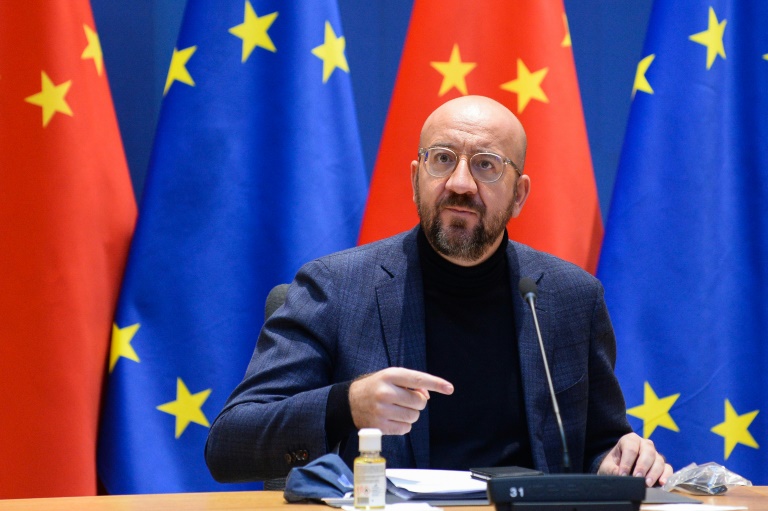
EU chief defends China deal ahead of US summit
One of Brussels' top two leaders has defended the European Union's efforts to reach an investment agreement with China, ahead of summit meetings with US President Joe Biden.

It's called diplomacy,Paddy. If the EU were to agree with everything the US is proposing, they stand the risk of being ridiculed by China & the world for being US's poodle. This is massaging to let people know the EU has spine & for some room to bargain.Fail.
EU chief defends China deal ahead of US summit
One of Brussels' top two leaders has defended the European Union's efforts to reach an investment agreement with China, ahead of summit meetings with US President Joe Biden.
I don't expect you to understand such nuances.
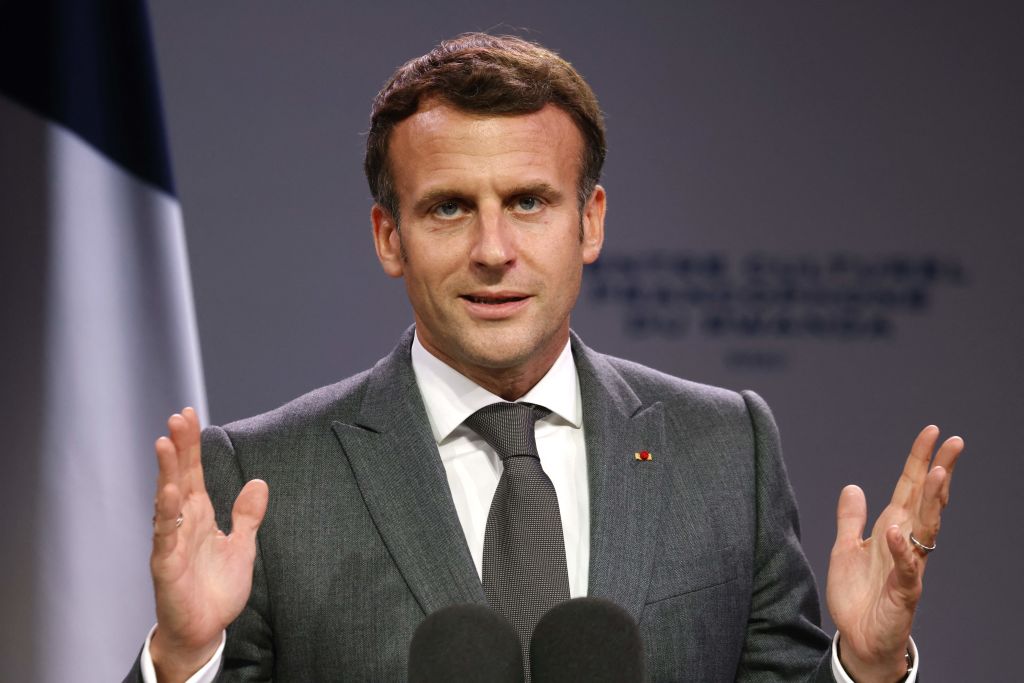
Macron is wrong. Nato must stand up to China
Joe Biden wants to use his visit to Europe for the G7 summit and the Nato meeting to rally democracies to take on the autocratic threat posed by Russia and China. But in a sign of how difficult that will be, Emmanuel Macron made clear last night that ‘the line I’m advocating for France, and
 www.spectator.co.uk

CARBIS BAY G7 SUMMIT COMMUNIQUÉ | The White House
We, the leaders of the Group of Seven, met in Cornwall on 11-13 June 2021 determined to beat COVID-19 and build back better. We remembered everyone


China will bring Macron and some of the other European leaders back to reality.
Anyway the Europeans will have to begin the process of miltarising once again pretty soon, especially the navy. They won't have a choice.
Japan to probe China-funded Confucius Institutes amid propaganda, spy threat
TOKYO - Japan is set to open a probe into the Beijing-funded Confucius Institutes in the country, following warnings from its security partners that the purported cultural centres may be a conduit for Chinese propaganda and even espionage.At the same time, it is toughening visa checks on Chinese students and tightening access to sensitive technology for all researchers, especially those involved in Beijing's Thousand Talents Plan to woo scholars.
"There is growing concern among regions that share common values such as freedom, democracy and the rule of law - including our ally the US as well as in European countries - that the Confucius Institutes should be abolished or be required to fully disclose their operations," Education Minister Koichi Hagiuda told the Diet last month in announcing the formal inquiry.
He was responding to ruling party lawmaker Haruko Arimura, who noted that the Confucius Institutes have been "recognised as a security threat in other countries" as she questioned how the CCP could be allowed to "systematically and strategically" establish the so-called cultural centres in Japan.
There are 14 Confucius Institutes set up in private universities across Japan, including the renowned Waseda University in Tokyo and Ritsumeikan University in Kyoto.
These were launched with next-to-no regulatory oversight. As they do not offer degrees, but rather courses on Chinese culture and language, they could be set up without any government approval.
In the formal inquiry, the Education Ministry will ask universities that host the Confucius Institutes for such details as funding and their sources, number of students, operational structure, and the extent of influence the Confucius Institutes wield over research in areas that China deems sensitive.
The conservative Sankei newspaper had called for a probe as early as in September last year, calling Confucius Institutes "communist-funded propaganda tools" with no room in a democratic country like Japan.
"The problem is that the Confucian institutes have become hotbeds for covert political machinations, funded to carry out Beijing's propaganda activities and providing cover for how it conducts influence operations," the Sankei editorial said.
It noted that instructors and teaching materials are all provided by China. "Apparently, the parties accepting this assistance have virtually no say in terms of human rights or influence in shaping the curriculum."
Japan has thus far been wary about acting against unconventional security threats to avoid damaging ties with China, a key business and trading partner.
But experts say that Tokyo is being prodded to do more, amid concerns that it may be the weak link in intelligence or high-tech research exchange in defence partnerships with democracies like the United States, the European Union and Australia.
Tokyo has, in recent months, been increasingly vocal about the China threat.
In April, it explicitly blamed the Chinese Communist Party (CCP) and the People's Liberation Army (PLA) for cyber attacks against 200 companies and research institutions, including the Japan Aerospace Exploration Agency (Jaxa).
It is also set to enshrine human rights into an update of its corporate governance code as soon as this month, after amping up its concerns over human rights in Xinjiang and Tibet, the clampdown on freedoms in Hong Kong, and rising tensions in Taiwan. This evoked criticism from China as "foreign interference".
Professor Heng Yee Kuang of the University of Tokyo's Graduate School of Public Policy told The Straits Times: "Japan's response is part of a growing backlash against Confucius Institutes as an example of Chinese manipulation and interference."
He added: "There are also real concerns over Chinese students in Japan who have been accused of cyber-espionage on behalf of the PLA, notably the recent cyber attacks on Jaxa."
Tokyo is also becoming more wary that sensitive intellectual property may be leaked to Beijing through personnel exchanges, with Japan a popular study destination for Chinese students.
The Yomiuri Shimbun cited informed sources in a report this week that tougher restrictions on technology access will be in place by next year to prevent the theft of sensitive technology that can be adapted for military purposes.
Dr Satoru Nagao, a non-resident fellow at the Washington-based Hudson Institute, told ST that the Confucius Institutes might present a "direct challenge to democracy", and that a gradual decoupling through curbs on personnel exchange is but a natural progression in the ongoing high-tech war.
"The more education exchanges are promoted with China, the more likely sensitive technologies can be revealed - whether knowingly or not - by the free world to the authoritarian regime," he added.
Prof Heng, however, said that Japan will likely take a "more restrained approach" - unlike the drastic measures to shut down Confucius Institutes or impose sanctions in the West - given its close business ties with Beijing.
"In an effort to preserve its relationship with China as much as it can, Japan will more likely tighten oversight and restrictions," he said.

Japan to probe China-funded Confucius Institutes amid propaganda, spy threat
It is also toughening visa checks on Chinese students and tightening researchers' access to sensitive technology. Read more at straitstimes.com. Read more at straitstimes.com.

How do you go to Europe to believe that the Congress threatens EuropeChina will bring Macron and some of the other European leaders back to reality.
Anyway the Europeans will have to begin the process of miltarising once again pretty soon, especially the navy. They won't have a choice
How do you go to Europe to believe that the Congress threatens Europe
I didn't understand that.