

The coming Global Backlash against China
- Thread starter BMD
- Start date
You are using an out of date browser. It may not display this or other websites correctly.
You should upgrade or use an alternative browser.
You should upgrade or use an alternative browser.
EU threatens China with WTO action as reports of Lithuanian trade blockade escalate
The European Union has threatened China with a World Trade Organization lawsuit if reports of an embargo on Lithuania’s exports to and imports from China prove accurate.The warning follows accusations by Lithuanian business figures that Chinese customs officials have been blocking goods from being exported to China or imported from the world’s second economy to the Baltic country.
The EU confirmed that it was investigating the accusations and warned that Lithuania’s relationship with China “has an impact on overall EU-China relations”.
“If the information received were to be confirmed, the EU would also assess the compatibility of China’s action with its obligations under the World Trade Organization,” said Valdis Drombovskis, the EU’s trade chief, in a joint statement with its top diplomat, Josep Borrell.

Josep Borrell is the EU’s top diplomat. Photo: European Parliament/dpa
At a press conference in Brussels on Wednesday, Dombrovskis proposed a powerful new trade weapon that is designed to tackle economic coercion, and said its sights would be trained on Beijing if the alleged trade blocks against Lithuania continued.
The row stems from Lithuania’s efforts to expand ties with Taiwan, a self-governing island that Beijing considers a rogue province.
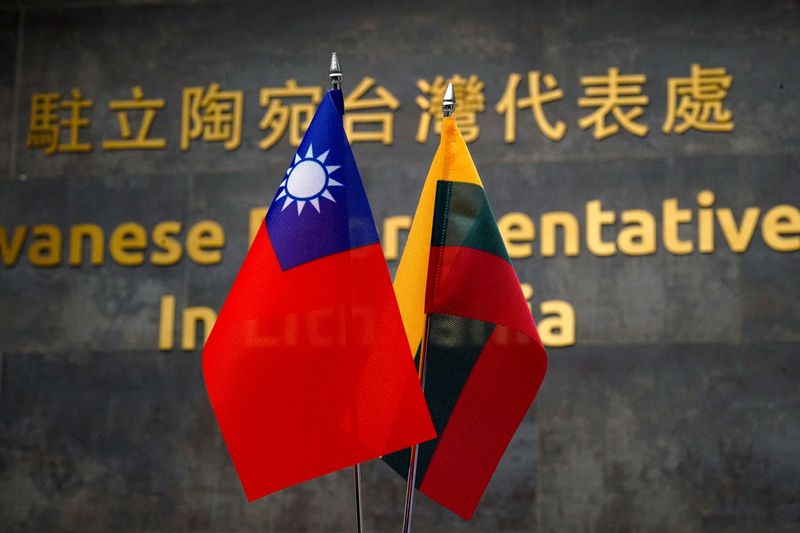
The Chinese government claims Lithuania breached the EU’s one-China policy by agreeing to host a “Taiwanese Representative Office” in its capital. Both Vilnius and Brussels deny any deviation from the policy.
“The EU has been informed that Lithuanian shipments are not being cleared through the Chinese customs and that import applications from Lithuania are being rejected,” said Dombrovskis.
https://www.scmp.com/news/china/dip...-taking-china?module=hard_link&pgtype=article
“We are in close contact with the Lithuanian government and are gathering information via the EU delegation in Beijing in a timely manner. We are also reaching out to the Chinese authorities to rapidly clarify the situation,” he added.Dombrovskis also confirmed that there would be no progress on a proposed EU-China investment deal that has stirred up controversy among EU lawmakers while sanctions remain on members of the European Parliament. Earlier this week, the EU renewed its own sanctions on Chinese officials over rights abuses in Xinjiang for a further year.
The anti-coercion instrument – the details of which the Post reported on Monday, before the proposal was announced on Wednesday – will target states that try to “interfere in the legitimate sovereign choices” of the EU or one of its 27 member states “by applying or threatening to apply measures affecting trade or investment”.
While it is billed as a “last resort” and a “deterrent”, it could see targets frozen out of lucrative EU sectors.
The measure lays out a large range of punitive actions the EU can take if it concludes that coercion is taking place, including tariffs, suspension of market access through the use of quotas or trading licences, and restricted access to public procurement programmes and investment markets.
According to the draft proposal, those found to be involved in coercion could be blocked from sourcing goods governed by EU export control guidelines, have their intellectual property rights truncated, be excluded from the bloc’s giant financial services or chemicals sectors, or face sanitary or phytosanitary barriers to tapping the EU’s food markets.
The reported trade embargo on Lithuania “clearly could be a reason to do assessment whether it constitutes economic coercion”, Dombrovskis said on Wednesday.
Some Lithuanian exporters have complained about the country being “wiped” from the Chinese customs system. They have been unable to select Lithuania as a country of origin on Chinese customs systems, meaning documentation cannot be completed and orders cannot be fulfilled.
On Tuesday, five trainloads of organic minerals departed Lithuania for China after the exporter was able to access the system correctly, but on Wednesday the disruption resumed, according to Vidmantas Janulevicius, president of the Lithuanian Confederation of Industrialists.Now, there are concerns that the trains, which have already travelled beyond Belarus, could be rejected on arrival, at the cost of millions of euros.
In a fresh blow, Janulevicius said 10 Lithuanian companies who had already prepaid for Chinese goods ranging from electronics to steel products were unable to import them, saying there is an effective trade embargo.
Don’t ‘play with fire’: Mainland China tells US for inviting Taiwan to democracy summit
The goods are now languishing in Chinese ports including Ningbo and Shanghai, while significant costs are being incurred in Lithuania as China-bound containers remain static.
“Since last week, 80 per cent of the goods have not been shipped, this problem is getting very serious,” he said, explaining that Chinese buyers suggested there was a “technical issue”.
However, there may be little the EU can do about the situation in the short term. If it chooses to launch a WTO case, even on a fast-track basis, this could take months.
The anti-coercion instrument could be even longer in the making. It must now be negotiated and approved by the European Council, made up of the EU’s 27 member states, and the European Parliament.
The parliament, which demanded such a tool be developed, is not expected to be a problem.
“The EU is facing geopolitical realities: the recent months and years have illustrated how trade policy is increasingly used as a political weapon. There is a gap in our toolbox that others can exploit,” said Bernd Lange, the top trade member in the parliament’s Socialist and Democratic grouping.
The tool “will fill that gap, starting today”, he added.
But problems could arise among the member states, some of which have expressed concern about a perceived power grab from the European Commission, which would be able to deploy the instrument without requiring unanimous approval from EU member states.
Sweden and the Czech Republic have led the scepticism, urging the EU to make sure the tool is within the rules of the WTO.

Franck Riester is France’s minister delegate for foreign trade. Photo: AFP
“The EU needs to retain its credibility as a leading advocate of multilateral trading system and an upholder of stable trade rules,” read a joint letter by the two governments to the commission, seen by the Post.
The French government, however, offered strong support for the tool.
“We can see it very clearly today, the great powers are less and less hesitant to abuse their economic weight in order to seek to illegitimately influence the political decisions of their partners – including those of the EU and its members,” said France’s minister delegate for foreign trade, Franck Riester.
“This is the case, for example, of China vis-à-vis Lithuania.”

EU threatens China with WTO action over reported Lithuanian trade blockade
The EU is investigating complaints from Lithuanian exporters that the country was ‘wiped’ from the Chinese customs system.
 www.scmp.com


Presentations point to greater Huawei role in China surveillance than acknowledged: report
PowerPoint presentations from Chinese telecommunications giant Huawei Technologies indicate that the company has a larger role in China’s surveillance efforts than was previously known, …
 thehill.com
Congress approves import ban targeting forced labor in China
Senators gave final congressional approval Thursday to a bill barring imports from China’s Xinjiang region unless businesses can prove they were produced without forced labor, overcoming initial hesit...

Wang Yi blames ‘forces with ulterior motives’ for Solomon Islands riots
In their first exchange since the violence erupted last month, foreign ministers from Beijing and Honiara talked up their nations’ relationship.
www.scmp.com
Western states need united front against divisive China - Trudeau
TORONTO, Dec 25 (Reuters) - Western countries should have a united front against China to prevent the Asian state from using commercial interests to play them against each other, Canadian Prime Minister Justin Trudeau said in an interview aired on Saturday.Trudeau said China has been "playing" Western countries against one another as they compete for access to economic opportunities in the country.
"We've been competing and China has been, from time to time, very cleverly playing us off each other in an open market, competitive way," he said in an interview with Global television.
"We need to do a better job of working together and standing strong so China can't play the angles and divide us one against the other."
Relations between Canada and China have been chilly since the 2018 detention of Huawei Chief Financial Officer Meng Wanzhou on a U.S. extradition warrant. China detained two Canadians shortly afterwards, denying Ottawa's accusations of hostage diplomacy.
Meng reached a deal with U.S. prosecutors in September, ending the extradition fight, and the two Canadians were released within hours of the agreement.
Even before Meng's arrest, Canada's repeated questioning of China's human rights positions had irked Beijing, and the two countries have failed to come closer.
Earlier this month, Canada said it will join allies in a diplomatic boycott of the 2022 Winter Olympics in Beijing in February to send China a message over its human rights record.

Western states need united front against divisive China - Trudeau
Western countries should have a united front against China to prevent the Asian state from using commercial interests to play them against each other, Canadian Prime Minister Justin Trudeau said in an interview aired on Saturday.
Cramer says it’s impossible to recommend Chinese stocks in a hostile communist regime
CNBC’s Jim Cramer said Wednesday he can’t recommend investors buy Chinese stocks because the communist government there is a “total wild card.”Chinese President Xi Jinping “does not like capitalism,” Cramer told “Squawk Box,” saying the leader of the world’s second-largest economy “may be the first totalitarian dictator in a long time.”
Cramer’s comments came as two well-known U.S. investors sent mixed signals on Chinese stocks.
Charlie Munger’s media and investment firm, Daily Journal Corp., nearly doubled its stake in Chinese e-commerce giant Alibaba, according to a regulatory filing Tuesday. Munger, who turned 98 on New Year’s Day, is also Warren Buffett’s longtime investing partner.
Meanwhile, DoubleLine founder Jeffrey Gundlach told Yahoo Finance this week that “China is uninvestable, in my opinion, at this point.” The so-called bond king said he’s never invested in China. “I don’t trust the data. I don’t trust the relationship between the United States and China anymore. I think that investments in China could be confiscated. I think there’s a risk of that.”
Cramer agrees with Gundlach, saying that it’s “impossible” to think about investing in stocks of Chinese companies against such an uncertain backdrop in China that — even if there’s a good argument to buy them.
“There is a sense that the middle class is going to be do better in China,” Cramer said. “Alibaba is going to do well. JD is going to do well. Baidu could do well. But that doesn’t mean their stocks can translate into doing well.”
Those three Chinese companies are listed on U.S. exchanges. However, that could change due to rising political pressure in the U.S. and China. In fact, Chinese ride-hailing app Didi announced in December it would delist from the New York Stock Exchange and pursue a listing in Hong Kong. Didi had gone public less than six months earlier.
China has been conducting a monthslong regulatory crackdown aimed broadly at its internet giants, and it has introduced legislation ranging from anti-monopoly measures to data security. The moves have sent investors scrambling and wiped out billions of dollars in value from China’s tech titans.
Cramer said the U.S. is trying to avoid a “very bad cold war” with China. “I think that President Xi has complete contempt for us, complete contempt for shareholders, and very contemptuous of rich people whom he thinks threaten his power.”
“Charlie Munger is a genius” investor, Cramer said. “But I just can’t do it,” he stressed, reiterating his position that Chinese stocks should be avoided.
The Chinese Embassy in Washington did not respond to a request for comment.

Cramer says it's impossible to recommend Chinese stocks in a hostile communist regime
CNBC's Jim Cramer said Wednesday he can't recommend investors buy Chinese stocks because the communist government there is a "total wild card."
Ah, the EU.
 us.yahoo.com
Analysis-German big business piles pressure on Lithuania in China row
Lithuania is under pressure from German companies to back down in a dispute with China to end a blockade of the Baltic state, as European trade officials struggle to defuse the row, people familiar with the matter said. China has pressed multinationals to sever ties with Lithuania or face...
us.yahoo.com

It's more Ah ze Germans. OTOH they've banned arms sales to KSA , India , etc . OTOH they're going out on a limb to accomodate China while the rest of the EU including France watches from the sidelines .Ah, the EU.
Analysis-German big business piles pressure on Lithuania in China row
Lithuania is under pressure from German companies to back down in a dispute with China to end a blockade of the Baltic state, as European trade officials struggle to defuse the row, people familiar with the matter said. China has pressed multinationals to sever ties with Lithuania or face...

Yale to begin investigating potential Chinese investments in light of human rights concerns
The University’s Advisory Committee on Investor Responsibility will examine potential investments in Chinese companies tied to human rights abuses.
 yaledailynews.com