L’infanterie, les chars et la guerre en Ukraine (3e partie-Théorie de la ligne)
Translated with www.DeepL.com/Translator (free version)
Infantry, tanks and war in Ukraine (Part 3 - Line theory)
It is not popular, especially in France, but the "non-offensive defence" (or all the methods of "non-battle" to use the expression of the commander Guy Brossolet), which consists in defending a territory by a guerrilla warfare leaning on solid defence poles is effective. It is all the more effective when the defenders are numerous (which often implies the use of reservists), well trained, well equipped with light weapons and vehicles, and when they face large but small columns of target vehicles.
Ukraine did not have the time or sufficient foreign assistance - which would have been cheaper to provide at that time than in the rush of the war - to fully implement this new model before the invasion. Instead of a 'Finnish super army', there was a patchwork that could not prevent the Russian forces from seizing large swathes of territory and even inflicting decisive losses.
The Ukrainian model was able to slow down and corrode, forcing the withdrawal of five complete Russian armies, but it proved much less effective when it came to attacking. The Ukrainian brigades also have great difficulty in breaking through the Russian fire screens, from air strikes to the numerous machine guns, the main weapon of modern infantry, and the whole range of artillery and tank guns. This leads to a form of tactical neutralisation where it is almost impossible to destroy each other's large units, except by encirclement followed by a long reduction. On wargames counters, both Russian and Ukrainian units would be given a high defence value and a low attack value, which usually leads to a blocking and fixing of the front.
The trenches of the Donbass
After the Battle of Kiev and the Russian withdrawal, the form of combat changed radically, in the manner of the forces engaged in the Korean War, moving abruptly from movement combat in 1950 to increasingly rigid position combat in 1951.
The last major Russian attack was on the small town of Izium, 100 km south-east of Kharkiv. Izium is already no longer a political objective, but the necessary base for enveloping the still Ukrainian Donbass from the west, a strategic objective now declared by Russia at the end of March. Its conquest is difficult, like all urban assaults led by ill-adapted units, but the Russians are demonstrating that they can take a limited objective - a town of 45,000 inhabitants held by two Ukrainian brigades, manoeuvring and territorial - in three weeks, provided that they commit a heavily reinforced motorised infantry division (engineering brigade and artillery brigade(s)). It was already a battle of a new style.
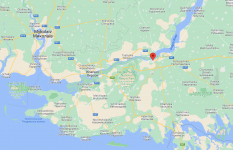
From Kharkiv to Kherson, there was now a continuous front of 900 km, more than the frozen front from the English Channel to Switzerland in the winter of 1914-1915. The line starts from a Russian bridgehead across the border north of Kharkiv, passes through the Donets River and the forest strip running due east to the town of Severodonetsk. It then follows the north-south fortified zone that separates the NRL-DNR from the rest of Ukraine, and then a long line running due west from Novotroitske (south of Donetsk) to the Dnieper and the Dnieper itself to Kherson and its bridgehead across the river.
In a static situation, a unit that does not fight digs in. In other words, this long strip of front will mechanically tend, provided both armies can impose this effort on their men, to become more and more advanced, to gain more depth both down and to the rear, and to further increase the defensive capacity of the units occupying it.
Behind these field fortifications, the Russian armies and the LNR-DNR corps have 2,400 artillery pieces, which means a capacity of several thousand shells and rockets per day at least, and a potential of 200 to 400 sorties of attack aircraft and helicopters as well as a few armed drones. Associated with numerous sensors, the Russians can hit anything that is a little important and visible over several tens of kilometres in the depth of the Ukrainian system and prepare for the assaults.
The converse is less true insofar as Ukrainian means of deep strike are much inferior to those of the Russians, if only because of the lack of shells and rockets which, according to a Ukrainian official, limit the number of shots to 6 to 8,000 per day, not to mention the rare aircraft and armed drones. With the occasional help of American intelligence, the means are perhaps used more effectively, as shown by the regular strikes on command posts and the deaths of Russian generals or the complete destruction of the Russian battalion trying to cross the Donets Bilohorivka river west of Sevordonetsk on 9 May.
Between entrenchments and fire from the sky, the form of the fighting obviously changed. For example, documented daily losses (Oryx) in infantry tanks were half as high on both sides as during the war of movement. This is even more true as one moves away from the front line, with only a few artillery pieces destroyed each day, which shows the weakness of the counter-battery on both sides. Trucks were also much less affected than during the war of movement. This may seem paradoxical, especially on the Ukrainian side, since logistics must operate under artillery and aircraft fire. This low loss rate is partly due to adaptation - night movement, camouflage, dispersal - but it is also probably due to a simple reduction in throughput. It should be noted that the ratio of material losses is still clearly in favour of the Ukrainians, largely because the Russians are more often on the attack.
There are fewer material losses but just as many human losses, if not more. For the first time, Ukrainian officials are talking about this issue, President Zelenski first, mentioning figures of 50 to 100 dead in the Donbass, and up to 150 to 200 for the whole front, with five times as many wounded. This is likely and is obviously a lot, probably more than during the first phase of the war. Since at the same time the losses in combat vehicles were decreasing, one can conclude that they were less involved in combat where Russian artillery had to take 2/3 of the Ukrainian losses. This proportion must be a little lower on the Russian side where many are also mown down by direct projectiles from machine guns, anti-tank weapons, snipers - very important in static fighting - and sometimes assault rifles when there is sometimes close combat.
Of course, when one moves from a macro perspective (operative art) to the micro (tactics and combat) and all these means are not dispersed over the whole front but concentrated in only certain sectors, these sectors are called hell.
Schumpeterian crisis
This new operational context is more troubling for the two adversaries who have retained their desire to conquer or reconquer.
In view of the means available, Russia decided to concentrate on the complete "liberation" of the Donbass, at least initially. On the Ukrainian side, things are more delicate. If the Russians had been stopped at their starting line on 24 February, it might have been possible to propose a peace agreement, but now Ukraine finds itself in the position of France at the end of 1914 when part of its territory was invaded. The status quo seems difficult to envisage when there may still be the possibility of liberation, but at the same time it is not clear how the Russian army can be repelled with the current force model.
There is no other way out of this Schumpeterian crisis (less and less results with as many deaths) than to change the model in quantity and quality, but this will take time.
For the moment, the Russians have the initiative again. Relying on a continuous front and not on arrows, and close to their railway bases, they could organise shorter and better protected road logistic flows than during the war of movement. Since a high concentration of resources was needed to achieve results, forces were redistributed according to the offensive or defensive postures of the combat sectors. From Izium to Horlivka, the northern perimeter of the Donbass still held by the Ukrainians was surrounded by around fifty Russian battle groups or LNRs, plus at least seven artillery brigades over a hundred kilometres, while the other sectors only had one battle group every 10 to 20 kilometres. These defensive sectors had no other mission than to hold the ground and fix the enemy, possibly by limited counter-attacks.
In the main sector from Izium to Horlivka (15 km north of Donetsk), the two pairs of towns Sloviansk-Kramatorsk (S-K) and Severodonetsk-Lysytchansk (S-L), 80 km apart, must be taken. Once these cities are taken, the only thing left to do is to take the small town and road junction of Pokrovsk a few dozen kilometres further south to consider the Donbass conquered.
This key zone is initially defended by 12 Ukrainian manoeuvre, territorial or national guard brigades as well as several militia battalions. The overall force ratio can be estimated at a slight Russian numerical superiority in men, three to two in their favour for combat vehicles and two to one for artillery and even more for air support.
The battlegroups involved were attached to the three main areas of action: north of S-K, around S-L and between Popasna and Horlivka on the border with the LNR-DNR, under various unclear commands. The battle groups were in fact mostly manoeuvre battalions, while the batteries were grouped further back in a mass of fire. The Russian command also formed a 'general reserve' with 15-20 battalions of its best units, air assault troops, navy troops, Wagner mercenaries or Chechen national guards, by the way, nothing from the Russian army which had not understood that it would need a powerful assault infantry. It is this general reserve that will make the difference.
The method used was hammering based on battalion attacks. A typical attack sees this battalion attempting to penetrate the fire envelope of the defence, hoping that the defence has been neutralised as much as possible by artillery and projecting as much firepower as possible itself through its vehicles and small arms. From this confrontation a very subjective impression emerges on both sides about the possibility of boarding. As long as it appears possible, the attacker continues to advance. As soon as this hope disappears, the temptation to withdraw becomes very strong. The reasoning is obviously the opposite for the defender who often withdraws before contact has taken place as soon as it is certain. This is not necessarily very deadly in view of the firepower deployed - it takes several hundred shells and thousands of rounds of ammunition and light shells to kill a single man - but it is very trying. The strength of the infantry battalions, which was proportional to their tactical quality but could fluctuate with wear and tear and results, was obviously essential.
The whole sector was thus hammered from the beginning of April. First, it was a question of starting from Izium to try to overrun the entire S-K and S-L target area from the west. The three brigades and the Ukrainian militias in the sector exchanged unstrategic space for time - one kilometre per week, as on the Somme in 1916 - and wear and tear. Failing to gain a decisive advantage in this sector, the effort was shifted to the area north-east of Sloviansk in the forest area around the Donets River. As a result of attacks, the key Lyman position was approached from several sides by the Russians and evacuated by the Ukrainians on 27 May. The pressure was now on the entire Ukrainian pocket north of Sloviansk following Russian advances to its east and west. Several more weeks of fighting were in prospect before they even approached Sloviansk. The Russians progressed much more slowly in Ukraine than the Allies in France in 1918.
Progress was also slow on the outskirts of Severodonetsk, the only major Ukrainian city on the front line. In the north, the small town of Rubizhne (56,000 inhabitants) was definitively conquered on 13 May, after more than a month of fighting. At the beginning of June, Severodonetsk itself was attacked, although the city could only be supplied by the bridges linking it to Lysychansk.
The only major Russian victory of the positional war was on 7 May at Popasna (population 22,000), 50 km south of Severodonetsk, after six weeks of fighting and with the commitment of the General Reserve. The capture of the high point of Popasna was accompanied by a breakthrough of a few kilometres, the only one achieved in this phase of the war, in all directions threatening in particular the main road feeding S-L.
Ukrainian forces are in a dilemma. The small attacks they have carried out in the Russian zones in a defensive posture have achieved some successes, particularly on the Kharkiv side, but without achieving anything decisive that could at least relieve the Donbass. They had to choose between withdrawing from the S-L pocket to avoid seeing several brigades encircled or firm resistance or even a counter-attack. They chose the second option. With the reinforcements, there are now 13 manoeuvre brigades and even 3 territorial brigades, sometimes engaged in attacks, as well as several militia battalions in the fight for the Severodonetsk-Lysychansk pocket, i.e. almost one third of the total Ukrainian army. It is a very risky gamble.
The ordinary and the extraordinary
Among the mysteries of this war, there is that of combat on the rear, partisan combat to use the local terminology or even extraordinary Chinese combat as a complement to regular ordinary combat. There is little information on the use of Russian spetsnaz, perhaps 8,000 to 10,000 engaged in Ukraine, other than to describe a mission of protection on the Russian rear against the possible action of Ukrainian Special Forces, which themselves conducted some destructive raids in Russia. No doubt these units are mainly used for in-depth intelligence.
It is known that there are many acts of civil resistance in the occupied southern zone, in other words non-violent, a lot of information given by the population to the central forces and some acts of sabotage, but it is far from an organised guerrilla war which, both from a political point of view, to signify hostility to the occupier, and from a military point of view, would be a great reinforcement for Ukraine as the war turned into an arm wrestling match. The territorial super-regiments mentioned above, the same ones that would have hurt the Russian battle groups much more, could have formed the basis of this resistance, regular and/or clandestine, once they had been overcome. The rather open terrain did not necessarily lend itself to guerrilla warfare, but the density of Russian forces was also very low. This has clearly not been anticipated, but it can still grow in strength in spite of or because of a repression that is likely to be fierce.
To conclude, Ukraine is far from the mobile armoured-mechanised combat of the Arab-Israeli wars or the Gulf War (1990) or even the American-British invasion of Iraq in 2003. This is obviously high-intensity warfare, but in a new form that also borrows heavily from the past. To innovate is sometimes to remember and it is likely that future combat units will no longer resemble those of 1945.