
Ukraine - Russia Conflict
- Thread starter randomradio
- Start date
You are using an out of date browser. It may not display this or other websites correctly.
You should upgrade or use an alternative browser.
You should upgrade or use an alternative browser.
Shown are the underground communications and command post of the 36th Separate Guards Motor Rifle Brigade of the Russian Armed Forces. This underground Russian military base is located at a depth of 3 meters and protected by a layer of concrete slabs, logs, and earth to protect against aerial bombs and GMLRS missiles. The base's wide, kilometer-long tunnels can accommodate a vehicle, an infantry fighting vehicle, and even a tank. The command post coordinates the actions of several troop units and drone operators.

18.02.26_Ouest France
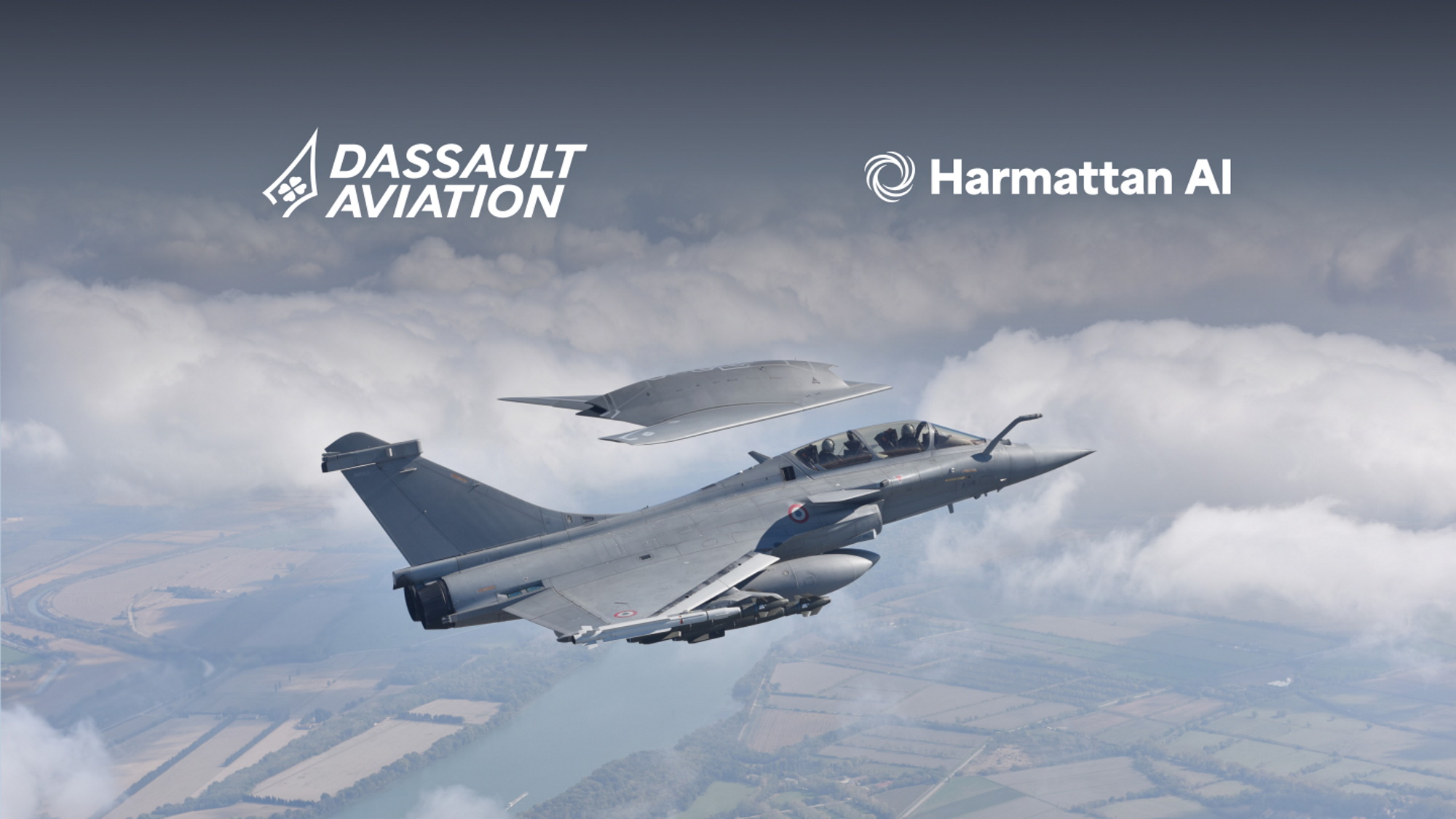
As a reminder, on January 12, 2026, Dassault Aviation and Harmattan AI announced a strategic partnership aimed at accelerating the integration of controlled autonomy and artificial intelligence technologies into combat aviation systems. As part of this collaboration, Dassault Aviation is leading Harmattan AI's $200 million Series B funding round.
 www.dassault-aviation.com
-----------------
Furthermore, the Black Bird jet-powered interceptor drone from the French company Alta Ares, deployed in Ukraine, has already shot down its first Russian Shahed drones [Geran]:
11.02.26_opex360:
War in Ukraine: A French startup will equip Ukrainian drones with its SAR reconnaissance radars
The CEO of the French startup Harmattan AI recently announced that its SAR radar module will soon be equipping Ukrainian drones. The company is thus strengthening its presence in Ukraine, following a strategic partnership established in October with the company Skyeton.The French defense startup Harmattan AI will soon equip Ukrainian drones with its SAR reconnaissance radars, reports the specialized website Militarnyi. With this announcement, the company is deepening its presence in Ukraine, following an initial strategic partnership established last October with the Ukrainian aerospace holding company Skyeton, which manufactures Raybird drones. The French technology will facilitate reconnaissance operations for Ukrainian aircraft.
A Highly effective remote sensing system
As a reminder, Synthetic Aperture Radar (SAR) is a particularly effective remote sensing system. It uses microwave radiation to create highly detailed images of the Earth's surface, regardless of weather conditions, day or night. In this way, drones equipped with this technology will be able to conduct reconnaissance operations even in fog, clouds, or rain.
Especially since Harmattan AI's SAR radar boasts impressive performance. According to information available on its website, it is capable of capturing images with a resolution of 0.25 meters at a distance of 2 km and 1.2 meters at a distance of 10 km. The radar module also weighs less than 3.5 kg, making it the only one in the world designed for drones weighing less than 150 kg.
A rich partnership
It was Mouad M’Ghari, CEO of Harmattan AI, who revealed in an interview with the media outlet Le Grand Continent that “this system will be integrated into Ukrainian systems and deployed in Ukraine.” For the time being, no company involved has revealed which drones will be equipped with these SAR radars. However, due to the strategic partnership between Harmattan AI and Skyeton, it is highly likely that they will at least be installed on Raybird drones. Harmattan AI would also fully benefit from this partnership, according to Mouad M’Ghari. Its CEO explained that they are learning a great deal from Ukraine’s experience in the war since 2014. “The real strategic weapon is the factory,” he stated. In parallel, several Ukrainian companies are developing their own SAR radars. /END
-----------------As a reminder, on January 12, 2026, Dassault Aviation and Harmattan AI announced a strategic partnership aimed at accelerating the integration of controlled autonomy and artificial intelligence technologies into combat aviation systems. As part of this collaboration, Dassault Aviation is leading Harmattan AI's $200 million Series B funding round.
Harmattan AI’s $200 million Series B led by Dassault Aviation - Press kits
Dassault Aviation and Harmattan AI today announced a strategic partnership to accelerate the integration of controlled autonomy and AI technologies into combat aviation systems. As part of this collaboration, Dassault Aviation is leading Harmattan AI’s $200 million Series B funding round. ©...
www.dassault-aviation.com
-----------------
Furthermore, the Black Bird jet-powered interceptor drone from the French company Alta Ares, deployed in Ukraine, has already shot down its first Russian Shahed drones [Geran]:
11.02.26_opex360:
The French company Alta Ares tested its Black Bird jet-powered interceptor drone in extreme cold.
Last October, following a series of tests conducted at the DGA Missile Testing [DGA EM] site in Biscarrosse, NATO validated the "#tactical protection dome" against drones, developed by the French company Alta Ares, founded in 2024.
Specifically, it is a system of A multi-layered defense system, based on the "Pixel Lock" artificial intelligence algorithm, tactical radars supplied by Thales and Echodyne, data fusion software developed by the American company Picogrid, and Ukrainian-designed X-Wing [or Bagnet] interceptor drones.
Deployed in Ukraine, this tactical anti-drone dome has already proven its effectiveness. "We have already shot down our first Russian Shahed [or Geran] drones," confirmed Hadrien Canter, CEO of Alta Ares, in the pages of the weekly magazine Challenges.
The contribution of the embedded "Pixel Lock" algorithm, which identifies, tracks, and neutralizes a threat without direct human intervention, has proven decisive, with a 70% destruction rate of Russian drones. And this at a lower cost than the drones themselves. “A Shahed costs around $60,000; we are well below that,” Mr. Canter pointed out.
That being said, the threat is constantly evolving. Indeed, Russian forces now possess a new kamikaze drone: the Geran-5. Derived, it seems, from the Iranian Karrar, this aircraft is reportedly capable of flying at speeds of 800 km/h, thanks to a JT80 turbofan engine supplied by the Chinese company Telefly. Hence the need to quickly find a countermeasure.
To this end, Alta Ares is developing the Black Bird, a new interceptor drone faster than the X-Wing, thanks to the integration of a turbofan engine supplied by the Alsatian SME ALM Meca. This aircraft has just reached a new milestone with successful tests in extreme cold conditions in Estonia.
Thus, the Black Bird completed three consecutive "successful" flights, during which it reached a speed of 450 km/h, while the temperature was -17°C on the ground and -25°C at altitude. "This performance represents a remarkable technical achievement, as these speeds are exceptionally difficult to reach in Arctic operational environments," Alta Ares emphasized in a statement released on February 10.
As Mr. Kanter explained, "Operations in extreme cold conditions pose considerable challenges for turbine engines." Therefore, "our successful deployment [in Estonia] demonstrates the operational maturity of our system for NATO's most demanding theaters in the north."
More broadly, these demonstrations, conducted with the support of the Estonian Defense Forces, validated "the entire Alta Ares interception ecosystem under operational conditions, including real-time communication links, antenna performance and signal integrity, live video data transmission from the interceptor, and Pixel Lock's detection, tracking, and locking capabilities."
In an interview with BFM TV a few weeks ago, the CEO of Alta Ares stated that the Black Bird interceptor drone would be capable of reaching speeds of 670 km/h. /END

Russian FPV drone strikes against Ukrainian Armed Forces equipment in February. It's worth noting that many more drones are being used, numbering in the thousands. VT-40 FPV drones, "Prince Vandal Novgorodsky" drones, and other models, including those controlled via fiber optic cable, are being used in combat. The exact filming location is not disclosed. The video shows drone strikes against various Ukrainian military equipment and structures. Information about some models is available on the channel. The footage also captured the strike on a rare Ukrainian AMX-10RC wheeled tank, made in France.

Footage of nighttime strikes by Russian Lancet kamikaze drones on Ukrainian military equipment in the Donbas and Ukraine. Also shown is a Lancet drone strike on a Ukrainian fuel tanker near the village of Berezhne in the Kharkiv region. And a Lancet drone attack on a Ukrainian army infantry truck near the village of Novomykolaivka in the Zaporizhzhia region of Ukraine.
Another 100 years of this to look forward to under Putin.
Last edited:
Footage of the destruction of the Ukrainian dam at the Molochar Reservoir by a Russian FAB-3000 aerial bomb. The dam is located two kilometers from Kostiantynivka and was blown up to hinder the Ukrainian army's supply of reserves, provisions, and ammunition. The attack was carried out by a Russian Su-34 frontline fighter-bomber. The FAB-3000 bomb partially destroyed the Ukrainian dam.
Despite the active use of FPV drones in combat operations in Ukraine, artillery continues to operate. In this video, a Russian 152mm 2S3 Akatsiya self-propelled howitzer destroys a Ukrainian army infantry fighting vehicle in the Zaporizhzhia region. Rarely can conventional ammunition achieve such accuracy. The 2S3 Akatsiya self-propelled howitzer was adopted by the USSR in 1971 and was produced in various modifications until 1989.
New footage of the Russian Yolka interceptor drone in combat. The video shows the interception of a Ukrainian Darts kamikaze drone by a Russian Yolka interceptor drone. The Darts kamikaze drone is similar to the Russian Molniya-2 drone and can reach speeds of up to 160 km/h, delivering strikes at a range of up to 50 kilometers. The drone's warhead weighs 3.6 kg. The Darts kamikaze drone costs approximately $1,000. The video was filmed in Russia over Belgorod.
Russian FPV drones using fiber optics have begun reaching the outskirts of Kharkiv, according to Serhiy Beskrestnov, advisor to the Ukrainian Defense Minister. The drones are difficult to detect and pose a real threat that needs to be addressed. A video on the Kharkiv ring road shows a Russian FPV drone striking a Ukrainian army pickup truck.
Footage of Russian FPV drone strikes by the 37th Guards Brigade of the 36th Army of the "East" Group of Forces against Ukrainian armored vehicles at the junction of Ukraine's Zaporizhzhia and Dnipropetrovsk Oblasts. The Ukrainian army has currently massed large forces in the Zaporizhzhia and Dnipropetrovsk Oblasts and is attempting a counteroffensive. The types of armored vehicles and drones used have not been disclosed.