
You are using an out of date browser. It may not display this or other websites correctly.
You should upgrade or use an alternative browser.
You should upgrade or use an alternative browser.


View: https://x.com/flyarcher/status/2079167522478125106?s=20
View: https://x.com/NatSecLedger/status/2079173262601298193?s=20

 www.twz.com
View: https://x.com/NatSecLedger/status/2079173262601298193?s=20
Anduril Brings The Thunder With Autonomous Tiltrotor Attack Drone Concept
Thunder is designed to fly deep into hostile airspace at low altitude as a highly autonomous wingman for AH-64 Apaches and MV-75 Cheyennes.
Anduril Brings The Thunder With Autonomous Tiltrotor Attack Drone Concept
Thunder is designed to fly deep into hostile airspace at low altitude as a highly autonomous wingman for AH-64 Apaches and MV-75 Cheyennes.
www.twz.com
Last edited:


Recently made this, I have written some stuff about the F/A-18's ingenious rudder techniques which make it very stable to fly...
When the F/A-18 was designed, McDonnell-Douglas and Northrop forgot to consider ground effect. This meant that they did not consider that the lift curve of the wing will be reduced and since the tail is also quite low to the ground, it will also be affected by this.
When they did the first flight and later flight testing, it was noticed promptly as the plane simply refused to takeoff at the speed they calculated and gave to the pilots.
At the end, not wanting to redo the whole wing geometry just for better takeoff performance, they made a fix which involved the twin rudders doing a "toe-in" movement. As in they both point inwards.
This was not only required during takeoff but also in-flight. So they had to create a rudder scheduler which reacted instantly with AoA rise to coordinate a rudder toe-in or toe-out to provide positive longitudinal stability.
Without this, at high AoA the plane was fighting the pilot to pitch up even higher or
The fix was simple enough but uncovered a series of fixes that were unnoticed while initially developing the plane. This meant the entire FCS was revalidated.. It was incredibly expensive and added complexity.
The pitching movement coefficient tells the direction of the pitching tendency.
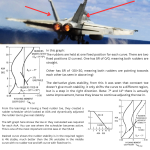
Source for graphs: MIT Aircraft Systems Engineering (Flight Controls) 2004
When the F/A-18 was designed, McDonnell-Douglas and Northrop forgot to consider ground effect. This meant that they did not consider that the lift curve of the wing will be reduced and since the tail is also quite low to the ground, it will also be affected by this.
When they did the first flight and later flight testing, it was noticed promptly as the plane simply refused to takeoff at the speed they calculated and gave to the pilots.
At the end, not wanting to redo the whole wing geometry just for better takeoff performance, they made a fix which involved the twin rudders doing a "toe-in" movement. As in they both point inwards.
This was not only required during takeoff but also in-flight. So they had to create a rudder scheduler which reacted instantly with AoA rise to coordinate a rudder toe-in or toe-out to provide positive longitudinal stability.
Without this, at high AoA the plane was fighting the pilot to pitch up even higher or
The fix was simple enough but uncovered a series of fixes that were unnoticed while initially developing the plane. This meant the entire FCS was revalidated.. It was incredibly expensive and added complexity.
The pitching movement coefficient tells the direction of the pitching tendency.
Last edited:
U.S. Air Force Reveals Plans For VTOL Bomber Prototype
U.S. Air Force Reveals Plans For VTOL Bomber Prototype | Aviation Week
U.S. Air Force seeks a reusable rocket-powered VTOL strike aircraft prototype for future high-speed bomber missions.
 aviationweek.com
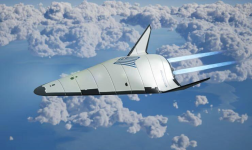
The New Frontier Aerospace hypersonic aircraft takes off vertically, much like a rocket without stages. The aircraft then lands vertically where it can then be refueled for another flight.
The U.S. Air Force has released plans to experiment with a prototype reusable, rocket-powered aircraft for high-speed, long-range strike missions.
Although limited to a prototype program, the interest from Air Force Global Strike Command points toward a future bomber alternative that differs markedly from the stealthy, subsonic Northrop Grumman B-21 Raider, which is now in the early stages of production.
The prototype described in solicitation documents released in mid-July calls for a liquid-fueled, rocket-powered, vertical-takeoff-and-landing (VTOL) aircraft. After launching vertically, or potentially on a steep diagonal trajectory, the aircraft would transition to horizontal flight and accelerate to high—likely supersonic or hypersonic—speed, perform a strike mission and then return to its launch base for a vertical landing.
Delta

Delta | USAvionix
A subsonic, jet-powered ISR drone built for speed, autonomy, and real-time intelligence over ranges of 300 to 500+ kilometers.
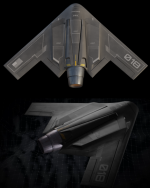
A subsonic, jet-powered ISR drone built for speed, autonomy, and real-time intelligence over ranges of 300 to 500+ kilometers.
Reaching speeds up to 500 km/h, it launches on its own, lands vertically, and operates solo or as part of an autonomous fleet, delivering persistent, high-altitude surveillance at scale.
Autonomy
End-to-end autonomous operation with vertical takeoff and landing.
Adaptive Intelligence
Phalanx AI updates mission logic in real time and shares insights across the fleet.
Operational Resilience
Mesh networking + satellite uplink maintain coordination in denied environments.

RTX Develops TJ150-Powered StormBreaker Precision-Guided Weapon for Extended-Range Strikes
RTX is preparing a turbojet-powered StormBreaker designed to extend U.S. strike range against moving targets in contested airspace.
 www.armyrecognition.com
RTX is preparing to flight-test a turbojet-powered StormBreaker designed to strike moving targets from greater range, Chairman and CEO Chris Calio revealed during the company’s July 23, 2026 earnings call. By adding sustained propulsion to the proven air-launched weapon, Raytheon could let U.S. combat aircraft attack mobile threats from farther outside dense air-defense zones.
The new variant uses a modified Pratt & Whitney TJ150 turbojet, but RTX has not disclosed its range, configuration, launch platforms or test schedule. A powered StormBreaker could preserve energy over longer distances and enable more flexible attack routes while retaining the weapon family’s all-weather precision against time-sensitive land and maritime targets.

USN does their own cht.
RENO, Nevada—The U.S. Navy is developing and currently flight testing a new long-range air-to-air missile that will far exceed the capabilities of the current AIM-120 and likely the recently disclosed AIM-174B as well.
The new AIM-424 “Malice” air-to-air missile is being developed for the F/A-18, the F-35 and F/A-XX. The missile was announced at the Tailhook Symposium here Aug. 22.
Specifics of the two-stage missile are classified and the Navy did not disclose the company producing the weapon. Imagery appears similar to the AIM-174B in size—much larger than the AIM-120.
The concept for the AIM-424 may have been in development for over a decade. In 2017, a senior defense official revealed the Long Range Engagement Weapon (LREW) concept during a defense industry conference. A presentation slide revealed a concept for a two-stage air-to-air missile launched from the internal weapons bay of a stealth aircraft.
"Budget documents in the fiscal 2017 spending request said that the LREW concept had completed a successful, two-year demonstration, and the technology was being transitioned to the services.
The Navy is under pressure to increase the reach of its striking power from the aircraft carrier. China has fielded air-launched anti-ship ballistic missiles and cruise missiles with ranges over 1,000 nm, which requires the Navy to respond with a weapon that can put the missile-carrying aircraft at risk.
The development comes as the Navy and the Air Force are preparing to field the new Lockheed Martin-developed AIM-260 Joint Tactical Missile.
aviationweek.com
Fits inside F-35C weapons bay
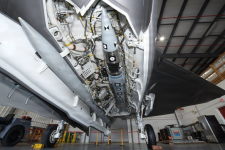
RENO, Nevada—The U.S. Navy is developing and currently flight testing a new long-range air-to-air missile that will far exceed the capabilities of the current AIM-120 and likely the recently disclosed AIM-174B as well.
The new AIM-424 “Malice” air-to-air missile is being developed for the F/A-18, the F-35 and F/A-XX. The missile was announced at the Tailhook Symposium here Aug. 22.
Specifics of the two-stage missile are classified and the Navy did not disclose the company producing the weapon. Imagery appears similar to the AIM-174B in size—much larger than the AIM-120.
The concept for the AIM-424 may have been in development for over a decade. In 2017, a senior defense official revealed the Long Range Engagement Weapon (LREW) concept during a defense industry conference. A presentation slide revealed a concept for a two-stage air-to-air missile launched from the internal weapons bay of a stealth aircraft.
"Budget documents in the fiscal 2017 spending request said that the LREW concept had completed a successful, two-year demonstration, and the technology was being transitioned to the services.
The Navy is under pressure to increase the reach of its striking power from the aircraft carrier. China has fielded air-launched anti-ship ballistic missiles and cruise missiles with ranges over 1,000 nm, which requires the Navy to respond with a weapon that can put the missile-carrying aircraft at risk.
The development comes as the Navy and the Air Force are preparing to field the new Lockheed Martin-developed AIM-260 Joint Tactical Missile.
U.S. Navy Testing New Long-Range Air-to-Air Missile | Aviation Week
The U.S. Navy is developing and currently flight testing a new long-range air-to-air missile that will far exceed the capabilities of the AIM-120 and likely the recently disclosed AIM-174B as well.
aviationweek.com
Fits inside F-35C weapons bay


SpecsUSN does their own cht.
RENO, Nevada—The U.S. Navy is developing and currently flight testing a new long-range air-to-air missile that will far exceed the capabilities of the current AIM-120 and likely the recently disclosed AIM-174B as well.
The new AIM-424 “Malice” air-to-air missile is being developed for the F/A-18, the F-35 and F/A-XX. The missile was announced at the Tailhook Symposium here Aug. 22.
Specifics of the two-stage missile are classified and the Navy did not disclose the company producing the weapon. Imagery appears similar to the AIM-174B in size—much larger than the AIM-120.
The concept for the AIM-424 may have been in development for over a decade. In 2017, a senior defense official revealed the Long Range Engagement Weapon (LREW) concept during a defense industry conference. A presentation slide revealed a concept for a two-stage air-to-air missile launched from the internal weapons bay of a stealth aircraft.
"Budget documents in the fiscal 2017 spending request said that the LREW concept had completed a successful, two-year demonstration, and the technology was being transitioned to the services.
The Navy is under pressure to increase the reach of its striking power from the aircraft carrier. China has fielded air-launched anti-ship ballistic missiles and cruise missiles with ranges over 1,000 nm, which requires the Navy to respond with a weapon that can put the missile-carrying aircraft at risk.
The development comes as the Navy and the Air Force are preparing to field the new Lockheed Martin-developed AIM-260 Joint Tactical Missile.
U.S. Navy Testing New Long-Range Air-to-Air Missile | Aviation Week
The U.S. Navy is developing and currently flight testing a new long-range air-to-air missile that will far exceed the capabilities of the AIM-120 and likely the recently disclosed AIM-174B as well.
Fits inside F-35C weapons bay
View attachment 53641
View attachment 53642
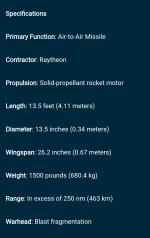
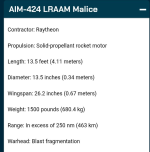
There's an even longer range weapon coming too.
Last edited:
Built quietly by Raytheon’s Advanced Technology division, the AIM-424 Long Range Air-to-Air Missile (LRAAM) is capable of hitting targets over 250 nautical miles (463 kilometers) away by leveraging its 13.5″ diameter and aerodynamic profile — outranging “any threat” according to Raytheon’s president Phil Jasper.
The U.S. Navy’s newest air-to-air missile, the AIM-424 Malice, was developed for both Air Force and Navy current- and next-generation fighters as the Pentagon looks to press additional capabilities into service for a high-end war in the Pacific, drawing from program efforts dating to the mid-2010s that sought long-range air-to-air missiles for competition with China.
Aviation Week was first to report on the missile’s existence when it was unveiled at the Tailhook Convention in Reno, Nevada — an event focused on naval aviation.
Built by Raytheon, the AIM-424 is capable of hitting targets over 250 nautical miles (463 kilometers) away, leveraging a 13.5″ diameter and aerodynamic profile that appears to have been built for range. That range would exceed estimates of all currently known Chinese air-to-air missiles that have widely been recognized as major threats to U.S. airpower in the Pacific.
“LRAAM sustains the Department’s first look, first shot, first kill advantage by providing our aviators greater reach, greater survivability, and greater tactical flexibility in the air-to-air fight. Built for 4th, 5th, and 6th generation platforms, LRAAM is designed for the air wing of today and the future,” the Navy said in its recently updated weapons portfolio overview.
Its range — and speed — exceed that of the currently fielded AIM-174B, a U.S. official familiar with the program confirmed to Naval News. Specialized aerodynamic fins and strakes also enable the missile to retain significant amounts of maneuverability even with its larger size compared to the long-fielded Raytheon-built AIM-120 AMRAAM and in-development Lockheed Martin-built AIM-260 JATM, according to the official. The retained maneuverability may allow the missile to engage fighter-sized targets even with its larger size.
Specialized cyber development teams have worked on building the missile’s infrastructure for a broad range of aircraft and joint systems shared between the U.S. Air Force and U.S. Navy, according to two U.S. officials familiar with elements of the program’s development. Their work began in January and included work on a specialized datalink designed for Malice’s longer range, of which little details are known.
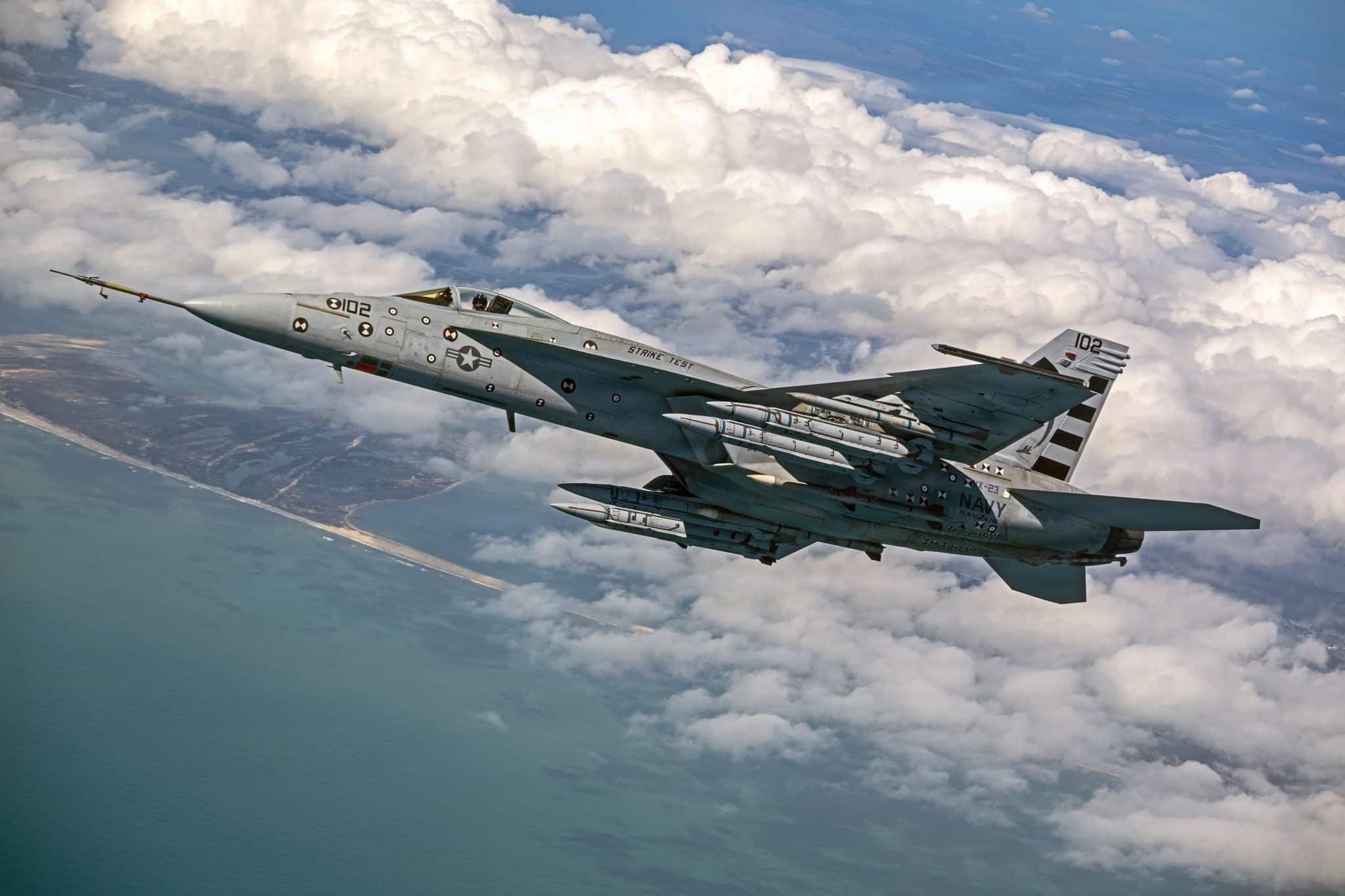
The broad range of aircraft include the U.S. Air Force’s sixth-generation F-47 and the U.S. Navy’s F-35C, F/A-18, and potentially the F/A-XX. At least one captive-carry flight test was disclosed in the Navy’s image release, dating back to April 2026. A fit test on an F-35 appears to have been conducted earlier this month in August. Naval News understands that the missile has been in development much longer.
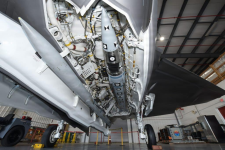
An AIM-424 Long Range Air-to-Air Missile (LRAAM) is mounted in the internal weapons bay of an F-35C. The AIM-424 LRAAM is the Department of the Navy’s next-generation, long-range air-to-air missile, built to give Marine and Naval aviators the capability they need to defeat advanced threats and defend the force. (U.S. Navy photo)
Confirmation of the missile’s existence from Raytheon came in a statement from the company’s president provided to Naval News.
“Strengthening fleet defense and maintaining superiority are essential to address rapidly emerging long-range air-to-air threats,” said Phil Jasper, president of Raytheon, an RTX business. “Our Advanced Technology team’s approach is at the core of doing just that with the development of the AIM-424. With increased range, lethality, and combat effectiveness for naval forces, the AIM-424 delivers a generational leap in air dominance combat capability that can out range any threat.”
The AIM-174B, once the U.S. Navy’s hottest air-to-air missile that was revealed to be operationally deployed in 2024, has been understood to serve as a stopgap for future capabilities that were in development through the past decade. “[AIM-174] exists. That’s an operational capability. As you can see that one being revealed and shown into the area, there are many more behind [it],” Admiral Keith Hash, Commander, Naval Air Warfare Center, Weapons Division (NAWCWD) said at the WEST 2025 conference in San Diego, California. NAWCWD is the same Navy team that helped develop and field the AIM-174B for operational use.
Beyond AIM-174 and AIM-424, the Pentagon continues to refine requirements around its Air Force Long Range Weapon (AFLRW) that seeks an air-to-air missile for the U.S. Air Force with a 1,000 nautical mile (1,850 kilometer) range.
A U.S. Navy official provided the following statement to Naval News on Saturday:
 www.navalnews.com
It's going to be so unfair having F-35's carrying aim-260's and aim-424's at the same time inside their weapons bay.
The U.S. Navy’s newest air-to-air missile, the AIM-424 Malice, was developed for both Air Force and Navy current- and next-generation fighters as the Pentagon looks to press additional capabilities into service for a high-end war in the Pacific, drawing from program efforts dating to the mid-2010s that sought long-range air-to-air missiles for competition with China.
Aviation Week was first to report on the missile’s existence when it was unveiled at the Tailhook Convention in Reno, Nevada — an event focused on naval aviation.
Built by Raytheon, the AIM-424 is capable of hitting targets over 250 nautical miles (463 kilometers) away, leveraging a 13.5″ diameter and aerodynamic profile that appears to have been built for range. That range would exceed estimates of all currently known Chinese air-to-air missiles that have widely been recognized as major threats to U.S. airpower in the Pacific.
“LRAAM sustains the Department’s first look, first shot, first kill advantage by providing our aviators greater reach, greater survivability, and greater tactical flexibility in the air-to-air fight. Built for 4th, 5th, and 6th generation platforms, LRAAM is designed for the air wing of today and the future,” the Navy said in its recently updated weapons portfolio overview.
Its range — and speed — exceed that of the currently fielded AIM-174B, a U.S. official familiar with the program confirmed to Naval News. Specialized aerodynamic fins and strakes also enable the missile to retain significant amounts of maneuverability even with its larger size compared to the long-fielded Raytheon-built AIM-120 AMRAAM and in-development Lockheed Martin-built AIM-260 JATM, according to the official. The retained maneuverability may allow the missile to engage fighter-sized targets even with its larger size.
Specialized cyber development teams have worked on building the missile’s infrastructure for a broad range of aircraft and joint systems shared between the U.S. Air Force and U.S. Navy, according to two U.S. officials familiar with elements of the program’s development. Their work began in January and included work on a specialized datalink designed for Malice’s longer range, of which little details are known.
The broad range of aircraft include the U.S. Air Force’s sixth-generation F-47 and the U.S. Navy’s F-35C, F/A-18, and potentially the F/A-XX. At least one captive-carry flight test was disclosed in the Navy’s image release, dating back to April 2026. A fit test on an F-35 appears to have been conducted earlier this month in August. Naval News understands that the missile has been in development much longer.
An AIM-424 Long Range Air-to-Air Missile (LRAAM) is mounted in the internal weapons bay of an F-35C. The AIM-424 LRAAM is the Department of the Navy’s next-generation, long-range air-to-air missile, built to give Marine and Naval aviators the capability they need to defeat advanced threats and defend the force. (U.S. Navy photo)
Confirmation of the missile’s existence from Raytheon came in a statement from the company’s president provided to Naval News.
“Strengthening fleet defense and maintaining superiority are essential to address rapidly emerging long-range air-to-air threats,” said Phil Jasper, president of Raytheon, an RTX business. “Our Advanced Technology team’s approach is at the core of doing just that with the development of the AIM-424. With increased range, lethality, and combat effectiveness for naval forces, the AIM-424 delivers a generational leap in air dominance combat capability that can out range any threat.”
The AIM-174B, once the U.S. Navy’s hottest air-to-air missile that was revealed to be operationally deployed in 2024, has been understood to serve as a stopgap for future capabilities that were in development through the past decade. “[AIM-174] exists. That’s an operational capability. As you can see that one being revealed and shown into the area, there are many more behind [it],” Admiral Keith Hash, Commander, Naval Air Warfare Center, Weapons Division (NAWCWD) said at the WEST 2025 conference in San Diego, California. NAWCWD is the same Navy team that helped develop and field the AIM-174B for operational use.
Beyond AIM-174 and AIM-424, the Pentagon continues to refine requirements around its Air Force Long Range Weapon (AFLRW) that seeks an air-to-air missile for the U.S. Air Force with a 1,000 nautical mile (1,850 kilometer) range.
A U.S. Navy official provided the following statement to Naval News on Saturday:
“The Department of the Navy is developing the AIM-424 Long Range Air-to-Air Missile (LRAAM), a next-generation missile intended to strengthen fleet defense and maintain a decisive air-domain overmatch against advanced threats. Also known as Malice, the LRAAM directly supports the Department’s contribution to integrated deterrence by increasing range, lethality, and combat effectiveness for Marine and Naval Aviation forces that are defending our fleets, our interests, and our homeland. Further details regarding specific capabilities and deployment timelines remain classified to protect operational security.”
U.S. Navy Unveils AIM-424 Malice Long-Range Air-to-Air Missile - Naval News
The U.S. Navy and Raytheon have unveiled the AIM-424 Malice, a long-range air-to-air missile built to hit targets over 250 nautical miles away.
www.navalnews.com
It's going to be so unfair having F-35's carrying aim-260's and aim-424's at the same time inside their weapons bay.

Damn. The Chinks are so f***** thenBuilt quietly by Raytheon’s Advanced Technology division, the AIM-424 Long Range Air-to-Air Missile (LRAAM) is capable of hitting targets over 250 nautical miles (463 kilometers) away by leveraging its 13.5″ diameter and aerodynamic profile — outranging “any threat” according to Raytheon’s president Phil Jasper.
The U.S. Navy’s newest air-to-air missile, the AIM-424 Malice, was developed for both Air Force and Navy current- and next-generation fighters as the Pentagon looks to press additional capabilities into service for a high-end war in the Pacific, drawing from program efforts dating to the mid-2010s that sought long-range air-to-air missiles for competition with China.
Aviation Week was first to report on the missile’s existence when it was unveiled at the Tailhook Convention in Reno, Nevada — an event focused on naval aviation.
Built by Raytheon, the AIM-424 is capable of hitting targets over 250 nautical miles (463 kilometers) away, leveraging a 13.5″ diameter and aerodynamic profile that appears to have been built for range. That range would exceed estimates of all currently known Chinese air-to-air missiles that have widely been recognized as major threats to U.S. airpower in the Pacific.
“LRAAM sustains the Department’s first look, first shot, first kill advantage by providing our aviators greater reach, greater survivability, and greater tactical flexibility in the air-to-air fight. Built for 4th, 5th, and 6th generation platforms, LRAAM is designed for the air wing of today and the future,” the Navy said in its recently updated weapons portfolio overview.
Its range — and speed — exceed that of the currently fielded AIM-174B, a U.S. official familiar with the program confirmed to Naval News. Specialized aerodynamic fins and strakes also enable the missile to retain significant amounts of maneuverability even with its larger size compared to the long-fielded Raytheon-built AIM-120 AMRAAM and in-development Lockheed Martin-built AIM-260 JATM, according to the official. The retained maneuverability may allow the missile to engage fighter-sized targets even with its larger size.
Specialized cyber development teams have worked on building the missile’s infrastructure for a broad range of aircraft and joint systems shared between the U.S. Air Force and U.S. Navy, according to two U.S. officials familiar with elements of the program’s development. Their work began in January and included work on a specialized datalink designed for Malice’s longer range, of which little details are known.
The broad range of aircraft include the U.S. Air Force’s sixth-generation F-47 and the U.S. Navy’s F-35C, F/A-18, and potentially the F/A-XX. At least one captive-carry flight test was disclosed in the Navy’s image release, dating back to April 2026. A fit test on an F-35 appears to have been conducted earlier this month in August. Naval News understands that the missile has been in development much longer.
View attachment 53649
An AIM-424 Long Range Air-to-Air Missile (LRAAM) is mounted in the internal weapons bay of an F-35C. The AIM-424 LRAAM is the Department of the Navy’s next-generation, long-range air-to-air missile, built to give Marine and Naval aviators the capability they need to defeat advanced threats and defend the force. (U.S. Navy photo)
Confirmation of the missile’s existence from Raytheon came in a statement from the company’s president provided to Naval News.
“Strengthening fleet defense and maintaining superiority are essential to address rapidly emerging long-range air-to-air threats,” said Phil Jasper, president of Raytheon, an RTX business. “Our Advanced Technology team’s approach is at the core of doing just that with the development of the AIM-424. With increased range, lethality, and combat effectiveness for naval forces, the AIM-424 delivers a generational leap in air dominance combat capability that can out range any threat.”
The AIM-174B, once the U.S. Navy’s hottest air-to-air missile that was revealed to be operationally deployed in 2024, has been understood to serve as a stopgap for future capabilities that were in development through the past decade. “[AIM-174] exists. That’s an operational capability. As you can see that one being revealed and shown into the area, there are many more behind [it],” Admiral Keith Hash, Commander, Naval Air Warfare Center, Weapons Division (NAWCWD) said at the WEST 2025 conference in San Diego, California. NAWCWD is the same Navy team that helped develop and field the AIM-174B for operational use.
Beyond AIM-174 and AIM-424, the Pentagon continues to refine requirements around its Air Force Long Range Weapon (AFLRW) that seeks an air-to-air missile for the U.S. Air Force with a 1,000 nautical mile (1,850 kilometer) range.
A U.S. Navy official provided the following statement to Naval News on Saturday:
U.S. Navy Unveils AIM-424 Malice Long-Range Air-to-Air Missile - Naval News
The U.S. Navy and Raytheon have unveiled the AIM-424 Malice, a long-range air-to-air missile built to hit targets over 250 nautical miles away.
It's going to be so unfair having F-35's carrying aim-260's and aim-424's at the same time inside their weapons bay.


Tiny Air-To-Air Missile In Development For Stealthy U.S. Navy Combat Aircraft
The big AIM-424 long-range air-to-air missile has grabbed headlines, but the Navy is also pursuing a new weapon for the exact opposite use case.
www.twz.com

Air Force ‘Closely Following’ Navy’s New Air-to-Air ‘Malice’ Missile
A new Navy missile could fill a long-range air-to-air need for the U.S. Air Force’s fourth-, fifth-, and sixth-generation fighters.
 www.airandspaceforces.com
Last edited: