
Request for Information (RFI) Multi-Mission Affordable Capacity Effector (MACE) Weapon System
SAM.gov
Blackbeard-GL
Ku-Band Affordable Resiliently Manufactured AESA (KARMA)
Castelion’s proposed Ku-band Affordable Resiliently Manufactured AESA (KARMA) starts where other SBIR efforts finish – with a proof-of-concept demonstration of a low-cost seeker designed for our 7in hypersonic missile. With KARMA, Castelion takes a page from Freedom’s Forge to design a seeker using commercial suppliers vs. commercial parts. By tapping into the automotive electronics market, we enter a highly competitive and fairly standardized marketplace. Use of standard industry “plug-and-play” sizes results in a seeker that is about 30% larger than its purely defense-industry counterparts, but dramatically lowers supply-chain risk and reduces cost. In this effort, Castelion leverages its ready-to-build 7-in seeker design to demonstrate functionality of the commercial-grade components and put it through a series of tests, including near-field chamber, far-field chamber, and thermal performance testing. Then, over the course of a 20-month period of performance, Castelion will identify the key requirements necessary for a “low-cost, multi-function radar system for attritable airborne platforms” and adapt the design to meet the SWaP and cost constraints outlined in topic AF244-D010. We are currently estimating that a 25% reduction in elements will allow us to meet performance, SWaP, and cost constraints, while maintaining the rest of the design. The effort will also include SAR data collection, algorithm development, and data link development. These additional steps will allow Castelion to fully model the performance of the seeker hardware. KARMA leverages technology developed under DARPA’s Shared Spectrum Access for Radar and Communications (SSPARC) program which allows coordination and communications between weapons simultaneously with radar operation. Castelion will test this capability with waveforms that include such modulations and demonstrate the radar-scene-radar communication path.
Compact Hypersonic Missile/Effector Reactive Material (CHyMERA) Warhead Prototype & Demonstration
Castelion’s Compact Hypersonic Missile/Effector Reactive Material (CHyMERA) Warhead Prototype & Demonstration, developed in close cooperation with MATSYS, will prototype and test a new type of warhead – showcasing the effectiveness of reactive material warheads for hypersonic weapons. The use of a reactive material warhead provides dual benefits to the platform. These multifunctional warheads allow for its advanced structural case material to provide (a) kinetic defeat mechanisms upon fragmentation and engagement with the target, and (b) highly energetic incendiary and blast events upon breakup of each frag within target due to the extremely rapid combustion of the reactive material alloy. These combined effects provide unmatched target defeat at a smaller payload than traditional warheads. This makes it ideal for the new class of “affordable mass” weapons that are being sought by the Government. CHyMERA is being developed for Castelion’s Blackbeard family of hypersonic weapons which requires a compact, but high performing, warhead that can be accommodated in the common 7-in diameter kill vehicle. This Direct-to-Phase 2 (DP2) effort will prototype the CHyMERA warhead and demonstrate its effectiveness in an arena test against a Castelion-built solid rocket motor (SRM). With novel threats emerging, such as hypersonic vehicles, there is an urgent need for payloads offering multiple defeat mechanisms, such as those offered by high density reactive materials (HDRM) warheads. The proposed effort will demonstrate CHyMERA’s effectiveness against specific components of “live” target surrogates. This research is critically needed to support MDA’s missile defense mandate. The proposed demonstration provides MDA with valuable insights into the expected damage created by a reactive materials warhead against an incoming hypersonic missile threat. It also advances Castelion’s Blackbeard missile line – which can be used as an offensive or defensive weapon – by not only maturing the warhead subsystem, but by beginning insensitive munitions testing of our SRM design.
On April 5, 2025, Castelion received a $1.39 million Phase II award for an advanced radar system. In May 2025, the company was selected for an AFWERX Strategic Funding Increase, aligning approximately $15 million in Air Force SBIR funding with $30 million in private investment and additional government funding to support transition from prototype to operational use. Across the STRATFI portfolio, 63.5% of supported companies have transitioned to Phase III.
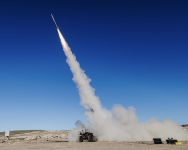
Capabilities developed through these efforts informed the design and manufacturability of Castelion’s hypersonic missile system, which is undergoing integration with Army and Navy platforms. Government-coordinated testing included prototype vehicle launches at Dugway Proving Grounds, Utah, on Nov. 6, 2025, and at San Nicolas Island within the Point Mugu Sea Range, California, on Dec. 5, 2025, to collect performance data under operationally relevant conditions.
Last edited: