US Military Technology


True Anomaly Selected for GHOST-R GEO Reconnaissance Mission

Geosynchronous orbit (GEO) is becoming contested, and the mission set is evolving to meet it. GEO is home to capabilities our nation depends on: advanced missile warning, global strategic communications, and national intelligence assets, all parked over fixed points on Earth because the mission demands persistence. For most of the space age, this orbit was sparsely populated and required little active monitoring. That condition has changed. As more systems operate in GEO and maneuver with greater capability, the ability to pursue, approach, and characterize objects in that regime has become a prerequisite for defending what lives there. GHOST-R is the first step for the United States in building it.
True Anomaly was selected by the Department of War Innovation Unit (DIU) to deliver its Jackal autonomous orbital vehicle for the Geosynchronous High-Resolution Optical Space-Based Tactical Reconnaissance (GHOST-R) program. GHOST-R paves the way for the success of RG-XX, the United States Space Force’s (USSF) program of record for establishing a persistent, highly maneuverable, and proliferated constellation in GEO for space domain awareness.
 
Unmanned AEW.


We’re delivering a whole new approach to airborne early warning & control on the MQ-9B family of aircraft. Our MQ-9B #AEWC solution extends the range of existing AEW fleets—providing persistent defense against evolving threats while keeping crewed assets safe. Whatever the mission demands, #MQ9B AEW&C puts air dominance within reach
 
  • Like
Reactions: BMD

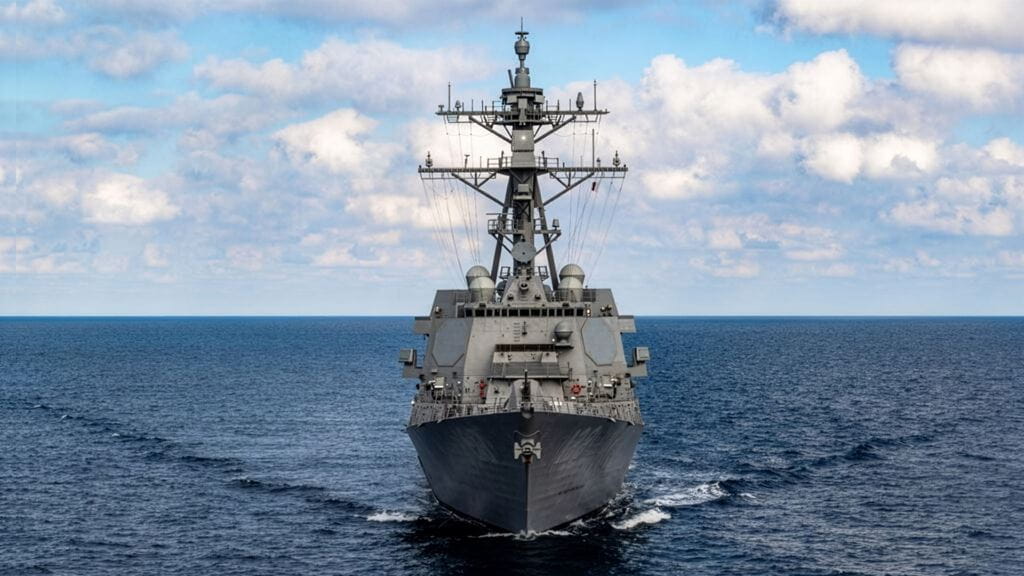
The US Navy’s Office of Naval Research (ONR) has awarded Raytheon a contract to develop advanced target-detection capabilities for the SPY-6 family of shipborne radars and future naval radar systems.

Under the contract, Raytheon’s Advanced Technology team will develop and test signal- and data-processing algorithms and integrate software upgrades to extend detection range, improve sensitivity, and increase radar efficiency.

The program builds on Raytheon’s work in software-defined apertures and research under previous ONR initiatives, including ASPIRE and STORM, which advanced hardware and software technologies for next-generation radar systems.

Work will be conducted at Raytheon facilities in Portsmouth, Rhode Island, and Andover, Massachusetts, through 2031.

“Modernizing fielded radar systems with software-first upgrades is one of the fastest and most cost-effective ways to deliver mission-ready capability,” President of Advanced Technology at Raytheon, Colin Whelan, said.

“These enhancements will enable naval operators to detect smaller objects at greater distances and classify targets more quickly, providing the fleet with faster, more informed decision-making.”
 
  • Like
Reactions: BMD