
VL-SRSAM Missiles for Indian Navy
- Thread starter Amarante
- Start date
You are using an out of date browser. It may not display this or other websites correctly.
You should upgrade or use an alternative browser.
You should upgrade or use an alternative browser.
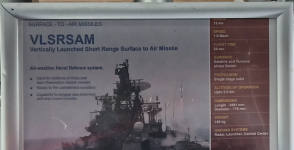


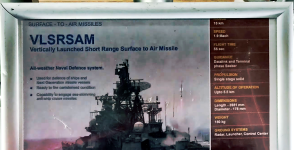

huh? like this is so different from the stats reported earlier wtf? not even 50km? or is this an early version?
What are the odds of a 180kg AUW Astra derivative having the same range as a MICA VL (112kg)?
The Astra Mk1 AAM has a reported range of 110km, around the same as AIM-120C5. I bet the VLSRSAMs range is atleast 25km. The DRDO might just be up to its usual tricks again.
The Astra Mk1 AAM has a reported range of 110km, around the same as AIM-120C5. I bet the VLSRSAMs range is atleast 25km. The DRDO might just be up to its usual tricks again.
Its BDL , so range etc can be sometimes perplexing. They also make version/mk 1 mk2 etc which is present in Astra itself and here mention of single rocket motor, so the scope is there obviously.
Missile flight path and the guidance algorithm in the obc determine range function. Single obc can usually run multiple guidance algo programs option which is why different mode of engagement is there and trajectory choice. With a good guidance scheme you can have launch range increased to 90 km whereas normal guidance scheme would have allowed for 52 km. Autopilot design is a very critical affair the mathematical model that will be used is an interesting & evolving field of study & highly computation oriented.
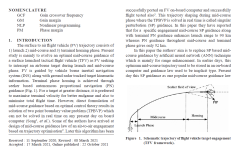
Missile flight path and the guidance algorithm in the obc determine range function. Single obc can usually run multiple guidance algo programs option which is why different mode of engagement is there and trajectory choice. With a good guidance scheme you can have launch range increased to 90 km whereas normal guidance scheme would have allowed for 52 km. Autopilot design is a very critical affair the mathematical model that will be used is an interesting & evolving field of study & highly computation oriented.
i
also where is the image with the range from? and havent multiple reports confirmed a 50km engagement range or was that detection range? so many questions about this one lol.
ll be very honest i simply dont understand what you are saying. to put it in layman terms this 15km range shown is not final and a lot more can be squeezed out of the airframe? or is this the very first iteration of this missile? because even with astra mk1 we should be getting NASAMS range(30 km).Its BDL , so range etc can be sometimes perplexing. They also make version/mk 1 mk2 etc which is present in Astra itself and here mention of single rocket motor, so the scope is there obviously.
Missile flight path and the guidance algorithm in the obc determine range function. Single obc can usually run multiple guidance algo programs option which is why different mode of engagement is there and trajectory choice. With a good guidance scheme you can have launch range increased to 90 km whereas normal guidance scheme would have allowed for 52 km. Autopilot design is a very critical affair the mathematical model that will be used is an interesting & evolving field of study & highly computation oriented.
View attachment 47941
also where is the image with the range from? and havent multiple reports confirmed a 50km engagement range or was that detection range? so many questions about this one lol.

Everyone is worried about the wrong thing.
Focus on the altitude. That's what got me worried. That's basically Barak 1 level of ceiling.
Focus on the altitude. That's what got me worried. That's basically Barak 1 level of ceiling.
It is easy to understand if we go step by step. Missiles need an active propulsion, here we have a single solid rocket motor shown. So it will have something like all boost or boost sustain feature. Once the rocket motor is burnt out no more active thrust. It has gained decent acceleration by then, so will have to use that kinetic acceleration gained momentum to go through and engage its target.ll be very honest i simply dont understand what you are saying. to put it in layman terms this 15km range shown is not final and a lot more can be squeezed out of the airframe? or is this the very first iteration of this missile? because even with astra mk1 we should be getting NASAMS range(30 km).
Now the target, that can be maneuvering esp fighter jets. So to counter that maneuver the missile also has to maneuver and beat the targets relative velocity wrt its own airframe otherwise it can not hit the target or get close by. Since there is no active propulsion beyond the stated 55 seconds flight, range will be limited because to chase a maneuvering target there will be lot of aerodynamic drag faced due to high G turns which penalizes the speed and acceleration. Astra mk1 rocket motor can operate for much longer duration, but here it is shown only 55 sec flight time. So the missile has to do its job with the kinetic impulse gained in that short flight duration. This is why range is limited and low.
Now even more complex, missiles have a guidance unit in the autopilot program which will control its flight ie making it fly the way you want. This guidance is basically a mathematical model that predicts the best way to engage its target based on input data & calculating real time. Every country or company build their own autopilot program. Like different mathematical problems give different result/answers , you can get different range from the same missile by applying guidance program model, obviously stretched within a certain limit.
also where is the image with the range from? and havent multiple reports confirmed a 50km engagement range or was that detection range? so many questions about this one lol.
From this vlog. We wait and see what is true capability of this missile system and how many variants are made or not.

Heartbreaking

Range and altitude are to match Barak-1 which it is replacing. That was their SQR asked for. For which they have tested.Everyone is worried about the wrong thing.
Focus on the altitude. That's what got me worried. That's basically Barak 1 level of ceiling.
There will be improvement in numbers when they have time to test for extended scenarios.

yea that makes sense, but its going to take a long time do validate at higher ranges and altitudes thoughRange and altitude are to match Barak-1 which it is replacing. That was their SQR asked for. For which they have tested.
There will be improvement in numbers when they have time to test for extended scenarios.
They already have higher altitude & range version systems and data available from tests beforehand. I think when it comes to defence on the sea, the sea-skimming missiles are the biggest threat whether subsonic or supersonic. Maybe this is why it is intended for, to target any sea skimming vector threat. 15km over the open sea is quite vast and if the accuracy is as intended the range would be just as fine from launch to hit before the incoming vector can pull off some major maneuver to deceive the ad system.oh yea that makes sense, but its going to take a long time do validate at higher ranges and altitudes though
VSHORD/Crosshair-N : Point Defence for Patrol and Auxillary Vessels.
VL-SRSAM : Point defence.
Barak-8 : Local Area & Area Defence.
LRSAM/Kusha-M2 : Long Range Air Defence.
The gap that remains is defence against low cost UAVs and USVs. Maybe Navy will also buy Martlet for such purposes.
VL-SRSAM : Point defence.
Barak-8 : Local Area & Area Defence.
LRSAM/Kusha-M2 : Long Range Air Defence.
The gap that remains is defence against low cost UAVs and USVs. Maybe Navy will also buy Martlet for such purposes.

Not at all. Single-pulse Astra won't cross more than 25-30Kms, when launched from the ground without booster.Heartbreaking
Good news is that since Astra 2 is dimensionally very similar to MK1, so we could always design VLSRSAM MK2 version(with Astra MK2 as base) with same cannister with range upto 40-50kms.
But even then the borchure will only read 30kms max range, lol
 @marich01
That useless thing is garbage.Martlet
You need a fire and forget system for countering UAVs.
Martlet offers you the exactly same capability as a 70mm unguided rocket with a laser guidance kit.

Bhargavastra + 30mm RCWS ( both EO/IR and guidance) should suffice.That useless thing is garbage.
You need a fire and forget system for countering UAVs.
Martlet offers you the exactly same capability as a 70mm unguided rocket with a laser guidance kit.
We already have modernised rbu rockets for surface and underwater threats, with deep magzines.
Hey, what happened to Bhargavastra? Does anyone know its status? Its like it completely disappeared from the scene after its May trials. There is not a single article covering it post May.Bhargavastra + 30mm RCWS ( both EO/IR and guidance) should suffice.
We already have modernised rbu rockets for surface and underwater threats, with deep magzines.
Few months ago testing begin, still ongoing.Hey, what happened to Bhargavastra? Does anyone know its status? Its like it completely disappeared from the scene after its May trials. There is not a single article covering it post May.
Probably will go into user trails in 2026.

Even if we don't get UVLS, Navy should try to upgrade their current SAM capabilities.
32 Barak won't cut it.
Atleast 48 VLSRSAM for current 7 destroyer and 7 frigates.
Might as well add more Barak/MRSAM on destroyers.
Kolkata class - 3 vessels (32-48 VLSRSAM)
Vishakapatnam class- 4 vessels (32-48)
Nilgiri class - 7 vessels (32-48)
NGMV- 6 vessels (24 Missile)
NGC/NGF - (32 for Corvette and 48 for Frigates)
32 Barak won't cut it.
Atleast 48 VLSRSAM for current 7 destroyer and 7 frigates.
Might as well add more Barak/MRSAM on destroyers.
Kolkata class - 3 vessels (32-48 VLSRSAM)
Vishakapatnam class- 4 vessels (32-48)
Nilgiri class - 7 vessels (32-48)
NGMV- 6 vessels (24 Missile)
NGC/NGF - (32 for Corvette and 48 for Frigates)