
Cheap Sagarika screwdrivergiri knockoff on way to complete desi delivery in under 10 mins (else money back maybe) to pak.
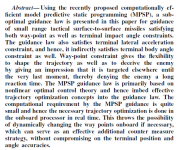


Its a drdo paper, screwdriver is generally referred to foreign weapons screwdrivered by Indian firms.screwdrivergiri knockoff on way to complete desi delivery in under 10 mins (
2 different generation of scientists worked on those 2 projects in different timeframe. hence can be applied that latter batch reused established proven tech.Its a drdo paper, screwdriver is generally referred to foreign weapons screwdrivered by Indian firms.
But isn't pralay already developed?


We nees to mass produce these. Need hundreds upon hundreds of them!!!
Pralay is 5 tonne missile so even with best optimisation its A2G variant shall be around 4 tonne. That brings the question of how IAF plans to use it because current inventory & planned platforms dont have the capability to air launch such heavy missile.
I think Rather than looking it as an varient.Pralay is 5 tonne missile so even with best optimisation its A2G variant shall be around 4 tonne. That brings the question of how IAF plans to use it because current inventory & planned platforms dont have the capability to air launch such heavy missile.
What happened to those Agni based bunker buster variant rumors?I think Rather than looking it as an varient.
It's better to look it as a new ~3 ton missile A2G based on pralay's "tech".
Plus AFAIK those 5 tons is launch weight of fully prepared missile with its payload.
It's payload ranging from 350kg to 1 ton.
IMO, A shorter, and some what narrower missile, at most 500kg max payload can be made based on using pralay's tech
That weights ~3-3.5 tons fully ready.
Though rudram 3 is already in user trails, the only advantage a A2G pralay will give over it will be more speed and larger payload.
I don't really think its that much Worth it to make a A2G pralay.

Not really, you can decrease warhead to 200kg and the missile is released in same speed as the carrier jet ie it would start with certain kinetic thrust at around 10km like altitude. So right there almost 800kg to 1 ton propellant saving achieved. Then you got faster climb up, possibly less dia rocket motor (decrease from 740mm dia to somewhat 600mm brahmos class, or use similar non uniform airframe structure like R3) and also avionics+airframe now much lighter esp if they use those isogrid structure airframe parts. So overall air launched version can be brought down to 2.2 ton range fully integrated.Pralay is 5 tonne missile so even with best optimisation its A2G variant shall be around 4 tonne. That brings the question of how IAF plans to use it because current inventory & planned platforms dont have the capability to air launch such heavy missile.
LRSOW idea is like that. Plenty of things can be done now should they wish to make different kind of systems. Can easily give 6-8 different config myself. However it needs to satisfy the somewhat restrictions we face. Su30 will not pull more than 2.5-2.6 ton article else safety compromised. The double pylon combined launcher of brahmos is rated for max 3 ton prob, and for safety you can load up to 2.5 ton approx. The launcher itself weigh ~ 450 kg. So the article needs to be max 2.1 ton class with few kg both side give or take.RudraM 3 is 1500kg-1800kg with 550km range.
A Pralay deravtive of 2.5T-3ton for Su30 will be good enough. (Our Kinzhal?)
Rudram 2 and 3 already have similar or somewhat heavier warhead than 200kg.Not really, you can decrease warhead to 200kg and
Brahmos A's weight is mentioned to be 2550kg.So the article needs to be max 2.1 ton class with few kg both side give or take.
Thats a new missile.Not really, you can decrease warhead to 200kg and the missile is released in same speed as the carrier jet ie it would start with certain kinetic thrust at around 10km like altitude. So right there almost 800kg to 1 ton propellant saving achieved. Then you got faster climb up, possibly less dia rocket motor (decrease from 740mm dia to somewhat 600mm brahmos class, or use similar non uniform airframe structure like R3) and also avionics+airframe now much lighter esp if they use those isogrid structure airframe parts. So overall air launched version can be brought down to 2.2 ton range fully integrated.
No idea.What happened to those Agni based bunker buster variant rumors?
That much changes will make it a completely new missile rather than a A2G version. Both heavy warhead capacity and range advantage will be lost. Rudram 3 is already there to perform the same role of this new missile with faster induction timeline. I dont think this is planned. But i m beginning to doubt if there is a possibility that 4 tonne A2G prahar can be launched by IAF transport aircraftsNot really, you can decrease warhead to 200kg and the missile is released in same speed as the carrier jet ie it would start with certain kinetic thrust at around 10km like altitude. So right there almost 800kg to 1 ton propellant saving achieved. Then you got faster climb up, possibly less dia rocket motor (decrease from 740mm dia to somewhat 600mm brahmos class, or use similar non uniform airframe structure like R3) and also avionics+airframe now much lighter esp if they use those isogrid structure airframe parts. So overall air launched version can be brought down to 2.2 ton range fully integrated.
A smaller shorter narrower new missile is not going to have definitive advantage over Rudram 3 both in terms of range or speed. Rudram 3 with more control surfaces will have better accuracy and air defense evading capabilities. Even 3-3.5 tonne missile cannot be carried by current inventory. Remember Brahmos A is 2.2 tonne only.I think Rather than looking it as an varient.
It's better to look it as a new ~3 ton missile A2G based on pralay's "tech".
Plus AFAIK those 5 tons is launch weight of fully prepared missile with its payload.
It's payload ranging from 350kg to 1 ton.
IMO, A shorter, and some what narrower missile, at most 500kg max payload can be made based on using pralay's tech
That weights ~3-3.5 tons fully ready.
Though rudram 3 is already in user trails, the only advantage a A2G pralay will give over it will be more speed and larger payload.
I don't really think its that much Worth it to make a A2G pralay.
Where exactly it is shown a heavier warhead ? R2 is 1050kg all up, its a miracle they have managed to push 200kg warhead in that. Solid fuel rockets need high % propellant loading to overall weight if these are to fly at high speed in relatively lower altitude.Rudram 2 and 3 already have similar or somewhat heavier warhead than 200kg.
not much to take away at all, its for a longer reach and via diverse platform. When you are programming the guidance law, the range constraint is done for a specific range engagement ie you have to specify at which range the engagement is to happen. This is done to determine whether the missile/FV is having the required kinematics to sustain its flight with the required thrust and maneuverability. This is important because if the range is too great the trajectory optimisation will not work the way you plan it to be under the ambient condition because there will be a shortfall between data in calculated test level vs data in practical test level.It will take away any seperate capability that pralay can provide.
Especially
Rudram 3 With 500+km range.
In the recent interview Dr Mishra specifically mentioned the alcm weight 2.2 ton, so with launcher weight it will be within tolerance threshold of safe flying condition at 2.6 ton. Even if the dual jugaad pylon was rated for 3 ton , it is not advisable to full load for safe take off , flight to the desired location and then release. Our airframes are hardy but also get old, heavy wear tear. So need to consider that aspect too.Brahmos A's weight is mentioned to be 2550kg.
Is it with launcher?
Or weight of the missile only?
So your saying at ~500 km range, pralay based missile will be more accurate than rudram 3?not much to take away at all, its for a longer reach and via diverse platform. When you are programming the guidance law, the range constraint is done for a specific range engagement ie you have to specify at which range the engagement is to happen. This is done to determine whether the missile/FV is having the required kinematics to sustain its flight with the required thrust and maneuverability. This is important because if the range is too great the trajectory optimisation will not work the way you plan it to be under the ambient condition because there will be a shortfall between data in calculated test level vs data in practical test level.