
Project Kusha / Programme LRSAM / PGLRSAM
- Thread starter Fatalis
- Start date
You are using an out of date browser. It may not display this or other websites correctly.
You should upgrade or use an alternative browser.
You should upgrade or use an alternative browser.




India to begin testing new long-range interceptor missiles for defence shield next year
NEW DELHI: India will next year begin testing new interceptor missiles for an indigenous air and missile defence shield under Project Kusha, which will be a critical element of the ambitious `Mission Sudarshan Chakra (MSC)’ announced by PM Modi to provide security cover to strategic as well as vital civilian areas in the country by 2035.The plan is to test the M1 missile, with an interception range of 150-km against incoming enemy aircraft, stealth fighters, cruise missiles, drones and precision-guided munitions, in 2026. It will be followed by M2 (250-km range) in 2027 and M3 (350-km range) in 2028 for the missile-based layered defence system being developed by DRDO, top sources told TOI.
The aim is to complete the development of these three long-range surface-to-air missiles (LR-SAMs) and related systems under Project Kusha by 2028 to, hopefully, pave the way for their induction from 2030 onwards, the sources added.
This fully-automated LR-SAM system, which will rival the expensive Russian-origin S-400 Triumf air defence system deployed by the IAF in limited numbers, will be a part of the overall MSC plan to build a multi-layered integrated air and missile defence shield around key locations.
In this, it will be somewhat similar to the proposed `Golden Dome’ missile defence initiative of the US or the deployed Israeli `Iron Dome’, which only has to protect a very small country. It is estimated the expansive Golden Dome, with the capability to also shoot down missiles in space, will cost around $500 billion over the next 20 years.
Chief of Defence Staff General Anil Chauhan, at the `Ran Samwad’ conclave at Mhow on Tuesday, said he was sure India could build its own “Iron or Golden Dome” under the MSC at “an affordable cost” with a whole-of-nation approach.
“It will act both as a shield and sword,” the CDS said, in tune with the PM’s statement that the defence shield will not only thwart aerial threats but also launch counter-strikes to hit the adversary “many times more”.
This clearly implies India will go in for a major expansion of its conventional (non-nuclear) arsenal of missiles like Pralay (500-km strike range), BrahMos (increased range from 450-km to 800-km) and land-attack cruise missiles (1,000-km range).
Gen Chauhan, on his part, acknowledged the proposed defence shield will require “a colossal amount of integration” of myriad capabilities as well as development of infrastructure and processes for “detection, acquisition and neutralisation of enemy air vectors, using soft and hard kill options, including kinetic and directed energy weapons (like lasers)”.
The shield, of course, will require multi-domain ISR (intelligence, surveillance, reconnaissance) through an overlapping network of early-warning and tracking sensors deployed on land, air, sea, undersea and space.
Then, robust land and sea-based batteries of a wide array of short to long range SAM missiles, high-power lasers and other weapons will be needed. Finally, reliable command and control posts to manage the sensors and weapons with an integrated air picture to effectively respond in real-time.
A small beginning was made with DRDO’s maiden test of an integrated air defence weapon system (IADWS) on Aug 23. It included quick reaction surface-to-air missiles (QRSAMS, with 30-km interception range), very short-range air defence system (VSHORADS, with 6-km range) missiles and a 30-kilowatt laser-based directed energy weapon (DEW, with 3.5-km range).
“Many of the building blocks for the MSC defence shield have either been developed or are being developed. The real challenge will be to integrate them all. It will cost a lot of money for a large country like India,” a source said.
A comprehensive defence shield will also include the operational deployment of Phase-I of the indigenous two-tier ballistic missile defence (BMD), which has been developed by DRDO to track and destroy enemy ballistic missiles in the 2,000-km range class, at different altitudes both inside (endo) and outside (exo) the earth's atmosphere for “a higher kill probability”.
In July last year, DRDO also successfully flight-tested an endo-atmospheric interceptor missile under Phase-II of the BMD system, with the defence ministry proclaiming it demonstrated the indigenous capability to defend against hostile nuclear-capable missiles in the 5000-km range class.
M1 was supposed to be tested next month . So yet another delay....India to begin testing new long-range interceptor missiles for defence shield next year
NEW DELHI: India will next year begin testing new interceptor missiles for an indigenous air and missile defence shield under Project Kusha, which will be a critical element of the ambitious `Mission Sudarshan Chakra (MSC)’ announced by PM Modi to provide security cover to strategic as well as vital civilian areas in the country by 2035.
The plan is to test the M1 missile, with an interception range of 150-km against incoming enemy aircraft, stealth fighters, cruise missiles, drones and precision-guided munitions, in 2026. It will be followed by M2 (250-km range) in 2027 and M3 (350-km range) in 2028 for the missile-based layered defence system being developed by DRDO, top sources told TOI.
The aim is to complete the development of these three long-range surface-to-air missiles (LR-SAMs) and related systems under Project Kusha by 2028 to, hopefully, pave the way for their induction from 2030 onwards, the sources added.
This fully-automated LR-SAM system, which will rival the expensive Russian-origin S-400 Triumf air defence system deployed by the IAF in limited numbers, will be a part of the overall MSC plan to build a multi-layered integrated air and missile defence shield around key locations.
In this, it will be somewhat similar to the proposed `Golden Dome’ missile defence initiative of the US or the deployed Israeli `Iron Dome’, which only has to protect a very small country. It is estimated the expansive Golden Dome, with the capability to also shoot down missiles in space, will cost around $500 billion over the next 20 years.
Chief of Defence Staff General Anil Chauhan, at the `Ran Samwad’ conclave at Mhow on Tuesday, said he was sure India could build its own “Iron or Golden Dome” under the MSC at “an affordable cost” with a whole-of-nation approach.
“It will act both as a shield and sword,” the CDS said, in tune with the PM’s statement that the defence shield will not only thwart aerial threats but also launch counter-strikes to hit the adversary “many times more”.
This clearly implies India will go in for a major expansion of its conventional (non-nuclear) arsenal of missiles like Pralay (500-km strike range), BrahMos (increased range from 450-km to 800-km) and land-attack cruise missiles (1,000-km range).
Gen Chauhan, on his part, acknowledged the proposed defence shield will require “a colossal amount of integration” of myriad capabilities as well as development of infrastructure and processes for “detection, acquisition and neutralisation of enemy air vectors, using soft and hard kill options, including kinetic and directed energy weapons (like lasers)”.
The shield, of course, will require multi-domain ISR (intelligence, surveillance, reconnaissance) through an overlapping network of early-warning and tracking sensors deployed on land, air, sea, undersea and space.
Then, robust land and sea-based batteries of a wide array of short to long range SAM missiles, high-power lasers and other weapons will be needed. Finally, reliable command and control posts to manage the sensors and weapons with an integrated air picture to effectively respond in real-time.
A small beginning was made with DRDO’s maiden test of an integrated air defence weapon system (IADWS) on Aug 23. It included quick reaction surface-to-air missiles (QRSAMS, with 30-km interception range), very short-range air defence system (VSHORADS, with 6-km range) missiles and a 30-kilowatt laser-based directed energy weapon (DEW, with 3.5-km range).
“Many of the building blocks for the MSC defence shield have either been developed or are being developed. The real challenge will be to integrate them all. It will cost a lot of money for a large country like India,” a source said.
A comprehensive defence shield will also include the operational deployment of Phase-I of the indigenous two-tier ballistic missile defence (BMD), which has been developed by DRDO to track and destroy enemy ballistic missiles in the 2,000-km range class, at different altitudes both inside (endo) and outside (exo) the earth's atmosphere for “a higher kill probability”.
In July last year, DRDO also successfully flight-tested an endo-atmospheric interceptor missile under Phase-II of the BMD system, with the defence ministry proclaiming it demonstrated the indigenous capability to defend against hostile nuclear-capable missiles in the 5000-km range class.
Its waste of time to follow such a program on a monthly basis. There will be so many delays. Its inevitable.M1 was supposed to be tested next month . So yet another delay....
Production is 5 years away. Anyone saying otherwise is either lying or is a DRDO scientist.


Yes unfortunately building SAMs from scratch is complex especially for a low R and D spending country like India. If we ripped off Russian systems and called them Hoe Quck 9 or something like a certain country does then things would be different perhaps.M1 was supposed to be tested next month . So yet another delay....
Production of an S400 type system in 5 years is a great achievement cuz it means our S400/HQ9/PAC equivalent will be done completely in house within a decade. Kusha will be a very unique, capable system. We need to make an export version of it.Its waste of time to follow such a program on a monthly basis. There will be so many delays. Its inevitable.
Production is 5 years away. Anyone saying otherwise is either lying or is a DRDO scientist.
If so then authentic timing must be given . You shouldn't say I will get it done next month when it willl be done next year .Yes unfortunately building SAMs from scratch is complex especially for a low R and D spending country like India. If we ripped off Russian systems and called them Hoe Quck 9 or something like a certain country does then things would be different perhaps.
Production of an S400 type system in 5 years is a great achievement cuz it means our S400/HQ9/PAC equivalent will be done completely in house within a decade. Kusha will be a very unique, capable system. We need to make an export version of it.
No professional ever gives timelines you keep on missing
You're right only 3rd world airforces with bad programs such as the USAF with F35 do such silly things.If so then authentic timing must be given . You shouldn't say I will get it done next month when it willl be done next year .
No professional ever gives timelines you keep on missing
That's right , DRDO is just like Lockheed Martin . Very comparable .You're right only 3rd world airforces with bad programs such as the USAF with F35 do such silly things.

you will never get to know what gets tested in frequent Notams for weapon testing over BOB.M1 was supposed to be tested next month . So yet another delay....

You said "no professional..." so basically Lockheed and USAF arent professional.That's right , DRDO is just like Lockheed Martin . Very comparable .
The point here is the complexity of defence technology, not a comparison.
Kusha3 will be the first one to be tested. We already have BMD in place. The Fatah missile over Sirsa was intercepted by Indian BMD as it was fired on Delhi. Proven BMD.


The Fatah missile over Sirsa was intercepted by Indian BMD as it was fired on Delhi. Proven BMD.
BMD must be capable of interception of multiple incoming ballistic warheads in round 2.
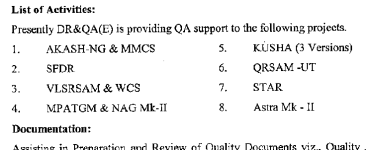
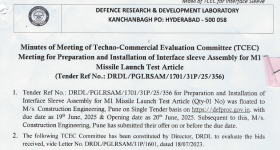
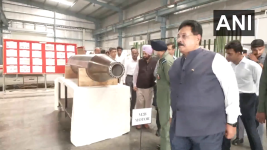
Fair few LRSAM tenders have seen progress in the last month with tcec done. data link ground system smart rack, 30 & 60 kg pf warhead TA fragments, frameless motor many things like that were pending for some time. Also the M1 test article.

Well that's not what they claimed earlier.. touting it as contender to S-500. Range upto 500KM+ I believe

Tactical missiles ought to retain metallic casings. CRMCs would make missiles expensive. We need SAMs by the thousands. Our ability to make CRMCs will remain limited in scale for the next couple of years. Better to reserve that capacity for strategic missiles.So, is that looking like a crmc to you all? That would be interesting if so. maybe just the angle, its still metallic casing? Just curious since Solar now does crmc also , for A1P.
I don't expect the small dia ones, just curious since this is long range system so can they do the booster part?Tactical missiles ought to retain metallic casings. CRMCs would make missiles expensive. We need SAMs by the thousands. Our ability to make CRMCs will remain limited in scale for the next couple of years. Better to reserve that capacity for strategic missiles.