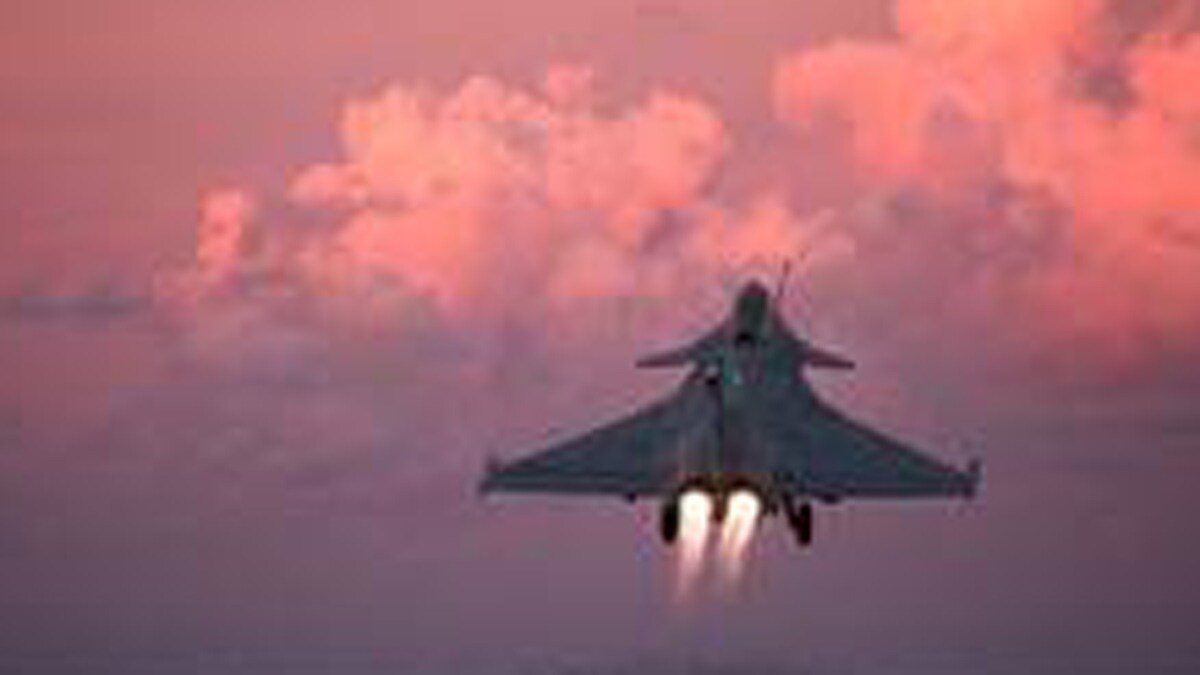
Twin-Engine Deck Based Fighter (TEDBF)

> Earlier IN indictaed 5gen TEDBF at Aero-India'25 & now again confusing citizens.😡
> IDK why some people consider only Pakistan as threat.
> Then some people wan't GCAP, some wan't FCAS & then some wan't brand new domestic 4gen. 🤦‍♂️🤣
> Future is of stealth hence DRDO making RAM, RAS, DEW, but ADA not giving geometry treatment to jets other than AMCA. & the TEDBF design has been frozen 🥶☃️:ROFLMAO:
> Delays of LCA, MWF, AMCA & no AHCA/HFA have always given excuse to import something.
> We wan't our AMCA to kill enemy's 4gen, 5gen, 6gen but wan't our 4gen to survive somehow, what an overconfidence.:rolleyes:
> Since beginning AMCA could have its naval version with custom AGMs like NSM/JSM, JASSM, AARGM-ER, MAKO, Kh-69, Kh-59mk2, Kh-58 UShKE, etc.
> Anti-ship role doesn't always mean hitting an AC which needs missiles bigger than Brahmos. There're destroyers, frigates, corvetes, etc which can be immobilised or their sensors hit & blinded, even the Op-deck & radar mast of AC can be precisely hit.
> Natural evolution of technology won't give special discount to any Navy & any 4gen jet of any nation. But still there're endless justifications for new 4gen.
 
A deal is reportedly in the works. This will take Rafale numbers in Indian service to 200+.

If we believe in TEDBF news today,
From the above article, CDR scheduled this year should have happened.. And go ahead for TEDBF is in process.
 
IMO, This looks like yet another ADA pipe dream to keep TEDBF R&D funding alive. At this pace, the project will be scrapped long before it reaches a prototype, it will probably take another 20 years from now. By then, the Navy will have moved on to 5th- or even 6th-generation fighters. We’ve already seen how slowly ADA and HAL have delivered Mk2 and AMCA. This is just another air show model, not real progress. Instead of selling concepts, ADA should prove itself by actually delivering Mk2 and AMCA prototype.
 
I have my doubts about any TEDBEF revival. considering the J35 it becomes quite useless for us. the rafale is good enough for us to use on our carriers if we are going to have non 5th gen jets.
Also remember than ADA freezing the design doesnt mean anything is going to happen. Doubt it will ever go past paper drawings simply because the rafale M satisfies this need.

J-35 is part of China's hi-lo concept, with very likely the J-50 providing the hi component. We can't have that on our small carriers.

We need a naval design based on the AMCA airframe. Its a MWF so it has a combat weight of 18tonnes(MTOW is 25 but combat is a lot lower for stealth). Which means even with the Ge 414 it maintains a TWR of 1.1. Even navalizing it would get to to 14 tonnes empty which means 20 tonnes for combat at a approx 1200kms range or even 18 tonnes with a 700-800 kms range. Even the GE414 version provides enough thrust for ski jump let alone the 120KN per engine version which will take it with ease.

ofc thrust is not the only thing that matters and wing geometry and lift matter just as much if not more but the power is there to make it happen if needed.

It's impossible. The IWB is too small for naval use. An AMCA-sized design is fine as a lo end component, like the J-35, but it can't be the primary system. USN is in the same boat concerning the F-35, so the replacement for SH will be an F/A-XX.

TEDBF is limited in size and design due to the need to fit on small STOBAR carriers.
 
> Earlier IN indictaed 5gen TEDBF at Aero-India'25 & now again confusing citizens.😡

That's for CATOBAR. And it's more likely to be closer to a 6th gen design instead.

> IDK why some people consider only Pakistan as threat.

TEDBF is for China too.

> We wan't our AMCA to kill enemy's 4gen, 5gen, 6gen but wan't our 4gen to survive somehow, what an overconfidence.:rolleyes:

Goes to show you know very little about what's happening. Even US and French navies will operate 4th gen airframes until 2060. By that time, even we will only be fully operating one carrier with TEDBF, with the second one in the process of being replaced. Our Rafale Ms will also have only 35 years, end of life in the 2060s.

USAF and PLAAF will operate 4th gen jets until the 2070s-80s. Russia will soon start building new 4th gen jets for phase out in the 2070-80s too. Relatively, compared to Eagle, Flanker, and Fulcrum, our 4.5th gen jets like Rafale, LCA Mk2, and TEDBF will be more advanced.

It's all about avionics, weapons, and the network. Stealth is important but secondary. And it's not really very important for carrier jets for many roles. We will use drones for stealth until a CATOBAR carrier becomes available.

> Since beginning AMCA could have its naval version with custom AGMs like NSM/JSM, JASSM, AARGM-ER, MAKO, Kh-69, Kh-59mk2, Kh-58 UShKE, etc.

When IN asked for the same, ADA dismissed that idea themselves. New clean-sheet stealth design instead.
 
I think FighterPiloting is referring to the AGM-158C LRASM which can only be carried externally and not the JSM that's under development of which the F-35 can carry two in its IWB.
He did not specifiy, he said anti-shipping role.

Not to mention, we don't need a navalised AMCA for navy if we are going for a stealth design.

We can design a new stealth design for carrier ops, can include a longer IWB for bigger anti-ship missiles.

TEDBF even if approved today, ain't entering service before 2040 MINIMUM.
Then it needs to remain relevant as our *PRIMARY* carrier fighter jet until minimum 2060 with upgrades.

A ~25 tons mtow, non-stealth design will be a repeat of Tejas saga, where ultimately Tejas mk2( which has changed so much that it literally become a entirely new type fighter jet, new class of fighter jet)
had to be developed to address lack of capability of Tejas, even in current scenario Tejas mk1a are not being procured as a high-end fighters, those would be Tejas mk2, rafale, upgraded su-30mki, than amca in future post 2035.


Much better to go back to a design board, design a stealth, ~30-35 tons mtow naval jet for larger future carriers
to be debuted in ~2045.

Vikramaditya will most likely be retiring post 2035, so it won't even see tedbf.

TEDBF
will see use in Vikrant + future larger carriers.
 
Last edited:
JSM is a medium-class missile.

Heavy missiles need to be carried externally. Brahmos, LRASM, Zircon, Stratus LO/RS, SCALP, ALBMs etc.

Stealth is not necessary for such heavy weapons compared to SR and MR missiles.
For heavy missiles, fighters don't even need to carry them, they can be ship-launched, the fighter just need to provide guidance.

& role of fighters on carriers is not just limited to anti-shipping missions.
 
He did not specifiy, he said anti-shipping role.

Not to mention, we don't need a navalised AMCA for navy if we are going for a stealth design.

We can design a new stealth design for carrier ops, can include a longer IWB for bigger anti-ship missiles.

TEDBF even if approved today, ain't entering service before 2040 MINIMUM.
Then it needs to remain relevant as our *PRIMARY* carrier fighter jet until minimum 2060 with upgrades.

A ~25 tons mtow, non-stealth design will be a repeat of Tejas saga, where ultimately Tejas mk2( which has changed so much that it literally become a entirely new type fighter jet, new class of fighter jet)
had to be developed to address lack of capability of Tejas, even in current scenario Tejas mk1a are not being procured as a high-end fighters, those would be Tejas mk2, rafale, upgraded su-30mki, than amca in future post 2035.

Pretty much.

AMCA's design is not suitable for carrier ops. Any attempt to change it will result in more work than a new design.

Much better to go back to a design board, design a stealth, ~30-35 tons mtow naval jet for larger future carriers
to be debuted in ~2045.

We don't need such a big jet. Plus a 4.5m long WB is sufficient for SR/MR missiles and AAMs. We need larger (wider) bay for more munitions instead. About 1.2m wide instead of the more general 0.9m like on Su-57 and F-22. 2.4m will fit in 2 JSM and 6 BVR missiles. This comes at the sacrifice of agility.

J-36's WB is over 7m long and 1.6m wide. That's a ridiculous design for a carrier.

Or we can go for a smaller design with WBs. MTOW is not that relevant, it will be restricted. Like SCAF will be limited to below 29T on carriers relative to its 33T land version. If we go for a TEDBF/SCAF class design, with just WB payload we will max out the design at 23T, with external weapons adding another 5-6T, so 28-29T.

Drones can be made to carry larger missiles internally.

Vikramaditya will most likely be retiring post 2035, so it won't even see tedbf.

No. It's been designed for 40 years. Mid-2030s is the MLU. Decommissioning in the 2050s.

Sevmash has a 20-year maintenance contract which will be renewed after MLU for another 20 years.
 
For heavy missiles, fighters don't even need to carry them, they can be ship-launched, the fighter just need to provide guidance.

& role of fighters on carriers is not just limited to anti-shipping missions.

Fighters are made to carry AShMs due to the need for positioning and a shorter alert cycle. Fighters increase the number of angles of attack. And fighter presence also lowers the chance of interception with it providing top cover. And it adds mass to the ship-launched missiles.

They can also operate on the fringes of the enemy's LoS and provide jamming support. The added air traffic too further hinders interception.

And finally, peform BDA.

Fighters also increase the range of missiles phenomenally by flying much further out to sea. MKI + Brahmos gives the missile a 1500-km range.
 
Pretty much.

AMCA's design is not suitable for carrier ops. Any attempt to change it will result in more work than a new design.


We don't need such a big jet. Plus a 4.5m long WB is sufficient for SR/MR missiles and AAMs. We need larger (wider) bay for more munitions instead. About 1.2m wide instead of the more general 0.9m like on Su-57 and F-22. 2.4m will fit in 2 JSM and 6 BVR missiles. This comes at the sacrifice of agility.

J-36's WB is over 7m long and 1.6m wide. That's a ridiculous design for a carrier.

Or we can go for a smaller design with WBs. MTOW is not that relevant, it will be restricted. Like SCAF will be limited to below 29T on carriers relative to its 33T land version. If we go for a TEDBF/SCAF class design, with just WB payload we will max out the design at 23T, with external weapons adding another 5-6T, so 28-29T.

Drones can be made to carry larger missiles internally.


No. It's been designed for 40 years. Mid-2030s is the MLU. Decommissioning in the 2050s.

Sevmash has a 20-year maintenance contract which will be renewed after MLU for another 20 years.
then why is the navy asking for a vikrant repeat? The vikramaditya seems to be having a lot of structural issues right now. We will know the truth in 2035 when it goes through Non destructive structural testing.
 
We don't need such a big jet. Plus a 4.5m long WB is sufficient for SR/MR missiles and AAMs. We need larger (wider) bay for more munitions instead. About 1.2m wide instead of the more general 0.9m like on Su-57 and F-22. 2.4m will fit in 2 JSM and 6 BVR missiles. This comes at the sacrifice of agility

We do need a bigger jet for future, or at the very least a jet with high combat radius.
As longer range & faster missiles are proliferating, U.S. Navy is also looking to retreat its carriers further back in pacific than initially to operate relatively safely without being overwhelmed, One of the core requirements of FA-XX.

Chinese SSNs & surface combatants will also carry lot more longer range & faster missiles in future.

We need a carrier fighter having the capability to cover mallacca straight while carrier itself remaining 1500+km behind the straits,to reduce the number & density Of chinese( ship, sub, air launched) anti-ship vectors that have the range to strike the carrier, assuming we can restrict chinese fleet to operate behind the Strait.


Also, when i mention mtow, i'm focusing on the size, range etc performance of other fighters in similar mtow class, not MTOW itself.

We need a jet more in performance range of Su57, SCAF as our primary carrier fighter for post 2040s, operational combat radius of ~1500km along with being a stealth, not a Rafale class jet.

( though report also claim amca will have combat radius of 1500km, I find it hard to beleive, my estimates are 1200+km)


As for IWB, 4.5-5 m long, 1-1.5 m wide single,should be sufficient.

Also, no. Of carrier fighter will be low, so they need to be qualitatively competent.


Drones can be made to carry larger missiles internally.

I also hope we can make them, but doesn't seem like we are gonna make big enough stealth drones to carry relatively larger anti-ship missiles like brahmos ng in iwb, most likely it will be carried externally.

No. It's been designed for 40 years. Mid-2030s is the MLU. Decommissioning in the 2050s.

Sevmash has a 20-year maintenance contract which will be renewed after MLU for another 20 years

Official naval planning reports and analysis suggest INS Vikramaditya has roughly 10–12 years of operational life remaining as of 2025, with a projected retirement around 2037. A structural audit is scheduled for 2035 to determine the feasibility of service beyond this period.

Even if the audit determines its still operationally & cost wise feasible for
Vikramaditya to service beyond 2040, it ain't gonna be a front line carrier.

Fighters are made to carry AShMs due to the need for positioning and a shorter alert cycle. Fighters increase the number of angles of attack. And fighter presence also lowers the chance of interception with it providing top cover. And it adds mass to the ship-launched missiles.

They can also operate on the fringes of the enemy's LoS and provide jamming support. The added air traffic too further hinders interception.

And finally, peform BDA.

Fighters also increase the range of missiles phenomenally by flying much further out to sea. MKI + Brahmos gives the missile a 1500-km range.

Yeah, I know.

Along with all those
They also need to be survivable & able to
contest enemy fighters strike division.

Fighters are made to carry AShMs due to the need for positioning and a shorter alert cycle
So you're saying they will see the missile long before They see a fighter carrying a missile, hence shorter alert cycle?

The only scenerios where this feasible is if a instrumentally(RF or IR) quite visible missile is flying at altitudes that are lot higher than where fighters fly.
( 20km+ km altitude minimum, basically HCM, HGV, ballistic)

A ship/sub launched supersonic or subsonic cruise missile fly lower ( 10-15km in Hi portion of their flight)
 
then why is the navy asking for a vikrant repeat? The vikramaditya seems to be having a lot of structural issues right now. We will know the truth in 2035 when it goes through Non destructive structural testing.

The navy did not ask for a Vikrant repeat, they wanted Vishal. But MoD set budget limits and that has restricted the navy's option to a second Vikrant.

But yeah, it will go through testing before MLU. But 70% of the ship is new, so it's unlikely to see serious problems.
 
With the new evolving threats ( or already evolved ) of drones, i think AC warfare needs to be revised. Imagine AC being targeted with swarms of drones at 600-1000 km far. AC is will be forced to operates such safe distance from shore limiting the aircraft.
We need to make large ACs & Deck based heavy class aircraft with 2000 kn range, is it even possible or practical?