Peter Briggs September 1, 2026
US production shortfalls, Britain’s submarine crisis and Australia’s own infrastructure delays are eroding the assumptions behind AUKUS. It’s time to take a different path.
The AUKUS ‘optimal pathway’ was supposed to deliver a seamless transition from our Collins-class fleet to US Virginia-class SSNs, followed by a jointly built SSN-AUKUS. Today, that pathway looks structurally undeliverable, operationally fragile and fiscally irresponsible.
The core assumptions of AUKUS are unravelling across both sides of the Atlantic. In the United States, shipyard output stubbornly hovers between 1.1 and 1.2 attack submarines per year, far below the 2.0+ rate required to sustain the US Navy’s own force structure. Under US law (10 U.S.C. § 8677), no US president can transfer second-hand Virginia-class hulls if doing so degrades American undersea readiness. Australia is counting on submarines that the US Navy simply cannot afford to give away.
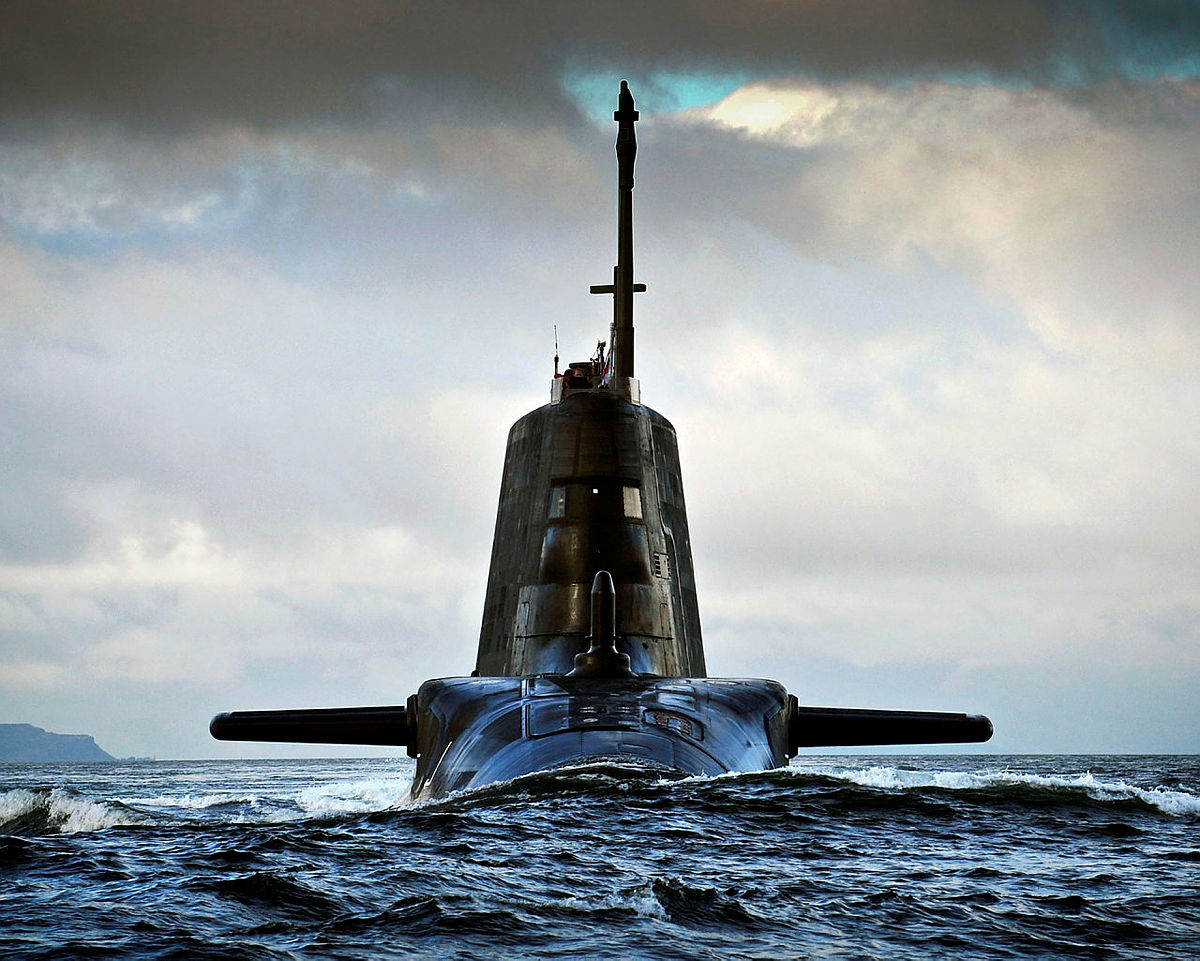
In the United Kingdom, the situation is even more dire. The Royal Navy’s attack submarine capability has effectively collapsed. By mid-2026, public fleet tracking revealed an unprecedented crisis: all five in-service Astute-class SSNs were tied up alongside simultaneously due to severe maintenance backlogs, dockyard shortages and cannibalisation for spare parts. HMS Ambush has not put to sea since August 2022 and HMS Artful has been inactive since May 2023.
This is not merely an Australian assessment. Former British director of nuclear policy, Rear Admiral Philip Mathias, recently delivered a scathing verdict on the state of the Royal Navy fleet, warning that:
“
Britain’s nuclear submarine fleet is in ‘DEEP’ trouble and why it can’t provide Australia with the support it needs.”
Admiral Mathias further highlighted Australia’s strategic miscalculation in signing up to the deal, stating:
“
It is clear that Australia has shown a great deal of naivety and did not conduct sufficient due diligence on the parlous state of the UK’s nuclear submarine program before signing up to AUKUS… Policy and money don’t build nuclear submarines – people do that, and there are not enough of them with the right level of skills and experience.”
He concluded that there is a “
high probability that the UK element of AUKUS will fail,” observing that “
the UK is no longer capable of managing a nuclear submarine program”. Plagued by shipyard overloads and prioritising its
Dreadnought nuclear-deterrent SSBNs, the UK is in no position to act as a reliable submarine build or operational training partner for Australia.
Crucially, the UK disaster provides a stark warning about the perils of neglecting comprehensive docking and sustainment infrastructure. The collapse of Britain’s SSN availability was not caused by a lack of operational will, but by a failure to maintain certified nuclear dry docks, refuelling facilities and specialised maintenance infrastructure at Devonport and Faslane. Australia is rushing toward the exact same trap.
At Osborne in South Australia, attempting to squeeze massive nuclear submarine construction alongside the
Hunter-class frigate program and
Collins Life of Type Extension (LOTE) creates spatial and capital gridlock exceeding $30 billion.
Meanwhile, the belated start to master planning for the Henderson Defence Precinct in Western Australia guarantees that Australia will not achieve ’nuclear ready’ certification by 2031, when the US decision to sell the first
Virginia-class hull is scheduled to be made.
Worse still, these severe infrastructure delays mean Australia will be unable to provide the certified depot-level maintenance and contingency docking required to support Submarine Rotational Force-West (SRF-West). Without comprehensive, certified domestic dry docks and deep sustainment yards, acquiring complex nuclear submarines is an exercise in futility, leaving multi-billion-dollar hulls rotting alongside piers.
Beyond physical infrastructure gridlock, AUKUS presents a self-inflicted crewing and force-structure crisis. Managing a fragmented three-class fleet (
Collins,
Virginia, and SSN-AUKUS) splits training, supply chains and personnel. An eight-boat AUKUS force will yield at best two to three deployable submarines on station at any given time, a poor return for a $368 billion investment. Furthermore, insisting on highly enriched uranium (HEU) reactors introduces weapons-grade fuel hazards, intrusive 3-to-5-kilometre emergency exclusion zones at urban shipyards like Osborne and severe social licence risks.
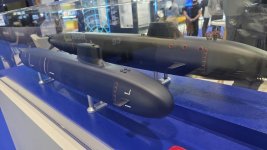
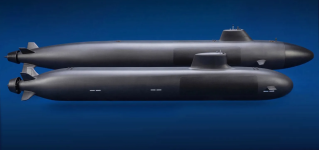
Australia does not need to abandon nuclear propulsion, but we must abandon the unworkable AUKUS framework. A viable, lower-risk alternative exists: pivoting to a low-enriched uranium (LEU) SSN based on the proven French
Suffren design.
At ~5,000 tonnes, the
Suffren baseline is already operational, debugged and requires a crew of just 65, halving the Royal Australian Navy’s seagoing recruitment target compared to the 135-person crews required for US and UK hulls. Subject to safety assessment, its smaller displacement would allow it to utilise existing shiplift and docking facilities, drastically reducing the infrastructure overload at both Osborne and Henderson. Built continuously at Osborne, an Australian fleet of 12 LEU SSNs can be delivered for $4.5 billion per hull ($54 billion build cost), with a total 30-year lifecycle program cost of approximately $180 billion. This $4.5 billion per unit cost figure is derived from a French offer to supply eight
Suffren for the cost of the 12
Attack-class conventional submarines plus 10 per cent, as reported in Andrew Fowler’s book,
Nuked: The Submarine Fiasco that Sank Australia’s Sovereignty.
This pivot saves Australia $188 billion compared to the headline AUKUS estimate. Reallocating that sovereign dividend releases up to $6.2 billion per annum back into the Defence budget over 30 years. These funds can directly secure sovereign long-range strike missiles, fund our surface frigate fleet, and establish the robust, sovereign dockyard infrastructure needed to sustain our fleet independently.
Continuing down the current AUKUS path risks leaving Australia with a prolonged undersea capability gap, no design rights, and an un-crew-able, unviable force. It is time for a pragmatic policy pivot to a 12-boat LEU submarine program that delivers true national sovereignty, continuous domestic shipbuilding and real maritime deterrence at a price Australia can afford.
/END
Peter Briggs retired from the RAN in 2001 after a 40-year career, specialising in submarines.
This included two submarine commands, command of the RAN Submarine Squadron, director of Submarine Policy and Warfare and Head of Submarine Capability Team, established to rectify Collins introduction into service issues.
He was the president of the Submarine Institute of Australia from 2006-09
and is a frequent contributor to public debate on Australian submarine matters.


 www.defenceconnect.com.au