That danger always exists. But it will disappear by 2035. Unlike Japan, the Americans will transfer 100% of the production tech to India, along with 80% of the engine tech. The deal is expected to be signed this year, and full indigenous production is expected to happen within 4 years of signature. Japan did not get this much ToT.
We will replace the remaining 20% with tech that we have already developed and are introducing in Kaveri 2.0.
Firstly, Japan does not require 'technology transfers' because it possesses world-leading capabilities in gas turbine research and development, primarily applied to power generation and naval vessels; they merely purchase production licenses for convenience. Technologically, the XF9-1 is superior to the F119 and certainly no less advanced than the 177. Furthermore, the domestic production rate of the F110 and F100 at IHI exceeds 99%. Japan's purchase of ECU components from the U.S. is purely symbolic; the F110-IHI-129 and F100-IHI-220E are manufactured in Japan starting from the raw ore.
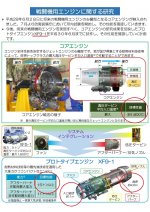
The XF9-1 aeroengine features a turbine inlet temperature surpassing 2,073 K

True. But China will be enough of a distraction for the US until India becomes a heavyweight. The US cannot solve the China problem in 10 years, but India will become a heavyweight in 10 years. As long as the Indian economy becomes resilient to external shocks and the rupee becomes a reserve currency, Western influence in India will come to an end.
The total fertility rate has fallen into the ultra-low category, dropping below 1.0
Losing 8 to 10 million people every single year... you think China can last a decade like that?????
The Japanese were externally dependent, India has a massive domestic market, add SE Asia and Africa too. Roughly 3 billion people as a captive market.
The Chinese lack free markets and have capital controls, their political system pushes money out. In India, money goes out only 'cause India is still poor and opportunities are less relative to the size of the population.
Russia, or should I say Soviet Union, collapsed 'cause of an authoritarian system's inability to absorb shock. India's been absorbing severe systemic shocks for as long as Russia has existed. In the modern era, democracies are built to resist shock.
despite China’s vast market and its dominance in global trade, these factors have not resolved its structural issues. The claim that China lacks a 'free market' is a typical cognitive bias—in fact, it is arguably too free, leading to social and economic volatility. It is a place where Westerners have historically found it incredibly easy to extract wealth.
Regarding Elon Musk: the Chinese government provided the capital and land to gift him a 'Gigafactory.' There are no unions and a grueling '996' schedule, enforced by state power. While Musk faced significant hurdles in India recently, in China, he is accorded supreme status.
We officially describe our population as 'peace-loving and industrious,' but the reality is a lack of regulation that borders on lawlessness.You think I’m joking when I say China is the last bastion of Liberalism, Darwinism, and Capitalism? Do you have any idea what’s happening on the Chinese internet lately? People are ruthlessly mocking Apple and Samsung for moving their factories to India, only for Indian workers to actually dare to go on strike. They’re demanding 8-hour workdays and hereditary employment status! To Chinese netizens, this is mind-blowing—the idea that you could even
have those options, or that you’d have the nerve to negotiate with the boss. They’re laughing at Samsung’s lack of vision, leaving China only to get 'nailed' in India.



To return to the main point: if the combined industrial output of China and Japan—spanning from basic commodities to advanced semiconductors—cannot guarantee universal prosperity, the likelihood of India achieving a breakthrough via external markets is minimal.
Lastly, regarding the 'authority' of Russia: authority itself is not inherently negative. Leaders like Mohammed bin Salman or Donald Trump exert significant authority; the perception of it is merely a matter of propaganda.