PAK-FA / Sukhoi Su-57 - Updates and Discussions

The time to integrate an absorb the 177s will take a decade. We need aircrafts and drones in production right now.
The aerospace engine industry is not an isolated industrial sector. The optimal strategy is to cooperate from the energy side, utilizing natural gas and domestically produced gas turbines to upgrade the power generation sector; only then will there be sufficient economic and industrial headroom to accommodate and sustain aerospace R&D talent.
The ideal solution involves collaboration among Japan, South Korea, and Russia to absorb mature technologies. Otherwise, the sheer cost of pure-play aerospace engine R&D, when amortized across total fleet procurement, becomes economically unacceptable.
 
Does anybody here think GoI (a coalition one at that) would approve a single source/G2G purchase of Su-57 after the opposition's vicious smear campaign against Rafale 1.0?

On the other hand, the US could also make F-404/F-414 deliveries/ToT contingent on 'market access' or a level playing field for the F-35 in India. In my view, GoI will find it hard to push back without a competitive evaluation of Su-57 vs F-35 at the very least.

The US holds many cards against us (taxes on remittances, cap on H1B, access to Anthropic LLM, FDI curbs, etc) that could make GoI more willing to negotiate. Adani recently struck an investment deal in exchange for US DoJ dropping fraud charges. That's how cut throat things are atm between the US and India.

I guess the outcome of the interim trade deal should give us a clearer picture.
 
Does anybody here think GoI (a coalition one at that) would approve a single source/G2G purchase of Su-57 after the opposition's vicious smear campaign against Rafale 1.0?

On the other hand, the US could also make F-404/F-414 deliveries/ToT contingent on 'market access' or a level playing field for the F-35 in India. In my view, GoI will find it hard to push back without a competitive evaluation of Su-57 vs F-35 at the very least.

The US holds many cards against us (taxes on remittances, cap on H1B, access to Anthropic LLM, FDI curbs, etc) that could make GoI more willing to negotiate. Adani recently struck an investment deal in exchange for US DoJ dropping fraud charges. That's how cut throat things are atm between the US and India.

I guess the outcome of the interim trade deal should give us a clearer picture.
Su-57 deal has advanced to a stage where we are about to finish our negotiations. Mr. Doval was in Russia, few days back, where both India and Russia have almost reached a defining stage in India license-manufacturing around 100 to 140 Su-57s, with few(around 20-40) coming from Russia directly.

As I have revealed multiple times, Su-57 acquisition is discussed at the very highest level and that's exactly what is visibly happening.
 
  • Like
Reactions: Sathya and batman
Su-57 deal has advanced to a stage where we are about to finish our negotiations. Mr. Doval was in Russia, few days back, where both India and Russia have almost reached a defining stage in India license-manufacturing around 100 to 140 Su-57s, with few(around 20-40) coming from Russia directly.

As I have revealed multiple times, Su-57 acquisition is discussed at the very highest level and that's exactly what is visibly happening.

I'm only going by past precedent. Single vendor deals are politically risky in India. I can't imagine GoI would want give any fodder to the opposition given the massive amounts of money involved here.

The IN might have wanted the Rafale right from the start but still went through the whole tender process with the SH B3 competing. Will the IAF do things differently? Too early to say.

If businessmen like Adani (who is close to the country's top leadership) are trying to avoid legal penalties by bribing Trump, would GoI risk open confrontation at a time when the INR is depreciating rapidly vs USD?

Su-57 would've been a default option for us had Trump not publicly offered the F-35 when Modi went to DC a year ago. In my view, that makes a direct purchase of the Felon quite complicated for GoI.

Would 6 more P-8Is, Javelin et all be enough to tilt the balance vs Su-57? I'm not so sure.
 
I'm only going by past precedent. Single vendor deals are politically risky in India. I can't imagine GoI would want give any fodder to the opposition given the massive amounts of money involved here.

The IN might have wanted the Rafale right from the start but still went through the whole tender process with the SH B3 competing. Will the IAF do things differently? Too early to say.

If businessmen like Adani (who is close to the country's top leadership) are trying to avoid legal penalties by bribing Trump, would GoI risk open confrontation at a time when the INR is depreciating rapidly vs USD?

Su-57 would've been a default option for us had Trump not publicly offered the F-35 when Modi went to DC a year ago. In my view, that makes a direct purchase of the Felon quite complicated for GoI.

Would 6 more P-8Is, Javelin et all be enough to tilt the balance vs Su-57? I'm not so sure.
There is no 'if' or 'but'. We've explicitly coveyed to Washington that we won't break our defence ties with Russia and proceed to buy all weapons that we think fits our defense ecosystem better(including Su-57, S-500 & additional S-400 squadron). We've also directly said no to F-35.

Opposition can cry foul all they want, Modi is a man of iron will. Everything that increases our combat prowess will be procured.

PS: It is uncanny that it was Mr. Doval who went to Russia in 2018 to inform them that we're coming out of the program and now here we are in 2026, he is the same man who has confirmed the blueprint of our Su-57 acquisition during his meet with FSMTC chief.
 
There is no 'if' or 'but'. We've explicitly coveyed to Washington that we won't break our defence ties with Russia and proceed to buy all weapons that we think fits our defense ecosystem better(including Su-57, S-500 & additional S-400 squadron). We've also directly said no to F-35.

Opposition can cry foul all they want, Modi is a man of iron will. Everything that increases our combat prowess will be procured.

PS: It is uncanny that it was Mr. Doval who went to Russia in 2018 to inform them that we're coming out of the program and now here we are in 2026, he is the same man who has confirmed the blueprint of our Su-57 acquisition during his meet with FSMTC chief.

Let's wait for the IAF to come out with a RfP or atleast an official statement first. Its silence is quite understandable since the Rafale 2.0 deal is in its last lap.

In any case, the bird is yet to undergo proper testing in India (unless you consider its week long participation in AI 25 to be sufficient.)

If a deal were imminent, the IAF would've atleast sent pilots to Russia for familiarization training by now, imo. For reasons I've explained earlier, I do not see GoI signing up for Su-57 until either Trump is out of office or until PAF orders J-35, whichever is earlier.
 
Last edited:
Looks like intial batches may come from Russia with 117S, which later would be swapped by 177, when its development is complete.
We are getting license production of the 117s. There's no way we get the license production of 177 before 2035 unless we are ready to spend 10 + billion dollars.
 
Does anybody here think GoI (a coalition one at that) would approve a single source/G2G purchase of Su-57 after the opposition's vicious smear campaign against Rafale 1.0?

On the other hand, the US could also make F-404/F-414 deliveries/ToT contingent on 'market access' or a level playing field for the F-35 in India. In my view, GoI will find it hard to push back without a competitive evaluation of Su-57 vs F-35 at the very least.

The US holds many cards against us (taxes on remittances, cap on H1B, access to Anthropic LLM, FDI curbs, etc) that could make GoI more willing to negotiate. Adani recently struck an investment deal in exchange for US DoJ dropping fraud charges. That's how cut throat things are atm between the US and India.

I guess the outcome of the interim trade deal should give us a clearer picture.

Strictly speaking, 'cause of Russia's ROE and America's FMS, the single-source purchase of equipment via these systems is seen as corruption-free since they require negotiating directly with the govt. Since Rafale GTG was a GTG deal too, the court case didn't go anywhere. Single source contract with a company becomes a problem.

And no, nothing's happening on the Su-57 front. It's not an emergency purchase, so a normal acquisition program will be public. If the IAF shows interest in the Su-57M1 or the D, it will show up in news articles first. There are no secret backroom deals happening here.

Yeah, the US-India relations are politically sensitive right now. The West currently have leverage over us in defense due to our dependence on their aircraft and ship propulsion systems. A few years ago I had stated that any new large deals with Russia will require us to wait until 2035 for relations to reset with the West. Until then new big ticket deals are unlikely to happen, by then we will have achieved a lot of our indigenization goals, which even the West hopes happens so we can exit the Russian defense industry. Post 2035, our economy will be bigger, we will have key leverage over the West too, and the security situation with respect to China would have changed enough for the West to start looking at Russia differently.

Anyway both Su-57 and F-35 have been rejected. The IAF is now only in the market for 6th gen.
 
There is no 'if' or 'but'. We've explicitly coveyed to Washington that we won't break our defence ties with Russia and proceed to buy all weapons that we think fits our defense ecosystem better(including Su-57, S-500 & additional S-400 squadron). We've also directly said no to F-35.

Opposition can cry foul all they want, Modi is a man of iron will. Everything that increases our combat prowess will be procured.

PS: It is uncanny that it was Mr. Doval who went to Russia in 2018 to inform them that we're coming out of the program and now here we are in 2026, he is the same man who has confirmed the blueprint of our Su-57 acquisition during his meet with FSMTC chief.

Doval went to Russia for an international summit.


The NSA has nothing to do with defense procurement.
 
Strictly speaking, 'cause of Russia's ROE and America's FMS, the single-source purchase of equipment via these systems is seen as corruption-free since they require negotiating directly with the govt. Since Rafale GTG was a GTG deal too, the court case didn't go anywhere. Single source contract with a company becomes a problem.

And no, nothing's happening on the Su-57 front. It's not an emergency purchase, so a normal acquisition program will be public. If the IAF shows interest in the Su-57M1 or the D, it will show up in news articles first. There are no secret backroom deals happening here.

Yeah, the US-India relations are politically sensitive right now. The West currently have leverage over us in defense due to our dependence on their aircraft and ship propulsion systems. A few years ago I had stated that any new large deals with Russia will require us to wait until 2035 for relations to reset with the West. Until then new big ticket deals are unlikely to happen, by then we will have achieved a lot of our indigenization goals, which even the West hopes happens so we can exit the Russian defense industry. Post 2035, our economy will be bigger, we will have key leverage over the West too, and the security situation with respect to China would have changed enough for the West to start looking at Russia differently.

Anyway both Su-57 and F-35 have been rejected. The IAF is now only in the market for 6th gen.
According to the lessons of the war in Ukraine, the concept of 'putting different eggs in different baskets' simply does not exist in this world. This so-called 'extra egg' amounts to nothing more than letting that egg detonate in your own hands one more time. Small nations—including France and other European states—are merely lapdogs raised by the United States. Buying French, British, or Swedish hardware is functionally identical to buying American gear. Ultimately, all the eggs wind up in the American basket anyway.
Russia’s experience with the Mistral-class amphibious assault ships, MTU engines, and Boxer armored vehicles serve as prime examples of this reality, as does China’s past purchase of Israeli AEW&C (Airborne Early Warning and Control) radar suites.
 
  • Like
Reactions: PhotonVish
According to the lessons of the war in Ukraine, the concept of 'putting different eggs in different baskets' simply does not exist in this world. This so-called 'extra egg' amounts to nothing more than letting that egg detonate in your own hands one more time. Small nations—including France and other European states—are merely lapdogs raised by the United States. Buying French, British, or Swedish hardware is functionally identical to buying American gear. Ultimately, all the eggs wind up in the American basket anyway.
Russia’s experience with the Mistral-class amphibious assault ships, MTU engines, and Boxer armored vehicles serve as prime examples of this reality, as does China’s past purchase of Israeli AEW&C (Airborne Early Warning and Control) radar suites.

We have three major suppliers for fighter jets. Russia, US, and France.

Russia, of course, there's MKI and Mig-29. MKI is for the long term and we have limited control over the technology, about 76% at the component level for the airframe and about 84% for the engine. In terms of cost it's 56% for the entire aircraft and 63% for the engine. It will increase to 75-80% from 2032 onwards for the aircraft and up to 80% for the engine. So Russia will still have significant control over it.

The US primarily supplies engines for the LCA. We have limited access to F404 for LCA Mk1A, which we are fine with. But we will produce 80% of the F414 in India and the Americans have allowed the replacement of the remaining 20% with Indian tech. The F414 will power LCA Mk2 and TEDBF along with 2-4 squadrons of AMCA as an interim engine. So the Americans have some influence over India's indigenous programs, but it will slowly disappear in a decade or two. There are some other foreign components too, like British tech, but we will eventually get rid of almost all foreign subsystems, including American. AMCA's engine will be developed with French assistance and we will retain 100% ownership and IPR for it.

France, both Mirage 2000 and Rafale are ITAR free. There are no American components in them. We will produce 100% of the airframe and engine in India while importing the electronics. In case of future political problems, we will be able to replace the electronics with Indian ones.

So only the MKI comes with the most constraints. All other programs have an escape mechanism in place and only indigenous programs have American tech. We have found balance here.

Unlike Russia, the West doesn't see India as an enemy. France won't sanction India, we have shared security concerns in the Indo-Pacific. We are cooperating in many areas and France is interested in India's success due to their need for a multipolar world. The US is in a difficult position with China, so they won't look to turning India into an enemy. At best, they won't sell advanced technologies, but will not sanction us. At least for the next 20 years, India won't become enemies with the West. And India's relations with Russia is turning from a defense relationship into an economic one. India needs Russia's energy and minerals to grow.
 
Strictly speaking, 'cause of Russia's ROE and America's FMS, the single-source purchase of equipment via these systems is seen as corruption-free since they require negotiating directly with the govt. Since Rafale GTG was a GTG deal too, the court case didn't go anywhere. Single source contract with a company becomes a problem.

I'd say the 2018 S-400 deal was a one off where the IAF signed a multi-billion dollar single vendor deal. And that's because only S-400 met its operational needs (THAAD was never truly on the table + it was not a multi-role system like Triumpf). MRFA is also essentially a follow-on deal.

FMS generally works out to be more expensive than DCS because the US govt takes a cut for its services.

The IAF may want to look at other 5G options on the global market (like KF-21), just as it has done for AWACS. There is an RfI out right now which is in parallel to Netra Mk1A/Mk2.

The Pakistanis have no choice but to settle for J-35 because it comes with long term Chinese financing. Doesn't mean the IAF will do the same.
 
I'd say the 2018 S-400 deal was a one off where the IAF signed a multi-billion dollar single vendor deal. And that's because only S-400 met its operational needs (THAAD was never truly on the table + it was not a multi-role system like Triumpf). MRFA is also essentially a follow-on deal.

We have many of those with Russia. Most of what we operate today is from single vendor deals. T-90, MKI, Vikramaditya/Mig-29K, AK-203, Kilo etc.

FMS generally works out to be more expensive than DCS because the US govt takes a cut for its services.

And no negotiations either.

The IAF may want to look at other 5G options on the global market (like KF-21), just as it has done for AWACS. There is an RfI out right now which is in parallel to Netra Mk1A/Mk2.

The IAF is not looking at anything 5th gen. KF-21 is 4.5th gen. The AWACS RFI is for platform, not the radar.

The Pakistanis have no choice but to settle for J-35 because it comes with long term Chinese financing. Doesn't mean the IAF will do the same.

Sure. But we are in the market for F-47, SCAF, and GCAP and are looking at multiple options as they develop. Not 5th gen.
 
We have three major suppliers for fighter jets. Russia, US, and France.

Russia, of course, there's MKI and Mig-29. MKI is for the long term and we have limited control over the technology, about 76% at the component level for the airframe and about 84% for the engine. In terms of cost it's 56% for the entire aircraft and 63% for the engine. It will increase to 75-80% from 2032 onwards for the aircraft and up to 80% for the engine. So Russia will still have significant control over it.

The US primarily supplies engines for the LCA. We have limited access to F404 for LCA Mk1A, which we are fine with. But we will produce 80% of the F414 in India and the Americans have allowed the replacement of the remaining 20% with Indian tech. The F414 will power LCA Mk2 and TEDBF along with 2-4 squadrons of AMCA as an interim engine. So the Americans have some influence over India's indigenous programs, but it will slowly disappear in a decade or two. There are some other foreign components too, like British tech, but we will eventually get rid of almost all foreign subsystems, including American. AMCA's engine will be developed with French assistance and we will retain 100% ownership and IPR for it.

France, both Mirage 2000 and Rafale are ITAR free. There are no American components in them. We will produce 100% of the airframe and engine in India while importing the electronics. In case of future political problems, we will be able to replace the electronics with Indian ones.

So only the MKI comes with the most constraints. All other programs have an escape mechanism in place and only indigenous programs have American tech. We have found balance here.

Unlike Russia, the West doesn't see India as an enemy. France won't sanction India, we have shared security concerns in the Indo-Pacific. We are cooperating in many areas and France is interested in India's success due to their need for a multipolar world. The US is in a difficult position with China, so they won't look to turning India into an enemy. At best, they won't sell advanced technologies, but will not sanction us. At least for the next 20 years, India won't become enemies with the West. And India's relations with Russia is turning from a defense relationship into an economic one. India needs Russia's energy and minerals to grow.
Furthermore, the localized production replacement rates for the F110 and F100 engines by Japan's IHI far exceed India's track record with the F414. The U.S. even relies on purchasing single-crystal materials from Japan. Yet, none of this changes the fact that the U.S. can pull the plug and cut them off at any given moment

Once your physical mass grows large enough, you can no longer hide behind a tree pretending to be a harmless kitten. What the West demands of you is to act as their economic blood donor. Their so-called 'freedom' is nothing more than allowing you to vent your frustrations, provided you have absolutely no power to change the status quo. If they don't view you as a competitor right now, it is either because you are too weak, or because they have a temporary use for you. The moment they settle their immediate affairs, you will be next in line.

When you are already on the chessboard, remaining a detached bystander is a pure illusion. You may desire a 'peaceful development,' but that depends entirely on whether others will permit it. Besides, they fundamentally need a common enemy just to hold themselves together.

That last paragraph you just wrote—the Japanese, the Russians, and the Chinese have all said the exact same thing at one point or another (right before getting absolutely pummeled)Including Saddam. To me, it all sounds incredibly familiar
 
Last edited:
  • Like
Reactions: batman
Furthermore, the localized production replacement rates for the F110 and F100 engines by Japan's IHI far exceed India's track record with the F414. The U.S. even relies on purchasing single-crystal materials from Japan. Yet, none of this changes the fact that the U.S. can pull the plug and cut them off at any given moment

That danger always exists. But it will disappear by 2035. Unlike Japan, the Americans will transfer 100% of the production tech to India, along with 80% of the engine tech. The deal is expected to be signed this year, and full indigenous production is expected to happen within 4 years of signature. Japan did not get this much ToT.

We will replace the remaining 20% with tech that we have already developed and are introducing in Kaveri 2.0.

Once your physical mass grows large enough, you can no longer hide behind a tree pretending to be a harmless kitten. What the West demands of you is to act as their economic blood donor. Their so-called 'freedom' is nothing more than allowing you to vent your frustrations, provided you have absolutely no power to change the status quo. If they don't view you as a competitor right now, it is either because you are too weak, or because they have a temporary use for you. The moment they settle their immediate affairs, you will be next in line.

When you are already on the chessboard, remaining a detached bystander is a pure illusion. You may desire a 'peaceful development,' but that depends entirely on whether others will permit it. Besides, they fundamentally need a common enemy just to hold themselves together.

True. But China will be enough of a distraction for the US until India becomes a heavyweight. The US cannot solve the China problem in 10 years, but India will become a heavyweight in 10 years. As long as the Indian economy becomes resilient to external shocks and the rupee becomes a reserve currency, Western influence in India will come to an end.

That last paragraph you just wrote—the Japanese, the Russians, and the Chinese have all said the exact same thing at one point or another (right before getting absolutely pummeled)Including Saddam. To me, it all sounds incredibly familiar

Perhaps, but it doesn't matter to us that much due to the way we are building resilience.

The Japanese were externally dependent, India has a massive domestic market, add SE Asia and Africa too. Roughly 3 billion people as a captive market.

The Chinese lack free markets and have capital controls, their political system pushes money out. In India, money goes out only 'cause India is still poor and opportunities are less relative to the size of the population.

Russia, or should I say Soviet Union, collapsed 'cause of an authoritarian system's inability to absorb shock. India's been absorbing severe systemic shocks for as long as Russia has existed. In the modern era, democracies are built to resist shock.
 
We have many of those with Russia. Most of what we operate today is from single vendor deals. T-90, MKI, Vikramaditya/Mig-29K, AK-203, Kilo etc.

Most of these deals were signed in the early 2000s. Vikramaditya was an exception because it came bundled w/Chakra 2. Let's not even talk about the Ak-203 fiasco.

The IAF is not looking at anything 5th gen. KF-21 is 4.5th gen. The AWACS RFI is for platform, not the radar.

This time the IAF will likely choose from among the platforms available on the market to avoid the challenges it faced integrating the Phalcon mission system on IL-76. The options are quite limited with G6000/G6500 biz jets on one end (Globaleye, Elta 2085) and B-737NG on the other (Wedgetail).

It has already dropped the idea of A330 based AWACS. With France buying Globaleye, the IAF will have to foot the bill all by itself if it picks an Airbus platform for conversion into AWACS.
 
Last edited:
That danger always exists. But it will disappear by 2035. Unlike Japan, the Americans will transfer 100% of the production tech to India, along with 80% of the engine tech. The deal is expected to be signed this year, and full indigenous production is expected to happen within 4 years of signature. Japan did not get this much ToT.

We will replace the remaining 20% with tech that we have already developed and are introducing in Kaveri 2.0.
Firstly, Japan does not require 'technology transfers' because it possesses world-leading capabilities in gas turbine research and development, primarily applied to power generation and naval vessels; they merely purchase production licenses for convenience. Technologically, the XF9-1 is superior to the F119 and certainly no less advanced than the 177. Furthermore, the domestic production rate of the F110 and F100 at IHI exceeds 99%. Japan's purchase of ECU components from the U.S. is purely symbolic; the F110-IHI-129 and F100-IHI-220E are manufactured in Japan starting from the raw ore.
The XF9-1 aeroengine features a turbine inlet temperature surpassing 2,073 K
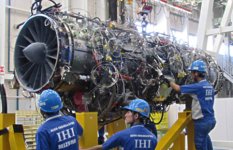
180629_ihi_xf9-450.jpgEpCg6gR.jpg
True. But China will be enough of a distraction for the US until India becomes a heavyweight. The US cannot solve the China problem in 10 years, but India will become a heavyweight in 10 years. As long as the Indian economy becomes resilient to external shocks and the rupee becomes a reserve currency, Western influence in India will come to an end.

The total fertility rate has fallen into the ultra-low category, dropping below 1.0
Losing 8 to 10 million people every single year... you think China can last a decade like that?????

The Japanese were externally dependent, India has a massive domestic market, add SE Asia and Africa too. Roughly 3 billion people as a captive market.

The Chinese lack free markets and have capital controls, their political system pushes money out. In India, money goes out only 'cause India is still poor and opportunities are less relative to the size of the population.

Russia, or should I say Soviet Union, collapsed 'cause of an authoritarian system's inability to absorb shock. India's been absorbing severe systemic shocks for as long as Russia has existed. In the modern era, democracies are built to resist shock.
despite China’s vast market and its dominance in global trade, these factors have not resolved its structural issues. The claim that China lacks a 'free market' is a typical cognitive bias—in fact, it is arguably too free, leading to social and economic volatility. It is a place where Westerners have historically found it incredibly easy to extract wealth.

Regarding Elon Musk: the Chinese government provided the capital and land to gift him a 'Gigafactory.' There are no unions and a grueling '996' schedule, enforced by state power. While Musk faced significant hurdles in India recently, in China, he is accorded supreme status.
We officially describe our population as 'peace-loving and industrious,' but the reality is a lack of regulation that borders on lawlessness.You think I’m joking when I say China is the last bastion of Liberalism, Darwinism, and Capitalism? Do you have any idea what’s happening on the Chinese internet lately? People are ruthlessly mocking Apple and Samsung for moving their factories to India, only for Indian workers to actually dare to go on strike. They’re demanding 8-hour workdays and hereditary employment status! To Chinese netizens, this is mind-blowing—the idea that you could even have those options, or that you’d have the nerve to negotiate with the boss. They’re laughing at Samsung’s lack of vision, leaving China only to get 'nailed' in India.
659FEF408F18316ADCBC93C8D239153A.gif8984FEE0EE0B8701684B3C6B377E9A9B.jpg88223f121d7d3d00c76c2ae960d777682026631614173.gif


To return to the main point: if the combined industrial output of China and Japan—spanning from basic commodities to advanced semiconductors—cannot guarantee universal prosperity, the likelihood of India achieving a breakthrough via external markets is minimal.

Lastly, regarding the 'authority' of Russia: authority itself is not inherently negative. Leaders like Mohammed bin Salman or Donald Trump exert significant authority; the perception of it is merely a matter of propaganda.
 
Last edited:
  • Like
Reactions: PhotonVish
Firstly, Japan does not require 'technology transfers' because it possesses world-leading capabilities in gas turbine research and development, primarily applied to power generation and naval vessels; they merely purchase production licenses for convenience. Technologically, the XF9-1 is superior to the F119 and certainly no less advanced than the 177. Furthermore, the domestic production rate of the F110 and F100 at IHI exceeds 99%. Japan's purchase of ECU components from the U.S. is purely symbolic; the F110-IHI-129 and F100-IHI-220E are manufactured in Japan starting from the raw ore.
The XF9-1 aeroengine features a turbine inlet temperature surpassing 2,073 K
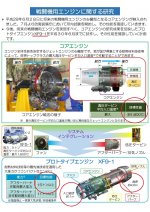
View attachment 51972View attachment 51973

F110-IHI-129 ToT is 76%.

F100 ToT is unknown, but some components are still imported from America. Even this is probably 76%.

India's ToT share is the most extensive ever given by the US to anybody.

XF9-1 is good, but useless without an aircraft program.

The total fertility rate has fallen into the ultra-low category, dropping below 1.0
Losing 8 to 10 million people every single year... you think China can last a decade like that?????

Impact will be felt a decade later. And the the decay will take a few decades more.

Even at a birth rate below 1, the actual number of births is still much higher than in the US. China's still producing over a million engineers a year compared to 250-300k in the US. So China will still pose a serious threat for many decades.

despite China’s vast market and its dominance in global trade, these factors have not resolved its structural issues. The claim that China lacks a 'free market' is a typical cognitive bias—in fact, it is arguably too free, leading to social and economic volatility. It is a place where Westerners have historically found it incredibly easy to extract wealth.

China's market is not free, it's largely run by the state. Only some non-strategic sectors are free and investment goes there.

Regarding Elon Musk: the Chinese government provided the capital and land to gift him a 'Gigafactory.' There are no unions and a grueling '996' schedule, enforced by state power. While Musk faced significant hurdles in India recently, in China, he is accorded supreme status.
We officially describe our population as 'peace-loving and industrious,' but the reality is a lack of regulation that borders on lawlessness.You think I’m joking when I say China is the last bastion of Liberalism, Darwinism, and Capitalism? Do you have any idea what’s happening on the Chinese internet lately? People are ruthlessly mocking Apple and Samsung for moving their factories to India, only for Indian workers to actually dare to go on strike. They’re demanding 8-hour workdays and hereditary employment status! To Chinese netizens, this is mind-blowing—the idea that you could even have those options, or that you’d have the nerve to negotiate with the boss. They’re laughing at Samsung’s lack of vision, leaving China only to get 'nailed' in India.

View attachment 51969View attachment 51970View attachment 51971

India's too poor for Elon. We cannot yet afford his cars. It's a sub-$20000 market.

Who care what the Chinese think? Both Apple and Samsung are expanding production in India.

To return to the main point: if the combined industrial output of China and Japan—spanning from basic commodities to advanced semiconductors—cannot guarantee universal prosperity, the likelihood of India achieving a breakthrough via external markets is minimal.

No large country can guarantee universal prosperity. The goal for such countries is to increase the middle class and higher to 80-90% of the population. The rest will have to be supported by subsidies and welfare.

But economic resiliency and prosperity are not the same. In 10 years, India will still have a lot of poor people, but problems outside will have little impact within India due to the economic size. By then the only destabilising factors will be a large war that affects global trade or a major natural disaster.

Lastly, regarding the 'authority' of Russia: authority itself is not inherently negative. Leaders like Mohammed bin Salman or Donald Trump exert significant authority; the perception of it is merely a matter of propaganda.

Authoritarian and authority are not the same things. Trump isn't an authoritarian, he's still the president of a democracy where there is a Parliament and Court to keep him in check. There's nothing that keeps authoritarians in check. Any ruler without an opposition is authoritarian.

Putin and Xi arrest or kill their opposition. In such an environment, honest people don't exist. That's why a Russian general cannot go to Putin and tell him to his face his Ukraine operation will fail.
 
F110-IHI-129 ToT is 76%.

F100 ToT is unknown, but some components are still imported from America. Even this is probably 76%.

India's ToT share is the most extensive ever given by the US to anybody.

XF9-1 is good, but useless without an aircraft program.


Impact will be felt a decade later. And the the decay will take a few decades more.

Even at a birth rate below 1, the actual number of births is still much higher than in the US. China's still producing over a million engineers a year compared to 250-300k in the US. So China will still pose a serious threat for many decades.


China's market is not free, it's largely run by the state. Only some non-strategic sectors are free and investment goes there.


India's too poor for Elon. We cannot yet afford his cars. It's a sub-$20000 market.

Who care what the Chinese think? Both Apple and Samsung are expanding production in India.


No large country can guarantee universal prosperity. The goal for such countries is to increase the middle class and higher to 80-90% of the population. The rest will have to be supported by subsidies and welfare.

But economic resiliency and prosperity are not the same. In 10 years, India will still have a lot of poor people, but problems outside will have little impact within India due to the economic size. By then the only destabilising factors will be a large war that affects global trade or a major natural disaster.


Authoritarian and authority are not the same things. Trump isn't an authoritarian, he's still the president of a democracy where there is a Parliament and Court to keep him in check. There's nothing that keeps authoritarians in check. Any ruler without an opposition is authoritarian.

Putin and Xi arrest or kill their opposition. In such an environment, honest people don't exist. That's why a Russian general cannot go to Putin and tell him to his face his Ukraine operation will fail.
IHI Calculated by monetary value, the localization rate is 75%, and the vast majority of the remaining part consists of electronic controls.
"Chinese engineers"—honestly, it cracks me up when you bring this up. The "engineer" we talk about and the "engineer" you refer to are two completely different things. China's so-called system, inherited from the Soviet Union, is basically just a method for evaluating the basic benefits and salaries of professional personnel; back in the day, we even had the eight-grade worker system. It has almost nothing to do with the "engineer" you have in mind. In my own workplace, there are several Associate Senior Engineers who only graduated from junior high school. It’s entirely a matter of taking care of them right before retirement to boost their pension.
The Chinese market is actually the freest and most open market in the world. Otherwise, why would European capitalists flock to it like crazy? Isn't that the simplest logic? Capitalists aren't stupid.
What the Indian auto market has introduced is similar to what China came up with in the 1980s during the so-called "Reform and Opening-up"—requiring Indians to hold a 51% controlling stake and forcing technology transfers. China used to do exactly this to all foreign automakers under the slogan of "trading market for technology." But then Elon Musk came along, and government officials treated him like an honored ancestor. All of those previous restrictions were scrapped for him, and they even gave him free land. The Indian government wouldn't coddle him like that, and he couldn't stand it, so he walked away.
Ultimately, so-called democracy cannot exist under private ownership. When the state itself belongs to capital, how can there be any true democracy in the country? Even Trump was elected through the Electoral College. Capitalists hand you candidate A, B, and C, and let you pick one from among them—what difference does it really make?
 
  • Like
Reactions: PhotonVish