Typhoon surpasses the Su-35 by a wide margin in terms of kinematics for BVR; climb, acceleration, supercruise etc. And the Typhoon's baseline RCS, airframe design, and advanced avionics also give it a significant leg up against the Su-35's. It's effectively a generation ahead in all three areas.
The Su-35's only advantage is range.
Payload is entirely up to the type of weapons you integrate with the jets, so that's up for grabs using whatever your budget allows.
Weaker engine sure, there are advantages to have with Su-35's more powerful engines, but they haven't given the Su-35 any real advantages over the Typhoon specifically. Decent engines, but old gen airframe and avionics.
Su-35 definitely surpasses the Gripen E in kinematics though, but still suffers from lack of advanced airframe and avionics tech.
Regarding Radar:
The Su-35 utilizes the Irbis-E hybrid phased array radar. It is worth noting that this is neither a standard PESA nor an AESA; its specific architecture groups every four T/R (transmit/receive) elements together, containing one transmit-and-receive unit alongside three receive-only units.
During testing in China, under full-power staring mode, its tracking performance achieved:
0.01㎡》100km
0.1㎡》160km
1㎡》270km
(Knowing that this analysis originated from Institute 14 personnel heavily validates the highly specific engineering data and the brutal)
When augmented by its L-band leading-edge flap radars, its overall performance is completely beyond anything the French and UK hardware can compete with.
Regarding RCS (Radar Cross Section):
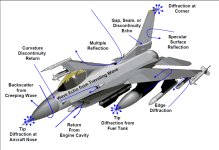
Radar detection range scales with the fourth root of the RCS area The fourth-power relationship. Consequently, once an RCS falls below 0.5㎡, any further reduction yields diminishing returns and becomes practically worthless.
For instance, if a given radar detects a target with a $10\text{ m}^2$ RCS at a range of $100\text{ km}$, its detection ranges scale as follows:
10㎡》100km
5㎡》84km
3㎡》74km
1㎡》56km
0.5㎡》47km
0.1㎡》32km
0.05㎡》27km
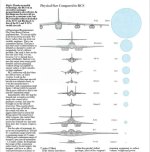
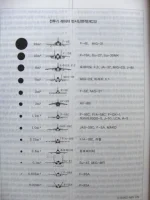
Furthermore, fighter jet RCS evaluations must rely on uniform statistical baselines, rather than the inflated figures marketed by individual manufacturers. According to the Russian standard established by the Gagarin Air Force Academy for R-27 missile launch calculations—which serves as a highly rigorous and precise practical field manual regulating every step of a missile engagement—the RCS values in the forward hemisphere at 0° alignment (head-on conditions) are rated as:
E-3A=50㎡
C-130/F-15=20㎡
F111/Panavia Tornado=10㎡
Panavia Tornado、F16=3㎡
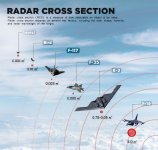
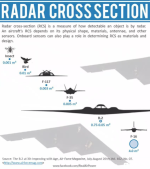
Correlating this with subsequent Russian data, both the Su-7 and the F-22 should be estimated at $0.4\text{ m}^2$ under this exact same standard. Thus, the Dassault Rafale, despite its extensive use of composite materials, likely sits at a level between $1\text{ to }3\text{ m}^2$. While the Su-35 features a slightly larger frontal silhouette, it is outfitted with a phased array radar, radar blockers, and composite skin structures, ensuring its RCS does not exceed $5\text{ m}^2$.
Therefore, the detection range gap between the Rafale and the Su-35 resulting purely from RCS—when painted by the same radar—will not exceed the disparity between $5\text{ m}^2$ and $1\text{ m}^2$. A pessimistic estimate places this at $84\text{ km}$ versus $56\text{ km}$, while an optimistic projection yields a gap between $5\text{ m}^2$ and $3\text{ m}^2$, or $84\text{ km}$ versus $74\text{ km}$.
Considering that the Su-35’s radar aperture power and frequency band advantages far eclipse those of Dassault, any edge gained by the Rafale's smaller RCS is effectively neutralized. In reality, during past engagements between the massive F-4 Phantom II (RCS >15㎡) and the MiG-21 (RCS <3㎡), no one obsessed over how these differing signature sizes affected missile hit probabilities. The only reason people fixate on this in 4.5-generation fighter debates today is due to manufacturers blowing their own trumpets.
Additionally, regarding the sheer performance of the Su-35's radar, it stands as the longest-range fighter radar in the world. Naturally, this is achieved under a high-gain staring mode; during wide-angle volume searches, it is prone to missing targets. However, it is undeniable that once a target's approximate bearing is cued by early warning assets or ground-controlled interception (GCI), switching to staring mode leaves the target with nowhere to hide.
The R-37M missile guided by this system serves as the perfect footnote to the radar's immense tracking capability. The logic is simple: as a dual-mode active/passive homing missile, its mid-course guidance architecture requires the launch aircraft to continuously track the rear aspect of the speeding R-37M to calculate its exact positioning and velocity for data-link corrections. Being able to lock onto a target as minuscule as the tail-end of an R-37M at distances of $200\text{ to }300\text{ km}$ is definitive proof of this radar's raw power.
Ultimately,
to guide a longer-range missile, you fundamentally require a more powerful radar. It is that simple. For the F-22, developing a larger missile was likely constrained by the physical limits of its internal weapons bay. However, for an externally carried aircraft like the Rafale and Typhoon, the fact that it has not developed an analogue to the R-37 proves that its radar's absolute performance is inherently inferior to the Su-35's—otherwise, a missile with such an eye-catching, massive engagement range would undoubtedly be exploited as a primary marketing gimmick.



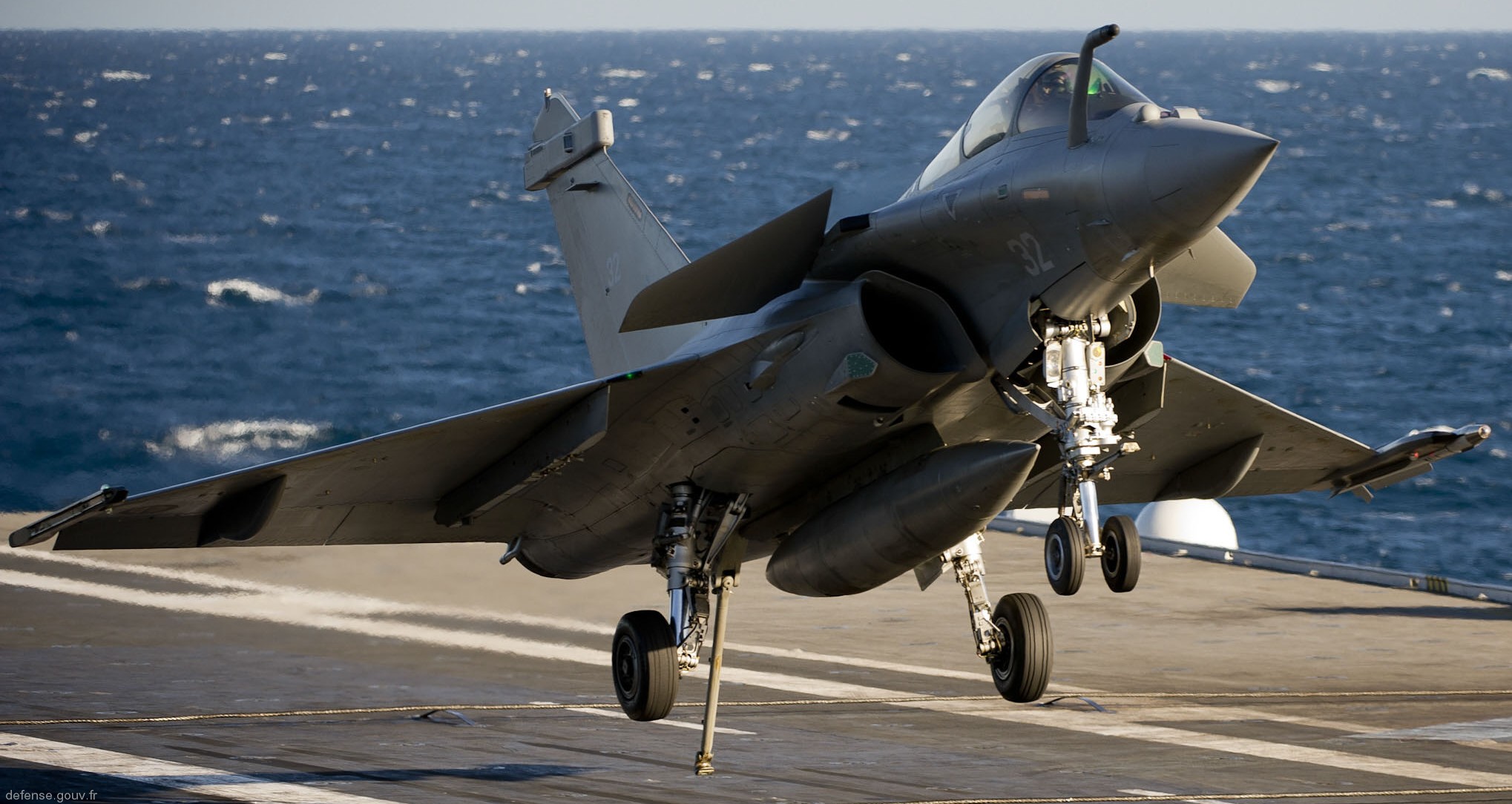

 ) then later further refined and utilised in Su-27BM or Su-35S. Su-35S' clean frontal RCS is just 0.7m2 to 1m2 in X-Band.