
LCA Tejas Mk1 & Mk1A - News and discussions
- Thread starter Ashwin
- Start date
-
- Tags
- indian defence forum
You are using an out of date browser. It may not display this or other websites correctly.
You should upgrade or use an alternative browser.
You should upgrade or use an alternative browser.


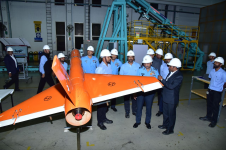
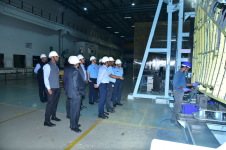
L&T Composite manufacturing jigs for LCA wings:

Composite intake ducts:
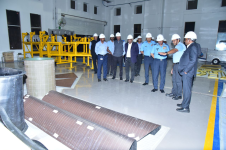
Composite intake ducts:

Indian EW + Radar combo comes later though. This is currently between Israeli radar and the 8222SB pod.

What does he mean by connect the dots at the end when he spoke about private players ?

Indian EW + Radar combo comes later though. This is currently between Israeli radar and the 8222SB pod.
They talk to each other through the mission computer. Integrating everything into the mission computer is taking time.
What does he mean by connect the dots at the end when he spoke about private players ?
PSUs being sidelined over time.

Tejas Mk1A hits fresh hurdle as one GE engine fails acceptance parameters
Already running over two years behind schedule, the Tejas Mk1A programme has hit another roadblock, with one of the six GE F404-IN20 engines delivered so far failing mandatory acceptance parameters during inspection, it is learnt.
Sources privy to the matter told TNIE that state-run Hindustan Aeronautics Limited (HAL) has sought rectification from US aerospace major General Electric, leaving it with only five serviceable engines.
Another source said HAL is expected to demonstrate progress by September in ironing out integration issues involving the Israeli AESA radar, another factor delaying deliveries.
The development comes at a time when GE is separately also negotiating with India for F414 engines to power the flagship fifth-gen Advanced Medium Combat Aircraft (AMCA). As reported by TNIE, the American company has sought around triple the price for supplying engines for the prototypes.
Separately, the Indian Air Force (IAF), which had earlier shown flexibility on certain delivery-linked operational requirements to facilitate induction, is also learnt to be examining additional relaxations to expedite deliveries.
The delays come at a time when the IAF is down to 29 operational fighter squadrons against a sanctioned strength of 42.5, even as it confronts the prospect of a twin threat from China and Pakistan. The concern is sharpened since Pakistan could get its hands on Chinese fifth-gen stealth fighters in the near future, while China continues to expand its own stealth fleet.
The 180 Tejas Mk1A fighters on order are expected to progressively replace ageing aircraft and arrest the steady decline in the IAF’s squadron numbers.
The six engines delivered so far are part of the 2021 contract worth $716 million for 99 F404-IN20 engines to power the first 83 Tejas Mk1A fighters. The first engine reached HAL only in March 2025, a year after the first aircraft was contractually due to be delivered to the IAF. The sixth engine, the one now found to have failed acceptance parameters, arrived in May.
The delays have also brought HAL under scrutiny, with the MoD weighing a financial penalty on the company. The penalty would stem from standard contractual provisions relating to delayed deliveries, and would not be punitive in an extraordinary sense.
Incidentally, HAL has itself invoked the liquidated damages clause against GE Aerospace for delays in supplying F404 engines, the principal bottleneck affecting the programme.
In April, then HAL chairman and managing director D K Sunil said GE had assured delivery of 20 F404 engines between June and December this year. A subsequent HAL briefing projected deliveries of 15 to 20 engines by year-end. GE has committed to raising production to 24 engines in 2026-27 and 30 annually thereafter.
Already running over two years behind schedule, the Tejas Mk1A programme has hit another roadblock, with one of the six GE F404-IN20 engines delivered so far failing mandatory acceptance parameters during inspection, it is learnt.
Sources privy to the matter told TNIE that state-run Hindustan Aeronautics Limited (HAL) has sought rectification from US aerospace major General Electric, leaving it with only five serviceable engines.
Another source said HAL is expected to demonstrate progress by September in ironing out integration issues involving the Israeli AESA radar, another factor delaying deliveries.
The development comes at a time when GE is separately also negotiating with India for F414 engines to power the flagship fifth-gen Advanced Medium Combat Aircraft (AMCA). As reported by TNIE, the American company has sought around triple the price for supplying engines for the prototypes.
Separately, the Indian Air Force (IAF), which had earlier shown flexibility on certain delivery-linked operational requirements to facilitate induction, is also learnt to be examining additional relaxations to expedite deliveries.
The delays come at a time when the IAF is down to 29 operational fighter squadrons against a sanctioned strength of 42.5, even as it confronts the prospect of a twin threat from China and Pakistan. The concern is sharpened since Pakistan could get its hands on Chinese fifth-gen stealth fighters in the near future, while China continues to expand its own stealth fleet.
The 180 Tejas Mk1A fighters on order are expected to progressively replace ageing aircraft and arrest the steady decline in the IAF’s squadron numbers.
The six engines delivered so far are part of the 2021 contract worth $716 million for 99 F404-IN20 engines to power the first 83 Tejas Mk1A fighters. The first engine reached HAL only in March 2025, a year after the first aircraft was contractually due to be delivered to the IAF. The sixth engine, the one now found to have failed acceptance parameters, arrived in May.
The delays have also brought HAL under scrutiny, with the MoD weighing a financial penalty on the company. The penalty would stem from standard contractual provisions relating to delayed deliveries, and would not be punitive in an extraordinary sense.
Incidentally, HAL has itself invoked the liquidated damages clause against GE Aerospace for delays in supplying F404 engines, the principal bottleneck affecting the programme.
In April, then HAL chairman and managing director D K Sunil said GE had assured delivery of 20 F404 engines between June and December this year. A subsequent HAL briefing projected deliveries of 15 to 20 engines by year-end. GE has committed to raising production to 24 engines in 2026-27 and 30 annually thereafter.


How does this delay the program? Even if there is a problem with one of the engines, it doesn't stop HAL from delivering the rest 5 ?Tejas Mk1A hits fresh hurdle as one GE engine fails acceptance parameters
Already running over two years behind schedule, the Tejas Mk1A programme has hit another roadblock, with one of the six GE F404-IN20 engines delivered so far failing mandatory acceptance parameters during inspection, it is learnt.
Sources privy to the matter told TNIE that state-run Hindustan Aeronautics Limited (HAL) has sought rectification from US aerospace major General Electric, leaving it with only five serviceable engines.
Another source said HAL is expected to demonstrate progress by September in ironing out integration issues involving the Israeli AESA radar, another factor delaying deliveries.
The development comes at a time when GE is separately also negotiating with India for F414 engines to power the flagship fifth-gen Advanced Medium Combat Aircraft (AMCA). As reported by TNIE, the American company has sought around triple the price for supplying engines for the prototypes.
Separately, the Indian Air Force (IAF), which had earlier shown flexibility on certain delivery-linked operational requirements to facilitate induction, is also learnt to be examining additional relaxations to expedite deliveries.
The delays come at a time when the IAF is down to 29 operational fighter squadrons against a sanctioned strength of 42.5, even as it confronts the prospect of a twin threat from China and Pakistan. The concern is sharpened since Pakistan could get its hands on Chinese fifth-gen stealth fighters in the near future, while China continues to expand its own stealth fleet.
The 180 Tejas Mk1A fighters on order are expected to progressively replace ageing aircraft and arrest the steady decline in the IAF’s squadron numbers.
The six engines delivered so far are part of the 2021 contract worth $716 million for 99 F404-IN20 engines to power the first 83 Tejas Mk1A fighters. The first engine reached HAL only in March 2025, a year after the first aircraft was contractually due to be delivered to the IAF. The sixth engine, the one now found to have failed acceptance parameters, arrived in May.
The delays have also brought HAL under scrutiny, with the MoD weighing a financial penalty on the company. The penalty would stem from standard contractual provisions relating to delayed deliveries, and would not be punitive in an extraordinary sense.
Incidentally, HAL has itself invoked the liquidated damages clause against GE Aerospace for delays in supplying F404 engines, the principal bottleneck affecting the programme.
In April, then HAL chairman and managing director D K Sunil said GE had assured delivery of 20 F404 engines between June and December this year. A subsequent HAL briefing projected deliveries of 15 to 20 engines by year-end. GE has committed to raising production to 24 engines in 2026-27 and 30 annually thereafter.
Is the ground being setup for more delays from HAL end?
Last edited by a moderator:

GE F404 Engine Snag Compounds LCA Mk1A Delays; MoD Warns HAL Over Missed Deadlines
Defence Ministry has directed HAL to meet delivery deadlines for the Tejas LCA Mk1A fighter jets and recover more than two years of delays. The warning follows continued engine supply issues and certification bottlenecks. With IAF operating well below sanctioned squadron strength, faster...
A significant setback emerged with the sixth GE Aerospace F404-IN20 engine delivered to HAL. The engine arrived with a technical snag, which a senior HAL official confirmed has since been rectified.
“Following standard operating procedure, we detect any issue upon the engine's arrival and immediately inform GE Aerospace,” the official told Asianet Newsable, adding that the fault likely stemmed from a transshipment issue and described it as routine.
“Following standard operating procedure, we detect any issue upon the engine's arrival and immediately inform GE Aerospace,” the official told Asianet Newsable, adding that the fault likely stemmed from a transshipment issue and described it as routine.
They find new reasons for delays. Compare any Chinese state PSU performance with these guys. HAL needs to be restructured more than anything.How does this delay the program? Even if there is a problem with one of the engines, it doesn't stop HAL from delivering the rest 5 ?
Is the ground being setup for more delays from HAL end?
Amca competing group, second place team should be given LCA Mk2 production now itself.

You repeated reminder that we could have been flying Tejas by now if we had moved to Russian engine in 2021-22.Tejas Mk1A hits fresh hurdle as one GE engine fails acceptance parameters
Already running over two years behind schedule, the Tejas Mk1A programme has hit another roadblock, with one of the six GE F404-IN20 engines delivered so far failing mandatory acceptance parameters during inspection, it is learnt.
Sources privy to the matter told TNIE that state-run Hindustan Aeronautics Limited (HAL) has sought rectification from US aerospace major General Electric, leaving it with only five serviceable engines.
Another source said HAL is expected to demonstrate progress by September in ironing out integration issues involving the Israeli AESA radar, another factor delaying deliveries.
The development comes at a time when GE is separately also negotiating with India for F414 engines to power the flagship fifth-gen Advanced Medium Combat Aircraft (AMCA). As reported by TNIE, the American company has sought around triple the price for supplying engines for the prototypes.
Separately, the Indian Air Force (IAF), which had earlier shown flexibility on certain delivery-linked operational requirements to facilitate induction, is also learnt to be examining additional relaxations to expedite deliveries.
The delays come at a time when the IAF is down to 29 operational fighter squadrons against a sanctioned strength of 42.5, even as it confronts the prospect of a twin threat from China and Pakistan. The concern is sharpened since Pakistan could get its hands on Chinese fifth-gen stealth fighters in the near future, while China continues to expand its own stealth fleet.
The 180 Tejas Mk1A fighters on order are expected to progressively replace ageing aircraft and arrest the steady decline in the IAF’s squadron numbers.
The six engines delivered so far are part of the 2021 contract worth $716 million for 99 F404-IN20 engines to power the first 83 Tejas Mk1A fighters. The first engine reached HAL only in March 2025, a year after the first aircraft was contractually due to be delivered to the IAF. The sixth engine, the one now found to have failed acceptance parameters, arrived in May.
The delays have also brought HAL under scrutiny, with the MoD weighing a financial penalty on the company. The penalty would stem from standard contractual provisions relating to delayed deliveries, and would not be punitive in an extraordinary sense.
Incidentally, HAL has itself invoked the liquidated damages clause against GE Aerospace for delays in supplying F404 engines, the principal bottleneck affecting the programme.
In April, then HAL chairman and managing director D K Sunil said GE had assured delivery of 20 F404 engines between June and December this year. A subsequent HAL briefing projected deliveries of 15 to 20 engines by year-end. GE has committed to raising production to 24 engines in 2026-27 and 30 annually thereafter.
FYI, we were anyways making / assembling RD-33MK at HAL since 2009 for Mig-29K.
And 4 years would have been enough to integrate test and certify the RD-33MK variant.
Again, who was the person responsible for selecting F404? He should be shot, if he is dead, his family should be lined up and shot and all their property confesticated.
LOL!
The rd-33mk cannot be used in a single engined configuration because of gearbox positioning and other peripherals.You repeated reminder that we could have been flying Tejas by now if we had moved to Russian engine in 2021-22.
FYI, we were anyways making / assembling RD-33MK at HAL since 2009 for Mig-29K.
And 4 years would have been enough to integrate test and certify the RD-33MK variant.
Again, who was the person responsible for selecting F404? He should be shot, if he is dead, his family should be lined up and shot and all their property confesticated.
LOL!
The rd93MA would have to be required which is presently have 91 kN thrust. Much more than Ge-404 ins6
The issue is that the rd-93MA is considerably bigger than the ge-404 and even the ge414.
Rd-33mk can be used in the tedbf and AMCA though and its already navalised so wouldn't require much modific
Last edited:
The rd-33mk cannot be used in a single engined configuration because of gearbox positioning and other peripherals.
The rd93MA would have to be required which is presently have 91 kN thrust. Much more than Ge-404 ins6
The issue is that the rd-93MA is considerably bigger than the ge-404 and even the ge414.
Rd-33mk can be used in the tedbf and AMCA though and its already navalised so wouldn't require much modific
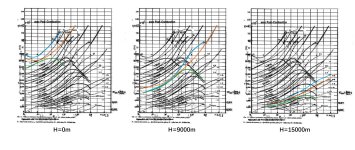
Helping you make up for the thrust deficit.
Note: The orange M88-2 curve represents theoretical thrust rather than installed thrust; actual thrust when installed on an aircraft would be 5%–10% lower.
The green F404 and blue RD-33 curves represent installed thrust for the F-18C and MiG-29, respectively.
Someone on reddit has found the delivery schedule of Swayam Raksha Kavach (SRK) LRU from two tenders, which are probably few months old. Looks like SRK hasn't been flight tested yet. Janes in November 2025 had reported that the flight testing was supposed to be completed this month and it would have been deployed on the aircrafts by year end.
New schedule says flight trials in November 2026. Deployment will be from April 2027. Also, the last LRU will be delivered in March 2032.
According to the document, SRK will deployed from the 59th aircraft it seems.
38 of 39 trainers and 84 fighter jets will be equipped with it.
Exciter Receiver Processor (ERP): P.NO:ERP_LCAMk1A_2023 122 NOS
ACM Module: P.NO:2041 101 000 122 No’s
Liquid Circulation Unit (LCU): P.NO:2041 102 000, Ver. 3.0: 122 No’s
Electronic Control Unit ( ECU): P.NO:2041 104 000, HW 2.0 122 No’s
New schedule says flight trials in November 2026. Deployment will be from April 2027. Also, the last LRU will be delivered in March 2032.
According to the document, SRK will deployed from the 59th aircraft it seems.
38 of 39 trainers and 84 fighter jets will be equipped with it.
Exciter Receiver Processor (ERP): P.NO:ERP_LCAMk1A_2023 122 NOS
ACM Module: P.NO:2041 101 000 122 No’s
Liquid Circulation Unit (LCU): P.NO:2041 102 000, Ver. 3.0: 122 No’s
Electronic Control Unit ( ECU): P.NO:2041 104 000, HW 2.0 122 No’s
Thats BS. Whats the source of this?The rd-33mk cannot be used in a single engined configuration because of gearbox positioning and other peripherals.
A variant used to power the JF-17 Thunder (FC-1), having "the most significant difference being the repositioning of the gearbox along the bottom of the engine casing."[5] The Klimov poster at Zhuhai 2010 airshow gave the thrust range of the engine to be 49.4 kN to 84.4 kN wet.[6] This was designed specifically for FC-1 with increased thrust and relocated gearbox compared to base RD-33's, although the increase of thrust decreased the service life of RD-93 to 2200 hours from RD-33's 4000 hours. According to Air Commodore Mehmood engines are solid and reliable: “We’ve flown 7,000 hours with the engine and we haven’t had any problems”, he said.[7][8] The RD-93MA is an upgrade of the RD-93 engine. The thrust of the RD-93MA is expected to 9300 kgf (91,2 kN) compared to 8300 kgf of the RD-93, a significant bump-up in power which will help the jet to carry more armaments and fly at a higher speed. This has been specifically developed to power JF-17 Block III fighter jetsThats BS. Whats the source of this?

Silly question but hear me out
why can't we mount the ASPJ pod in place of the LDP like the Pakistanis have done with JF-17 and free up an extra out board pylon
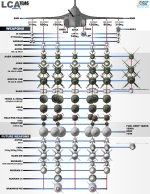

The both have the same weight and roughly the same dimensions

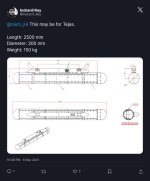
why can't we mount the ASPJ pod in place of the LDP like the Pakistanis have done with JF-17 and free up an extra out board pylon
The both have the same weight and roughly the same dimensions