Six F-35Bs arrived at the Marine Corps carrying ballast where their radars should have been, because the new APG-85 was not available. They can fly. They cannot conduct combat training or missions. That is the F-35 program at thirty years and a life-cycle estimate above $2 trillion: a fleet that is fully mission-capable about a quarter of the time, a modernization package five years late, 110 aircraft delivered in 2024 with every one late by an average of 238 days, and an aircraft whose complete upgrade consumes all 32 kilowatts of cooling it has, against a forward requirement of 62 to 80.
Nearly 30 Years Into the F-35 Program, Three Problems Still Define Its $2 Trillion Future: The Joint Strike Fighter program
began in November 1996. By July 31, 2026, it had been underway for almost 30 years. The Pentagon plans to buy 2,470 U.S. aircraft, and the Government Accountability Office estimates that acquisition and sustainment across the fleet’s 77-year life cycle will cost
more than $2 trillion.
The F-35 has genuine strengths. Its low-observable design, sensor fusion, and networking give U.S. and allied forces a penetrating aircraft capable of finding targets and sharing data in heavily defended airspace. The Pentagon still has to keep enough jets ready and modernize them before the aircraft’s original hardware reaches its limits.
The latest readiness data provide the sharpest warning.
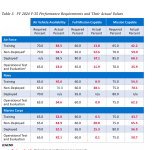
GAO reported in June 2026 that the fleet-wide mission-capable rate fell from 67 percent in fiscal 2021 to 44 percent in fiscal 2025. The full mission-capable rate, measuring the share of time a jet was able to perform every assigned mission, fell from 38 percent to 25 percent.
As of July 31, 2026, three problems stand above the rest: a sustainment system that has not kept pace with fleet growth, a Block 4 modernization effort trapped by software and testing delays, and an engine-and-cooling architecture with almost no margin for the capabilities planned in the 2030s.
F-35 Readiness Fell as the U.S. Fleet Passed 800 Aircraft
The readiness decline does not trace to one defective component.
Air Force officials cited newly accepted aircraft limited by software, scarce spare parts, and corrosion inspections and repairs. The result was a force in which
the fleet was fully mission-capable only about one-quarter of the time during fiscal 2025, even as the U.S. inventory surpassed 800 aircraft.
The Joint Program Office now proposes a major sustainment reset through fiscal 2031. The plan requires
$13.7 billion beyond previous projections, with more than $7 billion dependent on the industry delivering additional parts and materials. GAO found continuing capacity constraints for key items and projected that the services will face an annual sustainment gap above $1 billion by the mid-2030s.
Program Executive Officer Lt. Gen. Gregory Masiello told the Senate in June that the current support structure was built for 700 to 800 aircraft and now serves
more than 1,300 accepted F-35s worldwide. That is the underlying
readiness problem: procurement expanded faster than depots, repair capacity, spare inventories, and government access to technical data.
Masiello did not dispute GAO’s calculation, but said the Joint Program Office’s current figure placed mission-capable performance at
56 percent. That higher figure does not erase the five-year decline or the decision to launch a multibillion-dollar sustainment reset.
Combat units often post stronger readiness when parts, maintainers, and contractor support are concentrated for a deployment. A global fleet cannot treat every squadron as a surge operation. Routine readiness has to cover training units, test squadrons, home stations, and deployed forces without stripping one group to support another.
Block 4 Is Five Years Late and Still Waiting on Stable Software
Block 4 is intended to add weapons, electronic warfare improvements, radar enhancements, and communications upgrades needed against changing threats. GAO placed the effort at $16.5 billion as of 2021, more than 50 percent above its original baseline. The Pentagon has since reduced the package and moved completion to
2031 at the earliest, five years beyond the original schedule.
Technology Refresh 3, or TR-3, is the $1.9 billion computing and memory foundation for much of Block 4. Its hardware and software delays drove late production deliveries. Lockheed Martin delivered 110 aircraft in 2024, and
every one arrived late by an average of 238 days.
The software problem continued after deliveries resumed. The Pentagon’s operational-test office found that the latest TR-3 software was unsuitable for dedicated testing, while the final software planned for older TR-2 aircraft was
largely unusable for much of fiscal 2025 because of instability, missing capability, and newly discovered defects. No new combat capability was fielded during that fiscal year.
Masiello told senators on June 23 that 22 original Block 4 requirements had been fielded, including seven in the previous software release, with six more planned for summer 2026. The hearing also showed the limiting factor behind
the software delays: integration and test capacity has not kept pace with the volume and complexity of code. The operational-test force still lacks enough properly configured aircraft and simulation equipment to test representative formations on schedule.
The hardware delay is also reaching finished aircraft. The Marine Corps accepted
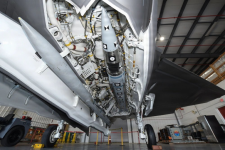
six F-35Bs with ballast instead of radars because the new APG-85 was unavailable. Those jets support basic flying but cannot conduct combat training or missions until their radars are installed.
The F-35 Is Running Out of Power and Cooling Margin
New processors, radars, and electronic-warfare systems draw electricity and produce heat. During the June Senate hearing, Masiello said the complete Block 4 configuration consumes the aircraft’s available 32 kilowatts of cooling capacity, leaving no margin. The program’s forward requirement is
between 62 and 80 kilowatts.
The shortfall has been known since 2008. The current engine has to work harder to extract power and reject heat, reducing component life. GAO estimated that the resulting wear has added
$38 billion to projected life-cycle costs. The limitation also pushes some capabilities beyond the reduced Block 4 package because the aircraft lacks the power and cooling to support them.
The Pentagon chose an
Engine Core Upgrade for the existing F135 rather than a new adaptive engine. The upgrade is meant to restore engine life and provide additional power, but it supplies only part of the cooling increase. A separate power-and-thermal-management upgrade must handle the greater demand and later mission systems, an issue also driving
the aircraft’s modernization bill.
The Engine Core Upgrade is scheduled to enter critical design review in August 2026, followed by ground testing in late 2027 and flight testing around 2030. Production is expected in 2031.
GAO’s current schedule does not begin production of the larger power-and-thermal-management upgrade until 2033.