
Billionaire Mittal’s Satellite Ambition Pitches OneWeb Against Musk’s Starlink
By Aryan Gupta
November 5, 2026 at 10:31 AM GMT+5:30
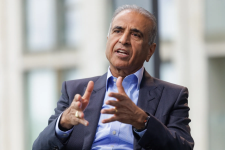
Sunil Mittal. Photographer: Jason Alden/Bloomberg.
Indian billionaire Sunil Bharti Mittal is betting he can build a global satellite-internet network independent of both the US and China, as governments increasingly seek strategic alternatives for critical communication infrastructure.
“Countries can’t rely on another country,” Mittal said in an interview on Bloomberg TV’s Leaders With Francine Lacqua. “Europe needs its own, India needs its own. China’s developing their own. So all countries will need some alternatives.”
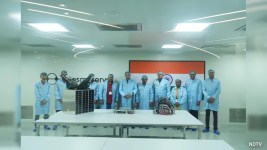
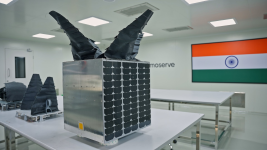
The ambition puts Eutelsat Communications’ OneWeb, backed by Mittal, in competition with some of the world’s largest technology companies, most notably Elon Musk’s SpaceX. Starlink already operates more than 10,000 satellites, compared with about 650 for OneWeb, giving Musk’s network a significant lead. Amazon.com Inc. is also building its own network, with plans for thousands of satellites.
Mittal’s Bharti Airtel Ltd., India’s second-largest telecommunications operator, was an early investor in OneWeb in 2015 and deepened its commitment in 2020, joining the UK government in a rescue package that pulled the satellite operator out of bankruptcy. The investors committed $1 billion in fresh equity, with Bharti later investing another $500 million.
The gap in commercial scale remains large. Starlink serves at least 13.6 million customers worldwide and generated more than $5 billion in connectivity revenue in the three months ended September. During the same period, Eutelsat’s low-Earth-orbit business, which includes OneWeb, generated 70.9 million euros ($81.5 million).
For Mittal, however, the contest is about more than broadband.
Satellite networks are increasingly becoming critical infrastructure, supporting communications, military operations and connectivity in remote regions. As countries grow more reliant on space-based networks, control over those systems is becoming a question of strategic autonomy.
Debate over dependence on privately controlled satellite infrastructure has also gained prominence in recent months, amid controversies surrounding Starlink’s role in geopolitical conflicts and Musk’s remarks about influential business interests in countries including India.
‘Last Man Standing’
For Mittal, the challenge of competing against a larger and better-capitalized rival is hardly new. Long before he began betting on satellite connectivity, he spent years navigating one of the most brutal shakeouts in India’s telecom industry.
The arrival of Mukesh Ambani’s Reliance Jio Infocomm Ltd. in 2016, offering free voice services and sharply discounted data plans, triggered a price war that reshaped India’s telecom sector. Several operators disappeared, while others merged or consolidated.
Bharti Airtel survived by expanding its spectrum holdings and raising capital to withstand the disruption.
“If you can be the last man standing in this town, we will become a very valuable company,” Mittal said.
Mittal said Bharti raised $18 billion over 34 months during the industry’s upheaval while he reduced his personal stake from 51% to 25%.
The strategy ultimately left Bharti and Jio as the dominant private players in India’s wireless market, with Bharti generated more revenue per customer while Jio maintains a lead in subscriber numbers.
Battle for Skies
The contest is now shifting from the ground to space. OneWeb, Starlink and Jio have secured licenses to provide satellite communications services in India, while Amazon Leo is also seeking regulatory approval. Commercial launches, however, remain subject to government clearances and spectrum-related requirements.
Mittal said OneWeb applied for approvals five years ago, has had ground infrastructure ready for three years and has operated satellites over India for the past five years.
“I think I am significantly ahead in the queue” of Musk, he said last month at the Bloomberg New Economy Forum in New Delhi.
The contest comes as India seeks to expand connectivity across remote and underserved regions while retaining oversight of critical communications infrastructure. Satellite broadband can reach areas where laying fibre-optic cables or building conventional mobile networks is uneconomical.
But Mittal doesn’t expect the economics of the industry to support a large number of competing global satellite constellations.
“Satellites need replacement every five or six years,” he said. It takes about $10 billion to build a constellation and need seven to eight years to deploy one.
https://www.bloomberg.com/news/arti...business&utm_medium=social&utm_source=twitter
By Aryan Gupta
November 5, 2026 at 10:31 AM GMT+5:30
Sunil Mittal. Photographer: Jason Alden/Bloomberg.
Indian billionaire Sunil Bharti Mittal is betting he can build a global satellite-internet network independent of both the US and China, as governments increasingly seek strategic alternatives for critical communication infrastructure.
“Countries can’t rely on another country,” Mittal said in an interview on Bloomberg TV’s Leaders With Francine Lacqua. “Europe needs its own, India needs its own. China’s developing their own. So all countries will need some alternatives.”
The ambition puts Eutelsat Communications’ OneWeb, backed by Mittal, in competition with some of the world’s largest technology companies, most notably Elon Musk’s SpaceX. Starlink already operates more than 10,000 satellites, compared with about 650 for OneWeb, giving Musk’s network a significant lead. Amazon.com Inc. is also building its own network, with plans for thousands of satellites.
Mittal’s Bharti Airtel Ltd., India’s second-largest telecommunications operator, was an early investor in OneWeb in 2015 and deepened its commitment in 2020, joining the UK government in a rescue package that pulled the satellite operator out of bankruptcy. The investors committed $1 billion in fresh equity, with Bharti later investing another $500 million.
The gap in commercial scale remains large. Starlink serves at least 13.6 million customers worldwide and generated more than $5 billion in connectivity revenue in the three months ended September. During the same period, Eutelsat’s low-Earth-orbit business, which includes OneWeb, generated 70.9 million euros ($81.5 million).
For Mittal, however, the contest is about more than broadband.
Satellite networks are increasingly becoming critical infrastructure, supporting communications, military operations and connectivity in remote regions. As countries grow more reliant on space-based networks, control over those systems is becoming a question of strategic autonomy.
Debate over dependence on privately controlled satellite infrastructure has also gained prominence in recent months, amid controversies surrounding Starlink’s role in geopolitical conflicts and Musk’s remarks about influential business interests in countries including India.
‘Last Man Standing’
For Mittal, the challenge of competing against a larger and better-capitalized rival is hardly new. Long before he began betting on satellite connectivity, he spent years navigating one of the most brutal shakeouts in India’s telecom industry.
The arrival of Mukesh Ambani’s Reliance Jio Infocomm Ltd. in 2016, offering free voice services and sharply discounted data plans, triggered a price war that reshaped India’s telecom sector. Several operators disappeared, while others merged or consolidated.
Bharti Airtel survived by expanding its spectrum holdings and raising capital to withstand the disruption.
“If you can be the last man standing in this town, we will become a very valuable company,” Mittal said.
Mittal said Bharti raised $18 billion over 34 months during the industry’s upheaval while he reduced his personal stake from 51% to 25%.
The strategy ultimately left Bharti and Jio as the dominant private players in India’s wireless market, with Bharti generated more revenue per customer while Jio maintains a lead in subscriber numbers.
Battle for Skies
The contest is now shifting from the ground to space. OneWeb, Starlink and Jio have secured licenses to provide satellite communications services in India, while Amazon Leo is also seeking regulatory approval. Commercial launches, however, remain subject to government clearances and spectrum-related requirements.
Mittal said OneWeb applied for approvals five years ago, has had ground infrastructure ready for three years and has operated satellites over India for the past five years.
“I think I am significantly ahead in the queue” of Musk, he said last month at the Bloomberg New Economy Forum in New Delhi.
The contest comes as India seeks to expand connectivity across remote and underserved regions while retaining oversight of critical communications infrastructure. Satellite broadband can reach areas where laying fibre-optic cables or building conventional mobile networks is uneconomical.
But Mittal doesn’t expect the economics of the industry to support a large number of competing global satellite constellations.
“Satellites need replacement every five or six years,” he said. It takes about $10 billion to build a constellation and need seven to eight years to deploy one.
https://www.bloomberg.com/news/arti...business&utm_medium=social&utm_source=twitter