

Air India Ahmedabad-London flight crash
- Thread starter Ashwin
- Start date
You are using an out of date browser. It may not display this or other websites correctly.
You should upgrade or use an alternative browser.
You should upgrade or use an alternative browser.


PIC means "Pilot In Command", basically the Captain. So the FOs will have to go long way to get promoted to Captain.
MCAS implementation & failure was something impossible to hide from public.View attachment 45193
Isn't the NTSB the one that ruled Boeing is at fault, especially for the 737-8 Max failures ! . Plus additional officials from the UK is also at site. So to say Boeing is spinning its PR is a bit premature!
Otherwise in every country if there is something which can cause gloal embarassment or disturb international ties, if there is chance to cover up, it will be tried. That's what different people in different vocabulary call corruption, totalitarian, autocratic, etc, etc.
In military domain also, most people globally didn't expect Boeing to win NGAD competition when LM, NG, the masters of Stealth so far, were also advertising.
Political blame game happens everyday in parliament.> Political sabotage to defame rulling party is also considered, although will never be proven publicly even if true bcoz it'll lead to political violence & perhaps a civil war too.
Sorry this is TOO Funny! no amount of external defamation is needed - when the ministers themselves are just useless with zero accountability and blame everyone else and only wake up for making Reels!
There are many funny things in there like throwing chairs & mics at each other, fist fights, etc.


We need qualified politicians in every party & dismantle monarchs


 talking about democracy.
UK regulator flagged Boeing fuel switches four weeks before Air India crash
The UK Civil Aviation Authority issued a safety notice on fuel control switches on Boeing 787s weeks before the Air India crash. This raises concerns over oversight and aircraft safety compliance.
Just four weeks before an Air India Boeing 787-8 crashed shortly after takeoff from Ahmedabad, the UK's Civil Aviation Authority (CAA) had flagged fuel control switches on several Boeing planes and ordered daily checks.
The UK aviation regulator issued a safety notice on May 15 instructing operators of five Boeing models, including the 787 Dreamliner, to review a US Federal Aviation Administration (FAA) Airworthiness Directive (AD) -- a legally enforceable regulation to correct unsafe conditions in a product -- and determine whether it affected their fleet. The FAA directive had flagged fuel shutoff valve actuators as a potential safety concern.
Can you tell me what would have happened if both engines would have stalled during take off in Japanese aircraft case, that too a Boeing 787?
I already mentioned ANA example in beginning
The ANA 787 incident happened in 2019 & if we deep-dive into the cause then it is complicated.
Boeing clarified that the engines can shutdown as thrust reverser were activated too quickly before ground condition achieved which activated the TCMA or Thrust Control Malfunction Accommodation system which guards against inadvertent asymmetrical high thrust situations. The TCMA would notice high thrust at idle or low speeds on ground w/o decceleration, so engine would be shutdown to reduce speed.
IMO, the programming logic should have been - not to allow thrust reverser in air &/or above certain speed, with aural & visual alarms.

@Mods, pls put up this post on the twitter handle of our forum.
It seems I have been able to find out twhat happened in this crash. The ignition switches just activate the FADEC as they are like circuit breakers. Once the FADEC is activated, all controls of the engines are now under its authority based on the logic built in it. It appears that just after T/O, for some reason FADEC commanded the fuel valves to cutoff. The DFDR sensor for location of the fuel shut off valve is in the fuel valve and not in the switches. Ignition switches going to cutoff does not mean that the switches were physically moved to cutoff. As these switches are not directly linked to the fuel shut off valve of the engine. Instead the FADEC controls them. During engine start, these valves open much later in the engine start cycle say around 25% N2 and remain closed till then as the engine motors up. We hear very distinct clicking of the high energy spark plugs firing when the fuel valve opens and starts feeding the fuel to the engine combustion chamber. After that the light up occurs and the engine accelerates to its self sustaining RPM. After that the spark plugs stop firing and the engine accelerates to its idling RPM. This shows that just by putting the ignition switch to on position does not start fuel supply to the engine, it marely activates the start sequence under the authority of FADEC.
So what happened in this crash? As stated, it appears that for some reason FADEC commanded the fuel shut off valves to close even when the switches were in their physical state at RUN Detente. The change and mismatch of the ignition swtich position and actual position of the fuel shut off valve must have popped up on EICAS immidiately. Watching the cutoff positon of the fuel shut off valve on EICAS is what must have prompted one pilot to ask as to why he cutoff? Now the reply of the other solves this mystery. He said he did not. After that they must have transitioned their eyes to the ignition switches only to find them in RUN position. By than RAT had deployed. Now the pilots had no other option but to start inflight relight of the engines and that needed them to recycle the ignition switches by first moving them to cut off and than moving them to RUN again. Remeber for engines the transition from RUN to cutoff happened within one second. But it took them 2 seconds to put both the engine switches to RUN again. This extra one second was due to recycling the switches from RUN to CutOFF to RUN again and to be done for both the engines.
There seems to be a massive cover up to save someone, either BOEING of FAA who certified these aicraft. The enquiry committee comprised people not only from Indian AAIB but also Boeing, FAA and GE. This initial report is a doctored document and falls way short of giving any meaningful direction to the investigation.
Similar incident had happened with an ANA B787 in the past. There too the switches were found to be in RUN position while the fuel shut off valve had transitioned to CUTOFF. There was no physical movement of the ignition switches in that incident.
It seems I have been able to find out twhat happened in this crash. The ignition switches just activate the FADEC as they are like circuit breakers. Once the FADEC is activated, all controls of the engines are now under its authority based on the logic built in it. It appears that just after T/O, for some reason FADEC commanded the fuel valves to cutoff. The DFDR sensor for location of the fuel shut off valve is in the fuel valve and not in the switches. Ignition switches going to cutoff does not mean that the switches were physically moved to cutoff. As these switches are not directly linked to the fuel shut off valve of the engine. Instead the FADEC controls them. During engine start, these valves open much later in the engine start cycle say around 25% N2 and remain closed till then as the engine motors up. We hear very distinct clicking of the high energy spark plugs firing when the fuel valve opens and starts feeding the fuel to the engine combustion chamber. After that the light up occurs and the engine accelerates to its self sustaining RPM. After that the spark plugs stop firing and the engine accelerates to its idling RPM. This shows that just by putting the ignition switch to on position does not start fuel supply to the engine, it marely activates the start sequence under the authority of FADEC.
So what happened in this crash? As stated, it appears that for some reason FADEC commanded the fuel shut off valves to close even when the switches were in their physical state at RUN Detente. The change and mismatch of the ignition swtich position and actual position of the fuel shut off valve must have popped up on EICAS immidiately. Watching the cutoff positon of the fuel shut off valve on EICAS is what must have prompted one pilot to ask as to why he cutoff? Now the reply of the other solves this mystery. He said he did not. After that they must have transitioned their eyes to the ignition switches only to find them in RUN position. By than RAT had deployed. Now the pilots had no other option but to start inflight relight of the engines and that needed them to recycle the ignition switches by first moving them to cut off and than moving them to RUN again. Remeber for engines the transition from RUN to cutoff happened within one second. But it took them 2 seconds to put both the engine switches to RUN again. This extra one second was due to recycling the switches from RUN to CutOFF to RUN again and to be done for both the engines.
There seems to be a massive cover up to save someone, either BOEING of FAA who certified these aicraft. The enquiry committee comprised people not only from Indian AAIB but also Boeing, FAA and GE. This initial report is a doctored document and falls way short of giving any meaningful direction to the investigation.
Similar incident had happened with an ANA B787 in the past. There too the switches were found to be in RUN position while the fuel shut off valve had transitioned to CUTOFF. There was no physical movement of the ignition switches in that incident.

Okay. Now we are going somewhere. Tell us what would have been Boeing response if airplane had crashed with most of the material damaged? Would Boeing feign ignorance or accept the fault in logic? And if I understand the report correctly, that also they tried to paint on pilots. What would had happened in the scenario if plane would had crashed with pilots dead? Who would have defended them against Big Company & its lobbiests?I already mentioned ANA example in beginning
IMO, the programming logic should have been - not to allow thrust reverser in air &/or above certain speed, with aural & visual alarms.
Crux of the matter, they played dirty even without investigation is still work in progress. How did the preliminary investigation reached in the hands of journalists with a agenda?
Okay. Now we are going somewhere. Tell us what would have been Boeing response if airplane had crashed with most of the material damaged? Would Boeing feign ignorance or accept the fault in logic? And if I understand the report correctly, that also they tried to paint on pilots. What would had happened in the scenario if plane would had crashed with pilots dead? Who would have defended them against Big Company & its lobbiests?
Crux of the matter, they played dirty even without investigation is still work in progress. How did the preliminary investigation reached in the hands of journalists with a agenda?
Industrial scams, cover ups, etc have been there everywhere since beginning of industrialization. It is human nature to try to hide mistakes & silently correct them.
When big industrial mistakes happen then people try to asses the span of damage, cost & time of corrections & ultimately something is done to prevent same/similar incidents in future.
Today's industry is complicated by Insurance money, Product's Market share, Stock market investment, political associations, International ties, trade & commerce, etc.
Hence industrialists try to find scapegoat & unethically hire lobbiests to do propaganda.
We citizens trust commities & organisations for investigations but those under govt./political control as well as private ones can be honest or corrupted.
Honest & sincere people when pressurised to manipulate, give resignation not to get entangled further.
Since beginning many people like Mary Schiavo (Former IG, US DoTr), Dr. Vandana Singh, some domestic & foreign pilots, enthusiasts like me, etc have considered S/w glitch with certain functions of FMC/EEC, we should see how confusion can occur with electro-mechanical man-machine interfaces.
All switches, buttons, knobs in the A/c are some kind of electronic relays, so the electrical signals are converted by ADC (Analog to Digital Convertor) mechanism & sent to FMC & then formatted & sent to FDR.
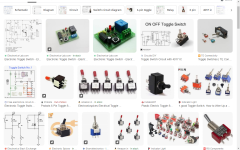
Some of the switches, buttons, levers, knobs can be controlled back in motion by the computer/auto-pilot,
For example -
- thrust levers in auto-thrust mode.
- engine start knobs from START to NORM.
- stabilizer trim wheel (787 doesn't have).
- speed brake lever.
...except the ones guarded by notches, brackets, covers, etc. But the computer/auto-pilot can still SOFT operate the functions.
For example-
- load-relief function for flaps, but flaps lever won't move. There'll be messages, perhaps LED & aural alarm then pilot has to adjust flap lever.
- EEC's TCMA shutting down engine(fuel valves) if RPM red line crossed, overspeed occurs, ground idle RPM issues, etc. But fuel switch won't move. In case of mid-flight shutdown the pilots need to manually cutoff & run both switches for engine restart.
- RAT auto-deploy.
- Electrical load shedding causing less priority things to shut down temporarily or indefinitely as per situation & power available, like shut down of some of the fuel pumps, hydraulic pumps, IFES (In Flight Entertainment System), Cabin Utility, etc.
As jets become more S/w oriented with glass cockpit & automatic adjustments, that means the computers have option to relay a signal further or not triggered by a hard switch, unless the proper conditions are met. Such safety mechanisms, S/w driven locks are already there.
So now there are many layers-
- physical, mechanical layer on top.
- electronic layer of transistor circuit.
- wiring layer of connectors, plugs, copper wires, fiber optic wires.
- S/w layer, the ultimate judge, jury, executioner.
Some Avionics logic could be hard-wired where too much S/w thinking is not needed.
Each of these layer have their standards w.r.t. manufacturing, maintenance, shelf life, etc, but also gltches associated.
But we've not reached the zenith of any technology, just the beginning actually.
1 glitch at any layer may or may not be corrected at H/w or S/w aspect of other layer, depends on design efficiency, maintenance, flight conditions, operation, etc. By "swiss cheese model", if some glitch gets through all layers then problems can arise.
A glitch at electronic, wiring, S/w layers may or may not show hard movement of switch/knob/lever/button, especially in those guarded by notches, bracket, covers, etc,
Some kind of messages on MFD with LED & aural alarm may or may not occur, hence in very short life-threatening emergency situation there can be confusion/misunderstanding, especially if pilots don't get along well.
All switches, buttons, knobs in the A/c are some kind of electronic relays, so the electrical signals are converted by ADC (Analog to Digital Convertor) mechanism & sent to FMC & then formatted & sent to FDR.
Some of the switches, buttons, levers, knobs can be controlled back in motion by the computer/auto-pilot,
For example -
- thrust levers in auto-thrust mode.
- engine start knobs from START to NORM.
- stabilizer trim wheel (787 doesn't have).
- speed brake lever.
...except the ones guarded by notches, brackets, covers, etc. But the computer/auto-pilot can still SOFT operate the functions.
For example-
- load-relief function for flaps, but flaps lever won't move. There'll be messages, perhaps LED & aural alarm then pilot has to adjust flap lever.
- EEC's TCMA shutting down engine(fuel valves) if RPM red line crossed, overspeed occurs, ground idle RPM issues, etc. But fuel switch won't move. In case of mid-flight shutdown the pilots need to manually cutoff & run both switches for engine restart.
- RAT auto-deploy.
- Electrical load shedding causing less priority things to shut down temporarily or indefinitely as per situation & power available, like shut down of some of the fuel pumps, hydraulic pumps, IFES (In Flight Entertainment System), Cabin Utility, etc.
As jets become more S/w oriented with glass cockpit & automatic adjustments, that means the computers have option to relay a signal further or not triggered by a hard switch, unless the proper conditions are met. Such safety mechanisms, S/w driven locks are already there.
So now there are many layers-
- physical, mechanical layer on top.
- electronic layer of transistor circuit.
- wiring layer of connectors, plugs, copper wires, fiber optic wires.
- S/w layer, the ultimate judge, jury, executioner.
Some Avionics logic could be hard-wired where too much S/w thinking is not needed.
Each of these layer have their standards w.r.t. manufacturing, maintenance, shelf life, etc, but also gltches associated.
But we've not reached the zenith of any technology, just the beginning actually.
1 glitch at any layer may or may not be corrected at H/w or S/w aspect of other layer, depends on design efficiency, maintenance, flight conditions, operation, etc. By "swiss cheese model", if some glitch gets through all layers then problems can arise.
A glitch at electronic, wiring, S/w layers may or may not show hard movement of switch/knob/lever/button, especially in those guarded by notches, bracket, covers, etc,
Some kind of messages on MFD with LED & aural alarm may or may not occur, hence in very short life-threatening emergency situation there can be confusion/misunderstanding, especially if pilots don't get along well.
Mary Schiavo (Aviation lawyer, Former IG, US Dept. of Transportation) who suspected S/w glitch in AI-171 crash, says -
- Prelim report not supposed to conclude, so it doesn't present evidence of pilot error.
- Some people conveniently cherry-picking only on FO's question but ignoring Captain's denial response.
- Wall Street Journal & other media, people should not incline or conclude pilot suicide-murder so soon.
- In 75-80% cases pilots were blamed & later they were found innocent.
- Boeing avionics S/w have done uncommanded things many times like in MCAS case.
- At this point blaming pilots for murder w/o evidence is HEINOUS ACCUSATION.
- After MH-370 accident also pilots blamed but no evidence 10 years down the line.
- In MCAS crashes of B-737 MAX, pilots were blamed, but inone case training material was missing, in other the pilots simply didn't have time.
- Whitles blowers at 787 assembly plant exposed many issues w.r.t. quality of components, assembly process, safety violations, etc.

------------------------------------------------------------------------------------------------------------------------


- Prelim report not supposed to conclude, so it doesn't present evidence of pilot error.
- Some people conveniently cherry-picking only on FO's question but ignoring Captain's denial response.
- Wall Street Journal & other media, people should not incline or conclude pilot suicide-murder so soon.
- In 75-80% cases pilots were blamed & later they were found innocent.
- Boeing avionics S/w have done uncommanded things many times like in MCAS case.
- At this point blaming pilots for murder w/o evidence is HEINOUS ACCUSATION.
- After MH-370 accident also pilots blamed but no evidence 10 years down the line.
- In MCAS crashes of B-737 MAX, pilots were blamed, but inone case training material was missing, in other the pilots simply didn't have time.
- Whitles blowers at 787 assembly plant exposed many issues w.r.t. quality of components, assembly process, safety violations, etc.
------------------------------------------------------------------------------------------------------------------------
@Mods, have you put it up on our twitter handle?@Mods, pls put up this post on the twitter handle of our forum.
It seems I have been able to find out twhat happened in this crash. The ignition switches just activate the FADEC as they are like circuit breakers. Once the FADEC is activated, all controls of the engines are now under its authority based on the logic built in it. It appears that just after T/O, for some reason FADEC commanded the fuel valves to cutoff. The DFDR sensor for location of the fuel shut off valve is in the fuel valve and not in the switches. Ignition switches going to cutoff does not mean that the switches were physically moved to cutoff. As these switches are not directly linked to the fuel shut off valve of the engine. Instead the FADEC controls them. During engine start, these valves open much later in the engine start cycle say around 25% N2 and remain closed till then as the engine motors up. We hear very distinct clicking of the high energy spark plugs firing when the fuel valve opens and starts feeding the fuel to the engine combustion chamber. After that the light up occurs and the engine accelerates to its self sustaining RPM. After that the spark plugs stop firing and the engine accelerates to its idling RPM. This shows that just by putting the ignition switch to on position does not start fuel supply to the engine, it marely activates the start sequence under the authority of FADEC.
So what happened in this crash? As stated, it appears that for some reason FADEC commanded the fuel shut off valves to close even when the switches were in their physical state at RUN Detente. The change and mismatch of the ignition swtich position and actual position of the fuel shut off valve must have popped up on EICAS immidiately. Watching the cutoff positon of the fuel shut off valve on EICAS is what must have prompted one pilot to ask as to why he cutoff? Now the reply of the other solves this mystery. He said he did not. After that they must have transitioned their eyes to the ignition switches only to find them in RUN position. By than RAT had deployed. Now the pilots had no other option but to start inflight relight of the engines and that needed them to recycle the ignition switches by first moving them to cut off and than moving them to RUN again. Remeber for engines the transition from RUN to cutoff happened within one second. But it took them 2 seconds to put both the engine switches to RUN again. This extra one second was due to recycling the switches from RUN to CutOFF to RUN again and to be done for both the engines.
There seems to be a massive cover up to save someone, either BOEING of FAA who certified these aicraft. The enquiry committee comprised people not only from Indian AAIB but also Boeing, FAA and GE. This initial report is a doctored document and falls way short of giving any meaningful direction to the investigation.
Similar incident had happened with an ANA B787 in the past. There too the switches were found to be in RUN position while the fuel shut off valve had transitioned to CUTOFF. There was no physical movement of the ignition switches in that incident.
Theoretically, TCB can also have electronic/electrical issues.
This aspect i mentioned in my last post that there are layers -
- mechanical switch layer
- electronic circuit layer below
- connectors & wiring layer
- S/w layer
> EEC's TCMA function shut down engines (fuel valves) of ANA 787 just before landing. This doesn't move guarded fuel switch.
> Load-relief function can operate flaps. This doesn't move notched flaps lever.
> Electrical Management's Load shedding function can deprioritise & auto-shut some fuel pumps, hydraullic pumps, etc under certain conditions. IDK yet if this will turn hydraulic, AC-pack knobs, etc in overhead panel.
So apart from S/w layer glitch,
the electronic circuit, connector, wiring layers can also have glitch, or maintenance issues.
Earlier, there was STAB POS XDCR message for Stabillier Position Transducer, which was troubleshooted.
STAB trim switch is in control column & thumb operated,
but red color guarded toggle switch for STAB on-cutoff are beside the fuel switches.

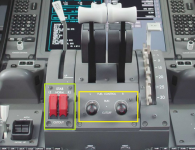
So where exactly was the issue?
- Transducer
- wiring
- connector
- switch
- something in TCB box?
From the message it appears that the Transducer is faulty, but a bad connector or wiring on either end MIGHT also produce this error.
An Electronics &/or Electrical engineer can tell best.
What exactly was troubleshooted?
Was something replaced like Stab Transducer, connector, wiring, Stab trim switch, stab on-off switch beside the fuel switches?
These 2 switches of Stab & fuel clearly seen to be 2 units with fixing screws. But still, can there be a short circuit in TCB box in or around Stab on-off switch, which also affected the Fuel switches?


The Indian AAIB have issued stern warnings not to do defamation propaganda otherwise legal action could be taken.

Last edited:
Many people who are expecting a fuel switch click in CVR should know that there can be confusion if referred only to CVR data & not matched with FDR data.
As i wrote earlier that some switches, knobs are auto-moved by FMC -
1 more thing to add here is the AUTOBRAKE knob turning from RTO to OFF, that too just after T/o.
It is located just below gear lever handle.
But the CLICK sounds plural. I wonder if more knobs, switches are auto-moved like this.
What a technial coincidence with AI-171 where some people are expecting Fuel switch off clicks around this time. I don't expect the investigation team would get confused with this click, especially when FDR data has revealed everything by now.
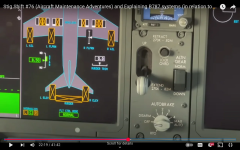
Here is a generic cockpit video where i observed the knob auto-rotate -
@03:56
As i wrote earlier that some switches, knobs are auto-moved by FMC -
Some of the switches, buttons, levers, knobs can be controlled back in motion by the computer/auto-pilot,
For example -
- thrust levers in auto-thrust mode.
- engine start knobs from START to NORM.
- stabilizer trim wheel (787 doesn't have).
- speed brake lever.
1 more thing to add here is the AUTOBRAKE knob turning from RTO to OFF, that too just after T/o.
It is located just below gear lever handle.
But the CLICK sounds plural. I wonder if more knobs, switches are auto-moved like this.
What a technial coincidence with AI-171 where some people are expecting Fuel switch off clicks around this time. I don't expect the investigation team would get confused with this click, especially when FDR data has revealed everything by now.
Here is a generic cockpit video where i observed the knob auto-rotate -
@03:56
News reports that the tail section probe going on for possible fire just before crash.
i wonder what in tail can cause both engines pull back or shut down.
High resolution images are difficult to find.
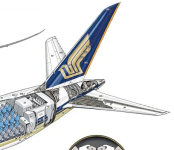
The tail has APU, battery for APU & rear galleys.
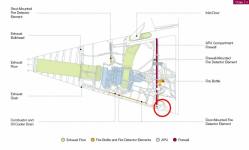
Behind the galleys is a bulkhead which i think is fire-hardened if APU catches fire + fire bottle for APU.
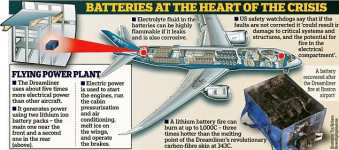
Initially long back there were battery issues which are said to be solved.
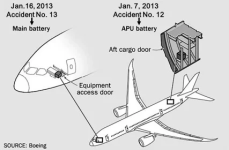
But suppose if we think that in AI-171 if there was tail battery or APU fire, then how would this affect engines?
AFAIK, on T/o the APU is not used & in this case also it was off, activated after engines failed.
i wonder what in tail can cause both engines pull back or shut down.
High resolution images are difficult to find.
The tail has APU, battery for APU & rear galleys.
Behind the galleys is a bulkhead which i think is fire-hardened if APU catches fire + fire bottle for APU.
Initially long back there were battery issues which are said to be solved.
But suppose if we think that in AI-171 if there was tail battery or APU fire, then how would this affect engines?
AFAIK, on T/o the APU is not used & in this case also it was off, activated after engines failed.
I should have checked this long back.
787 fuel system CBT video.
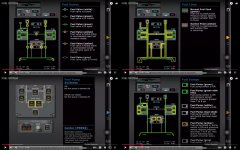
OBSERVATIONS -
> Total fuel capacity = 101,451 Kgs (67,899 Kgs center + 2x 16,766 Kgs in wings).
> Each tank has 2x AC EMPs (Electric Motor Pumps).
> A single pump can support 1 engine in any condition.
> The 2 center tank pumps are over-ride/jettison pumps. They have higher pressure O/p than L/R wing tank pumps, so that they'll over-ride wing tank pumps & use center tank tank fuel 1st.
> Wing tanks are referred to as main tanks but center tanks used 1st.
> When any wing fuel pump switches off, EICAS messages are displayed with amber color 'PRESS' on overhead buttons.
> When center fuel pump switches off, the EICAS messages are inhibited & no PRESS display on overhead buttons.
> If center fuel pump has low pressure, the EICAS message is displayed with button PRESS light illuminated.
> If low fuel in center tank is displayed in EICAS then center pumps should be switched off.
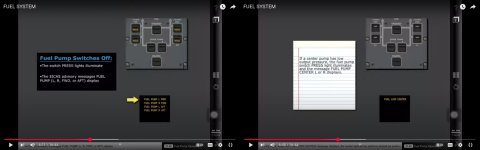
> When main/wing tanks fuel pumps are on, center tank scavenge pumps t/f any remaining fuel to wings.
> Fuel t/f begins from center to wing when center tank main pumps are off & wing tank quantity drops below 16 tons.
> When wing tank pumps have low pressure then engine can suction feed.
> If engine on suction feed then scavenge pumps are inhibited.
> Suction feed bypasses the wing tank pumps.
> Suction feed at high altitude can cause engine flame outs, irregular thrust, bcoz of dissolved air in fuel is released at lower air pressure.
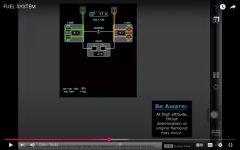
> If 1 side both fuel pumps become INOP, the other side 2 pumps together can cross-feed.
> Cross-feed is off by default.
> When 1 engine or its generators are INOP then fuel system selects best pumps to continue operation if possible depending upon available electricity.
> Some pumps could be de-prioritized & load-shed, displayed on EICAS display & amber color PRESS on buttons.
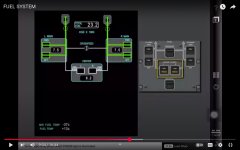
> APU fuel can be provided by any AC EMP supplying to left manifold, or left tank DC pump.
DERIVATIONS (not conclusions) -
> This video doesn't seem to say much about FSOVs except states.
> Earlier, many people online spoke of VAPOR-LOCK in fuel pipes due to hot weather, potentially causing engine choking, compressor stall, flame-outs.
> Compressor stall, flame-outs can cause bang noises. The lone survivor said he did hear a bang on T/o.
QUESTIONS -
> Can engines suction feed from center tank which is farther than wing tanks?
> Suction feed at higher altitude can cause flame-out, irregular thrust. What about in hot weather? There are fuel temperature indicators in EICAS dislay but is there any fuel cooling system?
> Bcoz center tank used 1st, crossfeed is off, so if center pump fails then -
> The guard shack obstructs the T/o point. Did something happen at this point/time?
> The prelim report gave a screenshot from 2nd CCTV cam but WHY nothing from even many more CCTV cams, nor clarification on this dust or smoke if any?
> There are airport employees sitting in tents on both sides of runways every few 100s of meters, for scaring away birds or whatever reason. Did they see any anomalies with engine?
787 fuel system CBT video.
OBSERVATIONS -
> Total fuel capacity = 101,451 Kgs (67,899 Kgs center + 2x 16,766 Kgs in wings).
> Each tank has 2x AC EMPs (Electric Motor Pumps).
> A single pump can support 1 engine in any condition.
> The 2 center tank pumps are over-ride/jettison pumps. They have higher pressure O/p than L/R wing tank pumps, so that they'll over-ride wing tank pumps & use center tank tank fuel 1st.
> Wing tanks are referred to as main tanks but center tanks used 1st.
> When any wing fuel pump switches off, EICAS messages are displayed with amber color 'PRESS' on overhead buttons.
> When center fuel pump switches off, the EICAS messages are inhibited & no PRESS display on overhead buttons.
> If center fuel pump has low pressure, the EICAS message is displayed with button PRESS light illuminated.
> If low fuel in center tank is displayed in EICAS then center pumps should be switched off.
> When main/wing tanks fuel pumps are on, center tank scavenge pumps t/f any remaining fuel to wings.
> Fuel t/f begins from center to wing when center tank main pumps are off & wing tank quantity drops below 16 tons.
> When wing tank pumps have low pressure then engine can suction feed.
> If engine on suction feed then scavenge pumps are inhibited.
> Suction feed bypasses the wing tank pumps.
> Suction feed at high altitude can cause engine flame outs, irregular thrust, bcoz of dissolved air in fuel is released at lower air pressure.
> If 1 side both fuel pumps become INOP, the other side 2 pumps together can cross-feed.
> Cross-feed is off by default.
> When 1 engine or its generators are INOP then fuel system selects best pumps to continue operation if possible depending upon available electricity.
> Some pumps could be de-prioritized & load-shed, displayed on EICAS display & amber color PRESS on buttons.
> APU fuel can be provided by any AC EMP supplying to left manifold, or left tank DC pump.
DERIVATIONS (not conclusions) -
> This video doesn't seem to say much about FSOVs except states.
> Earlier, many people online spoke of VAPOR-LOCK in fuel pipes due to hot weather, potentially causing engine choking, compressor stall, flame-outs.
> Compressor stall, flame-outs can cause bang noises. The lone survivor said he did hear a bang on T/o.
QUESTIONS -
> Can engines suction feed from center tank which is farther than wing tanks?
> Suction feed at higher altitude can cause flame-out, irregular thrust. What about in hot weather? There are fuel temperature indicators in EICAS dislay but is there any fuel cooling system?
> Bcoz center tank used 1st, crossfeed is off, so if center pump fails then -
- will FMC auto-enage either cross-feed valve or the wing tank pumps?
- will this cause few seconds of fuel outage causing engine choking/flame-out?
- Can EEC shut down & re-light engine due to choking?
> 1st airport CCTV was at very acute angle, shows dust &/or smoke. Can this be due to engine choking?> The guard shack obstructs the T/o point. Did something happen at this point/time?
> The prelim report gave a screenshot from 2nd CCTV cam but WHY nothing from even many more CCTV cams, nor clarification on this dust or smoke if any?
> There are airport employees sitting in tents on both sides of runways every few 100s of meters, for scaring away birds or whatever reason. Did they see any anomalies with engine?
I thought this would take just 2 days but instead it took full week after office & family time.
After fuel cutoff,
why one engine was switched back on after 10 seconds
& other after 4 seconds gap?
What happened on AI-171 is one thing but at least technically, apart from Boeing, GE, all aviation professionals globally know. But most don't speak straight 1st time itself IDK why.
The reason is technical, obvious, expected & simple. But non-aero people can't think it unless already searched/told on it.
NOTE - In latest jets like B-787, A-350, etc things could be slightly different w.r.t. more S/w controlled functions.
The pilots, even 787 pilots are making videos, podcast, interviews to news channels, but how many explained the systems simple block diagrams, etc?
Those who do speak don't get much traction it seems.
There are YT videos from training simulators on -
- EFATO or 1x engine failure at T/o at very low altitude.
- DEFATO or 2x engine failure at T/o but at sufficient altitude & speed.
But no video on DEFATO at very low altitude.
A simple Google search on Internet will tell the reason.
I already shared B-787 EFATO in simulator video earlier, but couldn't find DEFATO videos.
So I looked at YT vidoes of other jets like A320, A350, etc. The concept is same but the switches & procedure can differ.
After watching videos & anticipating cross-querries, i'm putting things in procedural type Q&A format -
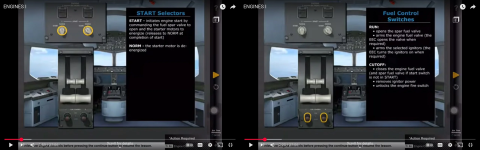
Q) What are engine related switches in B-787?
Ans) Engine start knobs in overhead panel & fuel on/off toggle switch behind throttle.
Q) What do they do actually?
Ans) Open/close fuel valves & operate ignitors.
Fuel cutoff unlocks Fire handle, so to extinguish fire, 1st throttle to idle then fuel cutoff is needed.
Q) When 1 or more engines fail, what is next logical step?
Ans) Try to restart them obviously.
Q) Are there multiple types of re-light?
Ans) Yes, depending upon altitude, air speed, mode of operation.
- Auto relight by FMC.
- Windmill re-light when air speed sufficient to turn the blades & auto-relight failed.
- Starter assisted re-light by bleed air &/or electricity when Windmill relight fails.
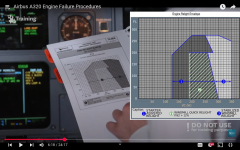
Q) Can these relight happen anytime or under any conditions?
Ans) There is relight envelope. Although all engines may have slightly different boundaries but atmosphere is common for all, so their diagrams would be identical.
Q) Can the restart be done immediately?
Ans) No, 1st check damage, like fire, structural damage, etc.
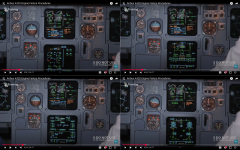
Q) How to check damage?
Ans) Look at engine parameters like N1, N2, FF (Fuel Flow), EGT (Exhaust Gas Temp.), oil pressure/temperature, generator, etc, hence this needs few seconds.
Below is example fo checking electrical, fuel, bleed air, engine pages on MFD -
Q) Does auto-relight need any manual touching of buttons, switches, knobs, levers, etc?
Ans) If no damage, then depending upon A/c model the pilots have to give a 'green flag' to FMC by -
- disengaging auto-throttle of affected engine.
- manually putting affected engine's start switch to ON to activate ignitors. (could be automatic in some A/c)
- pulling back affected engine's throttle to idle.
- FMC would try to re-light the affected engine thereafter.
Q) Why pull back throttle to idle?
Ans) throttle controls fuel rate to combustion chamber via FMU (Fuel Metering Unit) valve. Fuel cannot be introduced at full rate to avoid damage.
Q) Does 1st auto-relight after 'green flag' need fuel switch cutoff & on again?
Ans) No, it does not seem so from professional training simulator videos.
Q) How much time does this 1st auto-relight take to start?
Ans) Depending upon A/c & engine model up to 30 seconds. Latest jets might do it in 10-15 seconds.
NOTE- Relight doesn't mean full spool up to 100% which can take 100+/- seconds from zero RPM.
Q) Why would this take at least 10 seconds or upto 30 seconds?
Ans) FMC programmed to wait 1st to ventilate/drain engine of residual fuel in combustion chamber, otherwise engine can stall, EGT can cross limit, tailpipe fire can occur, relight can fail.
Q) If auto-relight fails then?
Ans) Manual options - Windmill then starter-assisted relight.
Q) How manual relight works?
Ans) Affected engine's Fuel switch needs cutoff & on.
Q) Can a fuel switch be switched on immediately after cutoff?
Ans) Probably not bcoz 10-30 seconds is mentioned to ventilate/drain engine of residual fuel in combustion chamber, otherwise engine can stall, EGT can cross limit, tailpipe fire can occur, relight can fail.
But if FMC is programmed to auto handle actual steps internally then fuel switch can be switched on immediately.
Q) In case of multiple engine fault, can all switches of affected engines be cutoff & back on together?
Ans) depends if Surviving engine(s) + RAT + APU gives sufficient bleed air or electricity to turn all N2 spools together.
But if FMC is programmed to auto handle actual steps internally then all affected engine's fuel switches can be switched on together.
Q) But what to do in low altitude emergency?
Ans) If FMC is capable of quick relight in 10-15 seconds via some emergency mode, etc then fine, otherwise skip auto-relight by manual over-ride & go for manual forced re-light a.s.a.p
Q) How to manually over-ride FMC/EEC rleight in B-787?
Ans) Either cutoff & on the fuel switches or 1st push EEC mode buttons to get into HARD ALTN mode.
Q) Till APU comes online, will RAT give enough electricity to relight both engines together?
Ans) Perhaps not, only 1 engine relight at a time.
Q) How much time RAT takes to deploy & give electricity after FMC detects dual engine failure?
Ans) it deploys in 1-2 seconds & may take 3-5 seconds to give electricity & hydraulic power.
Q) Like RAT, does APU gets auto deployed in emergency?
Ans) Depends on FMC programming.
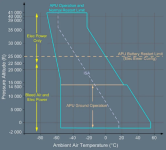
Q) How much time APU takes to start & give electricity after dual engine failure detected by FMC?
Ans) APU has operating envelope of speed & altitude.
APU may have its own battery to give initial rotation.
Li-ion batteries have been known to catch fire due to short cicuit, high load, impact, etc.
APU might auto-deploy immediately on emergency.
It may take 45-90 seconds to spool up & give electricity & bleed air.
Q) In low altitude emergency like DEFATO what should happen technically?
Ans) Either FMC's auto-relight or manual over-ride relight should happen in 10-15 seconds.
Either ways, battery, RAT, APU should should be designed to be robust, independent, redundant to relight all engines together in low altitude emergency.
----------------------------------------------------------------------------------------------------------------------------------------------------------------------------------------------
Sources referred -
- Airbus A320 Engine Failure Procedures
- PilotsEYE.tv Preview - "ALL ENGINE FLAME OUT" - Episode No.19 - A350 Boston
- Airbus A320 Engine Relight After All-Engine Flameout
- A320 one engine fail then other engine fire
- Engine Relight After an All-Engine Flameout
----------------------------------------------------------------------------------------------------------------------------------------------------------------------------------------------
ECAM messages on MFD for DEFATO, 2x engine fail, A320 professional pilot simulator -
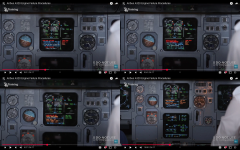
----------------------------------------------------------------------------------------------------------------------------------------------------------------------
ECAM messages on MFD for DEFATO, 2x engine fail, A350 professional pilot simulator -
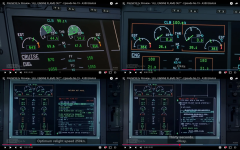
----------------------------------------------------------------------------------------------------------------------------------------------------------------------------------
Case study of A-320 Engine Relight After an All-Engine Flameout
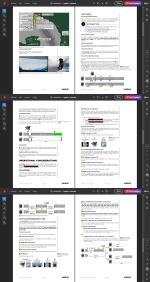
After fuel cutoff,
why one engine was switched back on after 10 seconds
& other after 4 seconds gap?
What happened on AI-171 is one thing but at least technically, apart from Boeing, GE, all aviation professionals globally know. But most don't speak straight 1st time itself IDK why.
The reason is technical, obvious, expected & simple. But non-aero people can't think it unless already searched/told on it.
NOTE - In latest jets like B-787, A-350, etc things could be slightly different w.r.t. more S/w controlled functions.
The pilots, even 787 pilots are making videos, podcast, interviews to news channels, but how many explained the systems simple block diagrams, etc?
Those who do speak don't get much traction it seems.
There are YT videos from training simulators on -
- EFATO or 1x engine failure at T/o at very low altitude.
- DEFATO or 2x engine failure at T/o but at sufficient altitude & speed.
But no video on DEFATO at very low altitude.
A simple Google search on Internet will tell the reason.
I already shared B-787 EFATO in simulator video earlier, but couldn't find DEFATO videos.
So I looked at YT vidoes of other jets like A320, A350, etc. The concept is same but the switches & procedure can differ.
After watching videos & anticipating cross-querries, i'm putting things in procedural type Q&A format -
Q) What are engine related switches in B-787?
Ans) Engine start knobs in overhead panel & fuel on/off toggle switch behind throttle.
Q) What do they do actually?
Ans) Open/close fuel valves & operate ignitors.
Fuel cutoff unlocks Fire handle, so to extinguish fire, 1st throttle to idle then fuel cutoff is needed.
Q) When 1 or more engines fail, what is next logical step?
Ans) Try to restart them obviously.
Q) Are there multiple types of re-light?
Ans) Yes, depending upon altitude, air speed, mode of operation.
- Auto relight by FMC.
- Windmill re-light when air speed sufficient to turn the blades & auto-relight failed.
- Starter assisted re-light by bleed air &/or electricity when Windmill relight fails.
Q) Can these relight happen anytime or under any conditions?
Ans) There is relight envelope. Although all engines may have slightly different boundaries but atmosphere is common for all, so their diagrams would be identical.
Q) Can the restart be done immediately?
Ans) No, 1st check damage, like fire, structural damage, etc.
Q) How to check damage?
Ans) Look at engine parameters like N1, N2, FF (Fuel Flow), EGT (Exhaust Gas Temp.), oil pressure/temperature, generator, etc, hence this needs few seconds.
Below is example fo checking electrical, fuel, bleed air, engine pages on MFD -
Q) Does auto-relight need any manual touching of buttons, switches, knobs, levers, etc?
Ans) If no damage, then depending upon A/c model the pilots have to give a 'green flag' to FMC by -
- disengaging auto-throttle of affected engine.
- manually putting affected engine's start switch to ON to activate ignitors. (could be automatic in some A/c)
- pulling back affected engine's throttle to idle.
- FMC would try to re-light the affected engine thereafter.
Q) Why pull back throttle to idle?
Ans) throttle controls fuel rate to combustion chamber via FMU (Fuel Metering Unit) valve. Fuel cannot be introduced at full rate to avoid damage.
Q) Does 1st auto-relight after 'green flag' need fuel switch cutoff & on again?
Ans) No, it does not seem so from professional training simulator videos.
Q) How much time does this 1st auto-relight take to start?
Ans) Depending upon A/c & engine model up to 30 seconds. Latest jets might do it in 10-15 seconds.
NOTE- Relight doesn't mean full spool up to 100% which can take 100+/- seconds from zero RPM.
Q) Why would this take at least 10 seconds or upto 30 seconds?
Ans) FMC programmed to wait 1st to ventilate/drain engine of residual fuel in combustion chamber, otherwise engine can stall, EGT can cross limit, tailpipe fire can occur, relight can fail.
Q) If auto-relight fails then?
Ans) Manual options - Windmill then starter-assisted relight.
Q) How manual relight works?
Ans) Affected engine's Fuel switch needs cutoff & on.
Q) Can a fuel switch be switched on immediately after cutoff?
Ans) Probably not bcoz 10-30 seconds is mentioned to ventilate/drain engine of residual fuel in combustion chamber, otherwise engine can stall, EGT can cross limit, tailpipe fire can occur, relight can fail.
But if FMC is programmed to auto handle actual steps internally then fuel switch can be switched on immediately.
Q) In case of multiple engine fault, can all switches of affected engines be cutoff & back on together?
Ans) depends if Surviving engine(s) + RAT + APU gives sufficient bleed air or electricity to turn all N2 spools together.
But if FMC is programmed to auto handle actual steps internally then all affected engine's fuel switches can be switched on together.
Q) But what to do in low altitude emergency?
Ans) If FMC is capable of quick relight in 10-15 seconds via some emergency mode, etc then fine, otherwise skip auto-relight by manual over-ride & go for manual forced re-light a.s.a.p
Q) How to manually over-ride FMC/EEC rleight in B-787?
Ans) Either cutoff & on the fuel switches or 1st push EEC mode buttons to get into HARD ALTN mode.
Q) Till APU comes online, will RAT give enough electricity to relight both engines together?
Ans) Perhaps not, only 1 engine relight at a time.
Q) How much time RAT takes to deploy & give electricity after FMC detects dual engine failure?
Ans) it deploys in 1-2 seconds & may take 3-5 seconds to give electricity & hydraulic power.
Q) Like RAT, does APU gets auto deployed in emergency?
Ans) Depends on FMC programming.
Q) How much time APU takes to start & give electricity after dual engine failure detected by FMC?
Ans) APU has operating envelope of speed & altitude.
APU may have its own battery to give initial rotation.
Li-ion batteries have been known to catch fire due to short cicuit, high load, impact, etc.
APU might auto-deploy immediately on emergency.
It may take 45-90 seconds to spool up & give electricity & bleed air.
Q) In low altitude emergency like DEFATO what should happen technically?
Ans) Either FMC's auto-relight or manual over-ride relight should happen in 10-15 seconds.
Either ways, battery, RAT, APU should should be designed to be robust, independent, redundant to relight all engines together in low altitude emergency.
----------------------------------------------------------------------------------------------------------------------------------------------------------------------------------------------
Sources referred -
- Airbus A320 Engine Failure Procedures
- PilotsEYE.tv Preview - "ALL ENGINE FLAME OUT" - Episode No.19 - A350 Boston
- Airbus A320 Engine Relight After All-Engine Flameout
- A320 one engine fail then other engine fire
- Engine Relight After an All-Engine Flameout
----------------------------------------------------------------------------------------------------------------------------------------------------------------------------------------------
ECAM messages on MFD for DEFATO, 2x engine fail, A320 professional pilot simulator -
----------------------------------------------------------------------------------------------------------------------------------------------------------------------
ECAM messages on MFD for DEFATO, 2x engine fail, A350 professional pilot simulator -
----------------------------------------------------------------------------------------------------------------------------------------------------------------------------------
Case study of A-320 Engine Relight After an All-Engine Flameout
> Certain Western forums have frozen their AI-171 threads.
> They refused to reopen the thread.
> They take abrupt decisions on personal wish stating "I think ... people should pause/stop..."
> They don't wan't more technical understanding & discussion on systems & components of B787.
> They said they don't wan't their site to become air crash investigation site, but all kinds of specs & speculations pour in 24x7 on design of new jets like NGAD, B-21, GCAP, FCAS, etc.
> They wan't to venture into whatever domain & depth they wan't but discourage others stating others are taking too much interest, means they wan't to puppet all minds.

> They say that crash is a gory scene & we should not talk much about it when we are talking about technologies & components. BTW the entire defence thing is about actively killing people, much much more gory thing.


> The investigation team will keep shifting focus from one section, system to another throughout the year, but they say that there's nothing new or evidence, means pilot guilty unless proven innocent, summary execution.
> They dont wan't to consider whistle blowers on manufacturing defects, malpractices, etc.
> Their country's members misbehaved & provoked the international members but the mods/admins didn't do anything, on the contrary warned & muted the international members who didn't do anything personal.
> The black boxes are said to be sitting for days at Ahmedabad. Some say that they went to US & returned quickly after opposition. Then taken to New Delhi. Western media start reporting before prelim report.
> This looks all pre-planned, choreographed. They have preemptively concluded & made their minds to play the captain-suicide-murder as reason.
> So some foreign forums are stopping technical discussions.
> Only Indian forums are tolerating any member, domestic or international, even after baselessly persuing only homicide angle w/o medical records & public data.
> They refused to reopen the thread.
> They take abrupt decisions on personal wish stating "I think ... people should pause/stop..."
> They don't wan't more technical understanding & discussion on systems & components of B787.
> They said they don't wan't their site to become air crash investigation site, but all kinds of specs & speculations pour in 24x7 on design of new jets like NGAD, B-21, GCAP, FCAS, etc.
> They wan't to venture into whatever domain & depth they wan't but discourage others stating others are taking too much interest, means they wan't to puppet all minds.
> They say that crash is a gory scene & we should not talk much about it when we are talking about technologies & components. BTW the entire defence thing is about actively killing people, much much more gory thing.
> The investigation team will keep shifting focus from one section, system to another throughout the year, but they say that there's nothing new or evidence, means pilot guilty unless proven innocent, summary execution.
> They dont wan't to consider whistle blowers on manufacturing defects, malpractices, etc.
> Their country's members misbehaved & provoked the international members but the mods/admins didn't do anything, on the contrary warned & muted the international members who didn't do anything personal.
> The black boxes are said to be sitting for days at Ahmedabad. Some say that they went to US & returned quickly after opposition. Then taken to New Delhi. Western media start reporting before prelim report.
> This looks all pre-planned, choreographed. They have preemptively concluded & made their minds to play the captain-suicide-murder as reason.
> So some foreign forums are stopping technical discussions.
> Only Indian forums are tolerating any member, domestic or international, even after baselessly persuing only homicide angle w/o medical records & public data.
Pls stop jamming us with all this data. I have over 8k hrs on B737 classic and NGs and A-320s. u hv no knowledge of any thing.
Some media have said that AI-171 investigation is cover up.
Foreign media says domestic mistake cover up.
Indian media says Boeing/GE mistake cover up.
For examples -
AIR INDIA CRASH - COVER UP? #airindiacrash
AI 171 Crash Probe: Experts Slam Leaks, Allege Boeing Cover-Up
Curious Case Of Air India-171 Flight Crash: RTI Reveals Shocking Details, DGCA Tried To Cover Up?
In the era of globalisation, international education & job, trade & commerce, Internet, India is emerging economy.

Today India has 100s of 1000s of techies & students of various domains + enthusisats from non-tech domains also.


So many journalists, bloggers, vloggers & other fan sites & pages also. Here is a small list -
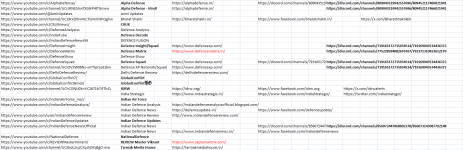
In whichever country/forum/social-site, if citizens' efforts'll be discouraged/stopped/abused, especially based on publicly verifiable articles, videos, etc, then obviously world will suspect of being corrupt, incompetent, unprogressive, cover-ups, autocracy, totalitarian, etc.
I've 20 years Ex. = 20yrs x [{(52 weeks x 5 days) - 20 paid holidays} x 8.5 hrs duty] = 40,800 hours on Datacenter equipments & 20 more years to go hopefully. But i can't stop anybody to discuss on DC tech.

Life is short.

We should not wait too much & expect other also to wait.

This is time pass chat.

But let's give our best.
Foreign media says domestic mistake cover up.
Indian media says Boeing/GE mistake cover up.
For examples -
AIR INDIA CRASH - COVER UP? #airindiacrash
AI 171 Crash Probe: Experts Slam Leaks, Allege Boeing Cover-Up
Curious Case Of Air India-171 Flight Crash: RTI Reveals Shocking Details, DGCA Tried To Cover Up?
In the era of globalisation, international education & job, trade & commerce, Internet, India is emerging economy.
Today India has 100s of 1000s of techies & students of various domains + enthusisats from non-tech domains also.
So many journalists, bloggers, vloggers & other fan sites & pages also. Here is a small list -
In whichever country/forum/social-site, if citizens' efforts'll be discouraged/stopped/abused,
especially based on publicly verifiable articles, videos, etc, then obviously world will suspect of being corrupt, incompetent, unprogressive, cover-ups, autocracy, totalitarian, etc.I've 20 years Ex. = 20yrs x [{(52 weeks x 5 days) - 20 paid holidays} x 8.5 hrs duty] = 40,800 hours on Datacenter equipments & 20 more years to go hopefully. But i can't stop anybody to discuss on DC tech.
Life is short.
We should not wait too much & expect other also to wait.
This is time pass chat.
But let's give our best.
Look its a clear case of malfunction of Fadec due to some kink. I had FAC-1 & FAC-2 failure after taking off from Srinagar in 2007. FBW system collapsed. The aircraft reverted to alternate law followed by direct law whn the gear was downed. My F/O went cold and in shock, I just told him not to worry as the most sophisticated aircraft has just become a Cessna-152 which he flew to get his CPL. I landed back, switched off everything including battery. Went out for a smoke, Came back and restarted the aircaft. The A-320 went into BITE, self corrected itself, I flew back to Delhi without any problem.