French Military aviation update and discussion

20.03.26_latribune.fr

Shahed Drones in the United Arab Emirates: A Combative DGA Already Tested in the Field

Under pressure, the French defense procurement agency (DGA), forced to take on a more combative role, has tested alternative solutions less expensive than MICA missiles to neutralize Shahed drones in the skies of the United Arab Emirates.

At the beginning of the year, Catherine Vautrin, the Minister of the Armed Forces, wanted a combat-ready DGA (Directorate General of Armaments). She got it. With the Iranian conflict, the DGA has donned its combat gear more quickly than anticipated. Some of its personnel have even been deployed to the United Arab Emirates (UAE) in support of the French armed forces, which, under the defense agreements signed between Paris and Abu Dhabi, are defending the UAE and French interests in this emirate located directly across from Iran. While France remains in a defensive posture, as Emmanuel Macron reiterated on Tuesday, it is nonetheless very active thanks to the Rafale fighter jets based in the UAE.​
The French fighter jets manufactured by Dassault Aviation are so active that they have rapidly depleted the meager stocks of MICA air-to-air missiles, which are highly effective against the low-cost Shahed drones. By the end of last week, the Rafales had already shot down some sixty Iranian drones, according to our sources. This has triggered a missile crisis in Paris. Prime Minister Sébastien Lecornu, a former minister and the architect of the war economy, wanted to use a meeting on the war economy scheduled for Tuesday to add this explosive issue to the agenda. The meeting was ultimately postponed at the last minute.​
By convening a defense council meeting that same day, the President of the Republic conveniently allowed the cancellation of this meeting, much to the satisfaction of the Joint Chiefs of Staff (EMA). The EMA preferred to address this thorny issue in a much more discreet setting than a meeting at Matignon, and above all, to find alternative solutions to the MICA missiles as quickly as possible with the DGA (Directorate General of Armaments), with whom it regularly clashes over its perceived lack of agility and boldness. To counter this frustrating narrative, the DGA (French Directorate General of Armaments), which has also deployed personnel to the CPCO (Operational Planning and Control Center) of the EMA (French Armed Forces General Staff), has accelerated its efforts to find cheaper alternatives to using MICA missiles to shoot down Iranian Shahed drones.
In the context of the war launched by Israel and the United States, Iran's retaliation against the Gulf states caught everyone off guard, including France. France found itself on the front line assisting its ally, the United Arab Emirates, which suffered the deaths of six civilians following Iranian drone attacks. Beyond the rapidly dwindling stockpiles in a protracted war, the question also arises of using the MICA missile (estimated to cost between €600,000 and €700,000) to neutralize a Shahed drone valued at $30,000 to $50,000. Clearly, the DGA (French Directorate General of Armaments), already facing significant challenges, has a mission to rebalance costs by developing alternative solutions as quickly as possible (rockets, anti-drone drones, cannons, machine guns, etc.).​

In the fight against drones, the DGA is not starting from scratch. Since 2024, in particular, it has been leveraging the entire dynamic drone sector in France within the framework of the drone pact. It appears to have identified potential solutions through new entrants such as Alta Ares and Harmattan AI, from whom it has placed orders for anti-drone drones for military operations. These drones are currently undergoing testing at the DGA's new anti-drone reference center, commissioned in December, to evaluate the performance and safety of these weapons. To save time, the DGA is simultaneously deploying them in the field to be tested in real-world environments. “This represents a significant time saving,” a source told La Tribune.​
The DGA (French Directorate General of Armaments) is currently working on developing a rocket, which is essentially an air-to-ground weapon with air-to-air capabilities. This will allow for the neutralization of Shahed drones from a helicopter or fighter jet using rockets that are much less expensive to produce than missiles. The DGA could potentially equip Tiger (attack helicopters) and Rafale/Mirage 2000-5 fighter jets with rockets very quickly. Furthermore, the DGA was able to conduct tests within 48 hours to validate procedures for neutralizing Shahed drones using the Tiger's cannon or machine guns from Gazelle, Cougar, and Caïman helicopters.
In record time, a combat-ready DGA has responded to try and win the logistical battle against the Iranian Shahed drones. Today, as explained to La Tribune, the DGA (French Directorate General of Armaments) can propose solutions to the Chief of the Defence Staff (CEMA) that are effective and neutralize these kamikaze drones at a cost lower than the value of the destroyed drone. The CEMA, who now has multiple options, will decide which solutions will be deployed in the United Arab Emirates. DGA personnel are deployed in the emirate to also coordinate the actions of manufacturers, who are also proposing solutions to neutralize the threat. /end
 
20.03.26_latribune.fr

Shahed Drones in the United Arab Emirates: A Combative DGA Already Tested in the Field

Under pressure, the French defense procurement agency (DGA), forced to take on a more combative role, has tested alternative solutions less expensive than MICA missiles to neutralize Shahed drones in the skies of the United Arab Emirates.

At the beginning of the year, Catherine Vautrin, the Minister of the Armed Forces, wanted a combat-ready DGA (Directorate General of Armaments). She got it. With the Iranian conflict, the DGA has donned its combat gear more quickly than anticipated. Some of its personnel have even been deployed to the United Arab Emirates (UAE) in support of the French armed forces, which, under the defense agreements signed between Paris and Abu Dhabi, are defending the UAE and French interests in this emirate located directly across from Iran. While France remains in a defensive posture, as Emmanuel Macron reiterated on Tuesday, it is nonetheless very active thanks to the Rafale fighter jets based in the UAE.​
The French fighter jets manufactured by Dassault Aviation are so active that they have rapidly depleted the meager stocks of MICA air-to-air missiles, which are highly effective against the low-cost Shahed drones. By the end of last week, the Rafales had already shot down some sixty Iranian drones, according to our sources. This has triggered a missile crisis in Paris. Prime Minister Sébastien Lecornu, a former minister and the architect of the war economy, wanted to use a meeting on the war economy scheduled for Tuesday to add this explosive issue to the agenda. The meeting was ultimately postponed at the last minute.​
By convening a defense council meeting that same day, the President of the Republic conveniently allowed the cancellation of this meeting, much to the satisfaction of the Joint Chiefs of Staff (EMA). The EMA preferred to address this thorny issue in a much more discreet setting than a meeting at Matignon, and above all, to find alternative solutions to the MICA missiles as quickly as possible with the DGA (Directorate General of Armaments), with whom it regularly clashes over its perceived lack of agility and boldness. To counter this frustrating narrative, the DGA (French Directorate General of Armaments), which has also deployed personnel to the CPCO (Operational Planning and Control Center) of the EMA (French Armed Forces General Staff), has accelerated its efforts to find cheaper alternatives to using MICA missiles to shoot down Iranian Shahed drones.
In the context of the war launched by Israel and the United States, Iran's retaliation against the Gulf states caught everyone off guard, including France. France found itself on the front line assisting its ally, the United Arab Emirates, which suffered the deaths of six civilians following Iranian drone attacks. Beyond the rapidly dwindling stockpiles in a protracted war, the question also arises of using the MICA missile (estimated to cost between €600,000 and €700,000) to neutralize a Shahed drone valued at $30,000 to $50,000. Clearly, the DGA (French Directorate General of Armaments), already facing significant challenges, has a mission to rebalance costs by developing alternative solutions as quickly as possible (rockets, anti-drone drones, cannons, machine guns, etc.).​

In the fight against drones, the DGA is not starting from scratch. Since 2024, in particular, it has been leveraging the entire dynamic drone sector in France within the framework of the drone pact. It appears to have identified potential solutions through new entrants such as Alta Ares and Harmattan AI, from whom it has placed orders for anti-drone drones for military operations. These drones are currently undergoing testing at the DGA's new anti-drone reference center, commissioned in December, to evaluate the performance and safety of these weapons. To save time, the DGA is simultaneously deploying them in the field to be tested in real-world environments. “This represents a significant time saving,” a source told La Tribune.​
The DGA (French Directorate General of Armaments) is currently working on developing a rocket, which is essentially an air-to-ground weapon with air-to-air capabilities. This will allow for the neutralization of Shahed drones from a helicopter or fighter jet using rockets that are much less expensive to produce than missiles. The DGA could potentially equip Tiger (attack helicopters) and Rafale/Mirage 2000-5 fighter jets with rockets very quickly. Furthermore, the DGA was able to conduct tests within 48 hours to validate procedures for neutralizing Shahed drones using the Tiger's cannon or machine guns from Gazelle, Cougar, and Caïman helicopters.
In record time, a combat-ready DGA has responded to try and win the logistical battle against the Iranian Shahed drones. Today, as explained to La Tribune, the DGA (French Directorate General of Armaments) can propose solutions to the Chief of the Defence Staff (CEMA) that are effective and neutralize these kamikaze drones at a cost lower than the value of the destroyed drone. The CEMA, who now has multiple options, will decide which solutions will be deployed in the United Arab Emirates. DGA personnel are deployed in the emirate to also coordinate the actions of manufacturers, who are also proposing solutions to neutralize the threat. /end

An F-16 successfully destroyed an airborne target using APKWS during an anti-cruise missile demo and further counter-UAS development led to the AGR-20 FALCO (Fixed Wing, Air-Launched, Counter-Unmanned Aircraft Systems Ordnance). Addition of an IR seeker permits fire-and-forget capability against airborne targets, easing pilot workload in the anti-missile/ counter-UAS role. The enhanced weapons have been extensively used downing Houthi missiles and drones targeting shipping in the Red Sea and Iranian weapons fired against Israel in October 2023.
 
France is currently revising its five-year plans to take into account the experiences of Ukraine and the Gulf:

First, France seems to be moving further away from the idea that a good defense budget must “serve everyone a little.” On the contrary, the update appears to mark a moment when the state is willing to make tough priorities: the focus must be on what delivers military effectiveness in a high-intensity war, even if that means abandoning programs that are more consensual, more European, or more elegant on paper. The emphasis on ammunition, deep-strike capabilities, electronic warfare, drones, and the Rafale F5 clearly points in this direction.

Second, this confirms a long-standing French principle: when resources are not unlimited, Paris tends to think not in terms of raw prestige, but in terms of the chain of military effects. The goal is not primarily to accumulate symbolic assets; the goal is to preserve or rebuild the links without which a modern army is hollow: stockpiles, missiles, sensors, electronic warfare, escort drones, strike depth, and industrial ramp-up. The decision to allocate 8.5 billion euros primarily to ammunition says exactly that: before discussing scale, we want to restore the capacity to sustain operations.

The handling of the Eurodrone is, from this perspective, very telling. It is not merely a budget cut. It is a political message: a slow, costly multinational program that is already lagging behind the evolution of warfare is no longer automatically protected in the name of European cooperation. If the need has changed, we cut it. This means that France now seems to prioritize operational relevance over loyalty to industrial compromises that have become too burdensome.

The Rafale F5, on the other hand, plays the opposite role. Its continuation and reinforcement show that Paris continues to bet on a system it controls and can develop under national constraints, with a particular focus on SPECTRA, collaboration with combat drones, and more generally adaptation to electromagnetic warfare and high-intensity combat. In short, France seems to be saying: if we have to pay dearly, we might as well pay for a path we truly control.

Behind all this lies an assessment of Ukraine and the Middle East. Both wars have shown that superiority lies not only in platforms, but in the speed of adaptation, the depth of stockpiles, and the ability to produce, reload, jam, strike from afar, and correct quickly. France’s trade-offs thus resemble an attempt to translate these lessons into the budget: less bureaucratic comfort, more preparation for a real war.

Finally, there is an implicit European message. France seems to be saying that a credible European defense will not emerge primarily from grand, abstract compromises, but from concrete capabilities that are available, delivered on time, and politically embraced. It is a tougher, less ornamental, and more sovereigntist vision in the positive sense of the term: we cooperate when it enhances effectiveness, not when it stifles the system.

In a nutshell, the political interpretation is this: France is no longer seeking merely to have a coherent military planning framework; it is seeking to realign its budget with war as it has come to be again.

The overall framework is clear: the update to the Military Planning Law increases defense spending to approximately 2.5% of GDP by 2030, with a military budget of nearly 64 billion euros by that time. The rationale is to prioritize high-intensity operations, ammunition, deep strikes, electronic warfare, drones, and the Rafale F5, while abandoning certain programs deemed too slow, too expensive, or less urgent.

Regarding the Eurodrone, your excerpt aligns with what is publicly circulating: several reports state that it has been sacrificed in the update, or at least significantly deprioritized, as it is deemed too expensive and already outdated in light of rapidly evolving requirements and more agile combat/ISR drones.

As for the Rafale F5, it has not been abandoned—quite the contrary. The original LPM already provided for the F5 standard to be developed during the 2024–2030 period and to include, in particular, an escort drone derived from the nEUROn program. Recent reports indicate that approximately €11.7 billion is earmarked for the Rafale program in the update, including more than €4 billion for the development of the F5.

Regarding electronic warfare, several analyses agree that it is becoming a top priority, particularly because France has allowed certain gaps to develop, and the F5 is specifically intended to address some of these through a major upgrade of SPECTRA and a more modular architecture better suited to the rapid evolution of electromagnetic threats.

Regarding deep strike capabilities, the prevailing idea is to strengthen penetration and stand-off capabilities, in a context where missile stockpiles, deep strike capabilities, and collaborative combat drones are becoming central. The fact that the Air Force plans to accelerate its adoption of collaborative combat drones without waiting for the Rafale F5 aligns perfectly with this direction.

And the immediate budgetary focus appears to be on ammunition. Public announcements regarding the review all highlight the additional €8.5 billion allocated to ammunition, drones, and the war economy, in addition to the ramp-ups already underway.

France is updating its Defense Planning Law not to add a little bit of everything, but to make decisive choices;
it is retaining and strengthening what directly serves the high-intensity warfare of the future;
it is reducing or eliminating what appears too slow, too bureaucratic, or not cost-effective enough from a military standpoint;
and it is committed to putting money where the need is greatest today: ammunition, deep-strike capabilities, electronic warfare, the Rafale F5, and drones.

In a nutshell:

the trade-off appears to be: fewer high-profile programs or industrial compromises, more rapidly deployable operational capabilities.
 
The draft update to the Military Planning Law calls for a defense budget of 76.3 billion euros in 2030—equivalent to 2.5% of GDP—up from 57.1 billion in 2026, according to the preliminary draft bill revealed by Politico and La Tribune and reviewed by AFP. It was €47.2 billion in 2024, the first year of the LPM.

- An additional 8.5 billion for ammunition - However, lessons from the conflicts in Russia-Ukraine and the Middle East, where ammunition consumption is enormous, are driving a special focus on missile and shell stocks, which have long served as adjustment variables in military budgets since the end of the Cold War. By 2030, an additional 8.5 billion euros—on top of the 16 billion already allocated for the period—will be spent on ammunition procurement.

While stockpile figures are confidential, they are set to increase by 400% for all types of remotely guided munitions, by 240% for AASM air-launched bombs, by 85% for Scalp cruise missiles, by 190% for 155mm shells, by 230% for torpedoes, and by 30% for surface-to-air missiles (Aster, Mica VL) compared to what had been planned previously. An additional two billion euros will be allocated to drones of all types, bringing the total investment in this area to 8.6 billion, according to Minister of the Armed Forces Catherine Vautrin.

By 2030, the Armed Forces will also receive 10—rather than 8—next-generation SAMP/T medium-range air defense systems capable of intercepting ballistic missiles, 500 additional drone-jamming rifles, anti-drone radars, anti-aircraft guns for the protection of air bases, and additional Caesar howitzers.

Paris also plans to launch a conventional ground-to-ground ballistic missile program with a range of 2,500 kilometers, building on the work of the European Elsa project, and to move forward with the development of an early warning capability to detect and track enemy missiles. In total, defense space spending will increase by 4.2 billion euros, in addition to the 6 billion already allocated in the Military Planning Law.
 
Ukraine has paid in blood, destroyed cities, and collective exhaustion for what many Europeans still refused to face. It has, in effect, bought time for the rest of the continent.
Time to see the return of:
  • industrial warfare,
  • war of attrition,
  • the centrality of ammunition,
  • the fragility of stockpiles,
  • the role of drones,
  • air defense,
  • electronic warfare,
  • strike depth,
and more generally, the need for a military apparatus that is not merely elegant on paper.

Without Ukraine, many would likely have continued to believe for a few more years that:
  • supply flows are sufficient,
  • small stockpiles are sufficient,
  • slow procedures are sufficient,
and that history could remain manageable from a distance.

So yes, there is an immense moral and strategic debt owed to the Ukrainians. Not only because they are fighting for themselves, but because they forced Europe to open its eyes before it was too late. The real question now is: what are we going to do with the time they’ve bought us?

Because if Europe wastes this time, then it will add ingratitude to its blindness.
 
  • Like
Reactions: BMD
For AASM, Aresia in Valenciennes makes the whole range of Mk8x bombs, plus this :
  • BA84 - new french general purpose bomb for AASM 1000
  • P1000 - new french penetrating bomb for AASM 1000
  • They are working on a 250kg bomb
BLU109 can also be used for a penetrating AASM 1000, but i don't think they have a licence.

Video of the new french P1000 bunker buster
 
  • Like
Reactions: Amarante

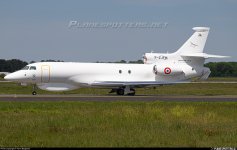
The first Dassault F8X Archange in French Air Force colors spotted at Bordeaux-Mérignac airport. The Falcon 8X Archange is France’s future airborne SIGINT platform. Equipped with Thales CUGE electronic warfare system, it will collect and analyze radar and communications emissions, enhancing the French Air Force’s strategic intelligence capabilities.

f-zjfm-armee-de-lair-et-de-lespace-french-air-and-space-force-dassault-falcon-8x-archange_Plan...jpg