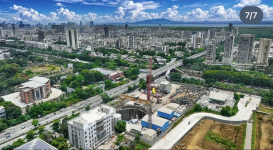
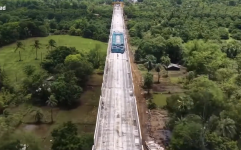
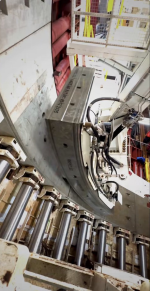
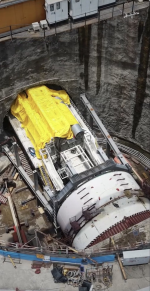
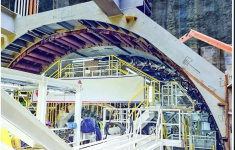
High speed / Semi-High speed rail projects of Indian Railways

This part is what I dont understand. People want the shiny trains but just ignore the massive debt that China took to build it. I dont remember the exact number but in dollar terms, it was nearing $1 Trillion.
Either privatise all the railway stations so they are access controlled or seperate the reserved trains with unreserved ones fully. I absolutely hate to wake up in 3AC berth with poor parasites who are also accorded the right to vote in this country, travelling without a ticket.

If the railways guarantee me zero harassment from those unreserved passengers and timely operations, I will ofcourse pay more for the ticket.

Remember 3AC travel was a profit making segment of Railways, it's not anymore.
 
Here comes the dumfck **** again with his rants. Ever since that rafale discussion that you got so butthurt about, you keep commenting under my posts with the most miserable strawman arguments. I keep ignoring you but you just dont take the hint.

This was his initial response:

His second response:

He's doing the very same thing, he is accusing me of. Its hilarious. No logical consistency.:ROFLMAO:
You're getting panned by everyone here for a reason bud. Use the full potential of the 2 brain cells you have and do some self reflection as to why.
 
Either privatise all the railway stations so they are access controlled or seperate the reserved trains with unreserved ones fully. I absolutely hate to wake up in 3AC berth with poor parasites who are also accorded the right to vote in this country, travelling without a ticket.

If the railways guarantee me zero harassment from those unreserved passengers and timely operations, I will ofcourse pay more for the ticket.

Remember 3AC travel was a profit making segment of Railways, it's not anymore.
Not sure what the problem you are describing has to do with HSR. China has 5X the spending power per capita as compared to India. They have such massive problems with debt. How do you think India will handle that???

The word you are looking for is "accountability". Why cant the railway minister solve the problem you are facing??? Have you done anything to make your voice heard??? Clearly, accountability is lacking. You are personally suffering from lack of accountability. Yet, you do nothing to ask for accountability. And neither is there any support on this forum for other people(students) asking for accountability. The eerie silence of this forum on student protests show who the majority of the people on this forum have no spine to ask for accountability. Silence on the autocratic practices of this regime. You voted for this.
 
You're getting panned by everyone here for a reason bud. Use the full potential of the 2 brain cells you have and do some self reflection as to why.
[Lmao...my response was deleted by the mod]

Couldnt care less about what people think (about what I write). The whole point of posting anonymously is to write freely & truthfully. Most of the people here are andhbhakts and treat modi & his govt as their mai baap. Wont open their mouths even when cruelly oppressed. You talking about brain cells is hilarious, considering you think smog is just a Delhi problem. Lmao.

Coming back to the original point:
I liked this project when its initial cost was $11 billion(majorly funded by Japan). Now, it has ballooned to $24 billion(more than half funded by us). It has stopped making any sense now. This HSR project is burning BILLIONS and has no export prospect. This money would be better served in electronics funding which will boost our exports and reduce pressure on rupee. The number of people benefiting from this project will be miniscule, as compared to creating millions of jobs in electronics industrial clusters.

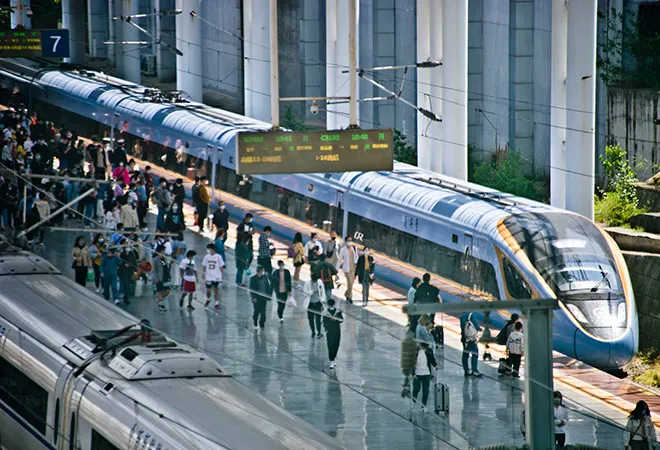
People see shiny chinese HSR trains and see them as a status symbol for countries to have. The Indonesian HSR project that was built with much fanfare and much cheaper costs is struggling to stay afloat.

The Malaysians are re-thinking their own plans seeing this:

The Chinese themselves are drowning in debt.


non-paywalled link:https://archive.is/1KISM

People rarely bother to see the ugly economic mess behind the fake facade.
 
Last edited:

DMRC's high-speed rail project proposal incomplete according to expert panel: Kerala CM​


<p>He said that the project proposal only talks of passenger movement and there is no mention of the transportation of goods.</p>


He said that the project proposal only talks of passenger movement and there is no mention of the transportation of goods.


Kerala Chief Minister V D Satheesan said on Wednesday that a government-appointed expert panel had found the high-speed rail proposal prepared by DMRC to be incomplete and recommended that it should not proceed in its present form.

The Delhi Metro Rail Corporation (DMRC) proposal was prepared under the guidance of Metroman E Sreedharan.

Satheesan said the proposal was incomplete as it did not contain a social or environmental impact assessment, lacked a sound economic model, made no mention of logistics movement, and had not undergone viability or feasibility studies.

The expert panel, which submitted its report to the government earlier on Wednesday, has recommended that the project could not be implemented in its present form and recommended that no steps be taken towards land demarcation or acquisition at this stage, Satheesan told reporters after a Cabinet meeting.

He said the panel had also cautioned against repeating the mistakes made by the previous Left rule during the proposed K-Rail project, where land acquisition was initiated before key studies were completed.

He said that the project proposal only talks of passenger movement and there is no mention of the transportation of goods.

"Without a logistics component in it, we will face problems in repaying the money we borrow for the project. So, the government will have to carry out a study regarding the logistics aspect," he said.

Satheesan further said that according to the panel, the proposal has no mention of land availability or inter-connectivity with other modes of transport like metro, inland waterways, and does not mention the number of passengers expected to travel on it.

Only after examining its viability and feasibility should the government go for a detailed project report (DPR), the committee has recommended, according to him.

"So, the government will have to examine various factors inlcuding social and environment impact of the project, the logistics movement, etc before calling for a DPR. There will be no land acquisition or demarcation for the project before the DPR is prepared," the CM said.

The government will examine all the recommendations of the expert panel and take a decision, he added.

He said that the government needs to ensure that the project does not turn into something like the previous Left administration's proposed semi-high speed rail corridor, Silverline, which was vehemently opposed by the Congress-led UDF due to its possible alleged adverse impact on the environment and various other reasons.

The Silverline project aimed to reduce the travel time from Thiruvananthapuram to Kasaragod, the two ends of the state, from the current over seven hours to around four hours.

 
[Lmao...my response was deleted by the mod]

Couldnt care less about what people think (about what I write). The whole point of posting anonymously is to write freely & truthfully. Most of the people here are andhbhakts and treat modi & his govt as their mai baap. Wont open their mouths even when cruelly oppressed. You talking about brain cells is hilarious, considering you think smog is just a Delhi problem. Lmao.

Coming back to the original point:
I liked this project when its initial cost was $11 billion(majorly funded by Japan). Now, it has ballooned to $24 billion(more than half funded by us). It has stopped making any sense now. This HSR project is burning BILLIONS and has no export prospect. This money would be better served in electronics funding which will boost our exports and reduce pressure on rupee. The number of people benefiting from this project will be miniscule, as compared to creating millions of jobs in electronics industrial clusters.

People see shiny chinese HSR trains and see them as a status symbol for countries to have. The Indonesian HSR project that was built with much fanfare and much cheaper costs is struggling to stay afloat.

The Malaysians are re-thinking their own plans seeing this:

The Chinese themselves are drowning in debt.


non-paywalled link:https://archive.is/1KISM

People rarely bother to see the ugly economic mess behind the fake facade.
Not everything is about le money and export attractiveness. Pretty much everyone knows, China has attained much debt building these bullet train corridors. But why did they still do it? Because of the tremendous benefit it offers to the Chinese people. The potential it has to greatly ease travel, reduce pollution and emissions (if deployed and used en mass), and literally bridge together cities. It is undeniable that building and operating these lines was a tremendous boon to the Chinese people. As it will be to the Indian people (specifically the expanding middle class) when opened and operated.


Even our metro rail systems including the Delhi systems are all loss making systems. So what should we do stop building metro rail systems and let more of the janta travel like peasants on those sh*tty buses? 🤡


And how much money are we spending on electronics right now? AFAIK the new semiconductor program got another $15 billion or so (a very good step). Already billions have been invested for assembled of electronics. How is the HSR project interfering with that.

Speaking about smog, you said "sar India polluted smoggy sar how will EOTS work sar". You think smog is a problem everywhere especially in Kashmir and along the LaC facing China? Lol.
 
[Lmao...my response was deleted by the mod]

Couldnt care less about what people think (about what I write). The whole point of posting anonymously is to write freely & truthfully. Most of the people here are andhbhakts and treat modi & his govt as their mai baap. Wont open their mouths even when cruelly oppressed. You talking about brain cells is hilarious, considering you think smog is just a Delhi problem. Lmao.

Coming back to the original point:
I liked this project when its initial cost was $11 billion(majorly funded by Japan). Now, it has ballooned to $24 billion(more than half funded by us). It has stopped making any sense now. This HSR project is burning BILLIONS and has no export prospect. This money would be better served in electronics funding which will boost our exports and reduce pressure on rupee. The number of people benefiting from this project will be miniscule, as compared to creating millions of jobs in electronics industrial clusters.

People see shiny chinese HSR trains and see them as a status symbol for countries to have. The Indonesian HSR project that was built with much fanfare and much cheaper costs is struggling to stay afloat.

The Malaysians are re-thinking their own plans seeing this:

The Chinese themselves are drowning in debt.


non-paywalled link:https://archive.is/1KISM

People rarely bother to see the ugly economic mess behind the fake facade.
The Indonesian project put all its stations outside the main city centres and expected people to travel to said stations without connecting them to proper mass transit. They literally rejected the japanese model of putting the stations in the main parts of the city and put them outside expecting them to grow outward. Needless to say its not working for them.

These projects are not built for a small timescale, they're meant to be projects that last a minimum of 80 years(The pillars being built for the MAHSR are designed for 100 years min.) Even if the Indonesian HSR isnt working today doesn't mean it wont work 10 years or even 20 years from now. As the city develops around the station it will grow furthur.

The Chinese HSR system is a classic example of how an overbuilt system looks, they should have stopped after connecting the main cities and slowly expanded their system as the demand needed but they built everything all at once and in a speculative manner on top of that. They built stations in the outskirts of the cities (and chinese cities are alr vastly bigger than Indian cities in terms of actual size) expecting the area around it to develop and absorb it quickly. That model didnt work well everywhere and led to a large amount of stations being completely empty with some unable to even pay their maintenance bills. The chinese also did speculation with the local govs where local govs took on a lot of debt to build said HSR in return to leasing their land and making back the money. This worked for a few years until the real estate crisis hit and crashed that part of the economy and its been downhill since.

India on the other hand is only building HSR today to connect major cities and corridors like the MAHSR corridor(very very high traffic corridor in both flights and trains(premium trains)), the upcoming southern HSR triangle and the link with to mumbai via hyderabad and pune. You also have the Delhi varanasi HSR which is foundation to the delhi-kolkata HSR and the delhi guwahati HSR via patna and siliguri with varanasi as the interchange hub. The MAHSR is the foundation for the delhi-mumbai HSR.

Out of all these planned HSR routes the only one that's a bit speculative is the varanasi-guwahati HSR as it prolly has the least ridership but it also has strategic implications and connectivity implications because at the end of the day its still connecting a region with nearly 50 million people(a insanely big population in almost every other country apart from the big 2). All the other have an existing demand that will only get stronger as the economy grows. it will probably be directly connected to the guwahati railway station which connects Arunachal, nagaland, mizoram, manipur, tripura, assam to get that loop of connectivity.

India is Not abandoning its main railway system or trying to make the HSR match that scale. HSR is meant to be a sort of expressway connecting major cities and regions.

India also doesn't need to build anywhere near China amounts. 12k kms would be a very very high level of saturation. We prolly wont even build that much and stop around 8-9k. Nowhere near the 70+k kms China is building. The Indian HSR costs around 1.5x what it costs the chinese to build per km taking into account inflation and what not. Even assuming 2x we would need to build 25k(35k accounting for the whole planned C-network) kms to hit the same level of debt the Chinese have.

The Chinese are also building this HSR network not for todays profits but for future gains over the lifetime of the system, I disagree with the scale at which they're building because its far too much for the gain but once again looking at this over even a 10 years timeframe is too small. You have to think 80+years.

Frankly idc if they Chinese HSR system succeeds long term(if it does good for them) but I do see immense potential in the implementation of HSR in India. India simply needs to build the HSR judiciously and not overbuild them in areas which don't need HSR at all, or if you do want to build strategic HSR, build it once the actual main parts of the HSR show that they can easily subsidize the price for the outer strategic parts.
 
The Indonesian project put all its stations outside the main city centres and expected people to travel to said stations without connecting them to proper mass transit. They literally rejected the japanese model of putting the stations in the main parts of the city and put them outside expecting them to grow outward. Needless to say its not working for them.

These projects are not built for a small timescale, they're meant to be projects that last a minimum of 80 years(The pillars being built for the MAHSR are designed for 100 years min.) Even if the Indonesian HSR isnt working today doesn't mean it wont work 10 years or even 20 years from now. As the city develops around the station it will grow furthur.

The Chinese HSR system is a classic example of how an overbuilt system looks, they should have stopped after connecting the main cities and slowly expanded their system as the demand needed but they built everything all at once and in a speculative manner on top of that. They built stations in the outskirts of the cities (and chinese cities are alr vastly bigger than Indian cities in terms of actual size) expecting the area around it to develop and absorb it quickly. That model didnt work well everywhere and led to a large amount of stations being completely empty with some unable to even pay their maintenance bills. The chinese also did speculation with the local govs where local govs took on a lot of debt to build said HSR in return to leasing their land and making back the money. This worked for a few years until the real estate crisis hit and crashed that part of the economy and its been downhill since.

India on the other hand is only building HSR today to connect major cities and corridors like the MAHSR corridor(very very high traffic corridor in both flights and trains(premium trains)), the upcoming southern HSR triangle and the link with to mumbai via hyderabad and pune. You also have the Delhi varanasi HSR which is foundation to the delhi-kolkata HSR and the delhi guwahati HSR via patna and siliguri with varanasi as the interchange hub. The MAHSR is the foundation for the delhi-mumbai HSR.

Out of all these planned HSR routes the only one that's a bit speculative is the varanasi-guwahati HSR as it prolly has the least ridership but it also has strategic implications and connectivity implications because at the end of the day its still connecting a region with nearly 50 million people(a insanely big population in almost every other country apart from the big 2). All the other have an existing demand that will only get stronger as the economy grows. it will probably be directly connected to the guwahati railway station which connects Arunachal, nagaland, mizoram, manipur, tripura, assam to get that loop of connectivity.

India is Not abandoning its main railway system or trying to make the HSR match that scale. HSR is meant to be a sort of expressway connecting major cities and regions.

India also doesn't need to build anywhere near China amounts. 12k kms would be a very very high level of saturation. We prolly wont even build that much and stop around 8-9k. Nowhere near the 70+k kms China is building. The Indian HSR costs around 1.5x what it costs the chinese to build per km taking into account inflation and what not. Even assuming 2x we would need to build 25k(35k accounting for the whole planned C-network) kms to hit the same level of debt the Chinese have.

The Chinese are also building this HSR network not for todays profits but for future gains over the lifetime of the system, I disagree with the scale at which they're building because its far too much for the gain but once again looking at this over even a 10 years timeframe is too small. You have to think 80+years.

Frankly idc if they Chinese HSR system succeeds long term(if it does good for them) but I do see immense potential in the implementation of HSR in India. India simply needs to build the HSR judiciously and not overbuild them in areas which don't need HSR at all, or if you do want to build strategic HSR, build it once the actual main parts of the HSR show that they can easily subsidize the price for the outer strategic parts.
Yes exactly. We should not go the Chinese route instead we need to connect major cities and strategic areas. 10k km or around that figure is more than enough for India.
 
This part is what I dont understand. People want the shiny trains but just ignore the massive debt that China took to build it. I dont remember the exact number but in dollar terms, it was nearing $1 Trillion.
Chinese consumers simply cannot afford this sort of thing; the "junk" projects spawned by China's economic bubble a decade ago ultimately led to bitter consequences—costs that were eventually covered by slashing other public expenditures and cutting back on social welfare.

Now, facing the prospect of catastrophic population decline by 2025, the government has offered a subsidy that is "sincere" indeed: 3,600 RMB per year for each newborn—which works out to a mere 10 RMB a day. It is pitifully cheap. To put that in perspective: in a typical Chinese second-tier city, a small bowl of noodles starts at around 12 RMB, and a plate of fried rice costs 15 RMB. Ten yuan is enough to buy only three 550ml bottles of Coca-Cola.

In China, the cost of raising a child is staggering; from the start of primary school at age six through to undergraduate graduation at twenty-two, an urban child requires an investment of at least 600,000 RMB. Moreover, 80% of undergraduates fail to find employment immediately upon graduation, necessitating further studies for a master’s or doctoral degree.
In particular, under the legacy of the strict "4-2-1" family planning policy, funding a child's education—and providing the necessary support for marriage and home ownership—often requires draining the "six wallets" of the entire family, including the grandparents.
 
Last edited:
Chinese consumers simply cannot afford this sort of thing; the "junk" projects spawned by China's economic bubble a decade ago ultimately led to bitter consequences—costs that were eventually covered by slashing other public expenditures and cutting back on social welfare.

Now, facing the prospect of catastrophic population decline by 2025, the government has offered a subsidy that is "sincere" indeed: 3,600 RMB per year for each newborn—which works out to a mere 10 RMB a day. It is pitifully cheap. To put that in perspective: in a typical Chinese second-tier city, a small bowl of noodles starts at around 12 RMB, and a plate of fried rice costs 15 RMB. Ten yuan is enough to buy only three 550ml bottles of Coca-Cola.

In China, the cost of raising a child is staggering; from the start of primary school at age six through to undergraduate graduation at twenty-two, an urban child requires an investment of at least 600,000 RMB. Moreover, 80% of undergraduates fail to find employment immediately upon graduation, necessitating further studies for a master’s or doctoral degree.
In particular, under the legacy of the strict "4-2-1" family planning policy, funding a child's education—and providing the necessary support for marriage and home ownership—often requires draining the "six wallets" of the entire family, including the grandparents.
Isn't the argument about HSR is that it can't be guaged with mere profit or loss from its operations alone but its wider impact?

Also about all this HSR thingy, I wonder are all nations, whether China or even India, looking at wrong model of economy, urban planning and transit?

Why are we encouraging frequent travel and wastage of time? Isn't HSR is a cure to a disease that shouldn't exist in first place? You see Germany didn't do HSR excessively, neither do the Dutch. All their productive engines- aka mittlestand towns are well connected and workers stay nearby.
 
Isn't the argument about HSR is that it can't be guaged with mere profit or loss from its operations alone but its wider impact?

Also about all this HSR thingy, I wonder are all nations, whether China or even India, looking at wrong model of economy, urban planning and transit?

Why are we encouraging frequent travel and wastage of time? Isn't HSR is a cure to a disease that shouldn't exist in first place? You see Germany didn't do HSR excessively, neither do the Dutch. All their productive engines- aka mittlestand towns are well connected and workers stay nearby.
For the past forty years, China has treated infrastructure development almost like a religion; whenever anyone raises doubts, the immediate retort is, "To get rich, build roads first," implying that such construction yields greater long-term benefits.

However, it is unclear who actually reaps these benefits. As it stands, the profits go to monopolistic private capital conglomerates—often controlled by the relatives of high-ranking officials This is because they reaped tangible benefits, "dumping" goods into the most remote county towns at extremely low costs. It also drastically reduced the number of hired workers (a major issue currently plaguing Chinese society, where approximately 320 million people are unemployed).
—while the losses fall upon the state-owned enterprises (SOEs) that operate the infrastructure.

Faced with massive, unpayable debts, the central bank is forced to flood the market with liquidity, printing more fiat currency to keep these SOEs afloat and thereby diluting the wealth of ordinary citizens. At this stage, the monopolistic private conglomerates—as the primary beneficiaries of bank loans—profit once again: the enormous operating loans they secured are effectively diluted by the excessive money supply.
Private conglomerates in China capture 80% of bank lending quotas, while state-owned enterprises are strictly prohibited from engaging in broad economic competition and commercial operations, restricted instead to the role of "infrastructure providers."---IN most, they are middlemen.

As for high-speed rail itself, it overlaps significantly with expressways and airports, leading to cutthroat competition and price wars.
Currently, half of China's expressway operators are unable to break even,
and fewer than 10% of airlines are profitable.
In 2014, the railway sector was reorganized from the Ministry of Railways into the China Railway Corporation with the aim of reversing massive financial losses; in reality, however, that astronomical figure has since doubled.

Regarding high-speed rail, the only truly successful example I have observed is Japan’s system. Its success stems from a combination of extremely high population density and the seamless integration of high-speed rail with local subway networks—a model that has not been successfully replicated in any other country.
 
Last edited: