
You are using an out of date browser. It may not display this or other websites correctly.
You should upgrade or use an alternative browser.
You should upgrade or use an alternative browser.


Isn't this old news? Haven't we replicated the range of the Green Pine radar in our indigenous LRTR with 3000 kms range way back in 2008 , IIRC?Cropped out section of information from an old source which might pique your interest
View attachment 17871

Isn't this old news? Haven't we replicated the range of the Green Pine radar in our indigenous LRTR with 3000 kms range way back in 2008 , IIRC?
I did mention old source for a reason
I posted it because many Indians keep quoting lesser ranges eg 1000 km , some less than 1000 km etc

A list of DRDO missiles that have been prioritized. Some of them have been flight tested recently, others are going to be tested soon. Curiously the AD-1 missile is on this list. The missile seems to be more mature than previously thought. First flight might not be far away.
Last edited by a moderator:
Extremely Detailed graphic on what an AD system entails. I guess an exhaustive write up to the accompanying graphic would be in order in the Indian context about the various components we possess, ones under development, the degree of indigenousness, imports, where we seem to be lacking, possible date of total deployment of all such assets with proper C&C in place like what the US & Russia have & what the latter's helping China achieven, etc.
PKS is a decent source too. I believe he did put out a decent article on India's AD system & what needs to be done sometime ago.
@Gautam
Extremely Detailed graphic on what an AD system entails. I guess an exhaustive write up to the accompanying graphic would be in order in the Indian context about the various components we possess, ones under development, the degree of indigenousness, imports, where we seem to be lacking, possible date of total deployment of all such assets with proper C&C in place like what the US & Russia have & what the latter's helping China achieven, etc.
PKS is a decent source too. I believe he did put out a decent article on India's AD system & what needs to be done sometime ago.
@Gautam
I am already writing another article. Might take a while, I am a bit busy. Why don't you give it a go ? Create a new thread & write the starting post. Others will contribute then with corrections & additions.
You can use that BMD thread from Startfront's twitter as a good starting point.

Ensured Nuclear Strike: Indian Ballistic Missile Defense and Pakistani Countermeasures - Pakistan Strategic Forum
>Ballistic Missile Defense encompasses all efforts employed to stop a tactical or strategic attack by a ballistic missile, but usually BMD is concerned with missiles armed with nuclear weapons. >A ballistic missile is a missile which follows a ballistic trajectory (i.e. is propelled via rocket...
 pakstrategic.com
A Paxtani perspective of our BMD .
That's a very.....amateurish article!! Its pretty evident by the boastful language, and the extremely poor understanding of Indian Missile Systems. Some fanboy wrote it after taking a look at wikipedia articles. I'm not an expert on indian strategic systems, and even then i can see the poor quality of research done.Ensured Nuclear Strike: Indian Ballistic Missile Defense and Pakistani Countermeasures - Pakistan Strategic Forum
>Ballistic Missile Defense encompasses all efforts employed to stop a tactical or strategic attack by a ballistic missile, but usually BMD is concerned with missiles armed with nuclear weapons. >A ballistic missile is a missile which follows a ballistic trajectory (i.e. is propelled via rocket...
A Paxtani perspective of our BMD .
Hilarious Example:
Another program known as the Akash system for missile defense and SAM role was developed but was rejected by the Indian armed services because of a high failure rate, excessive system malfunctions and falling short of the required velocity.
Literally Today:
India To Export Akash Missile With $5 Billion Defence Export As Target

When ever you read Pakistani sources, know for a fact however much they spice it up, you've to sit with a bagful of salt. It's always informative to see how much your enemy underestimates you trying to undermine your achievements more so when they've little to nothing to boast of in so far as indigenous development goes. He wrote a lot on Ababeel. All this after only 1 test conducted till date.That's a very.....amateurish article!! Its pretty evident by the boastful language, and the extremely poor understanding of Indian Missile Systems. Some fanboy wrote it after taking a look at wikipedia articles. I'm not an expert on indian strategic systems, and even then i can see the poor quality of research done.
Hilarious Example:
Literally Today:
India To Export Akash Missile With $5 Billion Defence Export As Target
View attachment 18937
View attachment 18938
View attachment 18939

That's a very.....amateurish article!! Its pretty evident by the boastful language, and the extremely poor understanding of Indian Missile Systems. Some fanboy wrote it after taking a look at wikipedia articles. I'm not an expert on indian strategic systems, and even then i can see the poor quality of research done.
Hilarious Example:
There's a lot of hilarious stuff in the article.
Both these Indian BMD systems employ hit-to-kill interception would have less than 30 seconds (less than 18 in case of the Ashwin) to track and fire at tens of Pakistani decoys and warheads travelling at Mach 20+ speeds. - Simply lol.
any BMD system can be saturated - That requires money.
Pakistan could, for example, fire 300 ballistic missiles - They will be lucky to have a dozen.
that too if the Prithvi missiles were fuelled up beforehand - Simply lol. Both BMD missiles are solid-fuelled.
Pakistan can also use this same scenario in a massive counterforce strike and first neutralise Indian BMD and early warning sites and then continue with a countervalue strike. - Facepalm. And the S-400 was entirely skipped.
I remember sometime back I posted on how for the same mileage & capacity of the warhead at times inferior in both cases our BMs , pound for pound, were very bulky compared to similar class missiles in the inventory of any nation across the board including China.
I also recall that since precise & comprehensive information of this nature is classified I had to rely on Wiki for it which attracted a fair amount of flak, ridicule & attendant controversy. Well here's another infographic capturing pretty much the same details albeit this time of our BMD program.
Last edited:
Yep.i think vls will come in different length according to package.
A cold launch set up is generally more complex & elaborate than a hot launch set up. Cold launchers are preferable on heavy multistage missiles especially when the 1st stage is a solid fueled. Hot launchers are preferable when there is a need for high rate of fire.Why we don’t focus on cold launch system ? Is it that complex system to design a Cold Launch type launcher ?
Tactical SAMs need a high rate of fire for point defence roles.
Both set ups have their advantages. For road mobile missiles remember you would also have to carry the additional weight of the gas cannisters for a cold launchers.I’m curious because I can see a lot of advantages in having Cold launch set up in space constrained areas like Naval ships , subs, Road mobile launchers and even in Airforce.
Not always safer. Say a Brahmos missile is ejected from the launch tube & somehow the solid boosters fail to ignite. Then the 3 ton missile will fall right back on the ship that launched it. There will be serious material damage & possibly even fire damage.I believe its safer and more friendly to the plateform too.
True. But if Barak-8 is removed we would need the Akash-Ng to replace it. Barak-8 ER can be replaced by XR-SAM. XR-SAM is a derivative of the Akash-NG also the NG has AESA seekers as opposed to the PDR seekers of the Barak-8.Anyway, the IN has made no mention of continuing the use of Barak 8 for future ships.
I hope so.So I am also assuming NGD and NGF will have new fangled UVLMs for everything.
Radar of the INS Dhruv or INS Anvesh ? DO we what band the LR_MFR operates in ?The same S band radar on Dhruv, resized to fit, could be used on new ships along with indigenous missile systems. Hence a possible quad pack option.
We have managed to indigenize the float part of ship building. The sensor & weapons part will be indigenized soon. The propulsion part will remain out of reach for at least a decade. We have marine diesel engines manufacturers in India (Kirloskar-SEMT, Cummins & MAN). Nuclear engines are also being made by BARC-L&T-BHEL. But gas turbines are either imported from Ukraine, US or UK.
HAL has signed some deals with GE & RR for maintenance spares and supplies. But that's about it. Even if we manage to get the KMGT working at best we will get around 15 MW. That will be good for Navy's smaller ships, the larger ones will continue to rely on imports.
Wonder if we should just ready the CLWR-B1 for surface vessel use. At 83 MWe it is more than twice as powerful as the RR MT30. Of course there are constraints of price & nuclear fuel.
True. But if Barak-8 is removed we would need the Akash-Ng to replace it. Barak-8 ER can be replaced by XR-SAM. XR-SAM is a derivative of the Akash-NG also the NG has AESA seekers as opposed to the PDR seekers of the Barak-8.
Akash NG won't be enough though. Unless there's no time to develop something new. 'Cause we need to be able to stop hypersonic missiles. Hopefully XRSAM will perform that role.
Radar of the INS Dhruv or INS Anvesh ? DO we what band the LR_MFR operates in ?
It's easy to guess even without any offical confirmation. MFR = Multifunction radar. And such radars are primarily in the S band (or even C band). L band sucks at targeting and X sucks at volume scan, hence S band sits in the middle, which has earned it that moniker. Also the reason why ships carry an S band radar for both surveillance and targeting. Anyway, I was referring to Anvesh, not Dhruv, I don't believe the Dhruv carries S band. The NGD/NGF will require an X band radar as well, similar in set up to the new American ABs, with the X band sitting on the crown.
We have managed to indigenize the float part of ship building. The sensor & weapons part will be indigenized soon. The propulsion part will remain out of reach for at least a decade. We have marine diesel engines manufacturers in India (Kirloskar-SEMT, Cummins & MAN). Nuclear engines are also being made by BARC-L&T-BHEL. But gas turbines are either imported from Ukraine, US or UK.
HAL has signed some deals with GE & RR for maintenance spares and supplies. But that's about it. Even if we manage to get the KMGT working at best we will get around 15 MW. That will be good for Navy's smaller ships, the larger ones will continue to rely on imports.
Wonder if we should just ready the CLWR-B1 for surface vessel use. At 83 MWe it is more than twice as powerful as the RR MT30. Of course there are constraints of price & nuclear fuel.
For one, we need to improve the refuelling cycle to 25 years (4th gen reactors) from 10 years (2nd gen). And we also need to introduce electricity in lieu of steam. Anyway, as per BARC, the sub nukes apparently cannot be used on surface ships because they are not marinized to the level required.
As for price, yeah, although there are immense savings in terms of fuel costs, we can't afford to pay higher upfront costs at this stage of our economy.
The NG's seeker can target TBMs which do go hypersonic in their terminal phase. Whether AD against TBMs translates to AD against hypersonic cruise missiles that remains to be seen. It seems the XRSAM is the Akash NG with a solid booster.Akash NG won't be enough though. Unless there's no time to develop something new. 'Cause we need to be able to stop hypersonic missiles. Hopefully XRSAM will perform that role.
Fair enough. It would also make sense to replace the S-band MF-STAR with a S-band LR-MFR. I hope the LR-MFR uses TSA type antennas with GaN transistors. That should allow it to out perform the MF-STAR.It's easy to guess even without any offical confirmation. MFR = Multifunction radar. And such radars are primarily in the S band (or even C band). L band sucks at targeting and X sucks at volume scan, hence S band sits in the middle, which has earned it that moniker. Also the reason why ships carry an S band radar for both surveillance and targeting.
The primary radar is X-band. The secondary is S-band. Though I am not sure which one is the primary & secondary.Anyway, I was referring to Anvesh, not Dhruv, I don't believe the Dhruv carries S band
Do we have any X-band radars in development ? I can recall the IAF's Ashwini LLTR operates in the S-band. IA's ADTCR is touted to be a derivative of the Ashwini so that's probably in S-band too. IN's Revathi is also in the S-band. We have a lot of S-band radars.The NGD/NGF will require an X band radar as well, similar in set up to the new American ABs, with the X band sitting on the crown.
QR-SAM's BMFR is a X-band AESA radar with 80 km range for a RCS of 2 sq. meters. That can be used I guess. What would be the use of the X-band ? FCR ? 80 km is good enough for most FCR applications. You can always make the AESA panels larger to get more range.
I love the flushed panels on the truck.

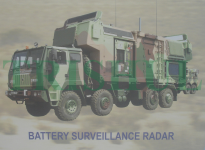
Yep I was hoping they could make a IEP set up using that reactor.For one, we need to improve the refuelling cycle to 25 years (4th gen reactors) from 10 years (2nd gen). And we also need to introduce electricity in lieu of steam.
I have read the same. With surface ship the power demands are stringent as surface ships need to overcome weather elements & its effect on sea state. With subs weather is not a constant drag.Anyway, as per BARC, the sub nukes apparently cannot be used on surface ships because they are not marinized to the level required.
Yeah. I had this idea going in my head that we could power a 15,000 ton combat ship with the CLWR-B1. Even if project costs can be reduced by scaling manufacturing the up front cost would be enormous.As for price, yeah, although there are immense savings in terms of fuel costs, we can't afford to pay higher upfront costs at this stage of our economy.
The Korean KDDX will carry dual band radars i.e. both S - and X - band.Also the reason why ships carry an S band radar for both surveillance and targeting.
The NG's seeker can target TBMs which do go hypersonic in their terminal phase. Whether AD against TBMs translates to AD against hypersonic cruise missiles that remains to be seen. It seems the XRSAM is the Akash NG with a solid booster.
Actually, it appears XRSAM is the Astra Mk2 with a booster. The original speculation was the SFDR version will be XRSAM, but obviously the timelines don't match. Perhaps Astra Mk3 will be the extended range version with 400Km range.
The mechanics for hitting a hypersonic sea skimmer is different from a TBM that falls in an inclination or vertical. The interception profile for a skimmer is very hard to achieve. If the XRSAM can do it, then we will need versions without the booster for this role.
Do we have any X-band radars in development ? I can recall the IAF's Ashwini LLTR operates in the S-band. IA's ADTCR is touted to be a derivative of the Ashwini so that's probably in S-band too. IN's Revathi is also in the S-band. We have a lot of S-band radars.
QR-SAM's BMFR is a X-band AESA radar with 80 km range for a RCS of 2 sq. meters. That can be used I guess. What would be the use of the X-band ? FCR ? 80 km is good enough for most FCR applications. You can always make the AESA panels larger to get more range.
I love the flushed panels on the truck.
View attachment 20953
Yeah, I've only seen the small ones. Perhaps the one on Dhruv is our very first one.
Yep I was hoping they could make a IEP set up using that reactor.
I have read the same. With surface ship the power demands are stringent as surface ships need to overcome weather elements & its effect on sea state. With subs weather is not a constant drag.
Yeah. I had this idea going in my head that we could power a 15,000 ton combat ship with the CLWR-B1. Even if project costs can be reduced by scaling manufacturing the up front cost would be enormous.
Too far away in my books. I'll be happy if NGD is a 10k-ton ship with 90+ VLS using IEPS. What we need is numbers. Our current VLS capability for CMs by 2025 or so is 1/10th of PLAN's. Plus our logistics pacts with many countries gives us plenty of supply options all across the world. And we do not have a nuke carrier to actually make use of a nuke destroyer. Otoh, the Russians and Chinese need nuke destroyers, they don't have many friends after all.
The primary radar is X-band. The secondary is S-band. Though I am not sure which one is the primary & secondary.
No L band at all on either ship?
Then I suppose they will use a land-based one on the mainland or A&N.
The Korean KDDX will carry dual band radars i.e. both S - and X - band.
Many new ships are coming with that now, starting with the Type 055. Zumwalt's X band was cancelled.
XR-SAM's upper-stage airframe looked identical to the Akash-NG. Although the Astra Mk-2's airframe is also similar.Actually, it appears XRSAM is the Astra Mk2 with a booster.
A SFDR based SAM is being worked. Who knows when that will arrive.The original speculation was the SFDR version will be XRSAM, but obviously the timelines don't match. Perhaps Astra Mk3 will be the extended range version with 400Km range.
Yep. To intercept a sea-skimming hypersonic AShM the SAM will need to have active thrusters similar to the DACS on the PDV Mk-2. We will also need hot launch set up & jet vane control system. AESA seekers, 2 way data links etc.The mechanics for hitting a hypersonic sea skimmer is different from a TBM that falls in an inclination or vertical. The interception profile for a skimmer is very hard to achieve. If the XRSAM can do it, then we will need versions without the booster for this role.
Putting them all on one missile will make it pretty heavy though, especially the DACS. We can use the Shaurya to test interception of hypersonic missiles. The Shaurya can't do sea skimming though, but still can be useful for testing. The building blocks are there, a lot of work to do.
The one of the Dhruv would be a bit too big to be superstructure mounted. Would need to be scaled down a bit.Yeah, I've only seen the small ones. Perhaps the one on Dhruv is our very first one.
The Dhruv probably has a L-ban. The fore deck has 2 radomes, one for the X-band the other for the L-band. Of course the mid deck has the massive S-band.No L band at all on either ship?
Then I suppose they will use a land-based one on the mainland or A&N.
There is a C-band AESA under development. Probably for the Swathi Mk-2.