
This is new information to me. Any more details on this. What type of reactor? LWR? Meant for subs or surface ships?smaller 55 MWe marine reactor is also being developed.
This is new information to me. Any more details on this. What type of reactor? LWR? Meant for subs or surface ships?smaller 55 MWe marine reactor is also being developed.

This is new information to me. Any more details on this. What type of reactor? LWR? Meant for subs or surface ships?

ATV was entirely centered around nukes. Work from the 1970s was centered more around creating the industry for submarines in general, starting with feasibility and initial work on reactor propulsion, missiles etc alongside building SSKs.
Then, after DRDO was established, we got the Chakra 1 and began design work on Arihant's reactor and submarine. We designed the demonstrator reactor at Kalpakkam after studying the VM-4 reactor which powered Chakra 1 and that allowed us to create the benchmarks required for the propulsion reactor for Arihant.
IN wanted SSNs first but was denied. So IN's first SSN program only began in 2017 (design stage).
By then VLS was part of all future submarine designs.
To that effect, the French showed off the SMX Ocean with VLS in 2014.
It's quite unrealistic to expect the IN wasn't looking at VLS at that stage.
I initially assumed that the BSMR-200 would be a derivative of the IPHWR-220. Turns out it is likely a LWR with significantly enriched fuel (35-55% U-235). I don't see the military utility of a naval SMR-55, but if we want to go for a nuclear-powered battle cruiser then a naval variant of the BSMR-200 will suffice.They are BSMR-200 and SMR-55. Both will start off as land-based SMRs and be adapted for usage on ships, like container ships and such.
Yes, a scaled down prototype of the HTGCR/IGCR. Not very useful for naval/military uses.There's also a 5 MWth reactor but that's meant for hydrogen production.
?
Who said otherwise? Besides, now it appears we're finally looking to make good on the original plan of creating fully indigenous SSKs using the lessons learnt in Arihant program. The new P-76 is going to be just that, except with a Scorpene-like single-hull design.
I've been saying that for years. The B1 is clearly 'inspired' by the Charlie's VM-4 while the B2 is 'inspired' by the Akula's OK-650B.
Back in 2024 you were saying India had no access to the VM-4 in a conversation with me:
Indian Nuclear Attack Submarine (Project 77) - Updates & Discussions
@Gautam @Ashwin Ok, so appraently we're indeed going for a SSN with VLS as per the source. He only mentions LACMs though (Nirbhay/ITCM), no AShM. Just as well, if we're getting a 190MWt reactor, we might as well onboard additional mission sets i.e. long range land-attack. No info regarding...www.strategicfront.org
Now you're saying we built the Arihant's demonstrator reactor (also known as S-1) after studying the VM-4.
Yea that's what I said.
There's no source to confirm this though.
My take on it is that the inclusion of VLS is marked by shift in program name from P-75A to P-77. You don't change project designation unless you're implementing a major change to design and/or expected mission profile.
One's got nothing to do with the other. The SMX's VLS could never meet our requirement. Too small.
The Amur concept's VLS was more in line with our needs, but that was just an attempt to cash in on India's BrahMos production ramping up.
All the P-75I competitors eventually dropped the VLS though as we weren't interested.
Maybe, maybe not. Let's agree to disagree.
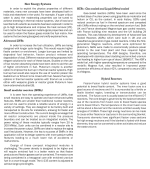
No its not,I initially assumed that the BSMR-200 would be a derivative of the IPHWR-220. Turns out it is likely a LWR with significantly enriched fuel (35-55% U-235).
I initially assumed that the BSMR-200 would be a derivative of the IPHWR-220. Turns out it is likely a LWR with significantly enriched fuel (35-55% U-235). I don't see the military utility of a naval SMR-55, but if we want to go for a nuclear-powered battle cruiser then a naval variant of the BSMR-200 will suffice.
For IN's SSBN/SSGN needs the CLWR-B2 is powerful enough. For surface ships like carriers, we need reactors in the 350-500 MWe class depending on the size of the carrier.
No, we didn't have access to Russian reactors for both submarines. Both were controlled directly by the Russians. Indian Navy reported that they were not even allowed to access the reactor room. If IN wasn't allowed, then forget BARC.
We studied the Chakra 1's reactors for benchmarks, we didn't make a copy of the reactor by copying the blueprints.
For example, LCA uses Mirage 2000 as the benchmark. IAF say they want this and that capability. And ADA look at M2000 and say, "Ah, okay, if we design a wing similar to the M2000, we get this much AoA, this much pitch and roll etc and so we will get this and that capability." That's the benchmark. If you try and attempt something without a benchmark, then you need invest a lot more in making different TDs before you can start the main program. That's why you see the Americans making so many TDs as they pioneer new designs.
When we created requirements for MMRCA, we used MKI as the benchmark. OEMs were expected to match or exceed the MKI. Similarly, IAF created LCA Mk2 benchmarks around M2000, to match it, to which ADA said they aim to exceed it.
When it comes to Chakra 1, they can see the basic design and figure out how much capacity is required, how much space it will take, how heavy it will be, how much water and fuel it needs, how noisy it should be etc, and then figure out a way to design a brand new clean-sheet design based around those benchmarks. All that without any access to the reactor.
The Indian reactors themselves are clean-sheet designs with no design input from Russia outside consultancy similar to how LCA and Arjun have nothing to do with M2000 and Leopard 2A4 outside of being inspired by those designs.
The Chinese used the F-22 and F-35 as benchmarks for the J-20 and J-35, hence the similarities.
That's also why the IN is using the P-75I to create benchmarks for the P-76. You are basically compressing the design stage by many years by using someone else's work. And the overall building, maintaining, and upgrading of these very similar hulls becomes really easy. We saw similar benefits with the design commonality we got from SA-6 and Akash. Now we have to see if P-75I and P-76 have that level of similarity or will end up being used as a benchmark for a new but inspired hull design.
VLS was always part of P-75I. So I don't see why we will downgrade our requirement for such an important capability on SSNs. All P-75I contenders offered VLS except Korea. They couldn't offer the VLS they had created for their navy. Even current lot of Scorpenes can be upgraded with VLS when the MLU happens. Anyway, yeah, we can agree to disagree here.
The demo reactor at Kalpakkam went critical in 2003. What you're saying implies we created a clean-sheet marinized PWR design out of thin air by the 90s itself - with zero experience in designing (or at least operating a foreign design) of a land-based PWR before that point, let alone a marinized one (if it was as you said and IN wasn't even allowed in the reactor room of VM-4).
That is simply not realistic if you study the status & progress of our domestic nuclear program by that time. All our past operating experience was in PHWRs (or small BWRs, a simpler system). All past design experience was exclusively confined to PHWRs derived from a foreign design (CANDU) that we didn't change all that much at least as of the 90s (I'm not counting all the tiny pool-type reactors or FBTR, which was based on France's RAPSODIE).
You can't just design an entirely new type of reactor in a jiffy by studying the parameters on a sheet of paper. Using your analogy, it would be like asking ADA to design the LCA as we know it today, except the only aircraft you operated before then was not an M2K but a De Havilland Vampire. That doesn't work.
You have to know that IN/GOI have to say certain things in order to ensure that NPT violations aren't out in the open. We have a special relationship with Russia in this regard and neither party is going to go and destroy that.
But like I said before, this is a field where nobody ever is going to come out and speak the truth, so you just have to read between the lines and draw conclusions based on overall assessments rather than just relying on curated statements.
The program started in the mid-1980s and the reactor went critical in 2003. That's normal time for the development and construction of a prototype reactor followed by 10 years for a sub reactor. That's effectively around 30 years.
If we simply copied VM-4 we wouldn't take 30 years. And we openly admit Russian design consultancy was used. The time used shows it's an indigenous design.
It would take that much time because it's not just about the design, we were setting up an entire supply chain and qualifying nascent vendors for entry into this field. Without building that ecosystem, the program would've been meaningless.
Anyway, the point is nobody jumps off the deep end straight into marinized PWRs as a clean sheet design without any experience of operating one before. The lease of these submarines was done precisely for that purpose: to provide our engineers at-sea operating experience with these reactors.
Otherwise there was zero need for us to lease these boats and sail them under our flag. We would've just asked the Russians to mail us the parameters they use and called it a day.
The most plausible assessment, the way I see it, is that we took a proven design and indigenized it with some modifications to suit our needs (like going from 20% enriched fuel assemblies to 40% enriched). And then the Russians also served to certify these modifications against their baseline.
Everybody went through the process we did. Everybody had to create a land prototype followed by one for subs. We did the same.
PWR design work started with less than a decade of real experience in the US, and the first one was a land prototype followed by a sub prototype for Nautilus.
The SU also took just a few years and within 8 years they had commissioned a submarine.
Both countries had nuclear submarines 10-15 years after starting their general nuclear programs.
And India had 40 years of reactor experience before starting this program. And then took 30 years to get a sub commissioned. And that's apparently impossible for Indians?
No its not,
Here's govt telling in Loksabha its a PHWR
View attachment 51681
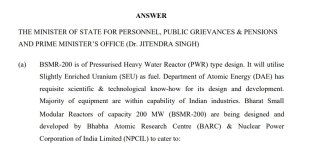
BSMR-200 is of Pressurised Heavy Water Reactor (PWR) type design. It will utilise Slightly Enriched Uranium (SEU) as fuel. Department of Atomic Energy (DAE) has requisite scientific & technological know-how for its design and development. Majority of equipment are within capability of Indian industries. Bharat Small Modular Reactors of capacity 200 MW (BSMR-200) are being designed and developed by Bhabha Atomic Research Centre (BARC) & Nuclear Power Corporation of India Limited (NPCIL)
Yes.
Cuz the risks they were taking (and the costs they entailed) were unacceptable & unaffordable for us.
They (Americans & Soviets) also went from their first orbital launch to building moonshot rockets in about 10 years. Here we are 45 years after SLV-3, negotiating with Russia to buy some RD-191s.
You cannot really compare things done under the Cold War arms race to how we do our programs.
Anyway, CLWR-B1 uses a completely different core design compared to VM-4. It has 13 fuel assemblies as per Peter Lobner whereas VM-4 has hundreds. Even if the reactor has similar benchmarking specs due to the involvement of the Russians via Chakra, the core design is fundamentally different.
Unlikely that Lobner has that kind of access to know how many FAs we use on B1. He uses publicly available sources to come up with his compilations and the B1's exact specs being public knowledge isn't really plausible. He doesn't provide any source for that info either.
Most probably he's imagining it based on some parallels with the early US PWR programs.
It's just very unlikely that we'd go with a totally new, unproven core design for our very first PWR - that too in an application where the country's nuclear deterrence is at stake. Our first PHWR was based on a foreign design and so was our first Breeder. Don't know why we should expect PWR to be any different.

 www.naval-technology.com
It's probably public info. The oldest I came across was in 2009.
The reactor consists of 13 fuel assemblies each having 348 fuel pins.Arihant Class Submarine
INS Arihant is India’s first nuclear-powered submarine. The ship submersible ballistic, nuclear (SSBN) submarine was launched at the Indian Navy’s…
The VM-4 has 200+.
Plus VM-4 uses 20-21% enriched uranium whereas CLWR-B1 uses up to 40%. So the core is obviously different.
Hmm, another no-name source from a foreign site with no plausible way of having access to that info.
Can't dismiss it, but if it was publicized by us, it could possibly be a misdirect as well.
Its just that it would be extremely risky to go with an unproven design for an application like this. Plus, if there was no need to provide our engineers hands-on operating experience with that reactor, we wouldn't have leased the boat to begin with.
A few meetings (and maybe a few visits to NIKIET) is all it would have taken to understand the parameters.
That's not much to go on really. There are variants of VM-4 known to use fuel of upto 45% enrichment. What that typically means though is that the fuel assemblies closer to the middle are at 20% enriched while outer assemblies are at 45%.
Its possible our 40% figure is achieved through a similar mechanism, though it's unclear.
The VM-4 as a system is however capable of 40% - it's just a question of how hard you want to run your boat/how frequently you're okay with refueling.
We certainly modified several aspects of the reactor in any case, with the Russians helping to validate/certify those changes.
All Russian VM-4s use 20%. VM-5 too.
Only Arihant comes with 30-45%.