What if the next pillar of the global semiconductor industry isn't built in one country — but three?
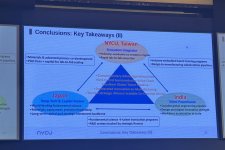
That was the animating question at the MUFG × NYCU Semiconductor Seminar in Hsinchu, where industry executives, policy financiers, and academic leaders converged on February 24, 2026, to sketch out a division of labor that could reshape chip geopolitics: Japan as the capital anchor, Taiwan as the ecosystem integrator, and India as the talent powerhouse.
The seminar, held in the heart of Taiwan's "Silicon Valley" with the support of the India-Taipei Association, also marked the signing of a memorandum of understanding (MOU) between MUFG Bank and National Yang Ming Chiao Tung University (NYCU) to formalize their industrial cooperation — setting the tone for what followed.
Tseng suggested that India could replicate Taiwan's successful model of using public research institutions, such as the Industrial Technology Research Institute (ITRI), to "derisk" early technology development. He also emphasized that Japan could leverage its mature financing capabilities to provide long-term capital for advanced packaging and training infrastructure.
To support this, the state provides real-time monitoring of electricity and water supplies to ensure uninterrupted service. Naik also highlighted significant financial incentives, noting that the government offers interest subsidies that can reduce a firm's effective interest rate from 7% to as low as 2%.
Kato added that JBIC is prepared to provide "gigantic" financing to support the ecosystem surrounding major Indian initiatives, such as the Tata semiconductor project. He pointed out that Japanese material and equipment suppliers hold substantial global market shares—50% and 30%, respectively—and are crucial to the Indian project's success.
"The concept today is partnership," Saito said, noting that the Indian government is "very welcoming" of this trilateral approach.
The panel was one of several discussions held during the seminar, which highlighted the growing alignment of the three nations in securing the future of the global semiconductor supply chain.
That was the animating question at the MUFG × NYCU Semiconductor Seminar in Hsinchu, where industry executives, policy financiers, and academic leaders converged on February 24, 2026, to sketch out a division of labor that could reshape chip geopolitics: Japan as the capital anchor, Taiwan as the ecosystem integrator, and India as the talent powerhouse.
The seminar, held in the heart of Taiwan's "Silicon Valley" with the support of the India-Taipei Association, also marked the signing of a memorandum of understanding (MOU) between MUFG Bank and National Yang Ming Chiao Tung University (NYCU) to formalize their industrial cooperation — setting the tone for what followed.
The "ideal model" for trilateral cooperation
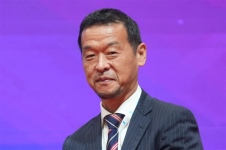
The panel focused on a proposed division of labor designed to stabilize and grow the global chip ecosystem. YC Tseng, a professor at NYCU overseeing international semiconductor talent development, outlined what he called the "ideal model" for the three-way partnership: Japan as the "capital anchor," Taiwan as the "ecosystem integrator," and India as the "talent powerhouse."Tseng suggested that India could replicate Taiwan's successful model of using public research institutions, such as the Industrial Technology Research Institute (ITRI), to "derisk" early technology development. He also emphasized that Japan could leverage its mature financing capabilities to provide long-term capital for advanced packaging and training infrastructure.
Gujarat rolls out the welcome mat
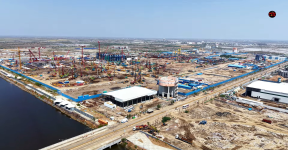
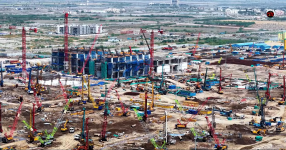
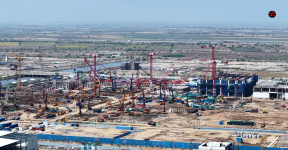
Rohit Naik, representing the Gujarat State Electronic Mission (GSEM), detailed the aggressive measures the state of Gujarat is taking to attract semiconductor manufacturers. Naik noted that the government is planning for the next 20 to 30 years, aiming to build a hub comparable in scale to the Hsinchu Science Park.To support this, the state provides real-time monitoring of electricity and water supplies to ensure uninterrupted service. Naik also highlighted significant financial incentives, noting that the government offers interest subsidies that can reduce a firm's effective interest rate from 7% to as low as 2%.
Japan's policy capital, ready to deploy
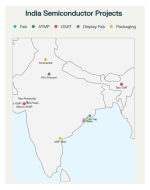
Genki Kato, a director at the Japan Bank for International Cooperation (JBIC)—a policy-based institution 100% owned by the Japanese government—revealed that 60% of Japanese companies now view India as the most promising investment destination.Kato added that JBIC is prepared to provide "gigantic" financing to support the ecosystem surrounding major Indian initiatives, such as the Tata semiconductor project. He pointed out that Japanese material and equipment suppliers hold substantial global market shares—50% and 30%, respectively—and are crucial to the Indian project's success.
Finding the missing piece
The panel concluded with a call for synergy between Japanese and Taiwanese firms. Yuki "Brian" Saito of MUFG Bank suggested that Japanese companies currently operating in Taiwan are in a unique position to find partners who can fill "missing parts" in their strategy—whether in human resources, financing, or industrial technology—before entering the Indian market."The concept today is partnership," Saito said, noting that the Indian government is "very welcoming" of this trilateral approach.
The panel was one of several discussions held during the seminar, which highlighted the growing alignment of the three nations in securing the future of the global semiconductor supply chain.