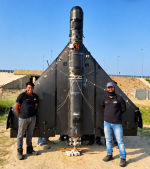
TASL? have any specs?
You are using an out of date browser. It may not display this or other websites correctly.
You should upgrade or use an alternative browser.
You should upgrade or use an alternative browser.


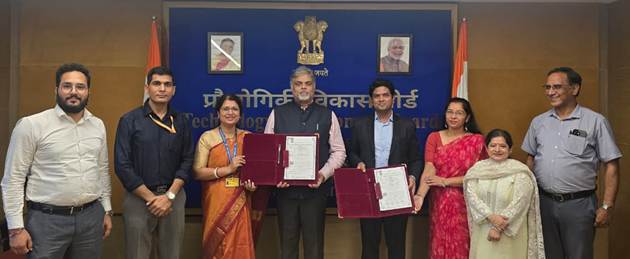
Aatmanirbhar Bharat: MoD inks Rs 1,577 crore contracts for Loiter Munition Systems for Indian Army
Posted On: 14 AUG 2026 7:33PM by PIB DelhiThe Ministry of Defence has signed contracts with TATA Advanced Systems Limited and NIBE Private Limited for the procurement of Loiter Munition Systems, along with munitions & other accessories, at an approximate cost of Rs 1,577 crore for the Indian Army. The contracts were inked in the presence of Defence Secretary Shri Rajesh Kumar Singh in New Delhi on August 14, 2026.
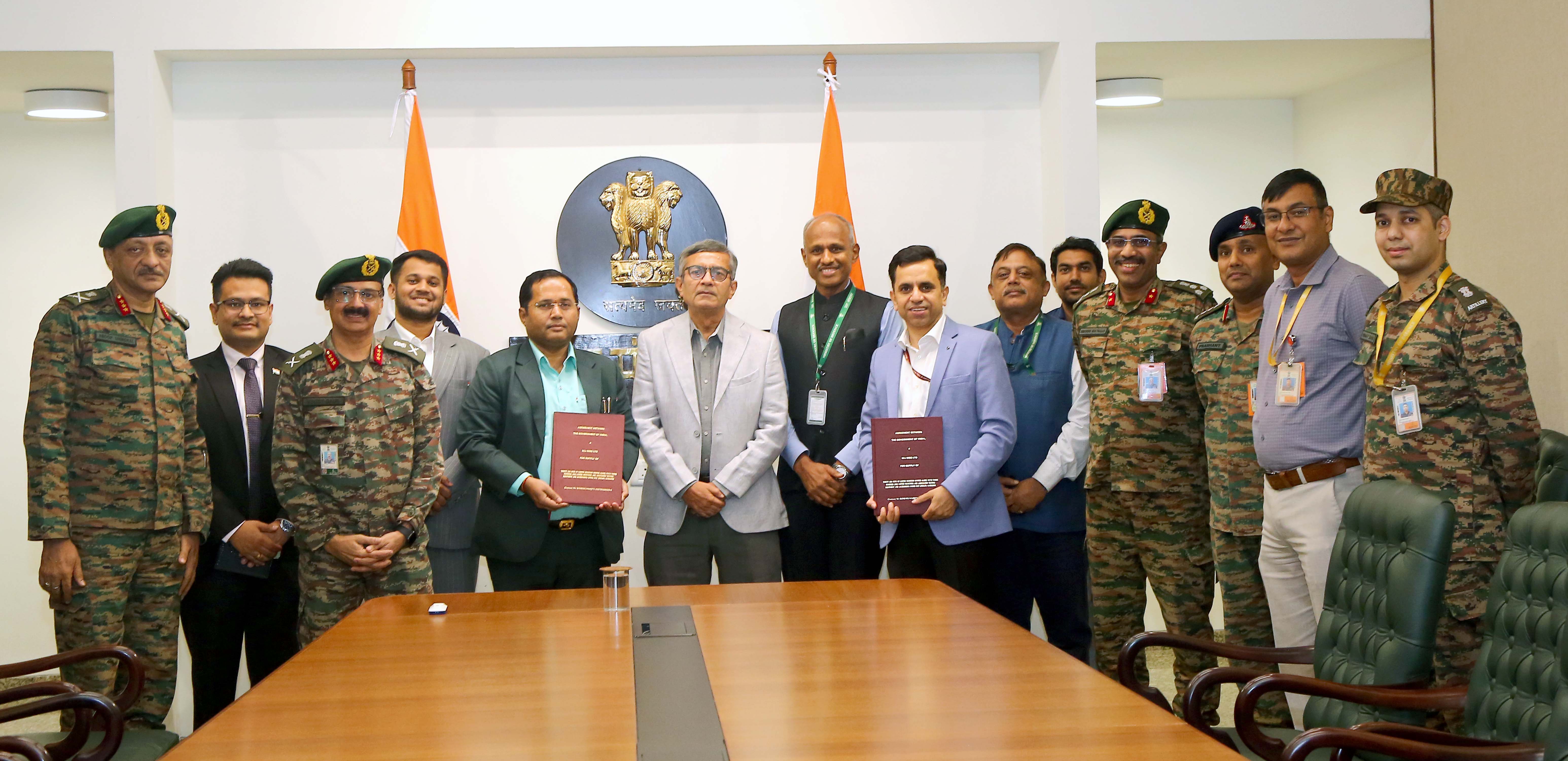
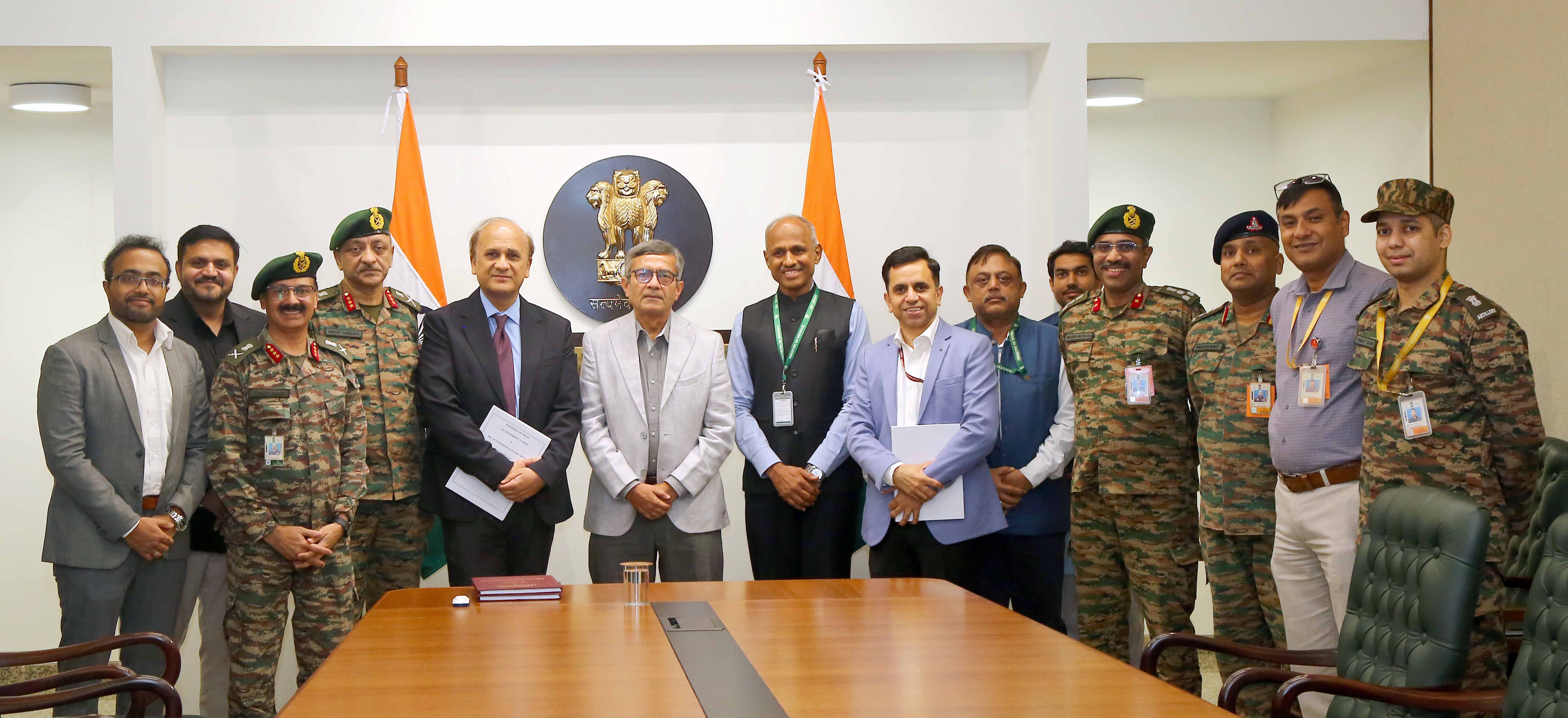
The Loiter Munition System is a critical equipment developed to enhance the capability of the Artillery Regiments, thereby strengthening the overall operational effectiveness of the Indian Army. Being procured under the Buy (Indian) category through Fast Track Procedure, the acquisition will bolster the manufacturing capabilities of the Indian industry.
The procurement marks a pivotal step towards modernising and empowering Indian defence industries, which will be a proud flag-bearer of ‘Aatmanirbhar Bharat’.

Aatmanirbhar Bharat: MoD inks Rs 1,577 crore contracts for Loiter Munition Systems for Indian Army
Posted On: 14 AUG 2026 7:33PM by PIB Delhi
The Ministry of Defence has signed contracts with TATA Advanced Systems Limited and NIBE Private Limited for the procurement of Loiter Munition Systems, along with munitions & other accessories, at an approximate cost of Rs 1,577 crore for the Indian Army. The contracts were inked in the presence of Defence Secretary Shri Rajesh Kumar Singh in New Delhi on August 14, 2026.
The Loiter Munition System is a critical equipment developed to enhance the capability of the Artillery Regiments, thereby strengthening the overall operational effectiveness of the Indian Army. Being procured under the Buy (Indian) category through Fast Track Procedure, the acquisition will bolster the manufacturing capabilities of the Indian industry.
The procurement marks a pivotal step towards modernising and empowering Indian defence industries, which will be a proud flag-bearer of ‘Aatmanirbhar Bharat’.
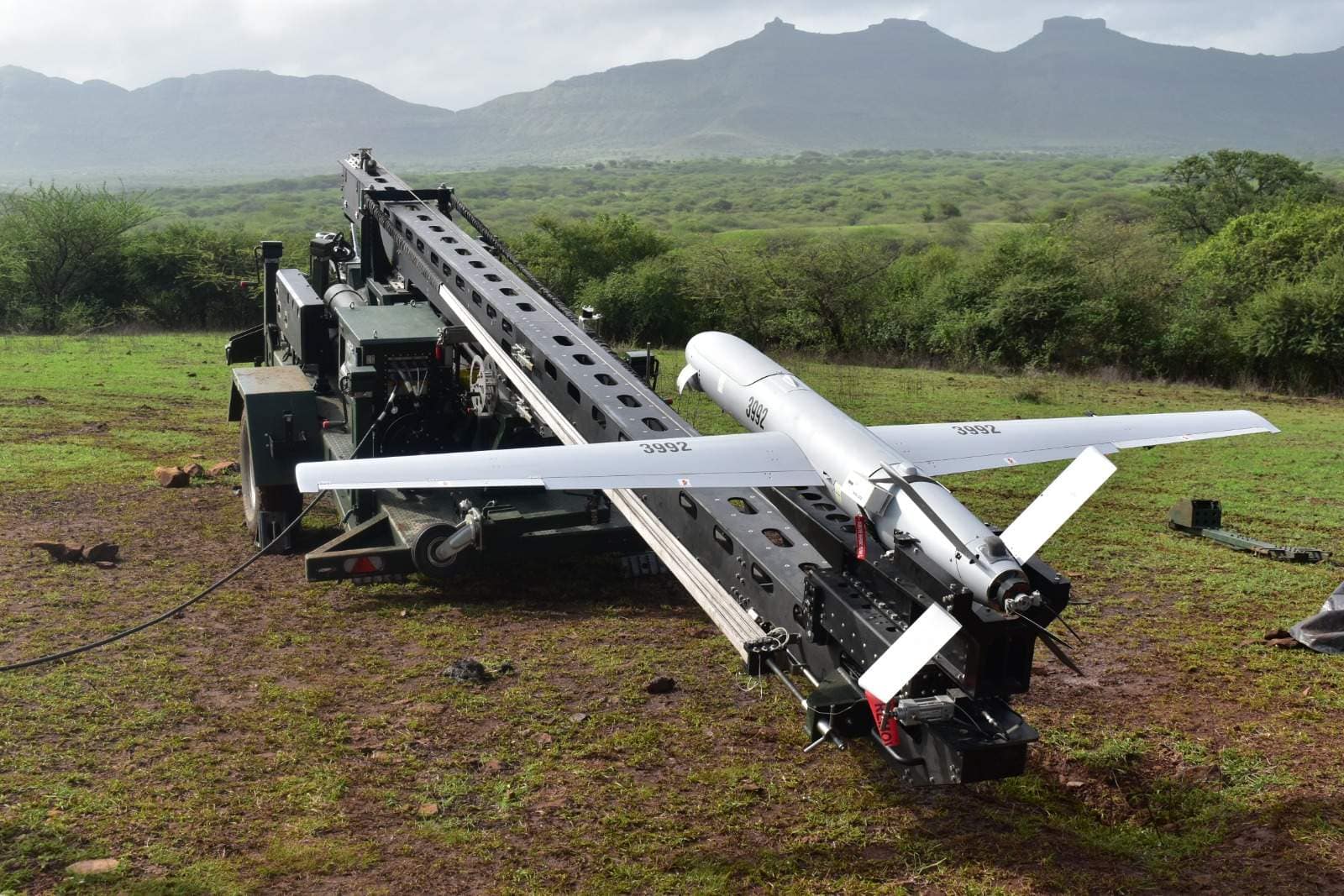
NIBE Limited, today announced the signing of a contract with the IndianArmy for the supply of the “Vayuastra” loitering munition system, procured under the FastTrack Procurement (FTP) category. NIBE has been awarded the L2 vendor share of thecontract, valued at approximately ₹ 563.35 crore.
Company has entered in to supply Contract with Indian Army, Ministry of Defence, Government of India for manufacturing and supply of thirty (30) Sets of Loiter Munition System that consist of three hundred (300) Loiter Munitions and Associated Testing Equipment and Accessories underbuy (Indian) category for a total consideration of Rs. 563.35 crore
Every air-taxi has military potential. Hope some of them see use in military logistics if not unmanned combat:
Their long-term vision:
View attachment 49150
View attachment 49151
Another air-taxi prototype:
Imagine one of these machines with/without a human pilot, carrying a large swarm of drones flown off a destroyer's deck. Like a mothership for drone swarms.
Incidentally a mothership for drone swarms is already being built:
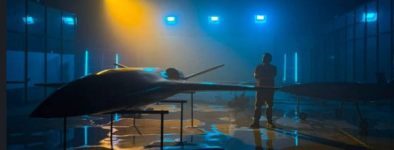
Raphe mPhibr is making a 2-stroke 250kW engine for drones:


TDB signs agreement with ideaForge for ₹151 crore RDI support to develop YETI heavy-lift autonomous aerial logistics vehicle
Indigenous VTOL platform designed to transport payloads of up to 200 kg, with a targeted range of 200 km, to advance towards TRL-9
Posted On: 14 OCT 2026 12:50PM by PIB DelhiStrengthening India's capabilities in autonomous aerial systems and next-generation logistics, the Technology Development Board (TDB), Department of Science & Technology (DST), Government of India, has signed an agreement with ideaForge Technology Limited, Mumbai, Maharashtra for financial support of ₹151 crore under the Research Development and Innovation (RDI) Fund.
The project, with a total project cost of ₹302 crore, focuses on the development of YETI, a heavy-lift, long-range autonomous aerial logistics vehicle, with the objective of advancing the technology from Technology Readiness Level (TRL)-4 to TRL-9. The financial support will be provided through debt financing.
Designed for demanding operating environments, YETI is an autonomous vertical take-off and landing, fixed-wing hybrid unmanned aerial vehicle (VTOL-FW UAV) intended to transport heavy payloads over long distances. Its proposed capabilities are aimed at addressing logistics requirements in areas where conventional transportation can be difficult, time-consuming or operationally constrained. The platform is designed to carry payloads of up to 200 kg, with a targeted range of up to 200 km and an operating altitude of up to 6,500 metres above mean sea level. Its weather-resistant design is intended to support operations in challenging environments, including high-altitude regions, deserts and marine conditions.
A key feature of YETI is its ability to take off and land vertically while retaining a fixed-wing configuration for longer-range operations. The vehicle is designed to operate from relatively small, unprepared landing areas measuring approximately 15 metres × 15 metres, enabling deployment in locations with limited ground infrastructure.The platform incorporates distributed and redundant propulsion and power architecture to improve fault tolerance. Its proposed capabilities also include GNSS-denied navigation, a communication link of up to 200 km, swarm operations and containerised transportation for rapid deployment. The design is intended to enable the vehicle to be transported and set up quickly, supporting logistics missions across geographically challenging locations.
The development of heavy-lift autonomous aerial platforms has growing relevance for applications requiring the movement of essential supplies across difficult terrain. By combining vertical take-off and landing with long-range flight capability and substantial payload capacity, YETI is being developed to address a distinct segment of the unmanned aviation and aerial logistics market.
The RDI-supported programme will facilitate further technology development, engineering, integration, testing and validation required to progress the platform towards TRL-9, subject to the applicable technical, safety and regulatory requirements. The project falls under the Deep Technology sector, with Intelligent Systems and Robotics as the sub-sector. It reflects the growing importance of indigenous autonomous systems that integrate aerospace engineering, propulsion, navigation, communications and intelligent control.
Shri Rajesh Kumar Pathak, Secretary, TDB, said, “The development of advanced autonomous systems is opening new possibilities for addressing complex operational and logistical challenges. Indigenous heavy-lift aerial platforms can play an important role in improving access to remote and difficult-to-reach locations. Through the RDI Fund, TDB is supporting technology-intensive projects that require sustained investment to progress from advanced development towards deployment. The agreement with ideaForge reflects our commitment to strengthening India's capabilities in autonomous systems, robotics and next-generation aerospace technologies.”
Speaking on this development, CEO and Co-founder of ideaForge Technology Ltd., said, “YETI represents a generational leap in what India can design, build, and operate autonomously. Our armed forces and our logistics networks face the daily reality of reaching where roads end, and weather doesn’t cooperate. YETI is our answer to that challenge, which is engineered not just to fly, but to deliver, reliably and repeatably, in the conditions that define the toughest operational environments. The government’s confidence in ideaForge through the RDI framework is a reaffirmation that Indian deeptech players are now ready to carry the weight of national capability-building.”

Logistics Drone (YETI UAV) | Long-Range UAV Delivery Solutions
Explore the YETI logistics UAV: a long-range drone platform for cargo delivery and smart logistics operations. High endurance aerial solution for supply chain efficiency.
 ideaforgetech.com
Flying Wedge unveils FWD Supreme prototype for AI-piloted combat aircraft programme
By Sankunni K
October 13, 2026, 21:18 IST
The company says its Supreme Lite variant is expected to make its maiden flight within the next two months.
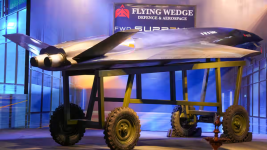
FWD Supreme with Suhas Tejaskanda, ounder of Flying Wedge Defence & Aerospace.
Flying Wedge Defence & Aerospace on Tuesday unveiled a full-scale static prototype of FWD Supreme, a proposed family of AI-piloted combat aircraft designed for surveillance, strike and collaborative combat missions. The company describes it as India’s first AI-piloted fighter aircraft programme, a claim its founder says rests on the platform’s intended autonomous decision-making capabilities.
Speaking to Fortune India, Suhas Tejaskanda, founder of Flying Wedge Defence & Aerospace, said the programme differs from existing unmanned combat aircraft initiatives such as the Defence Research and Development Organisation’s Ghatak and Hindustan Aeronautics Limited’s CATS Warrior.
“There are a lot of UCAV programmes in India, such as Ghatak and CATS Warrior. But there is no autonomous programme happening in India,” Tejaskanda said, explaining why the company considers FWD Supreme the first of its kind.
“The key difference lies in the decision-making architecture and reliance on external command structures. Traditional unmanned combat aerial vehicles are generally remotely piloted, whereas autonomous AI-piloted fighter aircraft such as FWD Supreme are designed to operate more independently and execute coordinated group tactics,” he added.
The launch was held in the presence of defence officials, but the company has no formal agreement with the Ministry of Defence for the programme, the founder said.
“This is a programme that has started, and we are now trying to get the government’s help. No (government) funding as such has been received till date. We're looking for funding from private equity and venture capital market,” Tejaskanda said.
According to Tracxn, Flying Wedge Defence & Aerospace has raised $3.44 million across eight funding rounds. The Bengaluru-based company was founded in 2022, with its latest funding round listed as a seed round dated April 4, 2026.
The company plans to develop the aircraft through what it calls Operation Triple Seven, an initiative intended to bring international partners into an India-led development and manufacturing programme.
Heavy variant still under development
FWD Supreme Heavy is being developed for autonomous combat operations, with potential roles in intelligence, surveillance and reconnaissance (ISR), strikes and collaborative missions. The company has unveiled a full-scale static prototype; it has not announced a maiden flight for the Heavy variant.
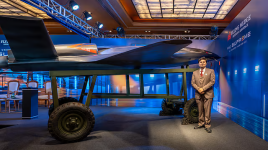
The release describes the aircraft as a one-tonne-class platform, while its specifications also refer to a weight class exceeding 1,500 kg.
Tejaskanda said the final configuration would depend on operational requirements and the trade-off between fuel and payload.
“The aircraft will be somewhere between one tonne and 1.5 tonnes, depending on the payload. If you carry more fuel, you carry less payload for longer range, and vice versa. The final configuration will be frozen after testing,” he said.
The company has outlined a projected range of more than 1,500 km, a payload of around 350 kg and a maximum speed of Mach 0.8–0.85.
Supreme Lite maiden flight expected in two months
The smaller FWD Supreme Lite variant has completed taxi trials and is being prepared for its maiden flight. Tejaskanda said the flight is expected within the next one-and-a-half to two months.
The company has not yet announced the outcome of a maiden flight for the Lite variant. Its progress will be an important next step in demonstrating the programme’s development beyond the static prototype stage.
Flying Wedge unveils FWD Supreme prototype for AI-piloted combat aircraft programme
By Sankunni K
October 13, 2026, 21:18 IST
The company says its Supreme Lite variant is expected to make its maiden flight within the next two months.
FWD Supreme with Suhas Tejaskanda, ounder of Flying Wedge Defence & Aerospace.
Flying Wedge Defence & Aerospace on Tuesday unveiled a full-scale static prototype of FWD Supreme, a proposed family of AI-piloted combat aircraft designed for surveillance, strike and collaborative combat missions. The company describes it as India’s first AI-piloted fighter aircraft programme, a claim its founder says rests on the platform’s intended autonomous decision-making capabilities.
Speaking to Fortune India, Suhas Tejaskanda, founder of Flying Wedge Defence & Aerospace, said the programme differs from existing unmanned combat aircraft initiatives such as the Defence Research and Development Organisation’s Ghatak and Hindustan Aeronautics Limited’s CATS Warrior.
“There are a lot of UCAV programmes in India, such as Ghatak and CATS Warrior. But there is no autonomous programme happening in India,” Tejaskanda said, explaining why the company considers FWD Supreme the first of its kind.
“The key difference lies in the decision-making architecture and reliance on external command structures. Traditional unmanned combat aerial vehicles are generally remotely piloted, whereas autonomous AI-piloted fighter aircraft such as FWD Supreme are designed to operate more independently and execute coordinated group tactics,” he added.
The launch was held in the presence of defence officials, but the company has no formal agreement with the Ministry of Defence for the programme, the founder said.
“This is a programme that has started, and we are now trying to get the government’s help. No (government) funding as such has been received till date. We're looking for funding from private equity and venture capital market,” Tejaskanda said.
According to Tracxn, Flying Wedge Defence & Aerospace has raised $3.44 million across eight funding rounds. The Bengaluru-based company was founded in 2022, with its latest funding round listed as a seed round dated April 4, 2026.
The company plans to develop the aircraft through what it calls Operation Triple Seven, an initiative intended to bring international partners into an India-led development and manufacturing programme.
Heavy variant still under development
FWD Supreme Heavy is being developed for autonomous combat operations, with potential roles in intelligence, surveillance and reconnaissance (ISR), strikes and collaborative missions. The company has unveiled a full-scale static prototype; it has not announced a maiden flight for the Heavy variant.
The release describes the aircraft as a one-tonne-class platform, while its specifications also refer to a weight class exceeding 1,500 kg.
Tejaskanda said the final configuration would depend on operational requirements and the trade-off between fuel and payload.
“The aircraft will be somewhere between one tonne and 1.5 tonnes, depending on the payload. If you carry more fuel, you carry less payload for longer range, and vice versa. The final configuration will be frozen after testing,” he said.
The company has outlined a projected range of more than 1,500 km, a payload of around 350 kg and a maximum speed of Mach 0.8–0.85.
Supreme Lite maiden flight expected in two months
The smaller FWD Supreme Lite variant has completed taxi trials and is being prepared for its maiden flight. Tejaskanda said the flight is expected within the next one-and-a-half to two months.
The company has not yet announced the outcome of a maiden flight for the Lite variant. Its progress will be an important next step in demonstrating the programme’s development beyond the static prototype stage.
Flying Wedge unveils FWD Supreme prototype for AI-piloted combat aircraft programme