Islamic Republic of Pakistan : News, Discussions & Updates

EU says Christian woman's release will determine future trade with Pakistan

The European Union has said the renewal of a trade deal with Pakistan will be dependent on the release of Asia Bibi, a Christian woman on death row.

Asia Bibi was sentenced to death for blasphemy in 2010, accused of insulting the Islamic prophet Muhammad, something she denies. She appealed the sentence but the hearing was postponed and she has been in prison ever since.

Jan Figel, the EU's special envoy for freedom of religion outside the EU, has told Pakistan that the renewal of their export privileges will be dependent on the freedom of Asia Bibi.

Pakistan currently have 'Generalised System of Preferences (GPS) status', meaning Pakistani products have duty-free access to the EU market with either no tariffs or preferential levies.

However, the EU said the result of Bibi's appeal, which is pending in the Supreme Court and could result in her being sentenced to hanging, will determine the continuity of this trade deal.

It said in a statement: "The cessation of GSP plus status will cause a severe blow to the sinking economy of the country and will not be able to compete with local competitors like Bangladesh and Sri Lanka."

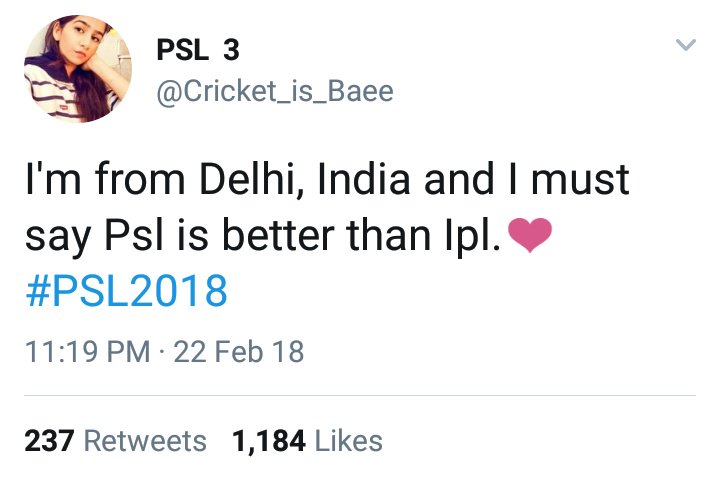
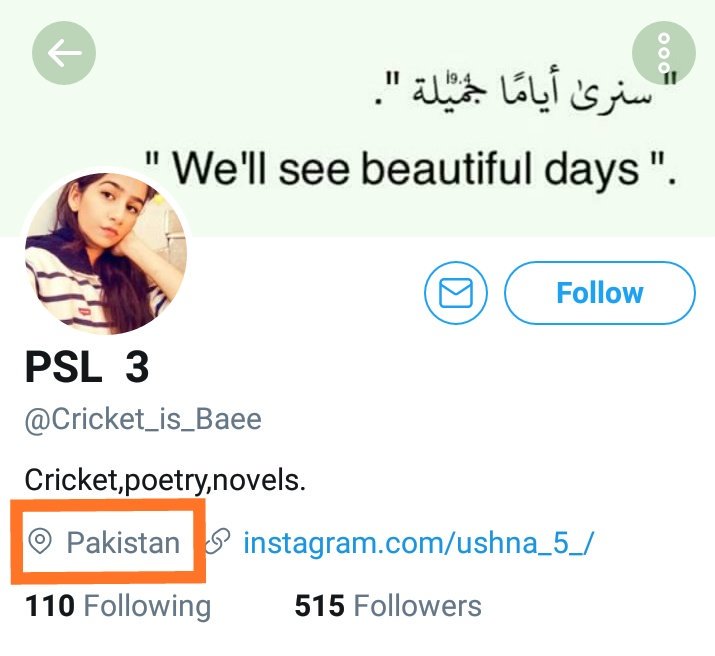
भारत PSL को नाकाम करने की कोशिश कर रहा है

 
KP govt to approve Rs277m grant for Darul Uloom Haqqania

The provincial government of the Khyber Pakhtunkhwa (KP) is set to approve a Rs277 million grant for Darul Uloom Haqqania, DawnNewslearnt on Friday.

This is not the first time that the madressah would be on the receiving end of a gracious grant from Pakistan Tekhreek-i-Insaf (PTI) led KP government as Rs300m were allocated for it in the budget for financial year 2016-17.

Defending the move, PTI chief Imran Khan had said that the funds and support would help the seminary students assimilate in our society, bring them in to the mainstream and keep them away from radicalisation.

==========================================================================


DWv_Kbek_VQAA8_VN6.jpg


DWv_Kc_HVUMAAh_HU2.jpg


Pak Media- America wants to destroy us using artificial Tsunami,we should destroy America

 
Last edited:
  • Like
Reactions: Notsuperstitious
Iranian envoy severely criticises Pakistan

Islamabad, – Iranian envoy to Pakistan criticized Islamabad on the problems existing in bilateral banking ties as well as the delay in completion of Iran-Pakistan gas project. Iran has banking interactions and trade ties with many countries in the world but this problem has not been already resolved between the two countries,' Iranian Ambassador to Pakistan Mehdi Honardoost said in a reference to cut of banking ties between the two countries since the sanctions era, state run IRNA has reported.

Honardoost, speaking at the seminar on ‘Contemporary Relations between Pakistan, Iran and Saudi Arabia: Present Challenges’ organized by Strategic Vision Institute (SVI) in Islamabad, said that Iran and Pakistan have many common grounds to build their relations upon.

He cited Pakistan's 'being too cautious' as the reason for the delay in resuming banking ties between Tehran and Islamabad.

Transfer of gas from Iran to Pakistan could flourish the region, the envoy noted in a reference to delay in completion of the project by Islamabad for 'unclear reasons'.He noted that the Iranian part of the project is complete, but the project has not become operational on the Pakistani side.
Honardoost cautioned about manipulation of extremism by certain elements to prevent improvement of Iran-Pakistan relations.
 
Rome's Colosseum turned red to protest Pakistan blasphemy law

648x364_romes-colosseum-turned-red-to-protest-pakistan-blasphemy-law.jpg


Hundreds gathered on a rainy night outside the Roman amphitheatre that is a symbol of the martyrdom of early Christians to hear the husband and daughter of Asia Bibi.

The Catholic woman has been living on death row in Pakistan since 2010, when she was condemned for allegedly making derogatory remarks about Islam after neighbors objected to her drinking water from their glass because she was not Muslim.

“The aim of the blasphemy laws is crush people who believe differently,” Archbishop Nunzio Galantino, secretary-general of the Italian bishops conference, told the gathering.
 
Pak Media On Indian Ballistic Missile Agni5/Prithvi2-India can't stop Babur and Raad


Pak analyst blasts ISPR agent Amjad Shoaib

 
2 policemen martyred as assailants open fire on DSP's vehicle in Quetta

Two police officials were martyred when assailants opened fire at the vehicle of Deputy Superintendent Police (DSP) Hameedullah Dasti on Quetta's Samungli Road Wednesday morning, DawnNewsTVreported.

The DSP narrowly escaped in the incident, Deputy Inspector General (DIG) Razzaq Cheema said, adding that the two policemen guarding Dasti died on the spot. The martyred policemen were identified as Muhammad Tahir and Ayub Shah.

A child was also injured during the attack, Quetta Civil Hospital spokesman Waseem Baig said, adding that he is being treated at trauma centre.

Dasti was on his way from his residence towards his office when he was targeted. DIG Cheema said three attackers opened fire at DSP Dasti's vehicle.

Police and personnel of other law enforcement agencies reached the spot as investigation into the incident went underway.

There was no immediate claim of responsibility for the attack. However, police sources termed the incident as an act of targeted killing in the city.

Balochistan Chief Minister Abdul Qudoos Bizenjo strongly condemned the attack on police and termed it a brutal act of terrorism. He directed the police to apprehend the culprits.

The incident follows a series of similar attacks targeting police and other law enforcement officials in the city. Earlier this month, four men of the Frontier Corps (FC)were gunned down in an incident of firing on Quetta's Saryab Road.

2 policemen martyred as assailants open fire on DSP's vehicle in Quetta - Pakistan - DAWN.COM
 
  • Informative
Reactions: Dagger
Govt will have to pay IMF $3bn by June, claims Rana

KARACHI: Pakistan will have to pay $3 billion to the International Monetary Fund (IMF) before June and for this funds will have to be raised from the international market, Minister of State for Finance Rana Muhammad Afzal Khan said on Tuesday.

The figure given by the minister is at odds with what the State Bank says Pakistan owes on its external debt service obligations till end of fiscal year. According to the central bank, the total amount Pakistan will have to pay on its external debt is $2.5bn, and that this amount does not require recourse to any extraordinary measures to raise.
 
4 security personnel martyred in Quetta blast

At least four security officials lost their lives and several others suffered injuries as a result of an explosion in the outskirts of Quetta, DawnNews reported.

The blast targeted a Frontier Corps (FC) checkpost in the Darvaish Belili area of the provincial capital. There were also reports of firing in the area soon after the blast.

The exact nature of the blast could not be ascertained as yet, however, a security official told DawnNews that "it seems to be a suicide attack".


2 blasts on the same day in heavily-fortified Quetta(Population 1 million).

====================================================================

Pakistan 'worried' over India's drone technology after Rustom-2 makes 'successful' test flight

Pakistan today voiced its concern over the development of sophisticated drone technology by India, describing it as "worrying".

Foreign Office spokesman Mohammad Faisal was asked at the weekly media briefing to comment on India's Rustom 2 which was being developed on the lines of the US predator drones for surveillance and reconnaissance purposes.

"India's development of drone technology is worrying when seen in the larger context of its buildup and expansion of military capabilities in the conventional and non-conventional domains, which are subjecting regional strategic stability to increasing strain," he said.

He also said that the use of drone technology should be consistent with the principles of the UN Charter, international humanitarian law and other established norms of responsible state behavior.

He also lambasted a decision by the Indian Motion Pictures Producers' Association (IMPPA) to uphold ban on Pakistan actors and artists as "yet another evidence of pervading extremism and anti-Pakistan prejudice in India".
 
Last edited:
Bold article by DAWN on role of Agencies in Pakistan

AN air of stultifying inaction has descended over the issue of enforced disappearances, even as people continue to go ‘missing’.

On the contrary, the abductions have become more brazen. From the backwaters of Fata and the provinces, and the dark of night, they are now taking place even in broad daylight in major urban centres.

The increasing audacity makes the response by the government and the justice system seem doubly pathetic; that in turn further emboldens the perpetrators.

First, it was suspected anti-state militants, Baloch insurgents and their sympathisers who were targeted; when the pushback was not unequivocal enough, the net expanded to include bloggers, journalists and civil society activists.

Matters have come to such a pass that now, anyone, anywhere can be picked up if they express, or are suspected of harbouring, a point of view that is secular and/or questions the national security policy.

The message from the establishment, or at least some elements of it, is clear: it is above the law, even the law that underpins the state itself. Eyewitness testimony does not matter, nor does the fact that the commission has recommended — to no avail — that criminal cases be filed against 117 law-enforcement officials.

There never seems to be enough evidence to actually hold anyone accountable for a gross human rights violation, the absence of which distinguishes civilised countries from those where the law of the jungle prevails.

Enough is enough.

=======================================================================================

300 years ago during the times of Aurangzaib Alamgir, the greater Pakistan used to generate 10 times more revenue than France. Shoaib Sheikh saying all that with a straight serious face. Legend.


Parliament House infested with ‘50,000 rats’

ISLAMABAD: Authorities at the Parliament House have finally been forced to devise a ‘strategy’ to contain the number of rats that have taken over the five-storey building. The rodent population in the building has grown to a shocking 50,000.

A local news channel on Tuesday reported that the rat infestation in the parliament is a known problem as a private firm was being paid Rs 650,000 annually to rid the house of the gnarly animals.

According to a ‘survey’, the rats live and roam around like kings in the Parliament Lodges, cafeteria, Prime Minister’s House and President House.

The news channel also reported that the firm was maintaining a detailed record of the progress. Details of each trap, plate or bait being placed across the parliament house are noted on a form and the resulting success or failure of each trap is then added to the details.
 
  • Like
Reactions: Shashank
Senate Approves Motion to Declare Chinese as Official Language

Single pointed obsession of hatred and revenge towards India is taking Pakistan to its exploitation and destruction via cultural invasion and economic debt trap. Let's see if these jihadis Kaum can prove that they really inherit the genes of the Maha-Mad man.

BTW, has anyone read this?

Sina's Challenge


I receive many emails from angry Muslims, who sometimes beg me, and sometimes order me to remove this site. I consider both, pleading and bullying, signs of psychopathology. Argumentum ad baculum and argumentum ad misericordiam are both logical fallacies.

If you do not like this site and want me to remove it, instead of acting as a bully or as a victim, disprove my charges against Muhammad logically. Not only will I remove the site, I will publicly announce that Islam is a true religion. I will also pay

$50,000 U.S. dollars

to anyone who can disprove any of the dozen of the accusations that I have made against Muhammad. I accuse Muhammad of being:

a narcissist a misogynist a rapist a pedophile a lecher a torturer a mass murderer a cult leaderan assassin a terrorist a mad man a looter

I have debated with many Muslims. Their defense of Islam can be summarized in two categories:

Denial of the authenticity of Islamic sources that report the stories of crimes of Muhammad (example: debate with Edip Yukssel, a leader of the Submitters)

Moral relativism and situational ethics, e.g., “In those days, pedophilia, assassination, rape, raid, pillage, massacre and lying, were common practices, so Muhammad is innocent because he did what everyone else was doing.” Muslims even go as far as to question the legitimacy of the Golden Rule to claim I do not have any basis to condemn Muhammad. In other words, who can say what is good and what is evil? That is up to the messenger of God to decide. (Example: debate with Yamin Zakaria)

These are the main two arguments that Muslims present in defense of Islam. Any rational person can see they are logical fallacies.

These charges are irrefutable. You simply can't disprove them because they are reported in Islamic sources and as such they are as good as confession. You can't acquit a criminal after he has confessed, unless you plead insanity, which is my point.

Muslims often ask: "Who will judge whether or not an attempt to disprove your accusations against Muhammad and Islam, was successful?" The readers will be the jury. It is not difficult to see which side is right once both arguments are presented without one side fearing the other. I will publish the debates in this site. My opponents are also encouraged to publish them in any Islamic site. Please note that I will not accept face to face debates. The debates must be in writing.

Edit 2007/07/29

The above challenge was issued in 2001 and it hasn't been met yet. See the debates I had with Muslims. Also see the pathetic attempt of some Muslims trying to refute me here , here, here and here. Is that all the Muslim world can offer? Where are the scholars of Islam? Why such an important task is left to a bunch of amateurs who actually do more damage to Islam? Isn't it time that the real scholars come forth and refute my charges?

The truth is that several of the people that debated me were real scholars, such as the eminent Pakistani scholar Mr. Javed Ahmed Ghamidi and his disciple Dr. Khalid Zaheer. This debate is a must read and is available for download. Dr. Zaheer is a learned man, a moderate Muslim and a good human being. I have utmost respect for him.

As of this date (2007), I will no longer debate with people who want to debate anonymously. I only debate with reputable scholars. I made this decision because often, Muslims moved by their faith and zealotry, but with little knowledge of Islam, challenge me to debate. They rehash the same tried and refuted arguments that bore everyone and disappear. Then, other Muslims, either accuse me of fabricating those debates or pooh-pooh my opponents for not being scholars.

As of this day, I am also doubling the reward. If you are not a reputable scholar, you can still win the prize. All you have to do is persuade a scholar to debate with me. If he (she) disproves my charges or can prove that Muhammad was a prophet of God, both you and he (she) will be rewarded $50,000 dollars each. This is to encourage you to write to your admired scholar and convince them that Islam is in danger and that it is their duty to defend it. Once you write to invite someone, please CC a copy to us for announcing the invitation. Our email is faithfreedom2 (at) gmail.com

Yes, Islam is in grave danger. Never, since its inception, Islam has faced a threat as serious as this. Today, millions of ex-Muslims are questioning the claimed truth of Islam, can make their criticisms heard worldwide, and unlike before, not fear for their lives. As long as these questions are not answered, this trend is only bound to continue, until the trickle becomes a torrent and the fall of Islam becomes obvious. In the past, the critics of Islam briefly shined like lamps in darkness, only to be put out by winds of persecution. What is happening today can be likened to the break of the dawn. Darkness has no chance in front of this much light. Muslims are waking up and leaving Islam like never before. A spiritual and intellectual revolution is underway. This is the century of enlightenment of the benighted Muslims. The giant is finally awakening. The days of Islam are numbered. This demon of hate and ignorance will be slain by the hands of its own primary victims. The unity of mankind and the world peace are around the corner.

Please advertise this challenge. Every Muslim must see it. This is like throwing water on their fire. Nothing will dampen their zeal more than the realization that among a billion Muslims there is not a single scholar who can prove the wild claims of Muhammad, nor acquit him of these grave charges. This unmet challenge has a sobering effect on them. They can make any excuse, such as, I am not worth their response, that there have been greater men than me who opposed Islam, or that I have been refuted already, but they will not be able to fool themselves. The more this challenge is circulated, the more Muslims will be forced to remain silent and doubt Islam. Do not undermine the psychological effect of this impossible challenge.

Sincerely

Ali Sina
 
Shelving of IP gas project: Iran threatens to take Pakistan to The Hague

ISLAMABAD: In a new development, Iran has threatened to move the arbitration court against Pakistan for unilaterally shelving the IP gas line project invoking the penalty clause of the Gas Sales Purchase Agreement (GSPA). Pakistan and Iran signed the GSPA in 2009 under IP gas pipeline project in the era of the Pakistan People's Party (PPP). Since then, the project could not get a shape.

Now under the latest scenario, Tehran has asked for payment of over $1.2 billion, as under the penalty clause from January 1, 2015, Pakistan is bound to pay penalty of $1 million per day if it fails to have intake of gas from Iran under the IP project, a top official of the Petroleum Division told The News.

Keeping in view the gravity of the issue, secretary Petroleum Division in an internal note, of which a copy is available with The News, has sensitised Prime Minister Shahid Khan Abbasi, saying there are vibes emanating from Iran to move the arbitration court seeking the imposition of penalty of $1.2 billion against failure of Pakistan to implement the project.

The prime minister, however, did not give any response when he was sent the question through an SMS, asking if the secretary Petroleum Division has sensitised you (the premier) over the intention of Iran on moving the arbitration court seeking penalty over failure of Pakistan to implement the project and if it is true, what strategy Pakistan will have to avoid the penalty.

The News on June 07, 2016 published a story that Pakistan had shelved the IP gas line project in the wake of pressure of a leading gulf country. The decision had irked authorities in Iran at that time, but now in latest development Iran after pause of 20 months has conveyed to Pakistan in plain words that it is going for arbitration seeking the huge penalty of $1.2 billion which is equal to almost the cost of the project.

The project was to be implemented under segmented approach which means that Iran had to lay down the pipeline on its side and Pakistan had to build the pipeline in its territory. The project was to be completed by December 2014 and come on stream from January 1, 2015. Under the penalty clause it was agreed by both sides that if Pakistan fails to have intake of Iranian gas from January 1, 2015, it will have to pay $1 million per day as penalty.

When this correspondent had filed the story on June 06, 2017 saying the IP project has been shelved, Shahid Khaqan Abbasi, who was at that time petroleum and natural resources minister, had confirmed that the government has deferred the project as it wants the private sector to invest in the LNG terminals and import LNG in the country and to this effect, both new LNG terminals are being erected. He had stated that if the private sector succeeded, the government may then abandon the project.

However, the minister at that time did not buy the information that the government has abandoned the project because of pressure from a gulf country. “We have deferred it as private sector is going to install more LNG terminals with a plan to import 1.2 billion cubic feet per day.

The official said that under the IP gas line, Pakistan could not arrange funding for the project as the US and UN had imposed sanctions on Iran and no international firm and donors were ready to finance the project and owing to this Pakistan sought the forced majeure to avoid $1 million per day penalty as per sale and gas purchase agreement inked with Iran. However, Iran did not buy the arguments on which Pakistan sought the force majeure so far.

Then Pakistan satisfied Iran that it was serious towards the project and to this effect it has started initiating Gwadar-Nawabshah LNG Pipeline (GNGP) with the same specifications agreed with Iran and the said pipeline will later on be called as IP gas line.

“On this argument, Iran did not charge the penalty which was due from January 1, 2015,” the official said. "So much so, Iran had agreed to review the gas price downward under IP gas line and to this effect for the last one year and eight months, Pakistan's official team is waiting for green signal from the top man of the country to visit Iran and start the talks for downward gas price. So far no permission has been granted to the officials of the Ministry of Petroleum and Natural Resources for the reasons best known to the top leadership," the official said.

“The government in June 2016 failed to resist the pressure from one of the Middle East countries which is why it had abandoned the project,” the official insisted, saying: “The decision had also annoyed Beijing as Chinese company was given the contract of GNGP under government to government arrangement. China had earmarked 85 percent of the funding for the project.

Shelving of IP gas project: Iran threatens to take Pakistan to The Hague
 
Foreign exchange: SBP's reserves plunge $358m, stand at $12.35b

KARACHI: Foreign exchange reserves held by the State Bank of Pakistan (SBP) continued to remain under pressure, decreasing 2.82% on a weekly basis, according to data released by the central bank on Thursday.
The fall marks the 11th successive week of decline, raising concerns over Pakistan’s ability to meet future payment obligations and a bulging current account deficit.

On February 23, foreign currency reserves held by the central bank were recorded at $12,345.6 million, down $358 million or 2.82% compared to $12,703.7 million in the previous week.


The data is incorrect,since around 5.8 billion USD is double-counted.Actual reserves are around 6 billion,and Pakistan has to pay back 4.5 bil USD to IMF by June 2018!
 
  • Like
Reactions: Parthu
ACROSS THE BORDER
Punjab, the Urdu literary hub of Pakistan, is slowly waking up to its lost Punjabi identity
Lahore’s unfamiliarity with its Punjabi roots lies in its education system, where Urdu and English are the mediums of instruction.
by Haroon Khalid
Published 2 hours ago
Punjab, the Urdu literary hub of Pakistan, is slowly waking up to its lost Punjabi identity
Maharaja Ranjit Singh's mausoleum in Lahore. | Mohsin Raza / Reuters
Some years ago, I was conducting a workshop with 40-odd undergraduate students at an elite university in Lahore. Using the symbols of Punjabi folk love legends – Heer-Ranjha, Sohni-Mahiwal, and Mirza-Sahiban – the plan was to deconstruct the concept of “forbidden love” and the societal structural factors that shaped it. While most of the students were familiar with the names of the lovers, not one knew anything else about these stories. Given that we were in Lahore, the provincial capital of Punjab, and Punjab being the country’s most powerful, educated and economically developed province, with other provinces complaining of its dominance, the situation seemed absurd. These folk love legends are the essence of traditional Punjabi culture. The symbol of Heer-Ranjha is ubiquitous in Sufi Punjabi poetry. Thus, even a cursory acquaintance with Punjabi culture would ensure a familiarity with these stories. So, how could these elite students in Lahore be so far removed from the city’s Punjabi influence?

The absurdity starts to make sense in the local educational context. In no school in Punjab, public or private, is Punjabi taught as a compulsory subject, unlike Urdu and English. The situation is similar in higher education, where only a handful of universities offer programmes in the Punjabi language and literature. There are only three Punjabi language newspapers in Punjab, compared to around two dozen Sindhi language newspapers published in Sindh. The Punjab in India publishes more than two dozen Punjabi language newspapers.

The Pakistani Punjab, on the other hand, served as the literary hub of the Urdu language, giving the country some of its most famous writers – Faiz Ahmed Faiz and Saadat Hasan Manto. Lahore, in particular, played a crucial role in the promotion of the Urdu language and literature during the formative years of the country. With organisations such as the Progressive Writers Association and Halqa-e-Arbab-e-Zauq that held regular literary gatherings in the city, Urdu literature and scholarship bloomed.

Punjabi folk love legends such as Mirza-Sahiban are the essence of traditional Punjabi culture.
The rise of Urdu
In many ways, this was the culmination of a pre-Partition culture. After the annexation of the province in 1849, the colonial regime promoted Urdu in Punjab. In the Lahore Durbar that preceded the British, Persian was the official language, a legacy of the Mughal Empire. With the arrival of the British, Urdu replaced Persian. The primary reason for choosing Urdu over any other language in Punjab was familiarity with the language of colonial officers, who were coming to administer the newly colonised region. The British had been using the language in northern India and felt it could also be used in Punjab. So in 1854, Urdu, a language that was alien to the people of Punjab, was given the status of vernacular official language.

As British schools started springing up around Punjab, Urdu and English became the medium of instruction. Punjabi was thought to be too barbarous a language compared to Urdu. Slowly, as indigenous schools popular throughout the Lahore Durbar and spread across the province were dismantled, a new breed of students emerged, divorced from the educational experiences of their predecessors. Whereas education earlier was a communal experience reinforced by family members at home, new divisions now emerged between children who were educated and parents who were not. These divisions were often understood as a differentiation between those who were civilised and those who were not. An entire civilisation, culture, history, people, literature, language, experience was stigmatised as Punjab raced towards modernity.

Lahore in British India became the educational centre of Punjab with Urdu and English as the medium of instruction. Towards the end of the 19th century, a thriving publishing industry had developed in the city. By 1883, of the 13 newspapers published here in vernacular languages, 11 were in Urdu. It was a language shared by the intellectual elite of the city, irrespective of their religion. Urdu in Punjab was not just the language of the Muslims but also of educated Hindus and Sikhs.

Language and religion
However, a new conflict took root at the start of the 20th century as nationalist fervour swept the country. Urdu became increasingly associated with Muslims, while Hindu nationalists demanded the same rights for Hindi. When in 1900 the British made Hindi the official language of Uttar Pradesh, along with Urdu and English, a demand for the same intensified in Punjab, led by the Arya Samaj. In 1917, Hindi was introduced as an optional language in educational curriculum. Thus, in the first half of the 20th century, languages became intertwined with growing communal sentiment.

In this battle between Urdu and Hindi, it was Punjabi that lost out. As languages acquired religious identities, Punjabi increasingly became associated with Sikhs. It is an attitude that continues to exist in contemporary Punjab. While the language is still used in the vernacular, it is completely cut off from intellectual and educational structures. Just as it was imagined during the colonial regime, it is still often referred to as a barbarous language. In October 2016, a leading private school organisation found itself in the limelight for all the wrong reasons when one of its principals, in a school notice, declared Punjabi an example of “foul language”. It is no surprise, therefore, that Punjabi students studying in the best schools and colleges of Punjab grow up without even a minor acquaintance with classical Punjabi writers or its popular folk stories.

The Lahore-based Punjabi Adabi Board is at the forefront of a growing movement to make Punjabi a medium of instruction in schools in Punjab. (Credit: Punjabi Adabi Board public group / Facebook)
Reclaiming Punjabi, Punjabiyat
However, for several years now, Punjabi nationalists have been gathering in front of the Punjab Parliament every February 21 – International Mother Language Day – to demand that Punjabi be made the medium of instruction in schools in the province, like it is for other provincial languages. There were earlier just a handful of intellectuals, who were largely ignored by the media and those in power. But over the years, the protest has grown in size and is now accompanied by a celebration of Punjabi culture with dhol, music and dance. The Punjabi Adabi Board, a Lahore-based literary organisation that promotes literature in Punjabi, has been at the forefront of this movement.

For now, the movement is still not big enough to make a dent, but it is accompanied by similar initiatives. Faisalabad has been hosting an annual Punjabi literature festival for several years now. This year, a leading university in Lahore organised an academic conference on Punjabi literature that coincided with Mother Language Day. There is now, it seems, an increasing awareness of the absence of Punjabi and Punjabiyat from the Punjab of Pakistan and there are a few determined to reclaim this identity.

Haroon Khalid is the author of three books – Walking with Nanak, In Search of Shiva and A White Trail

Punjab, the Urdu literary hub of Pakistan, is slowly waking up to its lost Punjabi identity

 
  • Informative
Reactions: Superkaif