ISRO & Indian Space Program: News & Discussions

  • Thread starter Thread starter Tarun
  • Start date Start date
  • Tags Tags
    isro
Reform heavily and work with industry and academia. Dont try to do everything. Dont stop people from leaving. Let young scientists to take charge.
In many strategic sectors we can't just allow people to get up and leave.

Like say people in the weapons division of BARC. Or people who workd in K series. Their movements and whereabouts even after leaving must be strictly tracked. They shouldn't be allowed to leave the country at all. And if they join another company they should only join Indian companies. Otherwise all it takes is one disgruntled idiot to erode an entire nation's security.

1 fellow I know here in west worked on K15 Sagarika before coming here. Isnt that a nat sec threat.
 
In many strategic sectors we can't just allow people to get up and leave.

Like say people in the weapons division of BARC. Or people who workd in K series. Their movements and whereabouts even after leaving must be strictly tracked. They shouldn't be allowed to leave the country at all. And if they join another company they should only join Indian companies. Otherwise all it takes is one disgruntled idiot to erode an entire nation's security.

1 fellow I know here in west worked on K15 Sagarika before coming here. Isnt that a nat sec threat.
This is ISRO not DRDO or BARC. People with experience should be allowed to leave if there is nothing critical is depended on him. Common sense like in every public company. That's how talent percolation happens and private industry flourishes. The best example is Skyroot itself, both founders are from ISRO.
 
This is ISRO not DRDO or BARC. People with experience should be allowed to leave if there is nothing critical is depended on him. Common sense like in every public company. That's how talent percolation happens and private industry flourishes. The best example is Skyroot itself, both founders are from ISRO.
Well yes. And that's the problem too, ppl working on critical stuff were leaving so gov is trying to stop them. A bad measure, more money needs to flow so that salaries can rise. But such is the current state of the country sadly. That we resort to such things.

Living a comfortable life in the west while talking on whether these scientists should be allowed to leave or not is indeed a very hypocritical thing of me, which makes me hate myself. But it is these nameless people and the work they do which gives us meaning in being Indians and secures our country.

My father almost became one of those nameless warriors, but alas was rejected by ISRO in the last stage interview process in 1998.
 
In many strategic sectors we can't just allow people to get up and leave.

Like say people in the weapons division of BARC. Or people who workd in K series. Their movements and whereabouts even after leaving must be strictly tracked. They shouldn't be allowed to leave the country at all. And if they join another company they should only join Indian companies. Otherwise all it takes is one disgruntled idiot to erode an entire nation's security.

1 fellow I know here in west worked on K15 Sagarika before coming here. Isnt that a nat sec threat.
Should the govt enforce measures to ensure state secrets arent exposed ? yes.
Making ppl work for the company against their will is not the right way to implement it. There are non-compete agreements , OSA , Intelligence agencies which should be used to ensure compliance.
 
  • Like
Reactions: RationalGuy
Scientists discover faster rotation in the Sun’s upper atmosphere

Posted On: 30 JUL 2026 4:35PM
by PIB Delhi

The atmosphere whirling around the Sun spins at a much faster rate than the visible surface of the Sun and the rotation speed increase with height above the Sun's surface, according to a new study that challenges the expectations of classical physics. Beyond improving our understanding of the Sun, these findings will help refine models of solar activity and space weather, which can affect satellites, communication systems, navigation networks, and power infrastructure on Earth.

For centuries, our culture has revered the Sun as Surya Dev, a symbol of life and energy. Yet, modern science continues to reveal that the Sun is far more complex than it appears. Like Earth, the Sun has an atmosphere, but scientists have long wondered how this vast atmosphere behaves as the Sun rotates.

Imagine an ice skater rotating at one point in the ice rink. When the skater pulls their arms close to their body, they spin faster, and when they stretch their arms outward, they slow down. This behaviour follows a fundamental law of physics called the conservation of angular momentum. Earth's atmosphere generally follows this rule.

However, a new study by researchers from Aryabhatta Research Institute of Observational Sciences (ARIES), an autonomous institute under Department of Science and Technology (DST), Udaipur Solar Observatory (USO), Physical Research Laboratory (PRL), and Ahmednagar College found that Sun is not a stickler to this rule.

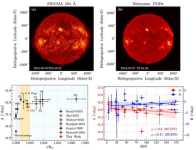
Using observations from the Nobeyama Radioheliograph in Japan, the team discovered that the Sun's atmosphere rotates faster than its visible surface, breaking the rules of classical physics.

The study also found that the rotation speed increases with height above the Sun's surface and decreases slightly when solar activity, indicated by the number of sunspots, becomes stronger. Conducted by Srinjana Routh and Vaibhav Pant (now at IIT Delhi) from ARIES, Anshu Kumari from USO-PRL, and Jaydeep Kandekar from Ahmednagar College, the research has been published in the journal Astronomy & Astrophysics Letters.

1785521333530.png
Fig: (Top) The Sun as seen from (left) space using the Solar Dynamic Observatory and (right) ground using Nobeyama Radioheliograph. (Bottom Left Panel) The increasing trend in the rotation rate of the equator of the Sun at different heights above the solar surface can be seen when compared to sunspots, which are usually observed at the solar surface. (Bottom Right Panel) Red coloured dotted line shows the possible slowing down of the rotation rate with increased number of sunspots.

Since the Sun is made mostly of gas and has no solid land, it is very difficult to say whether it rotates similar to how the Earth does. So, to find how the Solar atmosphere rotates, a method known as “2D image-correlation method” was used, where the solar image of two separate days was cropped to similar ranges and compared with each other to see how much one image has shifted with respect to the other. That shift was then used to calculate the rotational velocity.

Publication Link: https://www.aanda.org/articles/aa/abs/2025/08/aa55364-25

https://www.pib.gov.in/PressReleaseDetail.aspx?PRID=2291788&reg=3&lang=1
 
While proud Indians sell dhandho private sector 300 Kg launch capacity churan & resignation of Senior ISRO scientists as a great news of change to poor dumb masses, Chinese state-owned enterprise launch 186th starlink satellite of its own with 13,000 Satellite constellation target. As they say results talk, 🐂💩 walks.

 
While proud Indians sell dhandho private sector 300 Kg launch capacity churan & resignation of Senior ISRO scientists as a great news of change to poor dumb masses, Chinese state-owned enterprise launch 186th starlink satellite of its own with 13,000 Satellite constellation target. As they say results talk, 🐂💩 walks.

Do you expect us to doomscroll every time China achieves something? Achievement's are meant to be celebrated. Our biggest competition should be to our previous self and we are making good progress, of course China is currently ahead of us, they are trying to compete with USA, it would take us a few decades to match such competition but that doesn't mean we shouldn't celebrate our victories.
 
India's Indigenous GPS Gets Revival Push With 4 Planned NaVIC Satellite Launches

By Arun Dhital
Aug 06, 2026
Updated 12:28 PM GMT+5:30
1786270666085.png
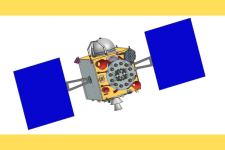
Rendering of the typical Indian Regional Navigation Satellite System (IRNSS) series one spacecraft for Navigation with Indian Constellation (NavIC) (Photo: Indian Space Research Organization (GODL-India))

The Centre is pushing to restore full functionality of NaVIC, the country's home-grown navigation network, with plans to send up four fresh satellites in the coming period, The Times of India reported.

Providing an update in the Lok Sabha on Wednesday (6 August), space minister Jitendra Singh laid out the sequence in a written reply. "NVS-03 is ready for launch after incorporation of all corrective measures arising from the NVS-02 anomaly. It will be followed by the launch of NVS-04 and NVS-05. One more satellite is planned thereafter to complete the seven-satellite NavIC base layer constellation," he said.

The minister stopped short of specifying when these missions would take place.

Referring to the setback with the NVS-02 replacement satellite in 2025, Singh explained that fixes had already been rolled out and validated. "Necessary corrective measures have been incorporated and successfully implemented and tested in CMS-03 satellite. The same will be followed in subsequent satellites, including the NavIC series of satellites carrying bi-propellant systems," he stated.

At present, navigation support is limited to just three spacecraft, namely IRNSS 1-B, IRNSS 1-L and NVS-01.

Effective operation of the system, however, demands a minimum of four satellites fitted with working atomic clocks. As a result, NaVIC has ceased to deliver independent positioning services.

The situation worsened in March this year when the final atomic clock aboard IRNSS-1F broke down, bringing the network to a standstill.

India's first-generation NavIC satellites went up between 2013 and 2018, but the fleet was soon plagued by repeated atomic clock failures across several IRNSS units.

The NVS line marks the second generation of these satellites. ISRO placed NVS-01 into its intended orbit in 2023, yet the failed NVS-02 launch in 2025 pushed back the timelines for NVS-03, NVS-04 and NVS-05.

India's Indigenous GPS Gets Revival Push With 4 Planned NaVIC Satellite Launches
 
We need to push for indigenous starlink alternative in urgency. China is already putting in place its own version, which Pakistan will have access to in case of conflict with us. This will allow them to fly kamikaze drones deeper in our territory through any gap in our air defences.

Russians learnt this the hard way in Ukraine. Earlier they were using Starlink for communications and guiding drones. Once the US switched it off for them, they are now launching their own version called “Rassvet”.

We focused more on space based surveillance after Operation Sindoor but we need to be proactive in this. The immense military applications of Starlink is clear.
 
Indian solar mission's new findings throw light on enduring Sun mysteries

Geeta Pandey
BBC Correspondent, Delhi

1786815389776.png
Scientists say the temperature variations in different regions of the Sun defy the laws of physics.

One of the most enduring mysteries that has been puzzling scientists forever is how the Sun's outer atmosphere - the corona - is millions of degrees hotter than its surface. And how does the corona continue to remain so hot despite frequent eruptions during which it loses huge amounts of energy?

Astrophysicists in India now say the latest findings from Aditya-L1, the country's first solar observation mission in space, have provided them some vital clues to unlocking those mysteries. Their findings are revealed in a recent paper published in the prestigious Astrophysical Journal Letters.

The temperature variations in different regions of the Sun defy the laws of physics, says leading Indian solar astrophysicist Prof R Ramesh of the Indian Institute of Astrophysics (IIA) who led the study.

If you cut through the Sun's layers, deep inside is the core where the temperature is 15 million Celsius. Travel outwards to the surface or the photosphere - the part that we see from the Earth - it's about 5,500C. Far away from the core is the Sun's outermost layer or corona where the temperature is about 2 million C - it can sometimes go up to 40 million C.

Prof Ramesh says the corona is where extreme weather events - such as solar flares and coronal mass ejections (CMEs) - originate, during which large amounts of energy is released by the Sun into space. The CMEs cause beautiful auroras, and they can also affect life on Earth by causing geomagnetic storms that can knock down power grids and affect weather and communication satellites.

In normal or low-activity times, the Sun launches two to three CMEs a day. During the maximum solar activity cycle that comes every 11 years, there can be 10 or more in a single day.

"Now if the Sun is losing such huge amounts of energy with each CME and it's not replenished, the star at the centre of our solar system would lose all its energy and Earth would plunge into an irreversible deep freeze," Prof Ramesh says.

But since that's not happening, it means there's a "mechanism" by which the corona is able to maintain its inexplicably high temperature, he says.

1786815350064.png
An illustration that shows the structure of the Sun - from the centre to the periphery are the core, the radiation and convection zones, the photosphere, the chromosphere and the corona.

Scientists put it down to two factors - one, the bubbling boiling motions on the Sun's surface that constantly generate waves which, as they travel outwards, carry energy to the corona - a bit like sea waves carrying foam and froth to the shore.

The second is the "tangled magnetic field lines" in the Sun's atmosphere that constantly snap and then reconnect. Prof Ramesh says a CME occurs when these twisting, looping lines - which resemble braided hair - rupture, throwing out massive clouds of magnetised plasma and gas in space. They often originate near sunspots, which are darker, cooler spots on the Sun where magnetic fields are particularly strong.

"But then these lines reconnect and the Sun replenishes the lost energy back within hours," he adds.

In their paper, Prof Ramesh says they have been able to quantify how much energy each of the two systems supply to the corona – which explains both why it's so many times hotter to begin with and how it retains that temperature after consistently losing energy.

Their study, he says, clearly shows that it's the second system that supplies most of the energy.

"Though the waves generated as a result of the bubbling, boiling motions on the Sun's surface generate and transport energy, their contribution is very little - they supply only 7% of the energy requirement.
"The remaining 93% comes because the Sun reconfigures itself and replenishes the lost energy."
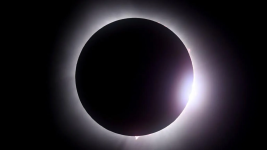
1786815302529.png
The Sun's corona is only visible with the naked eye from Earth during a total solar eclipse.

To arrive at that calculation, Prof Ramesh says they studied a "very energetic" CME that took place on 5 August 2024. Emissions were recorded by Aditya-L1's coronagraph called Velc (Visible Emission Line Coronagraph).

"We saw that in 10 hours after the CME, the tangled field lines were able to go back to their original place, they reconnected and corona's energy was reconfigured," he said.

"We do recognise that energy generated by bubbly motions plays a major role in it, but we have evidence that it is not sufficient. Our study shows that the magnetic field lines snapping and reconnecting everywhere on the Sun are the primary source for supplying most of the energy."

These data, Prof Ramesh says, "provide an important benchmark" for future studies into the potential energy generation mechanisms in the Sun's atmosphere.

"I think they would help answer the fundamental questions of physics that defy logic," he says.

Aditya-L1: Indian solar mission's new findings throw light on enduring Sun mysteries

 
  • Like
Reactions: Ironhide
The comments come as India's commercial launch ecosystem prepares for a significant expansion. Skyroot Aerospace is expected to carry out another orbital launch later this year before entering commercial operations, while the first commercial SSLV mission is scheduled for November. Agnikul is also targeting its first orbital mission over the coming months. Together, the three launch systems are expected to substantially increase India's launch capacity by the end of 2027.

"With the frequency of launches coming up by the end of 2027, the availability of launch slots will not be a problem," he said. "Then it comes down to the customer's confidence that these launches will be successful."

https://www.moneycontrol.com/news/b...st-cutting-costs-pawan-k-goenka-13997602.html

After a hiatus of nearly seven months, the Indian Space Research Organisation (ISRO) is finally ready to fly its next space mission. The space agency is preparing to launch its NVS-03 mission — part of India’s navigational satellite series NavIC — in the first week of September, senior officials from ISRO said.

Exclusive: ISRO is ready to launch its navigation satellite NVS-03 in September
 

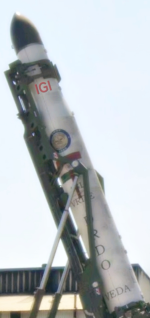
The VEDA is supposed to be a fully military-owned & military-operated satellite launch vehicle developed by DRDO (not ISRO or one of the many private space companies). The goal appears to be a rapid 'launch-on-demand' capability with these SLVs kept in sealed canisters (much like Agni-5) carried by all-terrain TELs, with pre-mated small satellite payloads of various types (ISR, PNT, ELINT etc). This is obviously in anticipation of possible hostile ASAT action that leads to existing large, long-term sats being destroyed/disabled.

1786863869513.png