LCA Tejas Mk1 & Mk1A - News and discussions

Incorrect.
It says MK1A delivery by September and MK2 rollout by March 2027
(Start from 21:00 of the conference call)
HAL's internal timeline for MK2 proto has always been March 27.
Previous HAL CMD said as much in that interview with Vishnu Som. People here gaslit themselves into believing March 2026 rollout by gymnastics over that FY26 thing.
Damn, delayed again eh? Did they mention why?
"Refinements" in MK1A.

As for MK2, even the previous CMD hinted March 2027 only.
 
  • Like
Reactions: Lolwa and Shan
HAL's internal timeline for MK2 proto has always been March 27.
Previous HAL CMD said as much in that interview with Vishnu Som. People here gaslit themselves into believing March 2026 rollout by gymnastics over that FY26 thing.

"Refinements" in MK1A.

As for MK2, even the previous CMD hinted March 2027 only.

Mk2 was supposed to be this year.

"2026 is going to be a very important year for us. LCA Mk-2 should take its first flight by June-July. That is going to be a significant milestone. We should also start our user trials for our light tanks," Kamat said.

Before this, HAL had claimed rollout in mid-2026, but first flight before March 2027.

Now new date.
 
And lol wut?

30 Mk1As and trainers have been built, but no engines. 🤣

If it's delayed anymore, then next year we will have upwards of 50 jets waiting for engines.
 

Commencement of deliveries of the Tejas Mark-1A (Mk1A) combat aircraft being built by Hindustan Aeronautics Limited (HAL) could be pushed beyond June, a defence source told Business Standard on condition of anonymity. The Indian Air Force (IAF), however, is willing to accept the aircraft with certain concessions, provided critical capabilities related to weapons firing, sensors, and electronic warfare are available at a level where the jet is combat-capable at the time of delivery, the source added.

“While the IAF is willing to accept the aircraft even if certain capabilities are not yet fully available, this may require a modification of the contract. That falls under the Ministry of Defence’s ambit,” the source said.

The source explained, for example, that if the aircraft possesses certain electronic warfare capabilities, but the required level of automation in that regard has yet to be achieved, the IAF would still be willing to accept deliveries, provided full functionality is assured in a timely manner down the line. “Pilots would manually perform such tasks in previous generations of aircraft, so that is something the IAF can work around for a certain amount of time,” the source added.

Previously, a separate defence source had explained that, in order to commence deliveries in March, HAL had sought certain relaxations in meeting the Air Staff Quality Requirements (ASQR) it had originally agreed to for the Mk1A jets. ASQRs are specific, documented standards, qualifications, and performance metrics that equipment must meet to fulfil operational requirements.


The programme review meeting between Hindustan Aeronautics Limited (HAL) and the Indian Air Force (IAF) on the delayed Tejas Mk-1A light combat aircraft has been pushed to June, with a firm date yet to be finalised, senior defence officials told TNIE.
The IAF, which had earlier shown flexibility on certain delivery-linked operational requirements to facilitate induction, is also learnt to be considering additional relaxations to expedite deliveries.

“Had there been tangible movement on the programme, the review meeting, which was originally scheduled for this month, would have taken place. The IAF has already shown flexibility and is willing to examine additional dilutions, wherever feasible, to accelerate deliveries, while ensuring that the core operational requirements are not compromised,” the official said.

It is learnt that newly appointed HAL Chairman and Managing Director Ravi Kota visited New Delhi earlier this month for discussions with the top IAF brass, during which the revised timeline for the review meeting was worked out.

Sources said that one of the key challenges has been the integration and synchronisation of the AESA radar with the aircraft’s electronic warfare suite and other onboard mission systems, which form part of the mandatory operational requirements for the Tejas Mk-1A configuration.

“The issue is essentially about ensuring that the radar, electronic warfare suite and weapons architecture are all communicating seamlessly through the mission computer network. Some of these integration parameters are still undergoing refinement and validation,” a source explained.

There are also certain performance benchmarks linked to radar range and optimisation that have required additional testing and software-level corrections before full operational clearance can be given,” the source added.

Apart from radar certification, the remaining mandatory operational benchmarks include completion of missile firing trials and full validation of the aircraft’s weapons package.

Sources said the Astra beyond-visual-range air-to-air missile (BVRAAM) integration effort also ran into difficulties during trials, necessitating further refinement and validation.
 

Awkward Kid GIF

HAL
 

Kota, however, informed the IAF that crucial integration work, including linking the Israeli radar with the weapon firing controls and the electronic warfare suite, was still incomplete.

Sources said the IAF would begin aircraft acceptance trials after HAL, at next month’s review meeting, confirmed that critical pending integration work had been completed. The trials typically take roughly a month.

So the work is nearing completion ?
 
  • Like
Reactions: Shan and ShiroBarks
I am not exactly sure what this means. So posting it here. This was posted today on HAL website.

Sub: Engineering, Procurement and Construction Turnkey Services (Consultancy Services & Execution of Works) for LCA Engine Test Bed (ETB) and Module Change Workshop at IAF Jorhat or any other IAF Base anywhere in India

Execution Period: 12 months

 
  • Like
Reactions: ShiroBarks
I am not exactly sure what this means. So posting it here. This was posted today on HAL website.

Sub: Engineering, Procurement and Construction Turnkey Services (Consultancy Services & Execution of Works) for LCA Engine Test Bed (ETB) and Module Change Workshop at IAF Jorhat or any other IAF Base anywhere in India

Execution Period: 12 months

Its depot-level maintenance infrastructure usually part of aircraft package contract.
 
And lol wut?

30 Mk1As and trainers have been built, but no engines. 🤣

If it's delayed anymore, then next year we will have upwards of 50 jets waiting for engines.
Rd-33 series 3 needs to be put in Tejas. Ge-404 needs to be put in the trash. The Americans are useless.
It is ironic(hilarious TBF) that Tejas mk1a is experiencing the same issue as the Arjun Mk1a. Embarrassing for a force that pretends to be highly professional. This is a failure of the IAF and its leadership. No PSU is to be blamed for this clownshow.
 
  • Like
Reactions: PhotonVish

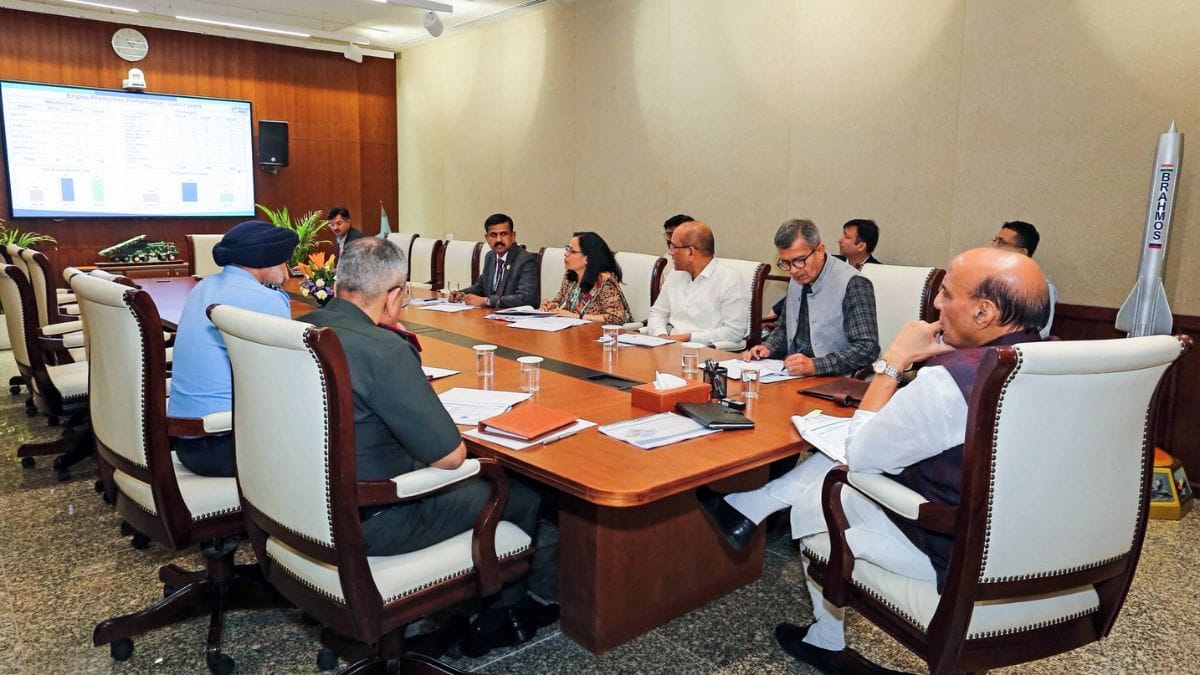
Sources further said that the CMD spoke about the progress being made in the project since he took over and felt that the major pending works will be completed over the next two months after which the delivery would start.

They added that the defence minister was of the view that HAL should sit down with the IAF and come up with a reasonable timeline, and that it should not overpromise and under-deliver.

“You should stick to your commitment,” Rajnath was quoted as telling the HAL CMD.

Sources said that based on the presentation, the Defence Ministry is of the view that the deliveries could start in October, notwithstanding the timeline given by HAL. Incidentally, October-end is when the current chief superannuates.

The government has been upset with the HAL and its former CMD D K Sunil for giving a new timeline for finishing work as the previous one comes to end.

“HAL cannot just simply overpromise when it comes to timeline and then extend it,” a source said.

To ensure faster induction, IAF has agreed to grant multiple concessions to HAL but has also drawn clear red lines on what it would and would not accept before inducting the fighter aircraft.

Those red lines relate directly to the aircraft’s combat capability, particularly its missile firing functionality, radar integration and the performance of its Electronic Warfare (EW) systems.

Sources said that while the IAF can start inducting the Tejas with certain kinds of weapon firing capabilities, it cannot operate a radar with non-integrated radar and electronic warfare system.

There are four items, the sources further said, for which the IAF has said it is unwilling to compromise. Some of these pending works, added sources, might be completed just a year from now.

The fresh concessions are an expanded version of the exemptions decided between the IAF and the defence ministry earlier in February.

The pending deficiencies were categorised as ‘minor’, ‘major’, and ‘not acceptable’.

Sources said the IAF was now willing to accept some deficiencies categorised earlier as ‘major’.