Rafale DH/EH of Indian Air Force : News and Discussions

You guys are Always reaching a highly exaggerated (UNCOMFIRMED)conclusion using lots of self serving assumptions with partial truths & lies.


In F35, while 1553B is used, all numbers aren't public, different blocks use different stuff, also not public. You can't make any credible conclusions as to which system has higher bandwidth.


also 35 and 57 were built around sensor fusion since day one, rafale had to switch from legacy.


Though, continue i guess.
 
  • Like
Reactions: Rajput Lion
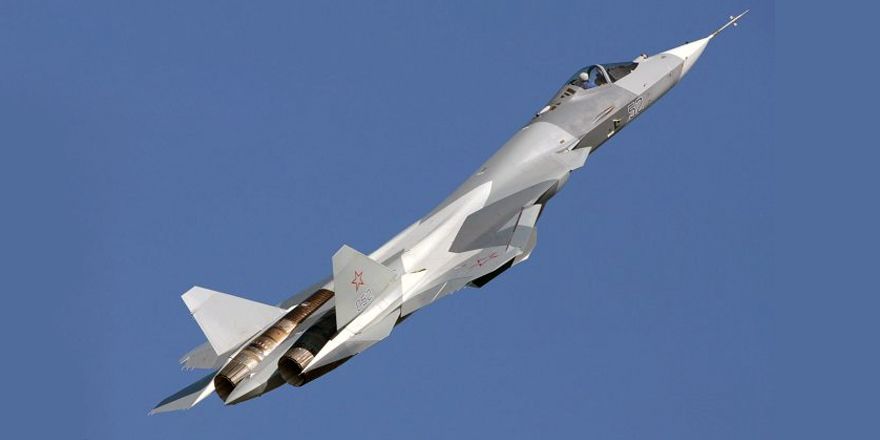
The Russians are playing catch up with the West, and have caught up with optical sensors.

But you're talking about FSO whereas I'm talking about the new EODAS on the Su-57M1.

The Rafale's TV channel was made to meet NATO RoE which require physical identification of the target before being attacked. It's not going to be as relevant during a war.

Rafale F4.2 and Su-57 now have QWIP IRST, while Typhoon, Gripen E, and KF-21 have older MCT. LCA Mk2 will have QWIP too.
Did you know that the F5 is expected to be equipped with an optical system known as the “silent killer” because it will allow the aircraft to engage enemies within the Meteor's range, and that this is one of the reasons we're reluctant to pursue ToT, we don't want the Russians to get their hands on it?
 
The Rafale's TV channel was made to meet NATO RoE which require physical identification of the target before being attacked. It's not going to be as relevant during a war.

That's got nothing to do with the tech itself.

Russia is critically dependent on COTS components like microbolometers used in EO/IR systems. They are currently in the middle of a major import substitution drive while continuing to smuggle Western components via third countries. I'll leave it at that.
 
Virupaksha does not come with an advanced TRM design though. Diamond will have given it a size and power density advantage but the design of the TRM itself is independent from the substrate. There's too much of a qualitative difference between element level and subarray level, making Virupaksha a pretty standard digital radar with a regular TRM design.
Even with regular TRM design(which it isn't 'cause it is using cutting-edge Vivaldi TSA design), Virupaksha would far surpass RBE2-XG because of sheer brute force of its massive array size. Plus thanks to bigger dish, its gain and SNR would also be far superior to RBE2-XG. If RBE2-XG can detect/track a 1m2 target from 300kms, Virupaksha would do the same from 600kms.

Diamond has insane thermal efficiency when compared to Silicon Carbide, i.e. almost 5 times more. So an advance TRM design with Diamond as subtrack can work at far more higher power for far more longer enabling even small AESA radars like RBE2-XG(with around 1000 TRM count), to deliver insane power without worrying too much about cooling(due to limited space inside small airframe) and then that radar could match or even exceed something like Virupaksha.

Seems like all our future jets like LCA MK2, MKI UPG., AMCA etc. will have far superior radar than even Rafale F5.
It appears diamond requires a lot more electrical power, which current lot of 4th and 5th gen jets cannot provide. And needs greater bulk orders for economies of scale to work out.
Imagine J-36 with a monster 5000 GaN-on-Diamond TRMs AESA Radar, backed by huge electrical power generated by its three engines and the jet carrying 6-10 PL-17s or 10-15 SFDR PL-21s? It's one scary proposition for us.
 
Did you know that the F5 is expected to be equipped with an optical system known as the “silent killer” because it will allow the aircraft to engage enemies within the Meteor's range, and that this is one of the reasons we're reluctant to pursue ToT, we don't want the Russians to get their hands on it?
So Rafale F5 is finally switching to LWIR based IRST sensor to hunt stealth jets from 200kms away in a head-to-head fight? Nice👍
 
also 35 and 57 were built around sensor fusion since day one, rafale had to switch from legacy.
That's nonsense; there's no way to integrate different sensors into the Rafale's human-machine interface, which hasn't changed since the beginning. This interface only works with a data fusion system that was already present in the first Rafale aircraft produced by Dassault.

Rafale – the Multi-Sensor Data Fusion (MSDF) system.

In summary​

The Rafale is one of the first European fighter jets to incorporate advanced multi-sensor data fusion (MSDF). At its heart, the Modular Data Processing Unit (MDPU) combines information from the RBE2 AESA radar, electro-optical sensors, SPECTRA electronic warfare system, radar emission detection sensors, and tactical data links in real time. The goal is to provide the pilot with a clear, unified tactical picture, eliminating the need to manage each sensor individually. This reduces cognitive load, increases combat responsiveness, and allows the Rafale to perform air-to-air and air-to-ground missions simultaneously. This capability shifts the pilot from the role of “sensor operator” to that of tactical decision-maker, thereby enhancing the aircraft’s operational effectiveness and survivability in contested environments.

The central role of the Modular Data Processing Unit (MDPU)​

The MDPU is a modular open-architecture computer developed by Thales and Dassault Aviation. It combines several hundred processing modules and manages over a billion instructions per second. Its mission is to continuously collect heterogeneous data streams from onboard sensors:
– the RBE2 AESA radar operating in the X band for air-to-air and air-to-ground detection and tracking;
– the OSF (Optronique Secteur Frontal) system for passive infrared detection and reconnaissance;
– the SPECTRA electronic warfare system (radar warning receiver, jamming, decoy);
– IFF receivers and information from tactical data links (Link 16, L16-F, Rafale-Rafale network);
– internal sensors (inertial navigation systems, GPS) for geolocation and correlation.

Instead of transmitting these raw data streams to the pilot, the MDPU applies correlation, filtering, and prioritization algorithms. It produces a single tactical display shown on the cockpit’s multifunction screens, which lightens the pilot’s workload and reduces interpretation errors in complex scenarios.

The logic and benefits of multi-sensor fusion​

Multi-sensor data fusion (MSDF) involves combining observations from active and passive sensors to build a unified and consistent representation of the air situation and battlefield.

On the Rafale, MSDF operates in three layers:

  1. Low-level fusion: correction of measurement inconsistencies between sensors (speed, distance, azimuth).
  2. Intermediate fusion: correlation of air or naval tracks detected by different sensors, elimination of duplicates.
  3. Decision-making fusion: prioritization of threats and allocation of weapon resources.
This approach transforms a set of disparate “points” into a coherent tactical image, showing the nature and position of priority threats.
It offers a significant advantage in an environment saturated with electromagnetic emissions and low-signature targets. For example, a long-range stealth aircraft may be only imperfectly detected by RBE2 radar but spotted by SPECTRA via its radar emissions or infrared signature; fusion combines these clues to track it earlier and more reliably.

The direct impact for fighter pilots​

Before the era of multi-sensor fusion, a pilot had to monitor the radar, RWR (radar warning receiver), IRST, and data links separately, interpret contradictions, and make quick decisions.
This high cognitive load limited the ability to perform combined air-to-air and air-to-ground missions in a single flight.

Thanks to the Rafale’s MSDF, the pilot becomes a tactical decision-maker. The system presents a single synthetic display showing threats ranked by danger, ammunition status, and likely firing zones of enemy defenses. This reduces reaction time by several seconds, which is crucial in aerial combat where a BVR missile can travel 20 km in a matter of seconds.

This simplification of the interface also improves resilience in stressful situations. In a interdiction scenario, the pilot can simultaneously monitor air threats and plan a ground attack without switching from one sensor mode to another. The aircraft acts as a digital co-pilot that filters and prioritizes information.

Support for multi-role missions​

The versatility of the Rafale is based on this fusion of data. The aircraft is capable, during a single mission, of intercepting air targets while guiding precision strikes on the ground.
Without MSDF, the pilot would have to divide his attention between the radar for air combat and other sensors for air-to-ground guidance, which would be unrealistic in a contested environment.

The MDPU coordinates the use of the radar in air-to-air and air-to-ground modes, while integrating target designation data from drones or other aircraft via the Link 16 network. It continuously calculates firing solutions, anticipates ground-to-air threats detected by SPECTRA, and adjusts the display to avoid conflicts.

This means that a Rafale in multi-role configuration can prioritize dealing with an approaching hostile missile while maintaining readiness for an air-to-ground strike, without having to manually reconfigure the sensors. This provides a decisive advantage in high-intensity operations, where time and mental load are limited.

Technical aspects and capacity development​

The MDPU was designed from the Rafale’s F2 standard but came into its own with the F3R standard and will be further enhanced with the F4.
– The RBE2 AESA radar introduced in the F3R offers better multi-target detection and increased resistance to jamming.
– The SPECTRA system provides a complete overview of hostile emissions and coordinates active responses (jamming, decoys).
– The MDPU’s software openness facilitates the integration of new weapons (Meteor, AASM) and sensors (Talios pods, RECO NG pods).

Computing power has increased by approximately 40% between the F3R and F4, enabling more complex correlation and artificial intelligence algorithms. The Rafale F4 will also be able to exploit data from AWACS aircraft or reconnaissance drones via secure links, thus integrating off-platform sensors into the fusion.

These improvements enhance the consistency of collaborative missions and pave the way for the future Air Combat System of the Future (SCAF), in which the Rafale will operate alongside support drones.

Tactical and operational benefits​

Multi-sensor data fusion offers three major benefits:

  1. Information superiority: the combination of active and passive sensors increases the range and reliability of detection.
  2. Reduced cognitive load: the pilot can focus on tactics and mission command.
  3. Increased versatility: the Rafale can change roles in mid-flight, responding to unexpected air threats without abandoning its primary mission.
These benefits translate directly into higher mission success rates and increased aircraft survivability.
They explain why data fusion has become a central criterion in the modernization of other fleets, such as the American F-35 or the future South Korean KF-21.

Future prospects and limitations​

The Rafale’s data fusion demonstrates the advantage of an architecture focused on processing rather than on individual sensors. However, certain limitations remain:
– dependence on the quality of data links;
– the risk of computer overload in a saturated electromagnetic environment;
– the need to keep threat libraries and algorithms up to date.

In the future, the introduction of machine learning algorithms could further automate the identification of new radar or infrared signatures and increase the ability to quickly recognize emerging threats.
This development is part of the global trend in next-generation fighter programs, where the human role will be gradually assisted, or even partially replaced, by decision support systems.

The Rafale, thanks to its multi-sensor data fusion, already illustrates this transition: the pilot is no longer a simple screen manager, but a mission commander with a global view, a decisive asset in modern air warfare.

 
That's nonsense; there's no way to integrate different sensors into the Rafale's human-machine interface, which hasn't changed since the beginning. This interface only works with a data fusion system that was already present in the first Rafale aircraft produced by Dassault.

Rafale – the Multi-Sensor Data Fusion (MSDF) system.

In summary​

The Rafale is one of the first European fighter jets to incorporate advanced multi-sensor data fusion (MSDF). At its heart, the Modular Data Processing Unit (MDPU) combines information from the RBE2 AESA radar, electro-optical sensors, SPECTRA electronic warfare system, radar emission detection sensors, and tactical data links in real time. The goal is to provide the pilot with a clear, unified tactical picture, eliminating the need to manage each sensor individually. This reduces cognitive load, increases combat responsiveness, and allows the Rafale to perform air-to-air and air-to-ground missions simultaneously. This capability shifts the pilot from the role of “sensor operator” to that of tactical decision-maker, thereby enhancing the aircraft’s operational effectiveness and survivability in contested environments.

The central role of the Modular Data Processing Unit (MDPU)​

The MDPU is a modular open-architecture computer developed by Thales and Dassault Aviation. It combines several hundred processing modules and manages over a billion instructions per second. Its mission is to continuously collect heterogeneous data streams from onboard sensors:
– the RBE2 AESA radar operating in the X band for air-to-air and air-to-ground detection and tracking;
– the OSF (Optronique Secteur Frontal) system for passive infrared detection and reconnaissance;
– the SPECTRA electronic warfare system (radar warning receiver, jamming, decoy);
– IFF receivers and information from tactical data links (Link 16, L16-F, Rafale-Rafale network);
– internal sensors (inertial navigation systems, GPS) for geolocation and correlation.

Instead of transmitting these raw data streams to the pilot, the MDPU applies correlation, filtering, and prioritization algorithms. It produces a single tactical display shown on the cockpit’s multifunction screens, which lightens the pilot’s workload and reduces interpretation errors in complex scenarios.

The logic and benefits of multi-sensor fusion​

Multi-sensor data fusion (MSDF) involves combining observations from active and passive sensors to build a unified and consistent representation of the air situation and battlefield.

On the Rafale, MSDF operates in three layers:

  1. Low-level fusion: correction of measurement inconsistencies between sensors (speed, distance, azimuth).
  2. Intermediate fusion: correlation of air or naval tracks detected by different sensors, elimination of duplicates.
  3. Decision-making fusion: prioritization of threats and allocation of weapon resources.
This approach transforms a set of disparate “points” into a coherent tactical image, showing the nature and position of priority threats.
It offers a significant advantage in an environment saturated with electromagnetic emissions and low-signature targets. For example, a long-range stealth aircraft may be only imperfectly detected by RBE2 radar but spotted by SPECTRA via its radar emissions or infrared signature; fusion combines these clues to track it earlier and more reliably.

The direct impact for fighter pilots​

Before the era of multi-sensor fusion, a pilot had to monitor the radar, RWR (radar warning receiver), IRST, and data links separately, interpret contradictions, and make quick decisions.
This high cognitive load limited the ability to perform combined air-to-air and air-to-ground missions in a single flight.

Thanks to the Rafale’s MSDF, the pilot becomes a tactical decision-maker. The system presents a single synthetic display showing threats ranked by danger, ammunition status, and likely firing zones of enemy defenses. This reduces reaction time by several seconds, which is crucial in aerial combat where a BVR missile can travel 20 km in a matter of seconds.

This simplification of the interface also improves resilience in stressful situations. In a interdiction scenario, the pilot can simultaneously monitor air threats and plan a ground attack without switching from one sensor mode to another. The aircraft acts as a digital co-pilot that filters and prioritizes information.

Support for multi-role missions​

The versatility of the Rafale is based on this fusion of data. The aircraft is capable, during a single mission, of intercepting air targets while guiding precision strikes on the ground.
Without MSDF, the pilot would have to divide his attention between the radar for air combat and other sensors for air-to-ground guidance, which would be unrealistic in a contested environment.

The MDPU coordinates the use of the radar in air-to-air and air-to-ground modes, while integrating target designation data from drones or other aircraft via the Link 16 network. It continuously calculates firing solutions, anticipates ground-to-air threats detected by SPECTRA, and adjusts the display to avoid conflicts.

This means that a Rafale in multi-role configuration can prioritize dealing with an approaching hostile missile while maintaining readiness for an air-to-ground strike, without having to manually reconfigure the sensors. This provides a decisive advantage in high-intensity operations, where time and mental load are limited.

Technical aspects and capacity development​

The MDPU was designed from the Rafale’s F2 standard but came into its own with the F3R standard and will be further enhanced with the F4.
– The RBE2 AESA radar introduced in the F3R offers better multi-target detection and increased resistance to jamming.
– The SPECTRA system provides a complete overview of hostile emissions and coordinates active responses (jamming, decoys).
– The MDPU’s software openness facilitates the integration of new weapons (Meteor, AASM) and sensors (Talios pods, RECO NG pods).

Computing power has increased by approximately 40% between the F3R and F4, enabling more complex correlation and artificial intelligence algorithms. The Rafale F4 will also be able to exploit data from AWACS aircraft or reconnaissance drones via secure links, thus integrating off-platform sensors into the fusion.

These improvements enhance the consistency of collaborative missions and pave the way for the future Air Combat System of the Future (SCAF), in which the Rafale will operate alongside support drones.

Tactical and operational benefits​

Multi-sensor data fusion offers three major benefits:

  1. Information superiority: the combination of active and passive sensors increases the range and reliability of detection.
  2. Reduced cognitive load: the pilot can focus on tactics and mission command.
  3. Increased versatility: the Rafale can change roles in mid-flight, responding to unexpected air threats without abandoning its primary mission.
These benefits translate directly into higher mission success rates and increased aircraft survivability.
They explain why data fusion has become a central criterion in the modernization of other fleets, such as the American F-35 or the future South Korean KF-21.

Future prospects and limitations​

The Rafale’s data fusion demonstrates the advantage of an architecture focused on processing rather than on individual sensors. However, certain limitations remain:
– dependence on the quality of data links;
– the risk of computer overload in a saturated electromagnetic environment;
– the need to keep threat libraries and algorithms up to date.

In the future, the introduction of machine learning algorithms could further automate the identification of new radar or infrared signatures and increase the ability to quickly recognize emerging threats.
This development is part of the global trend in next-generation fighter programs, where the human role will be gradually assisted, or even partially replaced, by decision support systems.

The Rafale, thanks to its multi-sensor data fusion, already illustrates this transition: the pilot is no longer a simple screen manager, but a mission commander with a global view, a decisive asset in modern air warfare.
😮‍💨.

The Modular Data Processing Unit (MDPU) was first integrated into the Rafale aircraft starting with the F2 standard.

The Rafale F2 standard entered operational service with the French Armed Forces in June 2006.


The Rafale F1 standard entered service with the French Navy on May 18, 2001.


The RBE2 AESA (Active Electronically Scanned Array) radar officially entered frontline operational service with the French Air Force in mid-2013.

As for the human machine interface, it literally evolved with newer standards, MBDA literally advertises the *new* human machine interface.

The F3-R Rafale is now capable of using the TALIOS high-resolution laser designation pod, which can generate images in both the visible and infrared ranges, and will benefit from largely improved capacities that will enable it to perform intelligence and target acquisition, and tracking and designation missions. In particular, the Rafale will feature new and more efficient fixed or moving target tracking capacities, as well as an automatic moving target detection capacity and a new human-machine interface that will make it easier to use.
 
You guys are Always reaching a highly exaggerated (UNCOMFIRMED)conclusion using lots of self serving assumptions with partial truths & lies.


In F35, while 1553B is used, all numbers aren't public, different blocks use different stuff, also not public. You can't make any credible conclusions as to which system has higher bandwidth.


also 35 and 57 were built around sensor fusion since day one, rafale had to switch from legacy.


Though, continue i guess.

Stop with the drivel, this is all public information.

Only the Russians and Chinese, specific to their own use, use different standards or derivations of NATO standards, while using NATO standards for export. But even this they make it public to a large degree.

The Chinese also use 1553B derived standard like the Su-57. So this is also a little over 1 Mbps, which they claim is faster than what's on the F-22. There are also other NATO standards like High-Speed 1553 and Hyper 1553 that offer higher speeds, which is likely what the Su-57 and J-20 use. And of course, a proprietary fiber line for mission systems, which is also naturally upgradeable.

But yes, while the fiber is upgradeable, this takes a long time. They stick to the same standard after introduction to ensure compatibility with new technologies developed by the wider industry. New standards are established as and when new blocks are made, but the F-35 is still in its first set of blocks, which will end with Block 4 or 5. Similarly, Rafale F1 to F4 have been on the same standard, with the exception of F3 getting an alternate fiber channel for avionics, while F5 gets the new upgrade. So this is done over decades.

The F-35 uses 1-2 Gbps for now, and even this should be upgradeable up to 8 or 10 Gbps before a new standard is established. In fact the exact speeds are 1.0625 Gpbs and 2.125 Gbps with a latency of 5.47 us. The follow-on upgrades are 4.25 Gbps, 8.5 Gbps, and 10.3125 Gbps. Yeah, it's that level of public.

The F-35 is using the same fiber standards we see on Apache, F-15E/X etc. And we will see the same standards on other NATO aircraft. It's likely the Russians are using the same standards for compatibility. The Chinese are unknown, but it's quite unlikely they will create new standards rather than use proven ones.

You talk way too much without knowing anything.
 
Did you know that the F5 is expected to be equipped with an optical system known as the “silent killer” because it will allow the aircraft to engage enemies within the Meteor's range, and that this is one of the reasons we're reluctant to pursue ToT, we don't want the Russians to get their hands on it?

I don't think even India's expecting ToT for parts that have long lives. From MRO perspective, the camera will last a long time, but TRMs will need to be made in India due to their high failure rates. We see that happening with the 36-jet order, so that should repeat with GaN too. But the camera's ToT won't be necessary to operate the aircraft.

The Russians have the same tech anyway. They currently have AlGaAs on OLS-50M, the same as Rafale F4.2, and an AlGaN upgrade is likely the next one for future variants. The OLS-50M should provide hundreds of kms against non-stealth targets and is said to manage 80 km against airframe friction on stealth targets. It's unclear if GaN will increase range, but if we include engine heat, with GaAs alone we could get Meteor range, ie, 150 km.
 
That's got nothing to do with the tech itself.

Russia is critically dependent on COTS components like microbolometers used in EO/IR systems. They are currently in the middle of a major import substitution drive while continuing to smuggle Western components via third countries. I'll leave it at that.

You are behind the times. The Su-57 uses domestic AlGaAs-based QWIP. The T-90M Proryv-3 uses MCT-based Irbis-K as GTI and Agat-MDT as CTI. And they have already established a large industry for uncooled microbolometers. Meaning, they have both domestic industry and are importing microbolometers. But this has to do with scale of the production required for the war effort, 'cause drones and missiles need uncooled imagers.

They seem to be using higher quality Russian microbolometers for long term weapons while dumping cheap Chinese ones on Ukraine.
 
Even with regular TRM design(which it isn't 'cause it is using cutting-edge Vivaldi TSA design), Virupaksha would far surpass RBE2-XG because of sheer brute force of its massive array size. Plus thanks to bigger dish, its gain and SNR would also be far superior to RBE2-XG. If RBE2-XG can detect/track a 1m2 target from 300kms, Virupaksha would do the same from 600kms.

Diamond has insane thermal efficiency when compared to Silicon Carbide, i.e. almost 5 times more. So an advance TRM design with Diamond as subtrack can work at far more higher power for far more longer enabling even small AESA radars like RBE2-XG(with around 1000 TRM count), to deliver insane power without worrying too much about cooling(due to limited space inside small airframe) and then that radar could match or even exceed something like Virupaksha.

That has to do with size of the array. Double range, definitely, even with diamond. But the range is far more degradeable compared to RBE2-XG. Essentially, the quality of the image will be better and will not be easily degraded on Rafale. Increasing range is possible via techniques and algorithms, so it's not as important beyond a certain point due to network effects.

Seems like all our future jets like LCA MK2, MKI UPG., AMCA etc. will have far superior radar than even Rafale F5.

Er, no. Only Virupaksha benefits due to larger size. The rest will have smaller radars. Element-level design means the RBE2 XG will still maintain lead 'cause it can track more targets at long range.

AMCA may come with a more advanced radar though. But Uttam and Virupaksha have less advanced processing than RBE2 XG. Our current radars comfortably surpass RBE2 AESA, but not XG.

Imagine J-36 with a monster 5000 GaN-on-Diamond TRMs AESA Radar, backed by huge electrical power generated by its three engines and the jet carrying 6-10 PL-17s or 10-15 SFDR PL-21s? It's one scary proposition for us.

Yeah, it's gonna be a problem.
 
  • Agree
Reactions: Rajput Lion
Lmao, I would say the same to you.

No, its not

Yeah, sure, 6th gen does need FBL and published figures from the military are fake too. And let's not forget your big claim that Su-57 IOC and FOC jets are entirely different too.

All backed up by the ridiculousness of that completely ignorant reply you made to Picdel's post.
 
  • Haha
Reactions: Rajput Lion
And let's not forget your big claim that Su-57 IOC and FOC jets are entirely different too.
Ioc & foc?
I talked about early prototypes not being su57.


All backed up by the ridiculousness of that completely ignorant reply you made to Picdel's post.
Lmao, Says a guy that spreads bullshit and never backs up his claim
Yeah, sure, 6th gen does need FBL and published figures from the military are fake too
Lmao, which figures?

Where official u.s military gives official figures of data transmission rates in their f35?


Even in that su57 debate, where I said to not reply unless you can back up your claims by a credible sources.

The sources you used are a random twitter account, lmao.

So credible lmao, and its not even related to my claim of early t-50 *prototypes* not being full-on prototypes.


And you had the audacity & shamelessness to reply too.


Though again, same in this case, unless you can provide *OFFICIAL* U.S. Military data figures about data transmission rates in databuses of F35, kindly don't bother to reply.
I don't wanna waste more of my time arguing with a professional bullshitter.
 
  • Haha
Reactions: Rajput Lion
Ioc & foc?
I talked about early prototypes not being su57.

Lol.

Lmao, Says a guy that spreads bullshit and never backs up his claim

Lmao, which figures?

Where official u.s military gives official figures of data transmission rates in their f35?

Already posted all 4 numbers. Google them on your own.

Even in that su57 debate, where I said to not reply unless you can back up your claims by a credible sources.

The sources you used are a random twitter account, lmao.

So credible lmao.


And had the audacity & shamelessness to reply too.


Though again, same in this case, unless you can provide *OFFICIAL* U.S. Military data figures about data transmission rates in databuses of F35, kindly don't bother to reply.
I don't wanna waste more of my time arguing with a professional bullshitter.

Ah, we have another spoonfed genius here. I posted the Twitter link so it's easy for you to do your own research.

But looks like baby needs feeding. Here goes.

I hope you can use the translator on your own.

According to a Sukhoi press release for the MAKS-2017 air show, "the first stage of state testing is nearing completion... Stability and controllability indicators at subsonic and supersonic speeds at high and low altitudes, as well as at supercritical angles of attack, have been confirmed." The first stage of state testing is quite advanced in flight testing. But only completion of the second stage, which tests the flight control and weapons systems, will allow the aircraft to be officially accepted into service with the Russian Aerospace Forces.

Stage 1 for flight testing, Stage 2 for avionics and weapons. That's IOC and FOC.

The thing is your ignorance is cemented by the fact that you do not know what's considered the most basic information about this program.
 
Already posted all 4 numbers. Google them on your own.
So again, unable to post the *official* figures from U.S. military itself which you wrongly claim are *public* , and when asked to prove your claim you refused and try to pushed the responsibility onto me by using gaslighting words.


Well, another lie, busted.


Though continue with your bullshit & whataboutism with whatever stupid internet sources or random twitter acounts you can come up with, lmao.


Bye.
 
  • Haha
Reactions: Rajput Lion
but TRMs will need to be made in India due to their high failure rates. We see that happening with the 36-jet order, so that should repeat with GaN too.
Do you have a high failure rate for your TRMs? That surprises me: I was under the impression, based on Thales’ statements when they delivered the first AESA radars, that one of the advantages was that the antenna required no maintenance for ten years because even if a TRM failed, it wouldn’t affect performance, and such failures were rare enough that maintenance wouldn’t be necessary until after 10 years.
 
  • Like
Reactions: Rajput Lion
Do you have a high failure rate for your TRMs? That surprises me: I was under the impression, based on Thales’ statements when they delivered the first AESA radars, that one of the advantages was that the antenna required no maintenance for ten years because even if a TRM failed, it wouldn’t affect performance, and such failures were rare enough that maintenance wouldn’t be necessary until after 10 years.
the russian TRM experience on the mig 29k wasnt particularly good so we dont know. The Indian TRMs are fine the russians on the other hand is a mystery. They could honestly be a lot better now considering this was 10 years in the past adn this was by mig(basically extinct now) and not sukhoi.
 
So again, unable to post the *official* figures from U.S. military itself which you wrongly claim are *public* , and when asked to prove your claim you refused and try to pushed the responsibility onto me by using gaslighting words.


Well, another lie, busted.


Though continue with your bullshit & whataboutism with whatever stupid internet sources or random twitter acounts you can come up with, lmao.


Bye.

Yeah, bye, and stop commenting on my posts.
 
  • Haha
Reactions: Rajput Lion