Saras and NAL Projects : Updates & Discussions

India inches closer towards manufacturing of indigenous Saras MK-II aircraft

The design and development of the 19-seater civilian aircraft is almost complete and once fully developed it will comprise pressurised cabin, digital avionics, glass cockpit, autopilot, command-by-wire flight controls.

 
India inches closer towards manufacturing of indigenous Saras MK-II aircraft

The design and development of the 19-seater civilian aircraft is almost complete and once fully developed it will comprise pressurised cabin, digital avionics, glass cockpit, autopilot, command-by-wire flight controls.

How is the d&d complete without a flying prototype?
 
How is the d&d complete without a flying prototype?
“The design has been freezed. Now we are focusing on the manufacturing as well as tying up with the partners in terms of manufacturing, assembly and integration,” Mohan Naik C, Chief Scientist at CSIR-NAL

It is 5 years away from maturity. I hope they partner with TASL like private entity, for any future of this project.
 
Foreign involvement in the NAL Saras Mk2


High AoA stability, Ground Effect, Single Engine Control, significant modifications of Saras Mk1: TsAGI Russia

Wind tunnel testing of Saras Mk2: Calapan Corp, USA

Cabin Design of Saras Mk2: GDC Engineering, UK

Wind tunnel testing and data generation of Saras Mk2: TsAGI, Russia

Further wind tunnel testing and data generation for Saras Mk2: ONERA, France

Nacelle design of tractor config Saras Mk2: The Nacelle Group, Northern Ireland

Seating system of Saras Mk2: Expliseat, France

Propeller for Saras Mk2: Hartzell, USA

Configuration studies for Saras Mk2: DAR Corporation, USA

Miscellaneous consultancy for Saras Mk2: Dassault Systems India Pvt. Ltd, Gurgaon

Lithium Iron Phosphate battery for Saras Mk2: Mid-Continent Instument, Kansas, USA

Windshield transparency consultancy for Saras Mk2: PPG Industries, Dubai

Hydraulic system, Flight controls, Fuel system, Electrical system, Fire protection system, other LRUs of Saras Mk2: Collins Aerospace

Design for certification of Saras Mk2: Safran Electronics and Defence, France

Landing gear system, and hydraulic LRUs: APPH Limited, UK

Engine mount isolater: Hutchinson Aerospace, USA

Brake manifold, braking system, aircraft systems related: Moog, USA and UK

Design and manufacturing of Pilot/Copilot seats: IPECO Holdings, UK

Further windshield transparency work: MECAPLEX, Switzerland

Testing of corrosion prevention primer: Hexigone Inhibitors, UK

Optimization of configuration studies: Professor Leonardo Manfriani, Switzerland

Deicing system: Goodrich Aerospace, Ohio, USA

Yoke: Crouzet, France

In the middle of writing I have forgotten to put Saras Mk2 after each of these listings... these are all for Saras Mk2.

This is what happens when you have a 1000 persons strong lab trying to be NASA, Embraer, and GE all together while having 1/250th of the budget


Next:
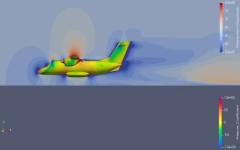
1785435048494.png

Above is the Sectional Velocity and Surface Cp Distribution with Flaps 15°

Aircraft 2.5m above Ground

NAL Saras Mk2

Ground effect studies show that the plane is safe for very low altitude operations, assisted by TsAGI Russia.

This was an issue that the Mk1 had issues with, when it would go into ground effect, the plane would balloon up, causing issues to handling during landing for the pilot.

It was fixed by TsAGI for both Mk1's 2018 prototype and Mk2's design...

Myasischev Design Bureau's chief designer Dr Alexander Bruk, his deputy Dr Alexander Arkhipov, Chief Specialist on Flight Dynamics Dr Eduard Abramenko, Engineer Designer on Control System Dr Vladimir Vinogadov and Dr Victor Frolovskiy from the Department of Design had come to NAL in 2010 for initiation of assistance in Saras program

 
True, at least NAL has its trisonic tunnel, but it would be too small to get a good Reynold's number reading for this size of plane.

We don't have many other testing facilities too... FTB being one of them
At least, some of the critical testing facilities are being developed right now apart from the flying test bed.
Foreign involvement in the NAL Saras Mk2


High AoA stability, Ground Effect, Single Engine Control, significant modifications of Saras Mk1: TsAGI Russia

Wind tunnel testing of Saras Mk2: Calapan Corp, USA

Cabin Design of Saras Mk2: GDC Engineering, UK

Wind tunnel testing and data generation of Saras Mk2: TsAGI, Russia

Further wind tunnel testing and data generation for Saras Mk2: ONERA, France

Nacelle design of tractor config Saras Mk2: The Nacelle Group, Northern Ireland

Seating system of Saras Mk2: Expliseat, France

Propeller for Saras Mk2: Hartzell, USA

Configuration studies for Saras Mk2: DAR Corporation, USA

Miscellaneous consultancy for Saras Mk2: Dassault Systems India Pvt. Ltd, Gurgaon

Lithium Iron Phosphate battery for Saras Mk2: Mid-Continent Instument, Kansas, USA

Windshield transparency consultancy for Saras Mk2: PPG Industries, Dubai

Hydraulic system, Flight controls, Fuel system, Electrical system, Fire protection system, other LRUs of Saras Mk2: Collins Aerospace

Design for certification of Saras Mk2: Safran Electronics and Defence, France

Landing gear system, and hydraulic LRUs: APPH Limited, UK

Engine mount isolater: Hutchinson Aerospace, USA

Brake manifold, braking system, aircraft systems related: Moog, USA and UK

Design and manufacturing of Pilot/Copilot seats: IPECO Holdings, UK

Further windshield transparency work: MECAPLEX, Switzerland

Testing of corrosion prevention primer: Hexigone Inhibitors, UK

Optimization of configuration studies: Professor Leonardo Manfriani, Switzerland

Deicing system: Goodrich Aerospace, Ohio, USA

Yoke: Crouzet, France

In the middle of writing I have forgotten to put Saras Mk2 after each of these listings... these are all for Saras Mk2.

This is what happens when you have a 1000 persons strong lab trying to be NASA, Embraer, and GE all together while having 1/250th of the budget
Didn't realise we had this much dependency for these platforms, at least our fighter jet platforms don't seem to have this much dependency on foreign services, hope we can do the same for these civilian platforms one day since many of the testing facilities and research capability developed for military platforms should also be done for civilian platforms.
 
  • Like
Reactions: superuser726
At least, some of the critical testing facilities are being developed right now apart from the flying test bed.

Didn't realise we had this much dependency for these platforms, at least our fighter jet platforms don't seem to have this much dependency on foreign services, hope we can do the same for these civilian platforms one day since many of the testing facilities and research capability developed for military platforms should also be done for civilian platforms.

This vast list of dependencies and imports is because NAL simply does not have the capacity to develop said systems.

They are a small lab who needs to contract even aircraft designers on temporary basis just to expedite the development process. They contracted 157 designers for periods ranging from 1 to 5yrs for the Saras Mk2 program. The core team assigned to this that works full time at NAL is of like 40 people, hence any technology which NAL has not developed yet, will be outsourced. They probably can develop it, but not a viable technique especially when so much of it would need to be developed in a reasonable time.

You can see they have not had any consultants for the composite parts in the body, this is because NAL already has some of the best composite tech in India... Further proving my point that this isn't lazy importing but realistic development..

I see that many of these requirements could be handled by ADA or HAL, stuff like landing gear, hydraulic system, flight control system, nacelle design, windshield transparency, braking system... ADA and even HAL have developed some of these on their own.

For the fighter jets it's required that most critical systems must be our own, hence disregarding how long it might take, ADA makes it.

Perhaps in the future they will be working on increase the indigenous content percentage, because currently it's clear no attempt was made at that, they are working to get the prototype built asap.

This way of work will not be very feasible for the future RTA. Hence they have asked straight up for ₹12511 cr in their 2025 submitted report. Much of that will be for building the infra needed for development of critical systems.

Funding for the Saras was not like that, they only ₹600cr. And these guys actually have managed to get things done with just this much money.

For comparison the Brazilian CBA-123 Vector program which is of a similar size got ₹7000cr and they stopped after making one prototype.
 
Last edited:
1785487758586.png
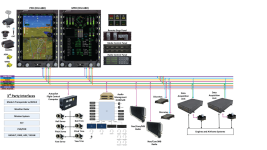
NAL Saras Mk2 avionics suite by Genesys

Interestingly, it shares the IDU-680 architecture with the HAL HTT-40 and HAL Do-228.

This is only the LHS part of the cockpit... PFD is of course also there on the other side of the cockpit for co-pilot.

But in both of those platforms, much of the sensors and computers have be indigenized by HAL, which is not the case here.

TACAN is not available in Saras Mk2 (it's there in the image because the HTT-40 does have the capability to have it integrated)
 
  • Like
Reactions: YoungWolf
NAL Saras Mk2 avionics suite by Genesys

Interestingly, it shares the IDU-680 architecture with the HAL HTT-40 and HAL Do-228.

This is only the LHS part of the cockpit... PFD is of course also there on the other side of the cockpit for co-pilot.

But in both of those platforms, much of the sensors and computers have be indigenized by HAL, which is not the case here.

TACAN is not available in Saras Mk2 (it's there in the image because the HTT-40 does have the capability to have it integrated)
Seems like we have other organisations outside NAL which has the technology or capability to develop the needed technology for many of these civilian needs, maybe better synergy between these organisations instead of expecting NAL to do everything and outsource the technologies they lack to foreign vendors doesn't seem like a viable solution to a country like us with big ambitions.

We should be open to hiring foreign experts if our country lacks the capability in certain sectors for critical and innovative projects, just look at the monumental achievement of Kurt Tank in our country even with all the bureaucratic hurdles, lack of capital and infrastructure. Now we are much more advanced in all these sectors than earlier and there is no reason we can't replicate such models of growth and acquire the required capability to r&d such platforms.
 
  • Like
Reactions: superuser726
Seems like we have other organisations outside NAL which has the technology or capability to develop the needed technology for many of these civilian needs, maybe better synergy between these organisations instead of expecting NAL to do everything and outsource the technologies they lack to foreign vendors doesn't seem like a viable solution to a country like us with big ambitions.

We should be open to hiring foreign experts if our country lacks the capability in certain sectors for critical and innovative projects, just look at the monumental achievement of Kurt Tank in our country even with all the bureaucratic hurdles, lack of capital and infrastructure. Now we are much more advanced in all these sectors than earlier and there is no reason we can't replicate such models of growth and acquire the required capability to r&d such platforms.
Seems like we have other organisations outside NAL which has the technology or capability to develop the needed technology for many of these civilian needs

Oh yes, we definitely do.

We should be open to hiring foreign experts if our country lacks the capability in certain sectors for critical and innovative projects

In my opinion, not really. At least not here. As I said before, the reason for the outsourcing and import of many systems is not because we cannot make them, but because developing an indigenous solution would take more time and money than what was given to NAL.

Data Patterns makes great avionics, NAL themselves helped with landing gear of Tejas (but end up importing a lot of it for Saras), ADA has designed HYD system, FCS, etc...

So what we should be open to is giving funding at the right time and allowing for increase in permanent positions at these labs.

AVIC has 500k employees, HAL has 20k, DRDO has 30k, NAL has 1.5k

The difference is visible. We don't have a lack of intelligence or ability to make tech, we have a lack of intent.
 
This vast list of dependencies and imports is because NAL simply does not have the capacity to develop said systems.

They are a small lab who needs to contract even aircraft designers on temporary basis just to expedite the development process. They contracted 157 designers for periods ranging from 1 to 5yrs for the Saras Mk2 program. The core team assigned to this that works full time at NAL is of like 40 people, hence any technology which NAL has not developed yet, will be outsourced. They probably can develop it, but not a viable technique especially when so much of it would need to be developed in a reasonable time.

You can see they have not had any consultants for the composite parts in the body, this is because NAL already has some of the best composite tech in India... Further proving my point that this isn't lazy importing but realistic development..

I see that many of these requirements could be handled by ADA or HAL, stuff like landing gear, hydraulic system, flight control system, nacelle design, windshield transparency, braking system... ADA and even HAL have developed some of these on their own.

For the fighter jets it's required that most critical systems must be our own, hence disregarding how long it might take, ADA makes it.

Perhaps in the future they will be working on increase the indigenous content percentage, because currently it's clear no attempt was made at that, they are working to get the prototype built asap.

This way of work will not be very feasible for the future RTA. Hence they have asked straight up for ₹12511 cr in their 2025 submitted report. Much of that will be for building the infra needed for development of critical systems.

Funding for the Saras was not like that, they only ₹600cr. And these guys actually have managed to get things done with just this much money.

For comparison the Brazilian CBA-123 Vector program which is of a similar size got ₹7000cr and they stopped after making one prototype.
The mandate of a CSIR lab is to do R&D in the civilian sector. They are not suppose to do the entire process alone for such a platform. We dont have any industry coming up and sharing the burden like a DcPP partner. The HAL, being under the defense ministry, a civil airframe is never their priority. Without industry backing, these are science projects.

Now, why are there no private industry joining hands on these projects?. Its the illiberal regulations. Mahindra tried with their Australian partners a decade back, and they gave up after realising how hard it is with this regulation. Under current DGCA/CEMILAC its just impossible. We now have the drone and space ecosystem flourishing because the government first addressed the regulatory barriers. That has yet to happen for civil aviation.
 
  • Like
Reactions: superuser726
It's shameful that we still don't have full wind tunnel testing facilities.
There is a joint program for Continues Trisonic wind Tunnel. Status unknown.

Gixp-8bbkAE_ktB

Gixp-8daUAA9tc0


Source :
 
The mandate of a CSIR lab is to do R&D in the civilian sector. They are not suppose to do the entire process alone for such a platform. We dont have any industry coming up and sharing the burden like a DcPP partner. The HAL, being under the defense ministry, a civil airframe is never their priority. Without industry backing, these are science projects.

Now, why are there no private industry joining hands on these projects?. Its the illiberal regulations. Mahindra tried with their Australian partners a decade back, and they gave up after realising how hard it is with this regulation. Under current DGCA/CEMILAC its just impossible. We now have the drone and space ecosystem flourishing because the government first addressed the regulatory barriers. That has yet to happen for civil aviation.

I have written on the Mahindra thing on other sites...

They got bureaucracied by the Indian govt right out of making planes... Same has happened in the jetbridge industry, almost all the jetbridges in India come from China.

Mahindra did not do the GippsAero part very well though, after seeing lack of orders in Australia, they tried making the company into a parts provider or shutting it down. Then they had to be purchased by George Morgan to rescue them from being shutdown, now they are making planes...