
Swarm Drones & Loitering Munitions of Indian Army
- Thread starter Tatvamasi
- Start date
You are using an out of date browser. It may not display this or other websites correctly.
You should upgrade or use an alternative browser.
You should upgrade or use an alternative browser.


Another LM:

EndureAir's A400 LM. Seeker assembly is from Ananth technologies. Ananth makes Nag's IIR seeker under ToT from DRDO.
EndureAir's A400 LM. Seeker assembly is from Ananth technologies. Ananth makes Nag's IIR seeker under ToT from DRDO.


Op Sindoor effect: Army receives 106 jet-powered kamikaze drones from defence firm SMPP
The Peacekeeper drone is originally a Belarusian one manufactured by a company called KB Indela which has partnered with SMPP.
 theprint.in
100 Jet powered drones delivered.
In a major boost to the country’s strike capability, the Indian Army has received 100 jet-powered kamikaze drones, capable of operating in GPS-denied battlespace, through a partnership between a Belarusian firm and an Indian one.
Delhi-based defence firm SMPP has delivered the Peacekeeper drones, also known as Agniveg, under emergency procurement by the Indian Army as part of a modernisation effort post Operation Sindoor.
The induction of these drones will play an important role in bridging the gap between short-range artillery strike and long-range missile strike capabilities of the Indian Army to take out enemy targets such as command centers, radar installations, logistics hubs etc.
Capable of hitting targets at 450 km/hour, the drone, which has a range of 180 km, was selected by the Indian Army following trials in Pokharan last year after Op Sindoor.
Sources in the defence and security establishment told ThePrint that the drone is originally a Belarusian one manufactured by a company called KB Indela which has partnered with SMPP.
Under the transfer of technology, SMPP has localised the munition part of the kamikaze drones with the understanding that there will be phased transfer of technology as numbers on order go up including manufacturing of the jet engine motor.
Sources said SMPP has also offered the next generation of the kamikaze drone which is capable of flying at 750 km/hour.
Of the total 106 delivered, 100 are strike drones whereas six of them are training Unmanned Aerial Vehicles (UAVs) which would be utilised to train future operators on this jet-powered drone system.
In a statement, SMPP said the delivery follows successful user trials in which the Peacekeeper (Agniveg) demonstrated a Circular Error Probable (CEP)—an indicator of a weapon system’s precision within a circle, centred around a target—of less than five metres showcasing an operational range of about 180 kilometres, while operating in a heavily jammed and spoofed environment.
“The performance highlights the system’s precision, reliability and ability to operate in contested battlefield conditions,” it added.
Drone warfare has emerged as the preferred choice when it comes to maintaining high-tempo battle operations with cost and risk being kept at minimal.
The SMPP, which was earlier developing and manufacturing anti-ballistic armor for soldiers and military vehicles, has now expanded its presence across precision strike capabilities, drone and counter-drone systems, large and medium calibre ammunition and next-generation battlefield technologies.
Nitesh Saxena is a TPSJ alum, currently interning with ThePrint.
(Edited by Gitanjali Das)

India Purchases Belarusian Berkut-BM Kamikaze Drones
India has acquired several dozen Belarusian-made Berkut-BM strike unmanned aerial vehicles, developed by the Belarus-based company Indela
 militarnyi.com
The UAV has chinese turbojet engines.
Maybe we should look at chinese turbofans for Tejas ?

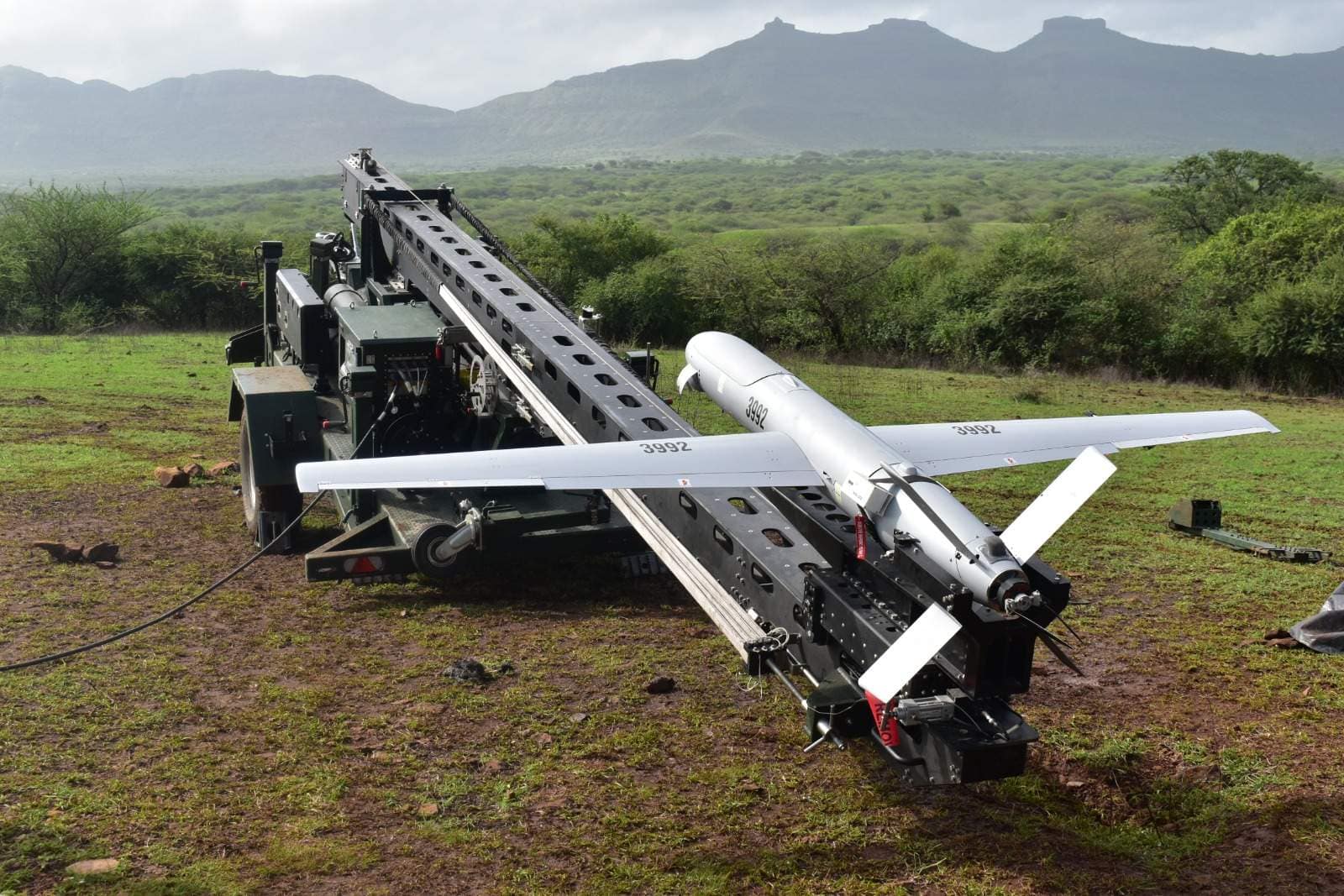
NIBE Limited, today announced the signing of a contract with the IndianArmy for the supply of the “Vayuastra” loitering munition system, procured under the FastTrack Procurement (FTP) category. NIBE has been awarded the L2 vendor share of thecontract, valued at approximately ₹ 563.35 crore.
Company has entered in to supply Contract with Indian Army, Ministry of Defence, Government of India for manufacturing and supply of thirty (30) Sets of Loiter Munition System that consist of three hundred (300) Loiter Munitions and Associated Testing Equipment and Accessories underbuy (Indian) category for a total consideration of Rs. 563.35 crore
TASL, NIBE bag ₹1,577-crore Army contracts for loiter munitions
The Ministry of Defence on Friday (August 14, 2026) signed contracts worth ₹1,577 crore with Tata Advanced Systems Ltd (TASL) and NIBE Ltd for the Indian Army.
The procurement of 84 loiter munition systems, 840 loiter munitions and accessories will enhance the Army’s precision-strike capability at ranges of up to 100 km.
The contracts, signed in the presence of Defence Secretary Rajesh Kumar Singh in New Delhi, have been processed under the ‘Buy Indian’ category through the Fast Track Procedure. The procurement provides for 60% overall indigenous content, including a minimum of 50% indigenous content in materials, components and software.
TASL, the L-1 vendor, will supply 54 loiter munition systems and 540 munitions at a cost of ₹1,013.77 crore, while NIBE, the L-2 vendor, will provide 30 systems and 300 munitions for ₹563.36 crore.
The systems, with a range of up to 100 km, are intended to bridge a gap in the Army’s precision-strike capability. At present, the Army’s precision-strike capability beyond the 40-50 km range is largely dependent on BrahMos missiles.
A limited number of artillery regiments and batteries have already been operationalised with loiter munition systems under Phase-I, and more units are proposed to be equipped under the latest procurement.
The Ministry said the acquisition would enhance the operational effectiveness of Artillery Regiments and provide a major boost to indigenous defence manufacturing and the government’s Aatmanirbhar Bharat initiative.
The equipment is scheduled to be delivered within 12 months from the date of advance payment.

TASL, NIBE bag ₹1,577-crore Army contracts for loiter munitions
The Ministry of Defence on Friday (August 14, 2026) signed contracts worth ₹1,577 crore with Tata Advanced Systems Ltd (TASL) and NIBE Ltd for the Indian Army.
The procurement of 84 loiter munition systems, 840 loiter munitions and accessories will enhance the Army’s precision-strike capability at ranges of up to 100 km.
The contracts, signed in the presence of Defence Secretary Rajesh Kumar Singh in New Delhi, have been processed under the ‘Buy Indian’ category through the Fast Track Procedure. The procurement provides for 60% overall indigenous content, including a minimum of 50% indigenous content in materials, components and software.
TASL, the L-1 vendor, will supply 54 loiter munition systems and 540 munitions at a cost of ₹1,013.77 crore, while NIBE, the L-2 vendor, will provide 30 systems and 300 munitions for ₹563.36 crore.
The systems, with a range of up to 100 km, are intended to bridge a gap in the Army’s precision-strike capability. At present, the Army’s precision-strike capability beyond the 40-50 km range is largely dependent on BrahMos missiles.
A limited number of artillery regiments and batteries have already been operationalised with loiter munition systems under Phase-I, and more units are proposed to be equipped under the latest procurement.
The Ministry said the acquisition would enhance the operational effectiveness of Artillery Regiments and provide a major boost to indigenous defence manufacturing and the government’s Aatmanirbhar Bharat initiative.
The equipment is scheduled to be delivered within 12 months from the date of advance payment.
Edit: NVM, read it wrong.
BTW, what happened to Nagastra-3? No Solar in this competition?
Last edited:

How is this thing more expensive than the jet powered drones with higher ranges IAF acquired recently?TASL, NIBE bag ₹1,577-crore Army contracts for loiter munitions
The Ministry of Defence on Friday (August 14, 2026) signed contracts worth ₹1,577 crore with Tata Advanced Systems Ltd (TASL) and NIBE Ltd for the Indian Army.
The procurement of 84 loiter munition systems, 840 loiter munitions and accessories will enhance the Army’s precision-strike capability at ranges of up to 100 km.
The contracts, signed in the presence of Defence Secretary Rajesh Kumar Singh in New Delhi, have been processed under the ‘Buy Indian’ category through the Fast Track Procedure. The procurement provides for 60% overall indigenous content, including a minimum of 50% indigenous content in materials, components and software.
TASL, the L-1 vendor, will supply 54 loiter munition systems and 540 munitions at a cost of ₹1,013.77 crore, while NIBE, the L-2 vendor, will provide 30 systems and 300 munitions for ₹563.36 crore.
The systems, with a range of up to 100 km, are intended to bridge a gap in the Army’s precision-strike capability. At present, the Army’s precision-strike capability beyond the 40-50 km range is largely dependent on BrahMos missiles.
A limited number of artillery regiments and batteries have already been operationalised with loiter munition systems under Phase-I, and more units are proposed to be equipped under the latest procurement.
The Ministry said the acquisition would enhance the operational effectiveness of Artillery Regiments and provide a major boost to indigenous defence manufacturing and the government’s Aatmanirbhar Bharat initiative.
The equipment is scheduled to be delivered within 12 months from the date of advance payment.
They're setting up a 4,000 units per year plant as per "plans"Another LM:
View attachment 51581
EndureAir's A400 LM. Seeker assembly is from Ananth technologies. Ananth makes Nag's IIR seeker under ToT from DRDO.

For Missiles And Kamikaze Drone Manufacturing, Ananth Technologies To Invest Rs 1,000 Crore In Andhra Pradesh
The company intends to develop the missile and drone manufacturing unit in two phases, which will generate direct employment for 750 people.
 www.etvbharat.com
TASL, NIBE bag ₹1,577-crore Army contracts for loiter munitions
The Ministry of Defence on Friday (August 14, 2026) signed contracts worth ₹1,577 crore with Tata Advanced Systems Ltd (TASL) and NIBE Ltd for the Indian Army.
The procurement of 84 loiter munition systems, 840 loiter munitions and accessories will enhance the Army’s precision-strike capability at ranges of up to 100 km.
The contracts, signed in the presence of Defence Secretary Rajesh Kumar Singh in New Delhi, have been processed under the ‘Buy Indian’ category through the Fast Track Procedure. The procurement provides for 60% overall indigenous content, including a minimum of 50% indigenous content in materials, components and software.
TASL, the L-1 vendor, will supply 54 loiter munition systems and 540 munitions at a cost of ₹1,013.77 crore, while NIBE, the L-2 vendor, will provide 30 systems and 300 munitions for ₹563.36 crore.
The systems, with a range of up to 100 km, are intended to bridge a gap in the Army’s precision-strike capability. At present, the Army’s precision-strike capability beyond the 40-50 km range is largely dependent on BrahMos missiles.
A limited number of artillery regiments and batteries have already been operationalised with loiter munition systems under Phase-I, and more units are proposed to be equipped under the latest procurement.
The Ministry said the acquisition would enhance the operational effectiveness of Artillery Regiments and provide a major boost to indigenous defence manufacturing and the government’s Aatmanirbhar Bharat initiative.
The equipment is scheduled to be delivered within 12 months from the date of advance payment.
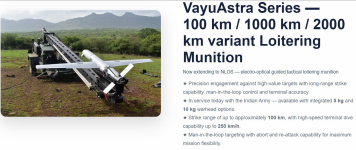
From some videos I saw on YT, it looked like Alpha Design/Adani had a tie up with Elbit to screwdriver the SkyStrikers in India. So how did Nibe end up with it? Seems like the Israeli firms are free to partner with more than one assembler in India?
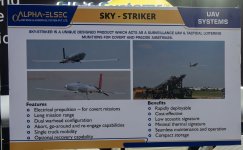
Also can we _PLEASE STOP_ using Indian names for these whitelabels? At least use an anglo name if you do not have the courage to call them by their foreign branding.