
Russian FPV strikes against Ukrainian Armed Forces equipment. Footage of Russian FPV drones in use in combat in Ukraine and the Donbas. The Russian FPV drones used in the battles include the Ovod, VT-40, Knyaz Vandal Novgorodsky, Upyr, Boomerang, and other models, including those controlled via fiber optic cable. The exact filming location is not disclosed. A June video shows drone strikes against various Ukrainian military equipment. The video also shows drone strikes against a Ukrainian T-64 tank, an M1224 MaxxPro armored personnel carrier, a Humvee, and other vehicles.
Ukraine - Russia Conflict
- Thread starter randomradio
- Start date
You are using an out of date browser. It may not display this or other websites correctly.
You should upgrade or use an alternative browser.
You should upgrade or use an alternative browser.
Hey @Soldier35
You seem russian. How useful were RBU-6000 to the russian navy in context of naval warfare & naval drones against ukraine???
You seem russian. How useful were RBU-6000 to the russian navy in context of naval warfare & naval drones against ukraine???
The first footage of a Russian FPV drone striking a Ukrainian MAAWLR mobile air defense system. MAAWLR (Mobile Anti-Air Weapons Launcher Reconfigurable) air defense systems have been manufactured in the United States since 2025 by Sierra Nevada Corp and can be mounted on a variety of vehicles. Depending on the missiles used, the MAAWLR can engage targets at ranges of up to 15 km. It's worth noting that the air defense system cannot engage FPV drones. See the air defense system's technical specifications on the screen. The video was filmed in the Kharkiv region.
Maksym Lavrynenko, the Kharkiv 'it-boy' entrepreneur and owner of the massive 3.3-million-follower TG channel Truha(Ukraine's largest group), got slapped with draft papers on June 17 right after picking a fight with Digital/Defense Minister Fedorov.
Lavrynenko got filthy rich selling a fantasy world where FPV drones and clever video editing win wars without blood. He personally cheerled the meat-grinder for ordinary Ukrainians while sitting comfortably behind a screen.
The man who spent four years feeding millions of kids into the meat-grinder through smooth propaganda has finally been forced to strip off his designer suit, grab a rifle, and personally test the 'modern warfare' he so passionately monetized.


Slava Ukraini!!!
Lavrynenko got filthy rich selling a fantasy world where FPV drones and clever video editing win wars without blood. He personally cheerled the meat-grinder for ordinary Ukrainians while sitting comfortably behind a screen.
The man who spent four years feeding millions of kids into the meat-grinder through smooth propaganda has finally been forced to strip off his designer suit, grab a rifle, and personally test the 'modern warfare' he so passionately monetized.
Slava Ukraini!!!

Footage of Russian FAB-250 bombs striking a Ukrainian bridge near the village of Serhiivka. At the time of the strike, two Ukrainian soldiers were on the bridge, attempting to evacuate a disabled ground robotic system. The attack was carried out by a Su-34 fighter-bomber. The Russian bombs destroyed the bridge, killing one Ukrainian soldier and wounding the other, as shown at the end of the video.
Well those first 3 all missed.Footage of Russian FAB-250 bombs striking a Ukrainian bridge near the village of Serhiivka. At the time of the strike, two Ukrainian soldiers were on the bridge, attempting to evacuate a disabled ground robotic system. The attack was carried out by a Su-34 fighter-bomber. The Russian bombs destroyed the bridge, killing one Ukrainian soldier and wounding the other, as shown at the end of the video.

The ground front is no longer the only relevant yardstick for gauging the balance of power.
In 2022, Crimea was still shrouded in a kind of strategic aura. It was said that a Ukrainian strike against the peninsula would trigger an uncontrollable escalation, possibly even a nuclear one. Four years on, Ukraine regularly strikes its radars, depots, substations, gas facilities and air defences. Sevastopol is now subject to power cuts, the peninsula is experiencing fuel shortages and service cuts, whilst Russia is having to divert more defensive resources to Moscow, the Kerch Bridge and other sensitive sites.
This represents a dramatic deterioration in Russia’s image as a superpower. The much-vaunted ‘demilitarisation of Ukraine’ has produced the opposite result: a Ukraine capable of conducting a distributed air campaign spanning several hundred, and at times more than a thousand kilometres, using its own national systems, against the territory of the power that was supposed to crush it in a matter of days.
Russia continues to exert real pressure in the Donbas, particularly around Kostiantynivka, Sloviansk and Kramatorsk; the danger facing Ukrainian defenders must not be downplayed. But this advance remains slow, costly and with no visible prospect of a battle of annihilation capable of bringing down the Ukrainian state. Recent assessments even suggest that the average rate of Russian advance has slowed significantly compared with 2025.
Meanwhile, Ukrainian strikes are having effects that cannot be measured in square kilometres:
This is why the Russian notion that capturing a few more towns would then allow them to declare ‘we have won, let’s stop here’ is becoming less and less realistic. A war does not end unilaterally simply because the aggressor believes it has gained enough ground. The adversary must either accept the terms or be unable to continue. Yet Ukraine retains, in fact, a growing capacity to inflict costs following every Russian advance.
There are now two overlapping wars:
For the time being, even in Moscow, the nervousness and criticism have not yet translated into a direct threat to Putin’s power.
But they are certainly altering the political calculus. The Kremlin was once able to present the war as a manageable external operation, with the bulk of the human cost borne by peripheral regions. If refineries, airports, electricity grids and central cities become permanently vulnerable, this distinction disappears.
And you are right about the fundamental trap: Putin knows how to continue the war, but he no longer has complete control over the terms of its conclusion. A cessation of hostilities without concessions from Ukraine does not depend solely on his will. The longer he waits, the more Ukraine develops capabilities that could make the Russian rear costly to defend.
Russia continues to gain ground at times, but it is gradually losing the privilege of deciding where the war is fought and how much it costs.
This is precisely why focusing solely on the arrows on the map of the Donbas becomes an analytical error. The visible front line is advancing by a few kilometres; the strategic front, however, now extends as far as Moscow, the Urals and the entire Russian energy economy.
In 2022, Crimea was still shrouded in a kind of strategic aura. It was said that a Ukrainian strike against the peninsula would trigger an uncontrollable escalation, possibly even a nuclear one. Four years on, Ukraine regularly strikes its radars, depots, substations, gas facilities and air defences. Sevastopol is now subject to power cuts, the peninsula is experiencing fuel shortages and service cuts, whilst Russia is having to divert more defensive resources to Moscow, the Kerch Bridge and other sensitive sites.
This represents a dramatic deterioration in Russia’s image as a superpower. The much-vaunted ‘demilitarisation of Ukraine’ has produced the opposite result: a Ukraine capable of conducting a distributed air campaign spanning several hundred, and at times more than a thousand kilometres, using its own national systems, against the territory of the power that was supposed to crush it in a matter of days.
Russia continues to exert real pressure in the Donbas, particularly around Kostiantynivka, Sloviansk and Kramatorsk; the danger facing Ukrainian defenders must not be downplayed. But this advance remains slow, costly and with no visible prospect of a battle of annihilation capable of bringing down the Ukrainian state. Recent assessments even suggest that the average rate of Russian advance has slowed significantly compared with 2025.
Meanwhile, Ukrainian strikes are having effects that cannot be measured in square kilometres:
- a reduction in fuel production;
- disruption to logistics flows;
- refineries being shut down for several months;
- rising prices and emerging shortages;
- the dispersal of Russian air defences;
- the spillover of the war into everyday life in major cities;
- an erosion of the state’s credibility as a protector.
This is why the Russian notion that capturing a few more towns would then allow them to declare ‘we have won, let’s stop here’ is becoming less and less realistic. A war does not end unilaterally simply because the aggressor believes it has gained enough ground. The adversary must either accept the terms or be unable to continue. Yet Ukraine retains, in fact, a growing capacity to inflict costs following every Russian advance.
There are now two overlapping wars:
- a ground war of attrition, in which Russia is still advancing in some areas;
- a war of depth, in which Ukraine is beginning to undermine the economic, logistical and psychological functioning of the Russian war effort.
For the time being, even in Moscow, the nervousness and criticism have not yet translated into a direct threat to Putin’s power.
But they are certainly altering the political calculus. The Kremlin was once able to present the war as a manageable external operation, with the bulk of the human cost borne by peripheral regions. If refineries, airports, electricity grids and central cities become permanently vulnerable, this distinction disappears.
And you are right about the fundamental trap: Putin knows how to continue the war, but he no longer has complete control over the terms of its conclusion. A cessation of hostilities without concessions from Ukraine does not depend solely on his will. The longer he waits, the more Ukraine develops capabilities that could make the Russian rear costly to defend.
Russia continues to gain ground at times, but it is gradually losing the privilege of deciding where the war is fought and how much it costs.
This is precisely why focusing solely on the arrows on the map of the Donbas becomes an analytical error. The visible front line is advancing by a few kilometres; the strategic front, however, now extends as far as Moscow, the Urals and the entire Russian energy economy.
Sure, your AI reads the textbook beautifully,The ground front is no longer the only relevant yardstick for gauging the balance of power.
In 2022, Crimea was still shrouded in a kind of strategic aura. It was said that a Ukrainian strike against the peninsula would trigger an uncontrollable escalation, possibly even a nuclear one. Four years on, Ukraine regularly strikes its radars, depots, substations, gas facilities and air defences. Sevastopol is now subject to power cuts, the peninsula is experiencing fuel shortages and service cuts, whilst Russia is having to divert more defensive resources to Moscow, the Kerch Bridge and other sensitive sites.
This represents a dramatic deterioration in Russia’s image as a superpower. The much-vaunted ‘demilitarisation of Ukraine’ has produced the opposite result: a Ukraine capable of conducting a distributed air campaign spanning several hundred, and at times more than a thousand kilometres, using its own national systems, against the territory of the power that was supposed to crush it in a matter of days.
Russia continues to exert real pressure in the Donbas, particularly around Kostiantynivka, Sloviansk and Kramatorsk; the danger facing Ukrainian defenders must not be downplayed. But this advance remains slow, costly and with no visible prospect of a battle of annihilation capable of bringing down the Ukrainian state. Recent assessments even suggest that the average rate of Russian advance has slowed significantly compared with 2025.
Meanwhile, Ukrainian strikes are having effects that cannot be measured in square kilometres:
The Moscow refinery could thus remain out of action for a long period; the strikes have already contributed to a fall in Russian fuel production and led the authorities to consider restrictions on exports and even imports. Attacks in the intermediate zone, between the immediate rear and the strategic depth, are also disrupting troop rotations, resupply and air defences at the front.
- a reduction in fuel production;
- disruption to logistics flows;
- refineries being shut down for several months;
- rising prices and emerging shortages;
- the dispersal of Russian air defences;
- the spillover of the war into everyday life in major cities;
- an erosion of the state’s credibility as a protector.
This is why the Russian notion that capturing a few more towns would then allow them to declare ‘we have won, let’s stop here’ is becoming less and less realistic. A war does not end unilaterally simply because the aggressor believes it has gained enough ground. The adversary must either accept the terms or be unable to continue. Yet Ukraine retains, in fact, a growing capacity to inflict costs following every Russian advance.
There are now two overlapping wars:
The second may gradually alter the significance of the first. Gaining a few dozen kilometres becomes far less attractive if, at the same time, the country loses refining capacity, has to protect its major cities, ration supplies to certain regions and divert its air defence systems from the army to the home front.
- a ground war of attrition, in which Russia is still advancing in some areas;
- a war of depth, in which Ukraine is beginning to undermine the economic, logistical and psychological functioning of the Russian war effort.
For the time being, even in Moscow, the nervousness and criticism have not yet translated into a direct threat to Putin’s power.
But they are certainly altering the political calculus. The Kremlin was once able to present the war as a manageable external operation, with the bulk of the human cost borne by peripheral regions. If refineries, airports, electricity grids and central cities become permanently vulnerable, this distinction disappears.
And you are right about the fundamental trap: Putin knows how to continue the war, but he no longer has complete control over the terms of its conclusion. A cessation of hostilities without concessions from Ukraine does not depend solely on his will. The longer he waits, the more Ukraine develops capabilities that could make the Russian rear costly to defend.
Russia continues to gain ground at times, but it is gradually losing the privilege of deciding where the war is fought and how much it costs.
This is precisely why focusing solely on the arrows on the map of the Donbas becomes an analytical error. The visible front line is advancing by a few kilometres; the strategic front, however, now extends as far as Moscow, the Urals and the entire Russian energy economy.
but do me a favor and tell your 'Made-in-France AI' this: in March 2026,
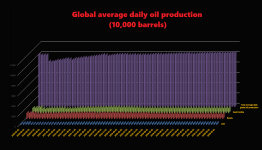
Russian oil output clocked a phase-peak of around 8.96 million barrels a day, and spiked to an average of 9.01 million in May. And just like that, the tides of war have shifted toward a Ukrainian victory for the 65536th time.

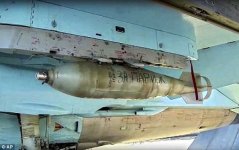
Back in 2015, the Russians were acting all sentimental, writing 'For Paris' on their bombs to blast ISIS. Fast forward a bit, and the French ended up holding hands with the same proxy networks aligned with those terrorists. I wonder if a French AI’s algorithms are selectively blind to that little piece of history.

Last edited:
The financial backers of Russia's War are beginning to get noisy. They must really enjoy having to pay for all this damage.Sure, your AI reads the textbook beautifully,
but do me a favor and tell your 'Made-in-France AI' this: in March 2026,
Russian oil output clocked a phase-peak of around 8.96 million barrels a day, and spiked to an average of 9.01 million in May. And just like that, the tides of war have shifted toward a Ukrainian victory for the 65536th time.
View attachment 52535
Back in 2015, the Russians were acting all sentimental, writing 'For Paris' on their bombs to blast ISIS. Fast forward a bit, and the French ended up holding hands with the same proxy networks aligned with those terrorists. I wonder if a French AI’s algorithms are selectively blind to that little piece of history.
View attachment 52536View attachment 52537
Let me get this straight: are you implying India’s Russian oil imports are lower than China's?The financial backers of Russia's War are beginning to get noisy. They must really enjoy having to pay for all this damage.
Or are you just salty about India buying it?
When your American daddy overlords are literally importing Russian crude, you’re here pretending you don't need it?
----------------Or are you just trying to learn from the European colonies?
despite this Those European dependents whined for four years about a total embargo, but their physical actions were hilarious—they folded instantly and dutifully paid up in Rubles.
You see, everyone is a financial backer of Russia—
the US, China, India, France, Germany, Poland...
----------even Ukraine itself.
So, I don't know what you have to complain about.

====================================================
from GOOGLe Gemini:
2025 Russian Oil and Gas Actual Purchase Volume by Physical Flow (Based on IEA / CREA Official Data)
| Country / Region | 2025 Actual Oil Purchase Volume(Crude Oil + Petroleum Products) | 2025 Actual Gas Purchase Volume(Pipeline Natural Gas + LNG) | Description of Actual Physical Flow Paths and Core Physical Characteristics |
| China | Approx. 108 million tons/year (Daily average approx. 2.2–2.3 million b/d) | Approx. 43 bcm/year | 1. Oil: Firmly remains Russia's largest buyer (accounting for approximately 47% of total Russian exports). Physical entities are directly imported via the Eastern Siberia–Pacific Ocean (ESPO) pipeline and maritime shipping (using shadow fleets from Kozmino Port, Murmansk Port, etc.). 2. Natural Gas: The core physical growth comes from the "China-Russia East Route (Power of Siberia-1)" pipeline operating at full physical capacity (approx. 38 bcm), with the remainder imported as maritime LNG from the Arctic. |
| India | Approx. 88 million tons/year (Daily average approx. 1.8–1.9 million b/d) | Negligible (Close to 0) | 1. Oil: Russia's second largest buyer (accounting for approximately 38% of total Russian exports). Completely reliant on maritime physical flow; in 2025, maritime physical volumes of Urals and Sokol crude oil accounted for over 40% of India's total import share. 2. Natural Gas: No pipelines physically connect the two countries, and due to long-term contract restrictions with the Middle East, there was almost no physical import of Russian LNG in 2025. |
| Europe (EU) | Approx. 14 million tons/year (Daily average approx. 250,000–300,000 b/d) | Approx. 36 bcm/year | 1. Oil (via pipeline exemptions): Although maritime imports are banned, the Southern Branch of the "Druzhba" pipeline remained physically open in 2025, with Central European countries like Hungary, Slovakia, and the Czech Republic directly receiving physical crude oil via the pipeline. 2. Natural Gas (not under sanctions): Europe is a hidden major consumer of Russian natural gas (accounting for nearly half of Russia's LNG exports). In 2025, France, Belgium, and Spain physically received approximately 18 bcm of Russian Liquefied Natural Gas (LNG) via sea; Hungary, Austria, etc., received approximately 18 bcm of pipeline gas via the "TurkStream" pipeline. |
| United States | Physical flow is 0 (Note: Excluding technical transit) | Physical flow is 0 | 1. Oil and Natural Gas: The US legislated an absolute ban starting in 2022. Direct maritime physical flow was 0 in 2025. However, according to IEA cross-border supply chain penetration audits, certain US ports actually unloaded aviation kerosene and diesel fuel in 2025 that had been blended in Indian refineries (such as Reliance Industries) and had already been altered in physical and chemical property from the original crude. |
| Ukraine | Physical flow is 0 | Approx. 12–14 bcm/year (Transit Natural Gas) | 1. Oil: No physical interaction. 2. Natural Gas (Absurd physical transit): A bizarre historical reality occurred in 2025—Ukraine's Sudzha metering station remained physically open. Although Ukraine announced it would not renew its purchase contracts with Russia, over 12 bcm of pipeline natural gas purchased by Europe (Austria, Slovakia) from Russia's Gazprom still physically penetrated Ukraine's territorial pipeline network to be delivered to Europe in 2025, and Ukraine continued to legally collect hundreds of millions of dollars in "physical transit fees." |
 Three Core Characteristics of the 2025 "Actual Physical Flow":
- Europe's "Portside Schizophrenia": In the 2025 CREA tracking reports, natural gas was not officially included in the European Union's sanctions list. As a result, France and Belgium became some of the largest physical recipients of Russian Arctic LNG in 2025. While France maintained high diplomatic pressure on Russia, its ports were operating at high capacity in 2025 unloading LNG vessels from Russia's Yamal.
- The "Division of Consumption" Between China and India: Together, China and India consumed over 85% of Russia's seaborne and pipeline crude oil in 2025. The difference is that China possesses a direct connection via the "Power of Siberia" pipeline, thus consuming both oil and gas; India, lacking cross-border pipelines, played the role of a pure "giant seaborne crude oil dehydration station" in 2025—refining the low-cost Urals crude it purchased and then physically reselling the refined petroleum products to Europe and the US at high prices.
- The Dark Humor of Sudzha: The "actual physical volume" in Ukraine's column is the most absurd physical loop in geopolitical history: while intense fighting occurred at the front lines, the natural gas pipeline valves in the rear continued to rotate normally in 2025. Russia's natural gas physically passed through Ukraine's pipelines to be delivered to Europe, Europe paid Russia in Rubles, Russia used those funds to maintain its military budget, and Ukraine earned transit fees in the middle to support its public finance—this physical reality punctures all naive myths regarding "complete severance and total decoupling" within information echo chambers.
Last edited:
Relations between the USSR, and subsequently Russia, and France had always been good until Russia invaded Ukraine. Yes, in 2025 Russia continued to export hydrocarbons, but today the sale of hydrocarbons to civilians in Crimea is banned, and in Moscow there are queues at petrol stations; we are all awaiting the figures for 2026.Sure, your AI reads the textbook beautifully,
but do me a favor and tell your 'Made-in-France AI' this: in March 2026,
Russian oil output clocked a phase-peak of around 8.96 million barrels a day, and spiked to an average of 9.01 million in May. And just like that, the tides of war have shifted toward a Ukrainian victory for the 65536th time.
View attachment 52535
Back in 2015, the Russians were acting all sentimental, writing 'For Paris' on their bombs to blast ISIS. Fast forward a bit, and the French ended up holding hands with the same proxy networks aligned with those terrorists. I wonder if a French AI’s algorithms are selectively blind to that little piece of history.
View attachment 52536View attachment 52537
As a Chinese, I had no idea you French and the Russians were such bosom buddies. That the Russians have been one-sidedly throwing themselves at you — now that's the truth: Napoleon and Alexander I clinking glasses at a cozy Moscow bonfire soirée(Use an entire city as fuel...). The Russian army threw a party in Paris twice (and in Berlin three times, just saying). Then came the two Mistrals, the Storm Shadows, and all those red, white and blue flags in Africa that got a makeover — still horizontal, though.↓Relations between the USSR, and subsequently Russia, and France had always been good until Russia invaded Ukraine. Yes, in 2025 Russia continued to export hydrocarbons, but today the sale of hydrocarbons to civilians in Crimea is banned, and in Moscow there are queues at petrol stations; we are all awaiting the figures for 2026.




NOW,
France sold off its African colonies at a tidy price(Forgive my presumption, but I should say: France has made sacrifices for love and justice in Ukraine.), just to trade for a "good seat" between Moscow and Washington.
Also, I really can't find any data showing a collapse in Russian oil production. Maybe my version of Google is different from yours.
My classmate told me he can barely afford to eat in Moscow anymore.
Attachments


Last edited:
Rare close-up footage of Russian Uragan MLRS strikes captured by an FPV drone in Ukraine. The strike targeted Ukrainian army positions near the village of Orekhov in the Zaporizhzhia region. Technical information about the new version of the Uragan-1 MLRS is available in the link to the video in the comments.
Ukrainian strikes are severely disrupting refining operations and are beginning to weigh on crude oil production, but have not yet caused total exports to collapse, as Russia is offsetting this by exporting more unrefined crude oil.As a Chinese, I had no idea you French and the Russians were such bosom buddies. That the Russians have been one-sidedly throwing themselves at you — now that's the truth: Napoleon and Alexander I clinking glasses at a cozy Moscow bonfire soirée(Use an entire city as fuel...). The Russian army threw a party in Paris twice (and in Berlin three times, just saying). Then came the two Mistrals, the Storm Shadows, and all those red, white and blue flags in Africa that got a makeover — still horizontal, though.↓
View attachment 52541View attachment 52539
View attachment 52542
View attachment 52543
NOW,
France sold off its African colonies at a tidy price(Forgive my presumption, but I should say: France has made sacrifices for love and justice in Ukraine.), just to trade for a "good seat" between Moscow and Washington.
Also, I really can't find any data showing a collapse in Russian oil production. Maybe my version of Google is different from yours.
My classmate told me he can barely afford to eat in Moscow anymore.
View attachment 52544
Crude oil production
This is the most recent development. According to the IEA, Russian crude oil production fell in May to around 8.7 million barrels per day, some 5 per cent lower than a year earlier and 10 per cent below Russia’s target for the month. The IEA has cut its forecast for Russian production in 2026 by 200,000 barrels per day, attributing this revision to repeated strikes against oil infrastructure.
The decline is not solely due to direct damage to oil fields. It is primarily the result of a bottleneck:
- refineries are processing less crude;
- some terminals and oil pipelines are temporarily disrupted;
- storage capacity is filling up;
- Transneft is no longer always able to accept all the volumes offered;
- producers are therefore forced to reduce output.
This is significant, as shutting down or curtailing a field is not always without consequences. Depending on its geology, age and method of operation, an interruption may reduce its future productivity or require costly recommissioning operations.
Refining: this is where the damage is most visible today
Refining is clearly the hardest-hit sector. The strikes forced virtually all major refineries in central Russia to halt or reduce production during the spring.
The Moscow refinery illustrates the extent of the damage: it is expected to remain out of service for at least six months. It processed around 11.6 million tonnes of crude oil per year and produced, amongst other things, 2.9 million tonnes of petrol and 3.2 million tonnes of diesel. This is therefore not simply a fire that can be put out in a matter of days, but the long-term loss of a major industrial facility serving the country’s most populous region.
The national consequences are now tangible:
- petrol and diesel shortages in several regions;
- queues at petrol stations;
- sales restrictions;
- rising prices;
- suspension of petrol and jet fuel exports;
- consideration of a ban on diesel exports;
- discussions on fuel imports, particularly from Kazakhstan.
Exports: the paradox of rising crude oil exports
At first glance, one might think that the sanctions are failing, given that crude oil exports are rising. In May, exports via Primorsk, Ust-Luga and Novorossiysk rose by 15 per cent, reaching around 2.5 million barrels per day. In June, they could even reach a record high of 2.7 to 2.8 million barrels per day.
But this rise is primarily a consequence of the damage:
the crude oil that Russian refineries can no longer process is being sent to the ports.
Russia is therefore exporting more raw material because it is producing fewer refined fuels. This allows it to temporarily avoid an even sharper decline in production, but it is less favourable economically: petrol, diesel, kerosene and petrochemicals incorporate greater added value than a barrel of crude.
The IEA estimates that in May, Russia’s total exports of crude oil and petroleum products remained at around 7.4 million barrels per day, and were therefore relatively stable. However, their composition has shifted: crude oil exports rose by around 490,000 barrels per day year-on-year to reach 5.2 million, whilst Moscow retained more refined products for its domestic market.
Thus, the total volume exported masks a qualitative deterioration.
Revenue: no collapse yet, but a less favourable structure
Oil export revenues reached around $20.8 billion in May, $710 million less than in April, mainly due to prices, but they remained high.
It would therefore be premature to say that the strikes have already deprived the Kremlin of its oil revenues. International prices, crude oil sales to India and China, and the redeployment of shipments to other ports are still enabling Russia to cushion the blow.
However, several costs are mounting up:
- loss of value added from refining;
- repairs to complex facilities;
- insurance premiums and logistics costs;
- idling of capacity;
- potential fuel imports;
- subsidies designed to cap domestic prices;
- possible reduction in production when ports and refineries are simultaneously overwhelmed or damaged;
- increasing expenditure on air defence around energy facilities.
The strategic conclusion
The situation can be summarised in three stages:
Strikes against refineries are sharply reducing fuel production.
Russia is diverting the resulting surplus crude oil to export, which temporarily maintains volumes and revenue.
When terminals, oil pipelines and refineries are struck simultaneously, the system becomes congested and oil production itself must decline.
It is therefore a campaign of gradual strangulation rather than an instantaneous shutdown. Crude oil export statistics may even improve whilst the Russian oil system deteriorates.
Ukraine has not yet dried up Russia’s oil revenue stream, but it is forcing Russia to sell more less-processed crude, to reduce its refining capacity, to ration its domestic market and, now, to begin cutting back on extraction itself.
The decisive factor will be persistence. A refinery can be repaired; if it is struck again before it is back in operation, whilst ports, pumping stations and depots are also under attack, Russia’s ability to compensate will eventually disappear.
The successes of Iran and Russia have made Westerners and their supporters so embarrassed that they dare not answer the questionUkrainian strikes are severely disrupting refining operations and are beginning to weigh on crude oil production, but have not yet caused total exports to collapse, as Russia is offsetting this by exporting more unrefined crude oil.
Crude oil production
This is the most recent development. According to the IEA, Russian crude oil production fell in May to around 8.7 million barrels per day, some 5 per cent lower than a year earlier and 10 per cent below Russia’s target for the month. The IEA has cut its forecast for Russian production in 2026 by 200,000 barrels per day, attributing this revision to repeated strikes against oil infrastructure.
The decline is not solely due to direct damage to oil fields. It is primarily the result of a bottleneck:
In early April, around 20 per cent of Russia’s oil export capacity remained unavailable, having briefly reached nearly 40 per cent at the end of March. Reuters reported at the time a reduction of around one million barrels per day in export capacity and the likely need to partially shut down certain wells.
- refineries are processing less crude;
- some terminals and oil pipelines are temporarily disrupted;
- storage capacity is filling up;
- Transneft is no longer always able to accept all the volumes offered;
- producers are therefore forced to reduce output.
This is significant, as shutting down or curtailing a field is not always without consequences. Depending on its geology, age and method of operation, an interruption may reduce its future productivity or require costly recommissioning operations.
Refining: this is where the damage is most visible today
Refining is clearly the hardest-hit sector. The strikes forced virtually all major refineries in central Russia to halt or reduce production during the spring.
The Moscow refinery illustrates the extent of the damage: it is expected to remain out of service for at least six months. It processed around 11.6 million tonnes of crude oil per year and produced, amongst other things, 2.9 million tonnes of petrol and 3.2 million tonnes of diesel. This is therefore not simply a fire that can be put out in a matter of days, but the long-term loss of a major industrial facility serving the country’s most populous region.
The national consequences are now tangible:
The Russian government is therefore implicitly acknowledging the seriousness of the situation, as it is considering imports and drawing on reserves to support the domestic market.
- petrol and diesel shortages in several regions;
- queues at petrol stations;
- sales restrictions;
- rising prices;
- suspension of petrol and jet fuel exports;
- consideration of a ban on diesel exports;
- discussions on fuel imports, particularly from Kazakhstan.
Exports: the paradox of rising crude oil exports
At first glance, one might think that the sanctions are failing, given that crude oil exports are rising. In May, exports via Primorsk, Ust-Luga and Novorossiysk rose by 15 per cent, reaching around 2.5 million barrels per day. In June, they could even reach a record high of 2.7 to 2.8 million barrels per day.
But this rise is primarily a consequence of the damage:
the crude oil that Russian refineries can no longer process is being sent to the ports.
Russia is therefore exporting more raw material because it is producing fewer refined fuels. This allows it to temporarily avoid an even sharper decline in production, but it is less favourable economically: petrol, diesel, kerosene and petrochemicals incorporate greater added value than a barrel of crude.
The IEA estimates that in May, Russia’s total exports of crude oil and petroleum products remained at around 7.4 million barrels per day, and were therefore relatively stable. However, their composition has shifted: crude oil exports rose by around 490,000 barrels per day year-on-year to reach 5.2 million, whilst Moscow retained more refined products for its domestic market.
Thus, the total volume exported masks a qualitative deterioration.
Revenue: no collapse yet, but a less favourable structure
Oil export revenues reached around $20.8 billion in May, $710 million less than in April, mainly due to prices, but they remained high.
It would therefore be premature to say that the strikes have already deprived the Kremlin of its oil revenues. International prices, crude oil sales to India and China, and the redeployment of shipments to other ports are still enabling Russia to cushion the blow.
However, several costs are mounting up:
Strikes against gas facilities are also beginning to have knock-on effects. Following the attack on the Orenburg processing plant, Kazakhstan was forced to reduce oil and condensate production from the Karachaganak field by around 25 per cent, as the associated gas could no longer be processed normally in Russia.
- loss of value added from refining;
- repairs to complex facilities;
- insurance premiums and logistics costs;
- idling of capacity;
- potential fuel imports;
- subsidies designed to cap domestic prices;
- possible reduction in production when ports and refineries are simultaneously overwhelmed or damaged;
- increasing expenditure on air defence around energy facilities.
The strategic conclusion
The situation can be summarised in three stages:
Strikes against refineries are sharply reducing fuel production.
Russia is diverting the resulting surplus crude oil to export, which temporarily maintains volumes and revenue.
When terminals, oil pipelines and refineries are struck simultaneously, the system becomes congested and oil production itself must decline.
It is therefore a campaign of gradual strangulation rather than an instantaneous shutdown. Crude oil export statistics may even improve whilst the Russian oil system deteriorates.
Ukraine has not yet dried up Russia’s oil revenue stream, but it is forcing Russia to sell more less-processed crude, to reduce its refining capacity, to ration its domestic market and, now, to begin cutting back on extraction itself.
The decisive factor will be persistence. A refinery can be repaired; if it is struck again before it is back in operation, whilst ports, pumping stations and depots are also under attack, Russia’s ability to compensate will eventually disappear.
This is the most recent development. According to the IEA, Russian crude oil production fell in May to around 8.7 million barrels per day, some 5 per cent lower than a year earlier and 10 per cent below Russia’s target for the month. The IEA has cut its forecast for Russian production in 2026 by 200,000 barrels per day, attributing this revision to repeated strikes against oil infrastructure.
Although the AI-crawled data you provided doesn't look bad, your American daddy's AI didn't tell you that Saudi Arabia's production also dropped to about the same level as Russia's during the same period, you know.
From beginning to end, whether it was the so‑called sanctions or the so‑called attacks on refineries, Russia has consistently maintained production levels on par with Saudi Arabia, while also holding spare capacity. This has utterly humiliated Western fans.
—namely, why the effects of Ukraine's terrorist attacks cannot be seen in Russia's oil production.
↓

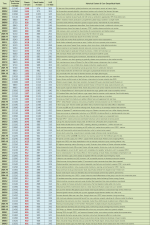
Also, since oil is a hard commodity, hitting its production capacity only drives up the price of refined products, which increases Russian firms' profits. A $0.5–1 rise in the crude price per barrel covers the destruction and losses inflicted by Ukraine's low‑quality drones. Hopefully, this basic reasoning isn't too hard for people with a junior‑high education to grasp.
Getting Westerners to accept their own decline and defeat is extremely hard
—they need to come to terms with themselves. (Of course, although 'most people' have never really cared about Western opinions from the start, the total population of China, India, and Russia-including Belarus and the New Russia regions already amounts to roughly 3 billion.)
Last edited:
