Ukraine - Russia Conflict

In any case, those who had doubts about the Flamingo’s operational capability can rest assured: it flies well. The Titan-Barrikady factory in Volgograd is reported to have been hit four times last night/this morning. This strike virtually removes any doubt as to the operational capability of the FP-5 Flamingo. Volgograd is not a nearby target: the Titan-Barrikady factory is located several hundred kilometres from the probable launch area, in the heart of a heavily defended region of Russia. Zelensky has confirmed the use of Ukrainian Flamingo missiles against the site, whilst the Russian authorities have acknowledged damage to the production facilities and ten people injured.

The target has been particularly well chosen. Titan-Barrikady manufactures, amongst other things, launchers and components for the Iskander-M systems and for Russian strategic missiles. A Flamingo carrying a payload of around one tonne is no longer merely a device designed to start a fire in a depot: it can cause severe damage to workshops, machine tools, assembly lines and industrial infrastructure that is difficult to replace.

The Ukrainian campaign is therefore changing in nature. Long-range drones saturate, identify and strike vulnerable targets; the Flamingo delivers a much heavier military payload against hardened installations or large industrial complexes. Even if the missile has not yet achieved the reliability of a mature Western system, it has moved beyond the demonstration prototype stage: it flies, occasionally penetrates Russian defences and produces significant effects deep behind enemy lines.

As for fuel, what is seen in the images is consistent with a crisis that has become geographically very widespread. As of 25 June, restrictions or rationing were reported in at least 55 to 56 Russian regions. In Siberia, particularly in the Irkutsk, Novosibirsk and Omsk regions, the authorities or distributors are prioritising essential services and are sometimes resorting to manual management of supplies. The Duma has even just authorised exceptional measures: the use of lower-grade fuels, support for imports and the postponement of certain obligations regarding refinery modernisation.

This is likely to remain a temporary situation at any individual filling station, as supply flows can be redirected. But the simultaneous and nationwide nature of the phenomenon is new. When shortages appear even in producing regions and in Siberia, it is no longer merely a local shortage: the refining and distribution system has lost its safety margins.

For Kerch, the direction of the queues speaks volumes politically: we no longer see crowds flocking to Crimea for their holidays; we see thousands of vehicles trying to leave, following power cuts, rationing and the cancellation of holiday camps.

There are therefore three interrelated images:
  • Operation Flamingo is striking a blow against the Russian military industry in Volgograd;
  • petrol stations are rationing fuel even deep in Siberia;
  • and queues are stretching eastwards as people leave Crimea.
These are no longer merely Ukrainian tactical successes. This marks the beginning of a visible shift in the everyday functioning and psychological geography of Russia at war.
 
  • Like
Reactions: BMD
So you’ve been holed up at home tinkering for ages, and this is the conclusion you’ve arrived at.
Watching you slap your own face is an absolute feast for my kink.

Your Daddy America’s failed choices have left you utterly miserable. You fantasize that I occupy the same social in china role as you at India.

So in truth,
you’ve made three mistakes:

First, of course, you should never have shot your mouth off in front of me, only to get pinned down and schooled by me relentlessly.

Second, you misjudged my personal social position. You assumed I’d get angry at a high debt ratio just like you. Unfortunately for you, the opposite is true — I’m the one using the leverage. 80–90% feels far too low low low for me; China’s real situation stands at 170% to 180%, regardless of the IMF’s so-called 80, 90, 100, or 110... So I really don't know what he's trying to accomplish by just talking to himself and coping like that.ideally, and I am a merchant of death.200–250% would suit me much better For me.

Third, naturally, is the literal meaning. On the IMF chart, a beautifully green Russia and a sickly yellow Europe and America — how utterly delightful.
Why is your debt growing so fast recently and why is Russia's not, that is the question. If getting engaged in a heavy, protracted war, with large losses was good for debt, as it would appear to be for Russia based on official figures (LOL), why has this not been the case for other nations at any point in history? Doesn't really make sense does it.
In any case, those who had doubts about the Flamingo’s operational capability can rest assured: it flies well. The Titan-Barrikady factory in Volgograd is reported to have been hit four times last night/this morning. This strike virtually removes any doubt as to the operational capability of the FP-5 Flamingo. Volgograd is not a nearby target: the Titan-Barrikady factory is located several hundred kilometres from the probable launch area, in the heart of a heavily defended region of Russia. Zelensky has confirmed the use of Ukrainian Flamingo missiles against the site, whilst the Russian authorities have acknowledged damage to the production facilities and ten people injured.

The target has been particularly well chosen. Titan-Barrikady manufactures, amongst other things, launchers and components for the Iskander-M systems and for Russian strategic missiles. A Flamingo carrying a payload of around one tonne is no longer merely a device designed to start a fire in a depot: it can cause severe damage to workshops, machine tools, assembly lines and industrial infrastructure that is difficult to replace.

The Ukrainian campaign is therefore changing in nature. Long-range drones saturate, identify and strike vulnerable targets; the Flamingo delivers a much heavier military payload against hardened installations or large industrial complexes. Even if the missile has not yet achieved the reliability of a mature Western system, it has moved beyond the demonstration prototype stage: it flies, occasionally penetrates Russian defences and produces significant effects deep behind enemy lines.

As for fuel, what is seen in the images is consistent with a crisis that has become geographically very widespread. As of 25 June, restrictions or rationing were reported in at least 55 to 56 Russian regions. In Siberia, particularly in the Irkutsk, Novosibirsk and Omsk regions, the authorities or distributors are prioritising essential services and are sometimes resorting to manual management of supplies. The Duma has even just authorised exceptional measures: the use of lower-grade fuels, support for imports and the postponement of certain obligations regarding refinery modernisation.

This is likely to remain a temporary situation at any individual filling station, as supply flows can be redirected. But the simultaneous and nationwide nature of the phenomenon is new. When shortages appear even in producing regions and in Siberia, it is no longer merely a local shortage: the refining and distribution system has lost its safety margins.

For Kerch, the direction of the queues speaks volumes politically: we no longer see crowds flocking to Crimea for their holidays; we see thousands of vehicles trying to leave, following power cuts, rationing and the cancellation of holiday camps.

There are therefore three interrelated images:
  • Operation Flamingo is striking a blow against the Russian military industry in Volgograd;
  • petrol stations are rationing fuel even deep in Siberia;
  • and queues are stretching eastwards as people leave Crimea.
These are no longer merely Ukrainian tactical successes. This marks the beginning of a visible shift in the everyday functioning and psychological geography of Russia at war.
It's not the first, their VNIPP factory was also hit 2 weeks back. That was ~1,000km inside Russia.
 
The first officially confirmed footage of the Russian military using Geran-4 Seeker jet drones in a strike on the Ukrainian airfield of Voznesensk in the Mykolaiv region. Geran-4 Seeker drones destroyed two Ukrainian MiG-29 aircraft, a refueling tanker, an APA-5D special vehicle, and the flight and engineering personnel who had arrived to prepare the aircraft for takeoff. Another Ukrainian MiG-29 also crashed in the Poltava region.

 
  • Like
Reactions: Ironhide
The most worrying aspect for the Kremlin is not just the deficit: it is the deliberate dismantling of its own budgetary safeguards.

In the space of three days, the Duma authorised the government to exceed spending and debt ceilings without formally amending the budget or going through another parliamentary debate. This amounts to an admission that the budget approved for 2026 is already no longer a credible basis for fiscal management.

The figures explain this haste. By the end of May, the federal deficit had reached around 6,000 billion roubles – already well above the 3,800 billion forecast for the whole year. It represented around 2.6 per cent of GDP, whereas the annual target was 1.6 per cent.

What appears to be a technical measure is therefore in reality a political shift:

when the rules prevent the war from being funded, one no longer scales back the war; one abolishes the rules.

For nearly twenty years, the stability of the Putin system rested in part on genuine fiscal orthodoxy: low public debt, substantial reserves, a relatively powerful Ministry of Finance, and a credible Central Bank. The war is gradually eroding this institutional capital.

Russia can still borrow, particularly from its own banks, and its level of debt remains lower than that of many Western countries. We should therefore not expect a sudden, Argentina-style default. But domestic debt is costly, interest rates remain high, and Russian banks are increasingly being called upon to absorb government bonds. The cost is thus passed on to the economy as a whole: credit becomes scarcer, civilian investment declines, interest rates rise, and banks become more dependent on the government.

Added to this are expenditure items that the budget only partially reflects:
  • cost overruns on military contracts;
  • recruitment bonuses and compensation for families;
  • repairs to damaged refineries and infrastructure;
  • air defence, partly funded by businesses;
  • support for the regions;
  • subsidies intended to keep prices in check;
  • the long-term costs of caring for the wounded and veterans over several decades.
Alexandra Prokopenko rightly emphasises this subtle erosion. A slow implosion does not necessarily take the form of a spectacular collapse: the system continues to function, but every month it must sacrifice more rules, reserves and civilian activities to sustain the same war.

This ties in perfectly with the analysis of Ukraine’s deep-strike operations. They do not need to bring the Russian economy to an immediate standstill. It is enough for them to continually add unforeseen expenditure and reduce revenue or productive capacity at a time when the military budget is already spiralling out of control.

Every damaged refinery therefore has a twofold effect:
  • it reduces or disrupts fuel production;
  • it forces the state and businesses to spend more on repairs, protection, imports or rationing.
The phrase ‘not every month, but every day’ is almost more serious than the deficit figure itself. It means that the Ministry of Finance can no longer plan on a stable monthly basis. It wants to be able to adjust expenditure and borrowing as emergencies arise, thereby managing the budget in the same way that a crisis management team manages a crisis.

This does not yet amount to the collapse of the regime. Prokopenko says as much herself: the system remains resilient. But it is becoming more opaque, more arbitrary and more dependent on forced borrowing and levies on society.

Perhaps the real implosion is this:

Russia is not yet short of money; it is gradually losing the institutions that enabled it to avoid squandering it.
 
  • Like
Reactions: BMD
It's called wrong - see sourced IMF graphs on trading economics for details.

Russia was advancing slowly, so bodies end up on their side of the line, so they can reclaim their own corpses.

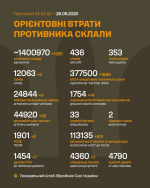
Jan 2026


April 2026


Russian rate of losses in Ukraine almost triples in one year​

Such a disastrous track record demonstrates that the things touted by this group are nothing but rubbish that no one cares about.BaiduShurufa_2026-6-28_15-59-5.png ;) 🤝
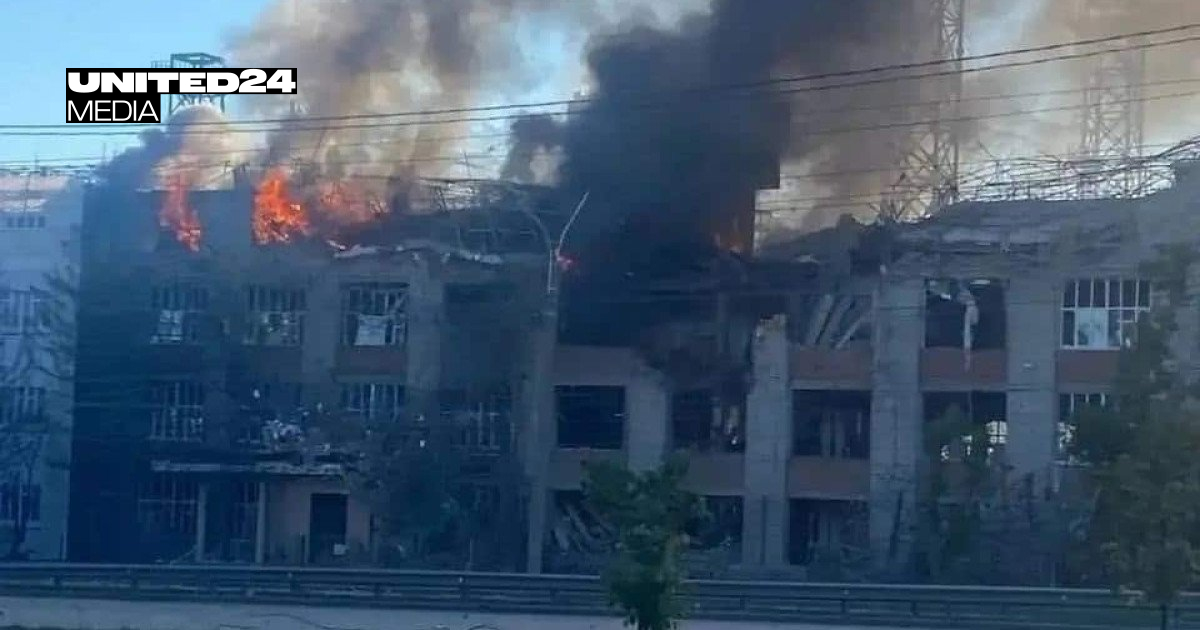
In any case, those who had doubts about the Flamingo’s operational capability can rest assured: it flies well. The Titan-Barrikady factory in Volgograd is reported to have been hit four times last night/this morning. This strike virtually removes any doubt as to the operational capability of the FP-5 Flamingo. Volgograd is not a nearby target: the Titan-Barrikady factory is located several hundred kilometres from the probable launch area, in the heart of a heavily defended region of Russia. Zelensky has confirmed the use of Ukrainian Flamingo missiles against the site, whilst the Russian authorities have acknowledged damage to the production facilities and ten people injured.

The target has been particularly well chosen. Titan-Barrikady manufactures, amongst other things, launchers and components for the Iskander-M systems and for Russian strategic missiles. A Flamingo carrying a payload of around one tonne is no longer merely a device designed to start a fire in a depot: it can cause severe damage to workshops, machine tools, assembly lines and industrial infrastructure that is difficult to replace.

The Ukrainian campaign is therefore changing in nature. Long-range drones saturate, identify and strike vulnerable targets; the Flamingo delivers a much heavier military payload against hardened installations or large industrial complexes. Even if the missile has not yet achieved the reliability of a mature Western system, it has moved beyond the demonstration prototype stage: it flies, occasionally penetrates Russian defences and produces significant effects deep behind enemy lines.

As for fuel, what is seen in the images is consistent with a crisis that has become geographically very widespread. As of 25 June, restrictions or rationing were reported in at least 55 to 56 Russian regions. In Siberia, particularly in the Irkutsk, Novosibirsk and Omsk regions, the authorities or distributors are prioritising essential services and are sometimes resorting to manual management of supplies. The Duma has even just authorised exceptional measures: the use of lower-grade fuels, support for imports and the postponement of certain obligations regarding refinery modernisation.

This is likely to remain a temporary situation at any individual filling station, as supply flows can be redirected. But the simultaneous and nationwide nature of the phenomenon is new. When shortages appear even in producing regions and in Siberia, it is no longer merely a local shortage: the refining and distribution system has lost its safety margins.

For Kerch, the direction of the queues speaks volumes politically: we no longer see crowds flocking to Crimea for their holidays; we see thousands of vehicles trying to leave, following power cuts, rationing and the cancellation of holiday camps.

There are therefore three interrelated images:
  • Operation Flamingo is striking a blow against the Russian military industry in Volgograd;
  • petrol stations are rationing fuel even deep in Siberia;
  • and queues are stretching eastwards as people leave Crimea.
These are no longer merely Ukrainian tactical successes. This marks the beginning of a visible shift in the everyday functioning and psychological geography of Russia at war.
Can the French still afford to pay their gas bills, or are they burning tires on the Champs-Élysées every day to keep warm?;)
f636afc379310a55fdaa41d7b54543a98226100112.jpg

The filial French President,
the impoverished French people,
filled with black and “green”---------------"diversity and inclusiveness",
I remember when I travelled to Paris in 2006, sitting at the entrance of Galeries Lafayette, in just 15 minutes I saw the police rush out of the store to catch thieves twice — twice.
A pity I didn't get to witness the Yellow Vests tyre-burning competition back then;
I imagine things are even more unbearable now.
Maybe in a few years when I go back, even grabbing a coffee will mean having to go to a halal canteen.
😃
 
Last edited:
Russia's ZAK-30 air defense system destroys Ukrainian drones. New footage of the Russian ZAK-30 "Citadel" anti-aircraft artillery system in action in Ukraine. The ZAK-30 air defense system is used by the 92nd Counter-UAV Regiment. The video shows the destruction of Ukrainian drones using 30-mm programmable munitions with an air-burst function. Drones are shot down at ranges of up to 1,200 meters, and the estimated consumption of munitions per target is approximately three. The ZAK-30 air defense system is based on the BM-30-D "Spitsa" module.