
You are using an out of date browser. It may not display this or other websites correctly.
You should upgrade or use an alternative browser.
You should upgrade or use an alternative browser.


Hermeus Unveils Air-Launched Ramjet-X Test Vehicle
https://aviationweek.com/defense/ai...us-unveils-air-launched-ramjet-x-test-vehicleHigh-speed aircraft maker Hermeus has revealed a ramjet-powered test vehicle that can be launched from under the wing of its supersonic Quarterhorse aircraft.
The unveiling of the Ramjet-X concept reveals a low-cost, expendable vehicle capable of high-speed flight to complement the reusable, Pratt & Whitney F100-229-powered Quarterhorse.
“Ramjet-X gives us a way to put new systems into sustained high-mach environments without building an expensive one-off test program every time,” Hermeus CEO Zach Shore said.
Smart - separate the risk from the expensive air vehicle to facilitate testing.
MQ-28 Block III, or really a solid candidate for a loyal wingman:Stealth technology Range ~4000 km2 weapons bays (1 AMRAAM or 2 SDB in each) Unit price equivalent to 1/10 () of the F-15 price


Castelion Moves Blackbeard into Production with U.S. Navy Order Valued Up to $200 Million

Castelion Moves Blackbeard into Production with U.S. Navy Order Valued Up to $200 Million - Castelion
Castelion today announced a production delivery order from the U.S. Navy, with a total value of up to $200 million, to manufacture, assemble, test, and deliver an initial lot of Blackbeard Hypersonic Weapons to the fleet. Awarded by Portfolio Acquisition Executive Aviation (PAE(A)) through its...
 www.castelion.com


Air Force secretary acknowledges the US has weapons in space
Troy Meink's statement is seen as a clear warning to China and Russia.
Air Force Secretary Troy Meink said Monday that the U.S. has weapons stationed in Earth’s orbit, the first public acknowledgment of a capability long assumed to exist after decades of debate over the weaponization of space.
"Today, we continue to ensure we remain ready to meet the challenges of evolving threats wherever they exist. This is why the United States now has on-orbit space control weapons capable of defending the Joint Force against hostile adversary action,” Meink said at the Air, Space and Cyber Conference, a stark warning to China and Russia.
"These capabilities can be employed for offensive and defensive purposes at the direction of combatant commands," a Space Force spokesperson told ABC News. "The U.S. has warned about Russian and Chinese weapons testing and operationalization since 2007. Due to their actions, it is no longer a question that space is a warfighting domain. Open communication strengthens deterrence, prevents adversary miscalculation, and normalizes space operations alongside the other services."
Earth’s orbit could become contested, national security experts and defense officials have long warned, with adversaries trying to disable or destroy satellites that provide troops with GPS, communications, intelligence and targeting data. Such attacks could also disrupt civilian communications and other systems critical to the global economy.
It’s unclear what kind of weapons the U.S. has placed in orbit or how long they have been deployed.
The prospect of warfare in space has loomed over military planning for decades as satellites have become essential to modern combat. Space weapons can include cyber weapons or lasers. They can also include satellites built to crash into others.
A kinetic conflict in space could also create lasting hazards in orbit. Destroyed satellites can produce debris traveling at extremely high speeds, increasing the risk of collisions and making it more difficult to safely launch and operate spacecraft.
View: https://x.com/SwarmAero/status/2099483870278127680?s=20
Swarm Unveils Gamera: A New Category of Low-Cost, Global Reach Aircraft for Persistent Strike and Sensing to Transform Global Power Projection
Swarm Unveils Gamera: A New Category of Low-Cost, Global Reach Aircraft for Persistent Strike and Sensing to Transform Global Power Projection
- Affordable, global-reach, Group 5 swarming strike and sensing aircraft has a ~72 foot wingspan and is designed for highly-efficient cruise and loiter missions with an unrefueled range of 9,000 nautical miles.
- Built with a novel manufacturing approach, Gamera lowers cost relative to legacy Group 5 UAS and crewed aircraft. Gamera delivers comparable standoff long-range strike effects for 10X lower cost-per-effect of existing platforms.
- The aircraft has over 2,800lbs of payload capacity and is the first UAS designed to employ bomber-class strike munitions such as LRASM/JASSM-ER missiles. Gamera’s large payload capacity enables it to deliver all of the capabilities of the MQ-9, as well as employ payloads the MQ-9 cannot.
- Swarm has matured its Legion command-and-control (C2) and autonomy software through multiple instances of successful, competitive contract performance. Legion orchestrates multi-domain, heterogeneous UXS in full end-to-end kinetic effect delivery and operates internationally in real-world operations.
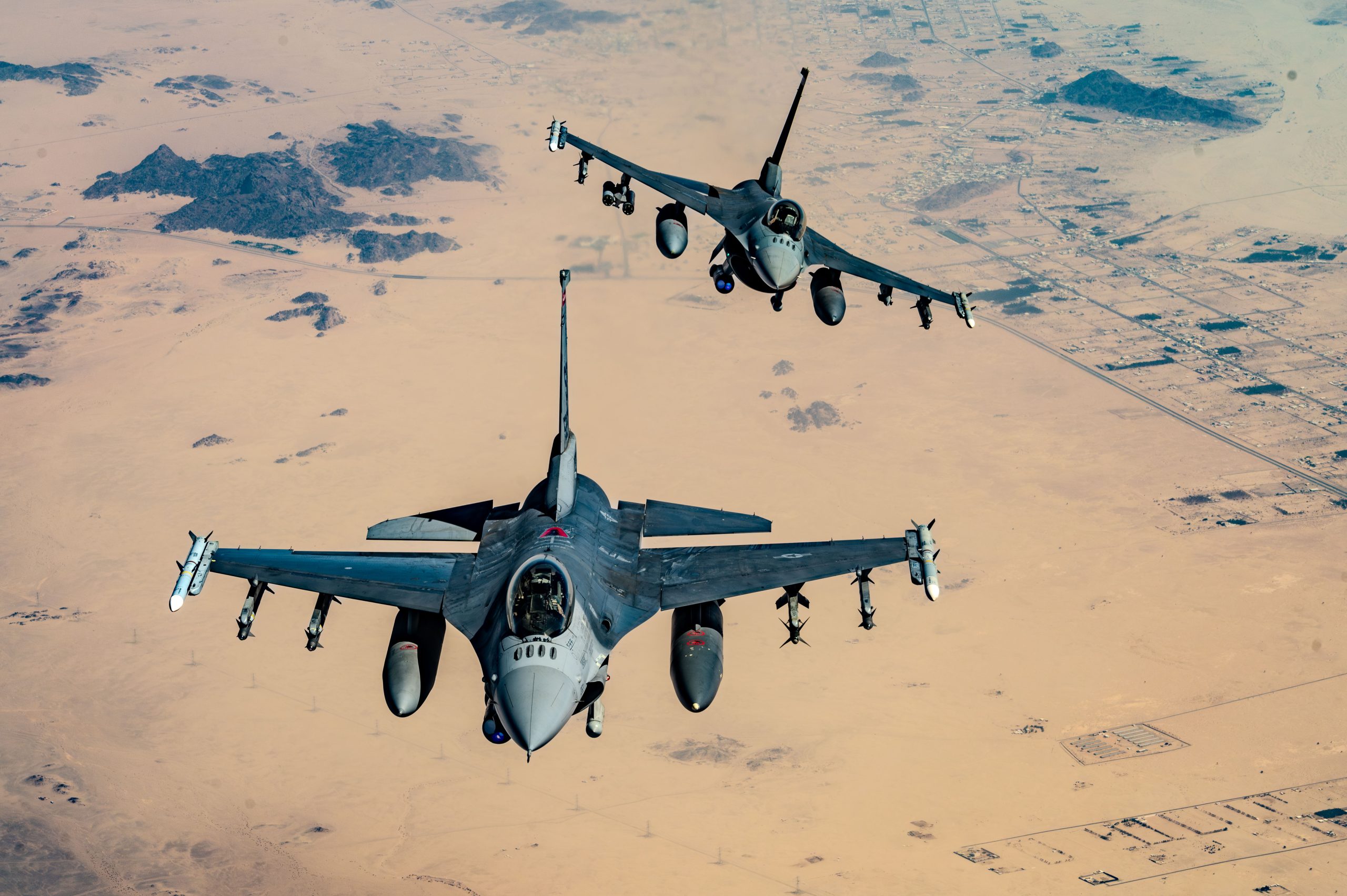
Air Force Eyes New-Build F-16s to Boost Fighter Force
The Air Force will consider acquiring new F-16 Fighting Falcon jets to answer capacity shortfalls in its aging fighter fleet, sources say.
 www.airandspaceforces.com
The Air Force will consider acquiring new F-16 Fighting Falcon jets to help fill capacity shortfalls in its aging fighter fleet, multiple people familiar with the matter told Air & Space Forces Magazine. These discussions are happening as the Air Force is building its proposed fiscal 2028 budget and the five-year spending plan that goes with it.
Buying new F-16s—which would be the U.S.’s first in more than 20 years—is viewed as one way to quickly build back lost fighter capacity, as Lockheed Martin continues to operate a hot production line for the aircraft. Buying F-16s from Lockheed, which also produces the F-35 Lightning II, would have parallels to the decision to acquire F-15EX Eagle IIs from Boeing, which likewise came after a yearslong gap in USAF purchases.
The new-build F-16s, potentially dubbed “F-16G” to reflect upgrades from existing F-16C and D models, could be on the agenda for discussion when Air Force four-stars gather this fall for a Corona gathering of top service officials.
Inside Defense reported in December 2025 the Air Force had made inquiries with Lockheed about the pricing for new F-16s.
Northrop Grumman, which is developing two major upgrades for existing F-16s, would also likely benefit. The company is working on the Integrated Viper Electronic Warfare Suite, or IVEWS, and an upgraded large aperture targeting pod called LITENING LA.
IVEWS, also known as the AN/ALQ-257, is an advanced electronic warfare system providing radar warning, active jamming, and detecting, identifying and locating of potential threats.
A source familiar with the issue, who asked not to be named to speak more freely, said any new F-16 would likely have IVEWS and multiple other new capabilities placing it not only beyond the legacy C and D fighters, but also the Block 70 fighters Lockheed is currently building.
“If the Air Force were to buy a new F-16, this would not be your grandfather’s F-16,” the source said. “This would be more akin to buying an F-15EX.”
The source said buying more F-16s would make sense for the Air Force, since Lockheed and Boeing are facing capacity constraints limiting how many F-35As and F-15EXs, respectively, they can build. And the service’s existing fleet of F-16s has been flown hard in the wars of recent decades, the source said.
“There’s only so many times you can do a service life extension program before you begin to lose the strength and integrity of the airframe itself,” the source said.
Buying new F-16s—which would be the U.S.’s first in more than 20 years—is viewed as one way to quickly build back lost fighter capacity, as Lockheed Martin continues to operate a hot production line for the aircraft. Buying F-16s from Lockheed, which also produces the F-35 Lightning II, would have parallels to the decision to acquire F-15EX Eagle IIs from Boeing, which likewise came after a yearslong gap in USAF purchases.
The new-build F-16s, potentially dubbed “F-16G” to reflect upgrades from existing F-16C and D models, could be on the agenda for discussion when Air Force four-stars gather this fall for a Corona gathering of top service officials.
Inside Defense reported in December 2025 the Air Force had made inquiries with Lockheed about the pricing for new F-16s.
Northrop Grumman, which is developing two major upgrades for existing F-16s, would also likely benefit. The company is working on the Integrated Viper Electronic Warfare Suite, or IVEWS, and an upgraded large aperture targeting pod called LITENING LA.
IVEWS, also known as the AN/ALQ-257, is an advanced electronic warfare system providing radar warning, active jamming, and detecting, identifying and locating of potential threats.
A source familiar with the issue, who asked not to be named to speak more freely, said any new F-16 would likely have IVEWS and multiple other new capabilities placing it not only beyond the legacy C and D fighters, but also the Block 70 fighters Lockheed is currently building.
“If the Air Force were to buy a new F-16, this would not be your grandfather’s F-16,” the source said. “This would be more akin to buying an F-15EX.”
The source said buying more F-16s would make sense for the Air Force, since Lockheed and Boeing are facing capacity constraints limiting how many F-35As and F-15EXs, respectively, they can build. And the service’s existing fleet of F-16s has been flown hard in the wars of recent decades, the source said.
“There’s only so many times you can do a service life extension program before you begin to lose the strength and integrity of the airframe itself,” the source said.
Cessna Cuts Cockpit Out Of SkyCourier Cargo Hauler For Uncrewed Logistics
As China moves at warp speed on uncrewed aerial logistics, Textron is offering a similar solution to the Pentagon with SkyCourier UX.

Cessna Cuts Cockpit Out Of SkyCourier Cargo Hauler For Uncrewed Logistics
As China moves at warp speed on uncrewed aerial logistics, Textron is offering a similar solution to the Pentagon with SkyCourier UX.
 www.twz.com
Lockheed’s New Modular JASSM Offers Swappable Noses and Launch Options
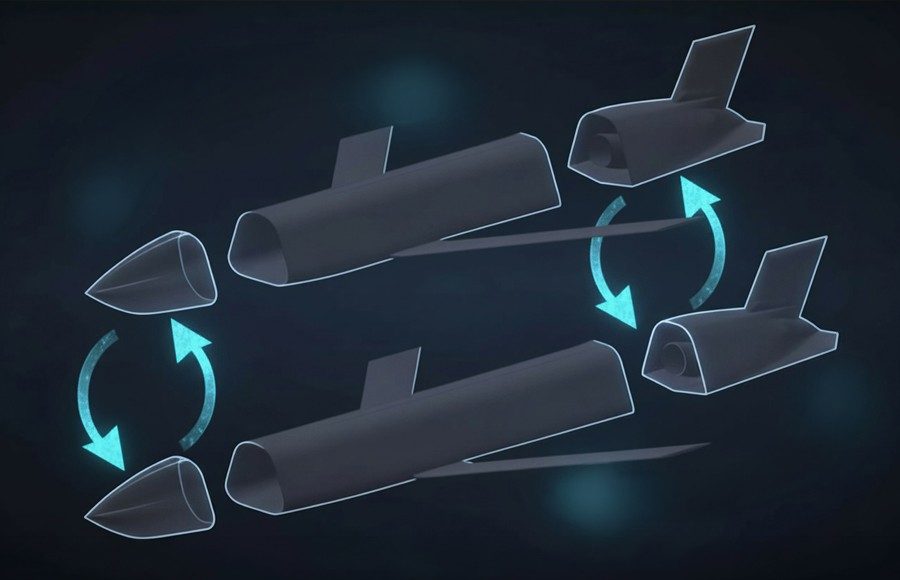
Lockheed Martin’s New Modular JASSM Offers Options
Lockheed Martin has unveiled its concept for a modular version of its Joint Air-to-Surface Standoff Missile called the AGM-158 FLEX.
www.airandspaceforces.com

The new-build F-16s, potentially dubbed “F-16G” to reflect upgrades from existing F-16C and D models, could be on the agenda for discussion when Air Force four-stars gather this fall for a Corona gathering of top service officials.
Lockheed Pitches Advanced F-16G To U.S. Air Force | Aviation Week
Lockheed Martin is pitching an upgraded variant of the F-16, called the F-16G, to the U.S. Air Force to fill Fighting Falcon units that will age out of their existing fighters.
 aviationweek.com
Multiple sources told Aviation Week that the F-16G is an improved version of the latest Block 70 variant of the fighter. A source familiar with the aircraft says it will include conformal fuel tanks, 600-gal. wing tanks, both an infrared search and track and SNIPER targeting pods and a drag chute.



NASA Chief Teases Mysterious Aircraft as Agency Plans New X-Planes
An unidentified aircraft resembling the SR-71 Blackbird appeared in Jared Isaacman’s All-In Summit presentation. Asked whether it was an SR-71, the NASA
 theaviationist.com


Here’s the interesting segment:
Interviewer: You showed a picture of the Blackbird up there.
Jared Isaacman: You sure that’s a Blackbird?
Interviewer: Well, okay. What was that picture that you showed up there?
Isaacman: Like I said, NASA’s getting back in the business of flying high and fast again.
Interviewer: I mean, that doesn’t seem like a space vehicle. It seems like an Earth-air vehicle.
Isaacman: Yeah. The first “A” in NASA is our aeronautics portfolio.

Blackbeard Hypersonic Missile Seen Flying On F/A-18 Super Hornet For The First Time
The Navy is pushing to get Blackbeard, a lower-cost and fast-to-produce standoff weapon, into operational service by 2028 at the latest.
www.twz.com
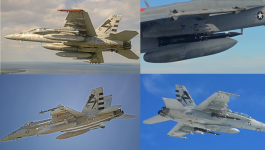
View: https://x.com/Supersonic_Red/status/2104733367337906556?s=20
aviationweek.com
NASA Asked Several Former SR-71A Staffers To Help Secret Restart
NASA Asked Several Former SR-71A Staffers To Help Secret Restart | Aviation Week
Nearly 27 years after the final Blackbird flight, NASA quietly launched a project last summer to return an SR-71A to flight.
aviationweek.com
CCAs and Autonomy Gain Momentum as Focus of Future Force
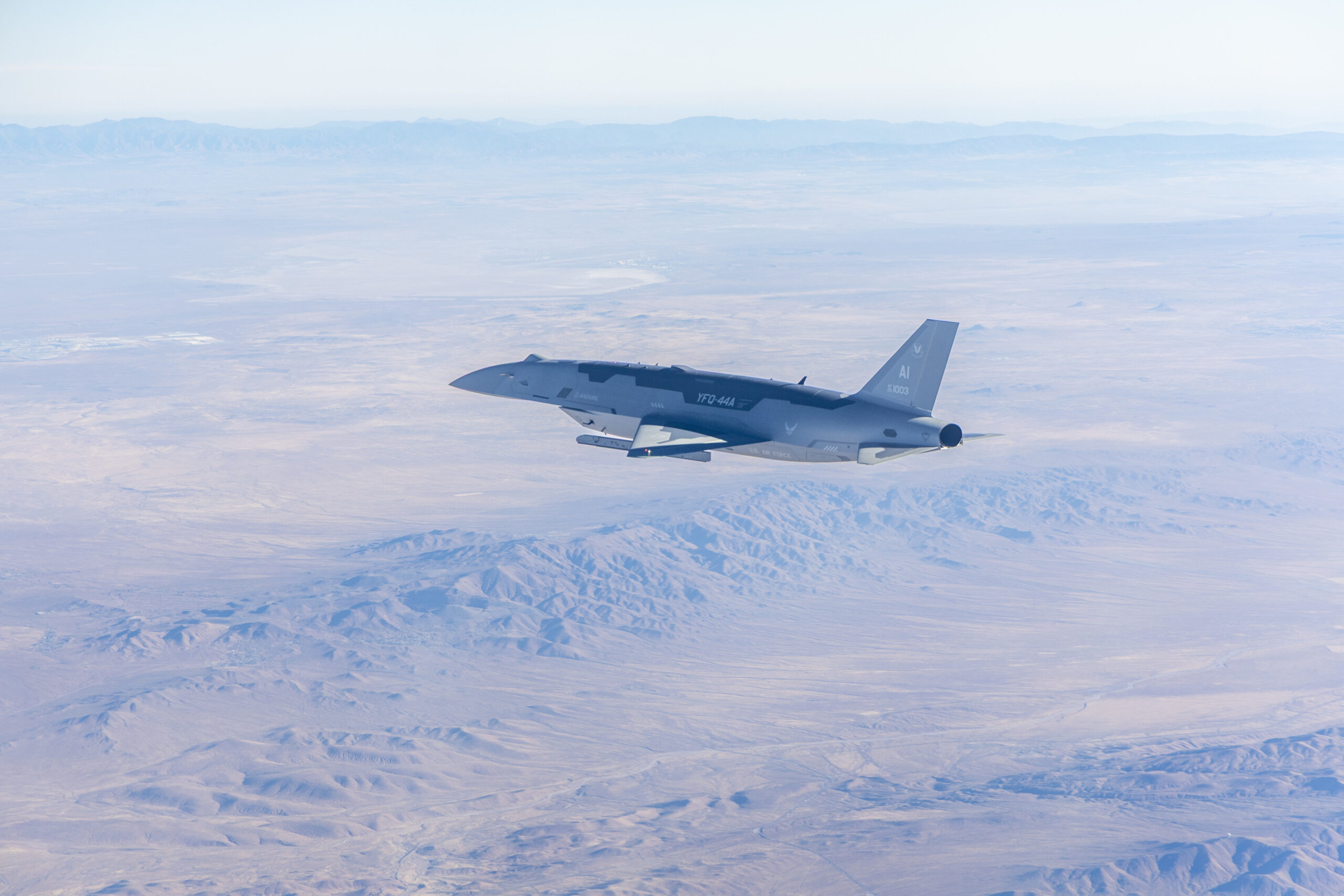
CCAs and Autonomy Gain Momentum as Focus of Future Force
The Air Force's autonomous drone era is rapidly approaching, and industry, service leaders, and operational squadrons are racing to prepare.
www.airandspaceforces.com
But now that promised vision appears imminent, with the Air Force promising at least 1,000 such drones by 2032.
Air Force Secretary Troy Meink kicked off AFA’s 2026 Air, Space & Cyber conference by promising the service will have at least 500 CCAs by then. And going a step further, he also predicted USAF will field an additional 500 Massed Modular Aircraft—a new semi-autonomous aircraft intended to inherit the MQ-9 Reaper’s strike and intelligence, surveillance, and reconnaissance missions, but at a lower price.

F-15EX May Finally Get Missile Warning System The USAF Originally Skimped On Buying
The F-15EX is designed to host a system to optically spot incoming missiles and its omission from USAF jets has become increasingly glaring.
www.twz.com