Indian Ballistic Missile Defence Programme - Updates and Discussions

2 things can be guessed.

Low Exo Atmospheric.

I might be off, but what I remember from geography Exosphere starts from somewhere like 500km altitude.

Low exo atmospheric should mean like 350km altitude at the very minimum.

Rest we don't know anything.

The length can be estimated by the length of flatbed of Tata 10x10. That I leave to someone else.
Endo atmosphere is below 100 Km
 
Well a good time to revisit this old SF thread on AAD


Slightly offtopic and purely my guess, this last tweet in the above thread, and the previous MAC Vympel unknown project D we heard about, might be simulation and tracking related to this or similar AD system? ie I mean collaborating on tracking/calculation/simulation of such near earth objects that are threats. I am basing this on Evgeniy comment and a wild guess. Most likely inaccurate I have to admit.


Screenshot.png
 
I like Dr Kamat more than previous Dr S Reddy, very clear on any info about projects he gives in simple language. Previously Dr Satheesh Reddy I don't know why always gave a political character sort of vibe to me.


Anyway offtopic again, the project D I was talking about in previous page, I think its not related to this nor MAK Vympel involvement with DRDO. Might be a bit related with the Sula radar we are buying from Russia though, to track space debris.
Mods please remove this to appropriate thread if needed.

Screenshot (1).png

telegram link :
 
Last edited:
I would describe the AD-1 as roughly equivalent to the Aster-30 Block-1NT and SM-6. It would form the lower rung of the BMD Phase-II program with regard to range & altitude, and will primarily be aimed at intercepting missile threats inside the atmosphere. The higher rung would be formed by the AD-2, which is still in development and is in the league of SM-3 with theatre-level BMD capabilities i.e. interceptions outside the atmosphere.

The two systems (along with supporting next-gen radars) form Phase-2 BMD and will likely see both land & ship-based use. The vessel INS Anvesh is already outfitted to carry out tests of theses BMD missiles in combination with new radars & combat management systems. If you recall, Phase-I was a technology demonstration phase under which several ABM platforms like AAD, PAD & PDV together with their support systems were developed & tested over the last decade. Phase-II represents the development of fully operationalized capabilities based on the lessons learnt from Phase-I tech demo.

The BMD-II is an indication of further progress in the following fields:
  • High Energy Solid Propellents
  • Next gen Divert & Attitude Control System (DACS)
  • Next gen Imaging Infrared (IIR) and Ka-band RF seekers (including AESA)
Older iterations of these technologies were already demonstrated on the XSV-1 ASAT missile, but as is visually apparent, the BMD Phase-II requires much more miniaturization & precision in these departments due to nature of the threats its supposed to defeat + nature of the mobile platforms that its supposed to be installed on.
 
I would describe the AD-1 as roughly equivalent to the Aster-30 Block-1NT and SM-6. It would form the lower rung of the BMD Phase-II program with regard to range & altitude, and will primarily be aimed at intercepting missile threats inside the atmosphere. The higher rung would be formed by the AD-2, which is still in development and is in the league of SM-3 with theatre-level BMD capabilities i.e. interceptions outside the atmosphere.

The two systems (along with supporting next-gen radars) form Phase-2 BMD and will likely see both land & ship-based use. The vessel INS Anvesh is already outfitted to carry out tests of theses BMD missiles in combination with new radars & combat management systems. If you recall, Phase-I was a technology demonstration phase under which several ABM platforms like AAD, PAD & PDV together with their support systems were developed & tested over the last decade. Phase-II represents the development of fully operationalized capabilities based on the lessons learnt from Phase-I tech demo.

The BMD-II is an indication of further progress in the following fields:
  • High Energy Solid Propellents
  • Next gen Divert & Attitude Control System (DACS)
  • Next gen Imaging Infrared (IIR) and Ka-band RF seekers (including AESA)
Older iterations of these technologies were already demonstrated on the XSV-1 ASAT missile, but as is visually apparent, the BMD Phase-II requires much more miniaturization & precision in these departments due to nature of the threats its supposed to defeat + nature of the mobile platforms that its supposed to be installed on.
Sir ji, it was mentioned that Programme LRSAM is meant for both IAF and IN. So the naval version means for the capital warships like DDGs or for INS Anvesh?
 
Sir ji, it was mentioned that Programme LRSAM is meant for both IAF and IN. So the naval version means for the capital warships like DDGs or for INS Anvesh?

For DDGs obviously, eventually.

INS Anvesh is just a Test & Evaluation vessel meant to serve as a platform for testing new weapon & system complexes during their development phases, prior to installing those systems on surface combatants.

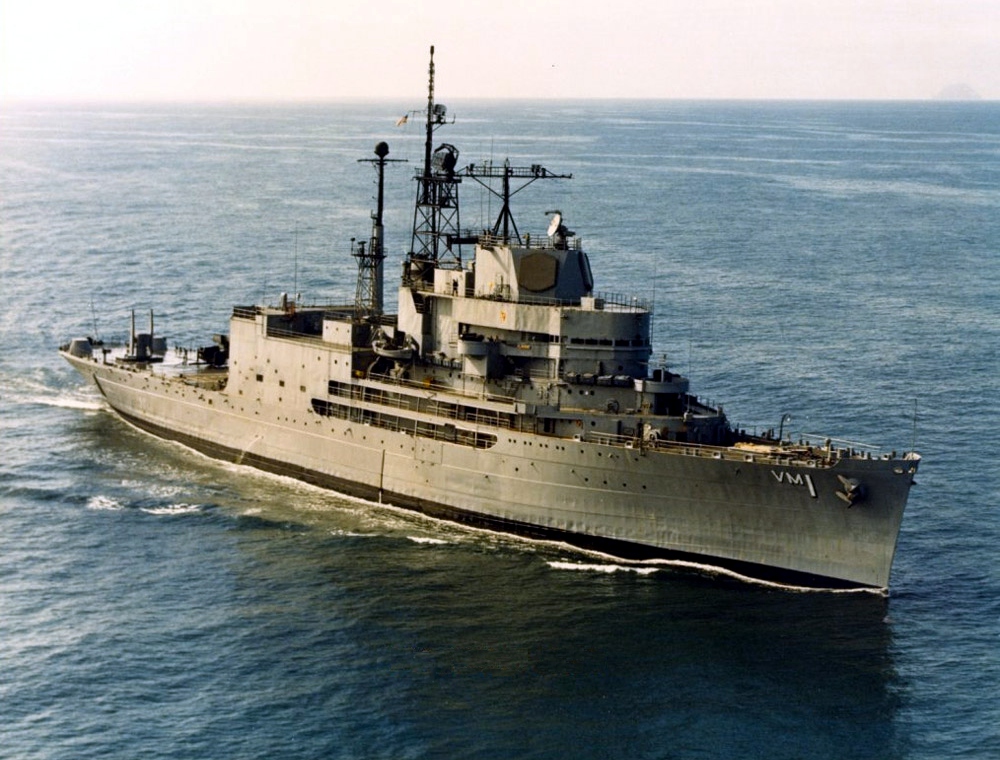
It's purpose is broadly similar to what was served by the USS Norton Sound (originally a non-combatant support ship) during the 70s and 80s, wherein it served as the platform to integrate and test the first iterations of both the AEGIS combat management system, the AN/SPY-1 radar, as well as the first prototype of the Mk.41 VLS. All these elements were integrated & tested together on this ship first, before being installed on Ticonderoga (and eventually Arleigh Burke) class warships.

INS Anvesh will serve a very similar purpose...with the exception of being a purpose-built vessel as opposed to Norton Sound which was originally a seaplane-tender.


USS_Norton_Sound_%28AVM-1%29_underway_at_sea%2C_circa_in_1980.jpg

The test version of AN/SPY-1 radar can be seen mounted on top
 
If you recall, Phase-I was a technology demonstration phase under which several ABM platforms like AAD, PAD & PDV together with their support systems were developed & tested over the last decade. Phase-II represents the development of fully operationalized capabilities based on the lessons learnt from Phase-I tech demo.
Nope. Phase 1 is now fully deployed and operational. BDL annual report of 2021-22 has already confirmed production orders for both AAD/PDV. Check this out(first paragraph):

Screenshot_20221104-173837_Chrome.jpg
 
I would describe the AD-1 as roughly equivalent to the Aster-30 Block-1NT and SM-6.

If you are referring to class, then maybe yes, we don't know enough though, at least we know it's endo-atmospheric. But in terms of capabilities, the AAD alone surpasses the other two. Both 1NT and SM-6 can intercept low end MRBMs, similar to AAD. But AD-1 is designed to intercept IRBMs. So in terms of roles it's on a whole different level. Outside Russia, I don't believe there is an equivalent.
 
If you recall, Phase-I was a technology demonstration phase under which several ABM platforms like AAD, PAD & PDV together with their support systems were developed & tested over the last decade. Phase-II represents the development of fully operationalized capabilities based on the lessons learnt from Phase-I tech demo.

P1 based on AAD/PDV has already become operational and is being expanded. It's meant to mainly stop Pak and Chinese SRBMs/MRBMs. It's our Patriot/THAAD equivalent. I think you're confused about PAD, because that was a TD for the PDV.

P2 based on AD-1/AD-2 is meant to stop Chinese IRBMs.

Both sit in their own niche areas of engagement.

We don't have an immediate need for ICBM interception, the Chinese need to further evolve their SSBN fleet for that to happen, ie, the JL-3 ICBM. The ASAT design could play a part by then.
 
If you are referring to class, then maybe yes, we don't know enough though, at least we know it's endo-atmospheric. But in terms of capabilities, the AAD alone surpasses the other two. Both 1NT and SM-6 can intercept low end MRBMs, similar to AAD. But AD-1 is designed to intercept IRBMs. So in terms of roles it's on a whole different level. Outside Russia, I don't believe there is an equivalent.

I'm going on the basis of both AD-1 and Block-1NT being supposedly rated for 1,500-km class threats.

EifvX0-XcAEsuxa.png

P1 based on AAD/PDV has already become operational and is being expanded. It's meant to mainly stop Pak and Chinese SRBMs/MRBMs. It's our Patriot/THAAD equivalent. I think you're confused about PAD, because that was a TD for the PDV.

P2 based on AD-1/AD-2 is meant to stop Chinese IRBMs.

Both sit in their own niche areas of engagement.

We don't have an immediate need for ICBM interception, the Chinese need to further evolve their SSBN fleet for that to happen, ie, the JL-3 ICBM. The ASAT design could play a part by then.

The 'operationalization' of AAD/PDV is at best a knee-jerk reaction to get a limited capability set pending the delayed arrival & deployment of S-400. The systems, much like LCH in Ladakh, were rushed into a semi-official role due to incidents of 2019-20.

Only the AD-1/2 are meant to be definitive systems.

Only part of the Phase-1 program which was always meant to serve operational purposes was the deployment of Long-range tracking radars.
 
The 'operationalization' of AAD/PDV is at best a knee-jerk reaction to get a limited capability set pending the delayed arrival & deployment of S-400. The systems, much like LCH in Ladakh, were rushed into a semi-official role due to incidents of 2019-20.

Only the AD-1/2 are meant to be definitive systems.

Only part of the Phase-1 program which was always meant to serve operational purposes was the deployment of Long-range tracking radars.

Not at all. It is a proper program meant for operational use. It's been deployed operationally. At least the widespread deployment of TELs is starting this year (2022!!! :cool:). Until now it was all stuff developed for testing purposes. P1 even has its own MFCR.

That infographic is misleading. It says AD-1 is more than 1500Km and AD-2 is more than 3000Km because AAD and PDV are below 1500Km and 3000Km respectively.

Also, BMD missiles are specific to the BM type. For example, AAD and PDV are more effective in countering SRBMs and MRBMs than AD-1 and AD-2, because the latter have been developed to operate against a different type. Now, while AD-1 might get away with shooting down an SRBM/MRBM because it's within the atmosphere, although it may struggle, AD-2 will be completely useless against SRBMs and MRBMs because its trajectory is meant for a whole different target.

For example, if you are trying to throw a ball from the ground to a friend on the third floor versus another friend on the first floor, you would need different amounts of force and throwing actions for both floors. Missiles are the same. But the difference between your throwing arm and the missile is you can make the adjustment necessary to use the right amount of force, but a missile using a solid rocket motor cannot do the same. It cannot throttle up or down, so you need a whole new missile to deal with a different target coming in at a different angle and speed.

Point being, P1 and P2 are complementary and both are necessary to protect a target. One protects a target from SRBMs and MRBMs and the other deals with IRBMs.

The S-400 has little to do with the BMD program, it's meant for a specific IAF requirement driven by the lack of fighter squadrons, Operation Copium-400. I'd say its BMD capability is complementary to the DRDO's as it features far greater tactical mobility and survivability, not necessarily capability. Plus it's proven. I guess the faster induction helps too. The S-400 is still the IAF's coping mechanism. It's primarily about transferring the small number of fighters left to offensive missions and employing a high-risk method of defence instead. If the USAF openly says they have lost conventional deterrence against China, then you can imagine how bad it is for us.

The LRTR meant for P1 was less capable. Due to delays, the LRTR meant for P2 became the main version for both phases.