Indian Ballistic Missile Defence Programme - Updates and Discussions

I'm yet to see test launch of any tactical missile (i.e. anything that can fit on a 12x12 or smaller vehicle) that doesn't happen from a camo truck.

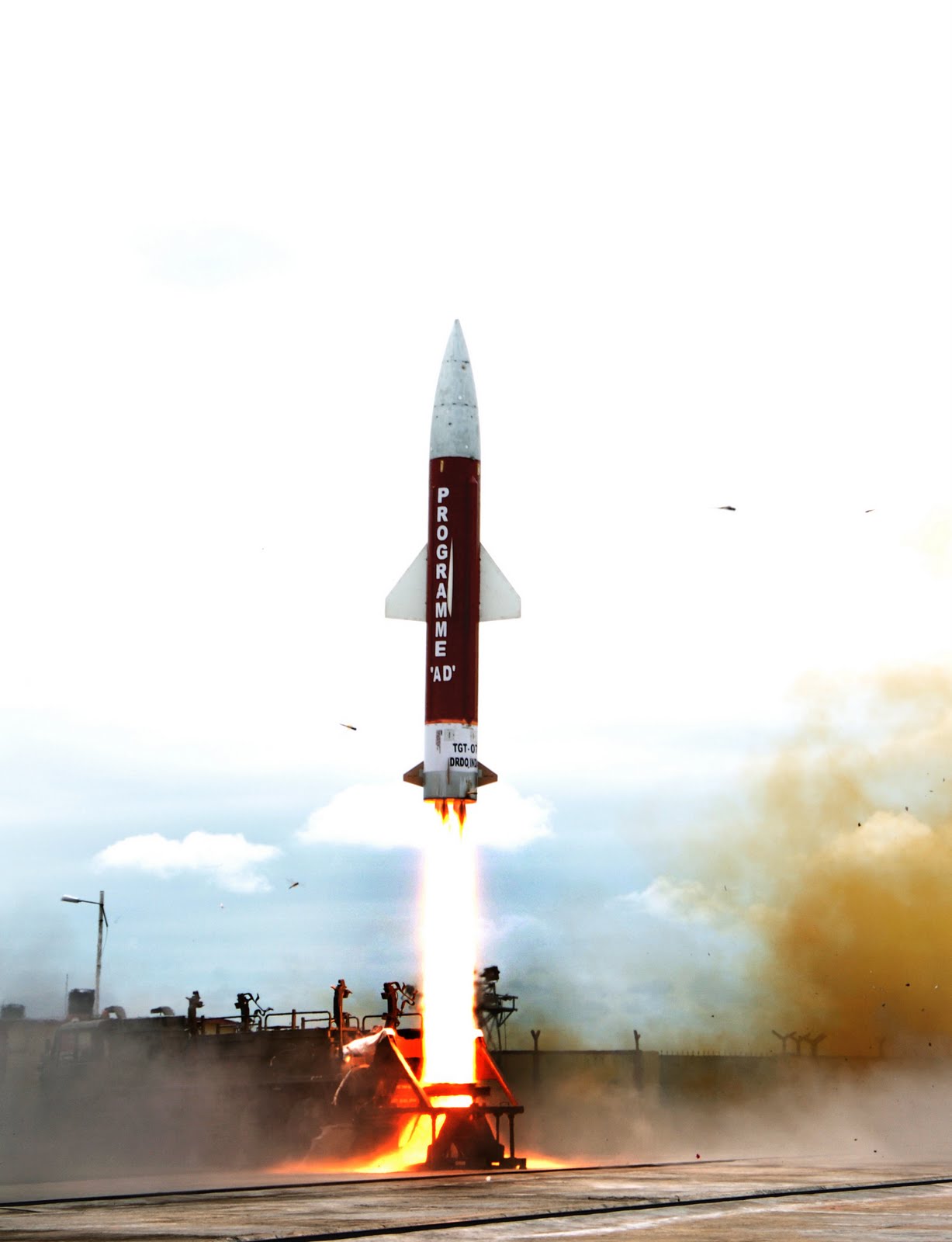
As you can see, the truck even in this pic of latest AAD config clearly has DRDO markings all over. This is not an Army truck, and this isn't a 'user trial' by any means.

As per Delhi Defence Review it was a missile in its final configuration for serial production. I suppose they used the Prahaar launcher for the test, since the Prahaar is a DRDO program, not an official IA program.

THAAD isn't meant to intercept ICBMs and they never claimed it was.

"THAAD defends against short, medium, and intermediate-range ballistic missiles"


IRBMs is as high as it goes - and that's what the missile launched from C-17's cargo hold was, a solid-fuel IRBM class target missile built by OSC, Northrop & Orbital ATK (bottom row, second from right):
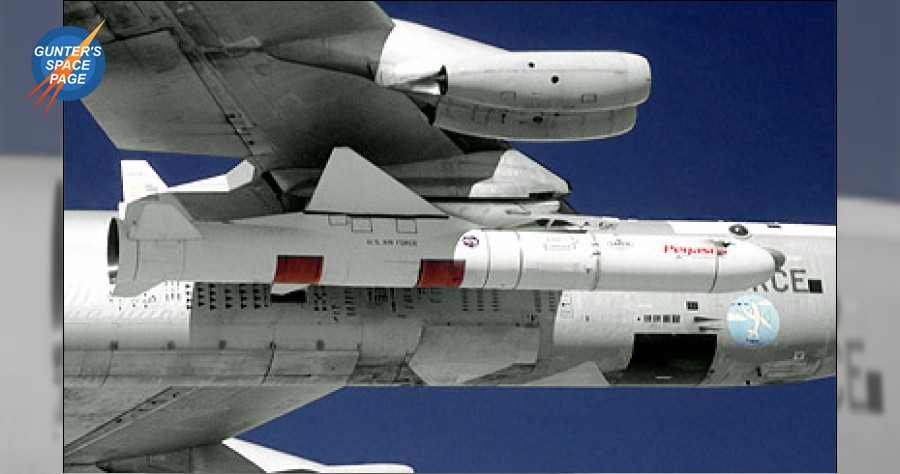

(It was either that or Northrop's own IRBM class target which is also of similar dimensions)

THAAD is a terminal-stage interceptor so the type of launch platform hardly matters - its just the kinematics of the missile during its terminal stage (where it's just the RV tumbling toward target) that matter.


Yeah it was likely this:
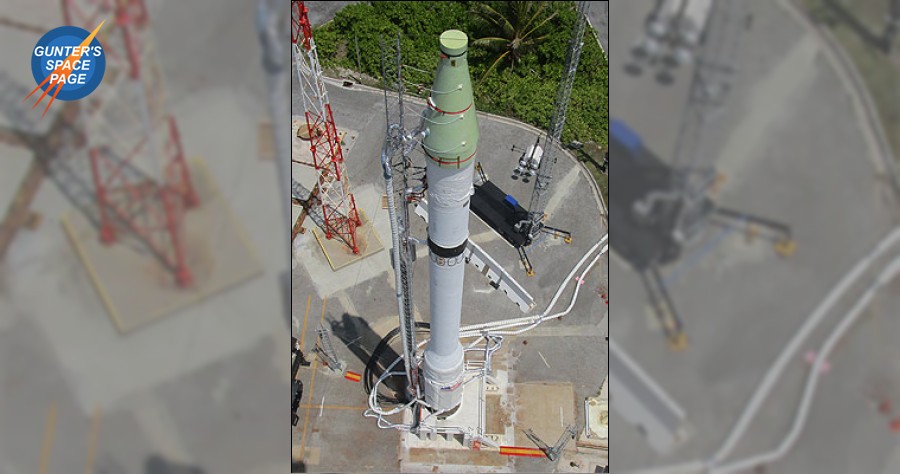

Using a Trident-I ICBM boost stage, it can perhaps simulate too well missiles like the DF-31 or JL-2, which are among the longest-ranged types that an AEGIS ship would likely be tasked to intercept during ascent phase.

They didn't test against a 300-km ATACMS and claim it was representative of a Chinese/Russian IRBM or ICBM - which would have been akin to what we're doing.

Interesting, so the same rules don't apply to a DRDO made target missile? You're saying a target missile intercepted at MRBM height isn't an MRBM class target?

And does DRDO claiming AAD and PDV have been designed to defeat all SRBM/MRBMs also not count?

That ICBM thing was from your link. And the Pegasus target missile is meant for their GBI tests. You forget that the US does not possess MRBMs or IRBMs, they need to use test missiles.

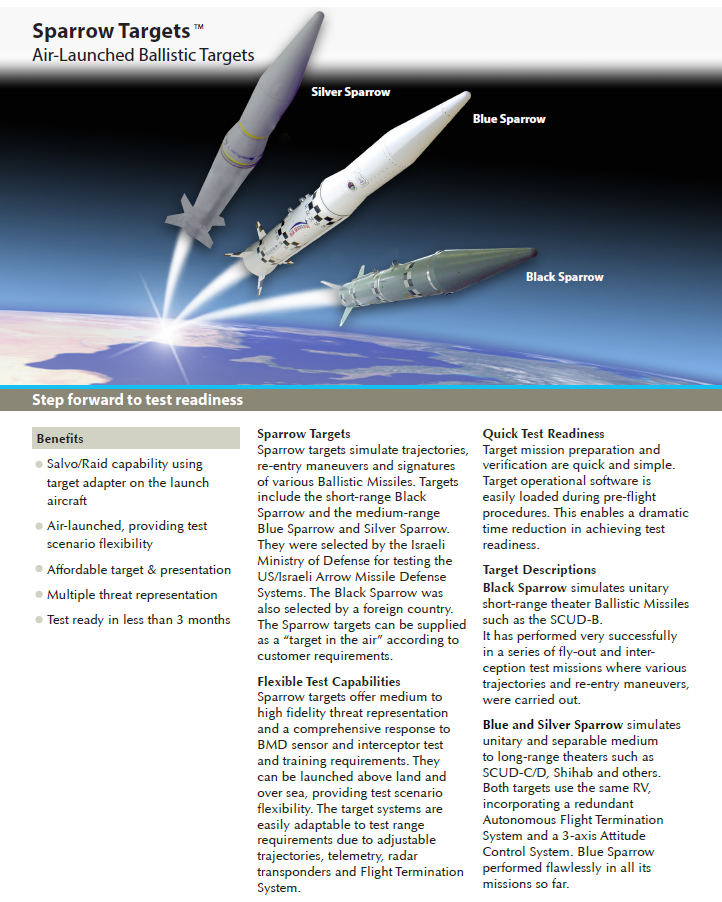
Anyway this is what Israel uses for their tests.
6ptZDPF.png

51104_blue-sparrow-f-15-rafael_52382.jpg


dp5pBIY.png


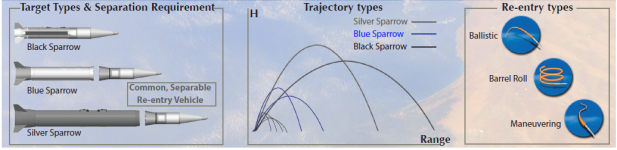
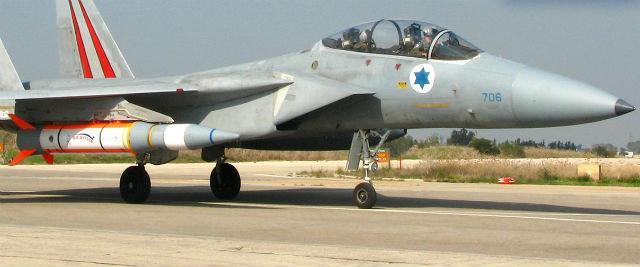
Black and Blue Sparrows simulate SRBMs, while Silver Sparrow simulates MRBMs, particularly the Shahab-3 family with a range up to 2000Km. The Silver Sparrow is launched by a C-130.

Unlike the Americans and Israelis who use an aircraft to launch their target missile, our target missile takes off from the ground. What really matters is the final stage, the reentry vehicle. And DRDO's target missile comes in various configurations necessary to simulate different SR and MRBMs. DRDO's target missile is far more capable than the Silver Sparrow due to the need to simulate missiles up to 3000Km.

Anyway, P1 is not a TD. It's a high priority program meant for operational use.

India's ASAT test's actual kill has less to do with technical reasons and more to do with political reasons. India failed to become a nuclear-have due to the failure to test a nuke. The ASAT test firmly puts us in the upcoming space club.
 
  • Like
Reactions: Chain Smoker
As per Delhi Defence Review it was a missile in its final configuration for serial production. I suppose they used the Prahaar launcher for the test, since the Prahaar is a DRDO program, not an official IA program.

DRDO intends a lot of stuff for serial production, including Prahaar. Doesn't mean they happen.

Interesting, so the same rules don't apply to a DRDO made target missile? You're saying a target missile intercepted at MRBM height isn't an MRBM class target?

And does DRDO claiming AAD and PDV have been designed to defeat all SRBM/MRBMs also not count?

That ICBM thing was from your link. And the Pegasus target missile is meant for their GBI tests. You forget that the US does not possess MRBMs or IRBMs, they need to use test missiles.

Anyway this is what Israel uses for their tests.
View attachment 25131

51104_blue-sparrow-f-15-rafael_52382.jpg


dp5pBIY.png


Black and Blue Sparrows simulate SRBMs, while Silver Sparrow simulates MRBMs, particularly the Shahab-3 family with a range up to 2000Km. The Silver Sparrow is launched by a C-130.

Unlike the Americans and Israelis who use an aircraft to launch their target missile, our target missile takes off from the ground. What really matters is the final stage, the reentry vehicle. And DRDO's target missile comes in various configurations necessary to simulate different SR and MRBMs. DRDO's target missile is far more capable than the Silver Sparrow due to the need to simulate missiles up to 3000Km.

Not in our case because we use a liquid stage for ascent which means the RV never gets to attain the velocities that would be expected from a Pakistani MRBM. The second stage alone cannot be relied upon if the boost stage doesn't do its job. It's just like a rocket - if the PSLV's first stage fizzles out and gives only about 50-60% of the expected thrust, can the satellite still be orbited? Nope.

The US air-launched IRBM targets use 2 solid fuel stages which is what enables them to simulate the actual velocities of Russian/Chinese missiles of similar range class. The air-launching is more a result of suitable launch pads not being available in a given hemisphere where they might want to conduct a full-range test.

Anyway, P1 is not a TD. It's a high priority program meant for operational use.

We'll see - like I said, such a development, if the decision is actually taken, is not something that can or would be hidden.

India's ASAT test's actual kill has less to do with technical reasons and more to do with political reasons. India failed to become a nuclear-have due to the failure to test a nuke. The ASAT test firmly puts us in the upcoming space club.

You sure there won't be a ban against interceptors that can handle threats above a certain range class? A working BMD i.e. an ability to negate the others' warheads, is as intrinsic to the whole concept of Deterrence as perhaps the bomb itself.

Like I said, now that P2 is in motion, interceptions of actual Agni-class target missiles will undoubtedly happen pretty soon.
 
For civilian targets, protecting metro cities is the most important. That's where all of our brain power and GDP comes from. Delhi and Mumbai are the topmost priority. Then comes ports, like Chennai and Kolkata, followed by money-makers like Bangalore, Pune and Hyderabad. Followed by some important industrial clusters. Everything else can be rebuilt.

Arrey bhaiya to protect Mumbai you need to protect whole of the western and central India its not just that you place the BMD near Khandala and wait the warhead to fly over Mumbai, the gradient of reentry will begin somewhere near Bhopal when fired from Beijing and end at Mumbai. Similar is for Chennai wrt to where the incoming missile is fired from, and same for Kolkata and Delhi.

The Locus needs to be vast bet it endo or exo atmospherics interception, other wise probability of timely interception falls down.
 
DRDO intends a lot of stuff for serial production, including Prahaar. Doesn't mean they happen.

BMD is an official IAF program. Can't compare it with the Prahaar.

Not in our case because we use a liquid stage for ascent

The target missile is all solid, as are the interceptors. PAD used liquid 'cause it was a TD.

You sure there won't be a ban against interceptors that can handle threats above a certain range class? A working BMD i.e. an ability to negate the others' warheads, is as intrinsic to the whole concept of Deterrence as perhaps the bomb itself.

With the ABM Treaty dead, a new one has to be created from scratch. But since our main threats are from SR/MRBMs and IRBMs, we won't face as much difficulty pushing it through, since countries need it against conventional capability too.

As long as we defang Pakistan, our main nuclear threat, we won't need a more capable BMD, 'cause a global nuclear war will see total destruction of all countries, not just the ones fighting. Nobody has the funds or tech that can reliably stop ICBMs either.

Like I said, now that P2 is in motion, interceptions of actual Agni-class target missiles will undoubtedly happen pretty soon.

Agni I/II class has already been simulated in P1. Agni III/IV/V need a new target missile. It will also be a representative missile, nobody has the kinda money to actually launch an IRBM as a target.

Anyway, time will tell us about P1. Probably as quickly as next year.
 
  • Like
Reactions: Chain Smoker
Arrey bhaiya to protect Mumbai you need to protect whole of the western and central India its not just that you place the BMD near Khandala and wait the warhead to fly over Mumbai, the gradient of reentry will begin somewhere near Bhopal when fired from Beijing and end at Mumbai. Similar is for Chennai wrt to where the incoming missile is fired from, and same for Kolkata and Delhi.

The Locus needs to be vast bet it endo or exo atmospherics interception, other wise probability of timely interception falls down.

The interceptors have very high slant ranges, like 300Km for AAD and 2000Km for PDV, lower for BMD. So I suppose the PDV/AD-2 will be able to intercept the warhead long before it reaches the atmosphere well beyond Bhopal.

But since it's a two-tier system, it needs the protection of AAD/AD-1 too, so these have to be localised.

So we will see a few PDV/AD-2 sites for the wider area placed along potential intercept paths and many AAD sites for local protection. The S-400 will also benefit from the protection of the PDV, whereas 40N6 and 48N6 will form the AAD/AD-1 component for the area they protect.

If we assume a missile's doing 1Km/s average at an altitude of 50Km, then it will reach the ground in 50s. Assuming an intercept takes place at 20Km, then the AAD will need to reach the interception spot in less than 30s considering the slant range. So it's not a lot of range, which means the interception will happen right over the target.
 
BMD is an official IAF program. Can't compare it with the Prahaar.

But what does it have to do with camo trucks though. All these camouflaged trucks are DRDO-owned and are not indicative of any Military participation in of themselves. The use of camo trucks is common to all programs, whether sanctioned or unsanctioned, whether they are maiden test launches or end-user trials.

The target missile is all solid, as are the interceptors. PAD used liquid 'cause it was a TD.

No, on the contrary the target missile is all-liquid. It's basically the same as your regular Prithvi.

The 'second stage' of Prithvi is basically just the tumbling RV with no propulsion of its own, hence is largely irrelevant to our conversation as the missile is solely dependent on the boost stage itself for imparting all the necessary velocity.

This is the target missile, note the "TGT" near nozzle:

Target-722314.JPG


I have not seen any information that would indicate the Prithvi-based TGTs were solid-fueled, please correct me if I'm missing something here.

With the ABM Treaty dead, a new one has to be created from scratch.

So does an ASAT treaty.

Agni I/II class has already been simulated in P1. Agni III/IV/V need a new target missile. It will also be a representative missile, nobody has the kinda money to actually launch an IRBM as a target.

Anyway, time will tell us about P1. Probably as quickly as next year.

Again, I have no idea how a liquid-fueled 250-km SRBM can simulate a solid-fueled 2,000-km MRBM. The weight, thrust, Isp, velocities are worlds apart.
 
Last edited:
But what does it have to do with camo trucks though. All these camouflaged trucks are DRDO-owned and are not indicative of any Military participation in of themselves. The use of camo trucks is common to all programs, whether sanctioned or unsanctioned, whether they are maiden test launches or end-user trials.

Time will answer that, at least by next year.

No, on the contrary the target missile is all-liquid. It's basically the same as your regular Prithvi.

The 'second stage' of Prithvi is basically just the tumbling RV with no propulsion of its own, hence is largely irrelevant to our conversation as the missile is solely dependent on the boost stage itself for imparting all the necessary velocity.

This is the target missile, note the "TGT" near nozzle:

Target-722314.JPG


I have not seen any information that would indicate the Prithvi-based TGTs were solid-fueled, please correct me if I'm missing something here.


So does an ASAT treaty.


Again, I have no idea how a liquid-fueled 250-km SRBM can simulate a solid-fueled 2,000-km MRBM. The weight, thrust, Isp, velocities are worlds apart.

The single-stage target missile (see image below) used in this test is based on a Prithvi booster and is capable of mimicking the re-entry characteristics of a medium range ballistic missile (MRBM). In order to successfully simulate the angle of attack and re-entry velocity usually associated with a MRBM, this target missile has an apogee greater than that of a standard member of the Prithvi missile family. Incidentally, the target missile also boasts a ring-laser gyroscope (RLG) based INS.

...the interceptor is based on the nuclear-capable Prithvi missile and the target developed for mimicking a hostile Ballistic Missile approaching from more than 2,000 km away was launched from a ship anchored in the Bay of Bengal.

The "exo-atmospheric" (outside the earth's atmosphere) interceptor missile tested, also called the PDV (Prithvi defence vehicle), directly hit the target missile at an altitude of 97km.

"Both, the PDV interceptor and the two stage target missile, were successfully engaged."


The target missile comes in different configurations. As far as I have understood, there are at least two known systems, one is single stage for endo-atmospheric tests and the other is a two-stage missile for exo. Both links have very reliable sources.

There is apparently an international ASAT Treaty being mooted as an extension of the Outer Space Treaty, although I'm not sure if the Russians and Chinese will be willing to sign one 'cause it currently only benefits the US.
 
  • Like
Reactions: Chain Smoker
Our AAD and PDV combo is good enough for anything Pakistani and Phase II would safeguard us from Chinese threats.

Having said that no BMD system is 100% fool-proof. That's why Indian government has done the right thing by making the first Phase operational rather than ever waiting for the "next best tech" to arrive. It's an organic curve.
 
The single-stage target missile (see image below) used in this test is based on a Prithvi booster and is capable of mimicking the re-entry characteristics of a medium range ballistic missile (MRBM). In order to successfully simulate the angle of attack and re-entry velocity usually associated with a MRBM, this target missile has an apogee greater than that of a standard member of the Prithvi missile family. Incidentally, the target missile also boasts a ring-laser gyroscope (RLG) based INS.

...the interceptor is based on the nuclear-capable Prithvi missile and the target developed for mimicking a hostile Ballistic Missile approaching from more than 2,000 km away was launched from a ship anchored in the Bay of Bengal.

The "exo-atmospheric" (outside the earth's atmosphere) interceptor missile tested, also called the PDV (Prithvi defence vehicle), directly hit the target missile at an altitude of 97km.

"Both, the PDV interceptor and the two stage target missile, were successfully engaged."


The target missile comes in different configurations. As far as I have understood, there are at least two known systems, one is single stage for endo-atmospheric tests and the other is a two-stage missile for exo. Both links have very reliable sources.

So one is an all-liquid type (i.e. regular Prithvi-like) and the other is one where at least the ascent stage is Prithvi-derived i.e. also liquid. We don't know whether the 2nd stage was solid or liquid but let's assume solid.

The question is how can the liquid stage impart enough velocity for the solid 2nd to take over from, cuz that's what the Pakistani BMs would be doing - they don't have a liquid 1st stage.

I'm aware that DRDO claims it can simulate this & that, I just don't understand how those claims make any sense beyond PR.
 
So one is an all-liquid type (i.e. regular Prithvi-like) and the other is one where at least the ascent stage is Prithvi-derived i.e. also liquid. We don't know whether the 2nd stage was solid or liquid but let's assume solid.

The question is how can the liquid stage impart enough velocity for the solid 2nd to take over from, cuz that's what the Pakistani BMs would be doing - they don't have a liquid 1st stage.

I'm aware that DRDO claims it can simulate this & that, I just don't understand how those claims make any sense beyond PR.

Prithvi I and II are liquid. Prithvi III is solid + liquid. TGT is all solid.

It's easy to simulate MRBMs and IRBMs using SRBMs because of payload. The Prithvi has been designed for a 500-1000Kg payload, but the target missile probably carries a 100Kg payload. A Prithvi III with a 200Kg nuke does 800Km, which could have an apogee of 100Km. The Agni II has an apogee of 200+Km. So all you have to do is take a Prithvi III and work your way from there by modifying the second stage, ie all solid, different motor, different test warheads etc. The TGT is only based on the Prithvi III, no different from how the ASAT is based on an Agni.

For P1, they launched the TGT from 70Km away, but with different trajectories, they managed to simulate missiles fired from 2000-2500Km. Also, when they speak of range, they are actually referring to speed. And to get speed, you need apogee. If your apogee is equal to MRBM apogee, then you are simulating an MRBM. You can even add thrusters to the warhead to increase speed before it hits the atmosphere. So if your apogee is 150Km, then thrusters can add to the speed to mimic a 300+ Km apogee.
 
Our AAD and PDV combo is good enough for anything Pakistani and Phase II would safeguard us from Chinese threats.

Having said that no BMD system is 100% fool-proof. That's why Indian government has done the right thing by making the first Phase operational rather than ever waiting for the "next best tech" to arrive. It's an organic curve.
Not really good for "anything Pakistan has".
May be good for slower Ghauri or Short range missiles, such as Ghaznavi.
But newer warheads are faster, for example Shaheen 3 has re entry speed of 22000 KPH, or Mach 18.
That's a bit too fast even for S-400, because S-400 can only track targets up to mach 14.
 
  • Informative
Reactions: RASALGHUL
Not really good for "anything Pakistan has".
May be good for slower Ghauri or Short range missiles, such as Ghaznavi.
But newer warheads are faster, for example Shaheen 3 has re entry speed of 22000 KPH, or Mach 18.
That's a bit too fast even for S-400, because S-400 can only track targets up to mach 14.

Question is if it's operational.

Shaheen 3 could fall into the entry-level IRBM category too. But I don't think that even when it's operational, it will change the calculus for P1 'cause a 100% capability is unlikely. So a few Shaheen 3s getting through will be par for the course.

In any case, PDV has been tested since 2009, so it will have seen further improvements.

There's nothing saying the ASAT cannot perform BMD either, it's basically a PDV with a bigger booster.

The S-400 was limited by a treaty. Our S-400s can use our BMD radars for surveillance, and it's not expensive to induct a handful of more modern FCRs capable of defeating more robust threats, including hypersonic CMs and glide bombs. As for the treaty, knowing the Russians, you can bet it's just a software restriction, no different from Brahmos's range magically increasing overnight by 100Km after we entered the MTCR.
 
Question is if it's operational.

Shaheen 3 could fall into the entry-level IRBM category too. But I don't think that even when it's operational, it will change the calculus for P1 'cause a 100% capability is unlikely. So a few Shaheen 3s getting through will be par for the course.

In any case, PDV has been tested since 2009, so it will have seen further improvements.

There's nothing saying the ASAT cannot perform BMD either, it's basically a PDV with a bigger booster.

The S-400 was limited by a treaty. Our S-400s can use our BMD radars for surveillance, and it's not expensive to induct a handful of more modern FCRs capable of defeating more robust threats, including hypersonic CMs and glide bombs. As for the treaty, knowing the Russians, you can bet it's just a software restriction, no different from Brahmos's range magically increasing overnight by 100Km after we entered the MTCR.
I am unaware of any treaties. Was talking on pure technical perimeters.
S-300 radar has been with India for a while now and has been used in developing Indian BMD.
It's not just about the radar.
There are two other requirements.
Target tracking and actual physical hit.
For example S-400 has the big bird radar which can "detect" target from hundreds of Km away, but acquisition and real time tracking is done by tombstone radar which can only do so for a radius of 60 km or so.
That too if speed is below mach 14.

About Shaheen 3 deployment. They were actually deployed, locked and loaded during February 2019 nerender modi Election campaign, also known as Balakot strikes.
Not sure about numbers. But Shaheen 2 has 27 launches available at any given time.
Even that missile has round about the same or above the speed of S-400 target tracking limits.
 
Not really good for "anything Pakistan has".
May be good for slower Ghauri or Short range missiles, such as Ghaznavi.
But newer warheads are faster, for example Shaheen 3 has re entry speed of 22000 KPH, or Mach 18.
That's a bit too fast even for S-400, because S-400 can only track targets up to mach 14.
PDV MK2 intercepted a satellite at nearly 10km/s closing velocity. Just little tweaking can make it intercept any ICBM. So your Shaheen could also be intercepted.

Anyways, our Phase 2 is specifically designed to counter this particular kind of threat.
 
PDV MK2 intercepted a satellite at nearly 10km/s closing velocity. Just little tweaking can make it intercept any ICBM. So your Shaheen could also be intercepted.

Anyways, our Phase 2 is specifically designed to counter this particular kind of threat.
There's a difference between interception of a satellite and a missile.
Guess what's the difference?
 
  • Like
Reactions: Ashwin
I am unaware of any treaties. Was talking on pure technical perimeters.
S-300 radar has been with India for a while now and has been used in developing Indian BMD.
It's not just about the radar.
There are two other requirements.
Target tracking and actual physical hit.
For example S-400 has the big bird radar which can "detect" target from hundreds of Km away, but acquisition and real time tracking is done by tombstone radar which can only do so for a radius of 60 km or so.
That too if speed is below mach 14.

About Shaheen 3 deployment. They were actually deployed, locked and loaded during February 2019 nerender modi Election campaign, also known as Balakot strikes.
Not sure about numbers. But Shaheen 2 has 27 launches available at any given time.
Even that missile has round about the same or above the speed of S-400 target tracking limits.

The S-400 was developed to the limits of the ABM Treaty, which restricted interception to below 5Km/s, ie speed below mach 15. So it can be improved to go beyond that. It's only a paper restriction, not a technical restriction.

In any case, the S-400 has been deployed close to the borders, so it's not meant to stop something like the Shaheen 3 anyway. The main threats are sub-1000Km.

You should be worried about Feb 2024 then...
 
The S-400 was developed to the limits of the ABM Treaty, which restricted interception to below 5Km/s, ie speed below mach 15. So it can be improved to go beyond that. It's only a paper restriction, not a technical restriction.

In any case, the S-400 has been deployed close to the borders, so it's not meant to stop something like the Shaheen 3 anyway. The main threats are sub-1000Km.

You should be worried about Feb 2024 then...
I guess it is a technical limit as detection , tracking , computation and communication are never in real time, and there's a lapse.
So , from the initial detection and tracking by big bird, then passing on the job to tombstone for locking on and generating parameters viable for firing a missile for targeting the incoming threat. Then the missile going after the target and using own radar, and getting midcourse update.
All this takes some micro seconds.
If the target speed is too high, the parameters generated for firing an S-400 missile will go outdated too soon. If you know what I mean?


For those reasons countries like Pakistan don't bother spending money on ABM. Because its too expensive and counteracts by enemy as way cheaper. Just increase the missile speed by a few mach numbers, and or add some maneuverability.
 
Yes. Intercepting a missile is much more difficult than a satellite. But you missed two key words in my post: "can" & "tweaking".

Anyways, here is a nice article on this topic: India’s A-SAT Test And What It Tell About The Country’s Capability To Shoot Down Ballistic Missiles
ASAT is relatively easier because any satellite is always in a fixed orbit, which is known and won't change .

Ballistic missile can be fired from anywhere and in a variety of trajectory.
There's the difference
 
The S-400 was developed to the limits of the ABM Treaty, which restricted interception to below 5Km/s, ie speed below mach 15. So it can be improved to go beyond that. It's only a paper restriction, not a technical restriction.

In any case, the S-400 has been deployed close to the borders, so it's not meant to stop something like the Shaheen 3 anyway. The main threats are sub-1000Km.

You should be worried about Feb 2024 then...
However I get what you are saying here.
Same as Brahmos which had 600km range from day one and even carried fuel fir that range, but had 300 km range due to software limiting it to that range, because of legalities.

For S-400 such limitations are not in the detection and tracking/ looking on , ranges.
But modules and missile types being provided.

For example is the 400km range 40N6E being sold to india?

Is the ground attack capability module and software is being sold to india?

Since S-400 is a highly modular system, capabilities can be added by integration of new appropriate modules.

That's where legalities play their role.
Detection and tracking range is the same.