Twin-Engine Deck Based Fighter (TEDBF)

The IN took a gamble with the Gorshkov, which came from a class of ship designed for the VTOL Yak-38 jump jet. The rebuild came with plenty of compromises in terms of deck space, ac line-up on deck, etc. No comparison with the Vikrant and Viraat were designed from the ground up for the job.

Vikrant is a better design as a carrier, but this only at best gives a difference of 5-10 additional sorties a day at peak. At normal, equal number of jets provide equal number of sorties. There's not much difference. If both carriers have 24 Mig-29Ks, during surge they can provide almost 50 sorties whereas during normal it's 1 sortie per day. So they have pretty much the exact same capabilities.

Rafale makes a difference due to its inability to use the smaller lift on Vikram, but TEDBF is meant to address that.

Her safety record does not inspire confidence. Even if the hull is sound, the airwing is the Achilles heel. The MiG-29 wasn't designed with carrier ops in mind and the fact that the IN is buying the Rafale within under 20 yrs is proof of that. The upfront cost of Vikram may have been lower than a new build carrier back in 2013.

IN's Rafale plans date back to the 90s and 2000s. They were always gonna buy up to 90 Mig-29Ks along with 57 Western MRCBFs. The former for 2 STOBAR carriers, the latter for the flattop. Now those 80-90 jets will be TEDBF, courtesy of the time elapsed since the 90s. Nothing's changed. IN is very likely to get their 31 new Rafales.

Originally, all 80-90 + 57 would have been Rafales. But IN/ADA chose to go the indigenous route.

But being an older hull, the cost of maintenance over her service life will be that much higher. And the engine is a boondoggle in and of itself.

Maintenance cost is irrelevant for the capabilities it brings. The choice is between paying for 2 carriers or 3 carriers, who cares about money at that point, especially when aviation capabilities are pretty much the same.

When was the last time she left port again?

Er, mate, Vikram is more at sea than Vikrant.

Vikrant's operational tempo started approaching its peak only as of last year. It's yet to reach its peak, whereas Vikram has been showing peak performance since the year it was inducted. Russian maturity vs Indian, it's obvious the Russian one wins hands down.

Vikrant's only now attaining maturity. It's only done 1000 arrested landings as of this year, Vikram's done thousands.

That's why Vikram's gonna get MLU'd, 'cause even after IAC-2 comes in by 2035, it will need 5-10 years to attain maturity alongside the crew. You can't create this level of experience with money.

IN's artificially creating greater urgency for IAC-3.
 
I think we are getting a bit too far ahead of ourselves. The TEDBEF will remain a ghost plane simply because the rafale takes over the vast majority of its capabilities. Its simply not needed. making a 4.5 gen jet that will debut in 2040 is stupid and the IN knows it. Dont see a single proper word from any gov source about TEDBEF approval. Its not happening.

TEDBF is an important requirement for the IN, they are the ones pushing for it.

Rafale will operate alongside TEDBF until a flattop becomes available. It's being used as the standard to design IAC-3.

Already posted before, but IN needs Rafale-class jets in such large numbers (200) that the powers that be decided that it's just better to develop their own Rafales instead of just handing a massive and expensive contract to France. And optimization for STOBAR performance is bonus, while surpassing some other core Rafale features, like electrical power, range etc. Rafales in the meantime act as a stopgap for all carriers, until a dedicated CATOBAR capable jet is developed for the 2050s, which will then flow into a family of nuclear carriers.

TEDBF is also specifically being designed to fit the STOBAR carriers 'cause they can't operate larger and heavier jets.

Once Vikram is pushed into MLU, the overall requirement will be 200 fighters. Doesn't make sense to give that contract to the French, right?

Essentially 150-200 Rafale class jets up to IAC-3 followed by whatever number of next gen CATOBAR jets for whatever number of carriers planned.
 
How bad are the maintenance issues surrounding Vikram? Genuinely curious, don't really come across much news of it anyway, including the dedicated thread on this forum.

Atleast 3 fire-related incidents have been reported since 2019.


While I don't think IN would be open to replacing the propulsion wholesale and convert to a COGAG like Vikrant now (space n fuel stores won't be an issue, could use DT-59 based system like our destroyers) considering the RoI will be pretty low (don't see it serving past 2040), it's something that should've been done when it was being brought back to life.

Agreed. But considering the IN is already converting the ageing Brahmaputra class FFG (which are of a similar vintage) from steam to diesel propulsion, it is atleast plausible they might do somethibg similar with Vikram.

But you're right; it all depends on how long they want to keep her in service.
 
Atleast 3 fire-related incidents have been reported since 2019.


Agreed. But considering the IN is already converting the ageing Brahmaputra class FFG (which are of a similar vintage) from steam to diesel propulsion, it is atleast plausible they might do somethibg similar with Vikram.

But you're right; it all depends on how long they want to keep her in service.
it completely depends on whether keeping the vikram and directly building INs vishal is worth more long term. Im just very skeptical of the Ins vikrant repeat especially when the TPCR specifically states a nuclear carrier is needed.

If BARC can redesign the CLWR B2 engine to uprate to like 250MWt each then we can easily get a 65k tonne carrier to move at 30 knots if needed, we could also get a 75k tonne carrier to move around 27 knots but thats below the golden 30 knots threshold although EMALS do make up for that threshold as the french seem okay with using 2 220MWt reactors for a 80k tonne carrier at 27 knots max. but to be fair building a new class is like going to take at least a decade if not more so it might just be worth getting a vikrant repeat to replace the vikram is she's dying.
 
  • Like
Reactions: Speedster1

The only aircraft carrier we’re likely to get in the foreseeable future is basically an improved INS Vikrant-class.

The Navy has pretty much dropped its plans for a 65,000 ton carrier powered by a 550 MW barc reactor, since developing something like that would take 15–20 years and cost a lot.

Maybe we’ll see something with IEP later on, but I don’t think we’re getting an EMALS equipped carrier anytime soon.

TEDBF should happen, can't allow NLCA experience to die

1000091320.png
 

The only aircraft carrier we’re likely to get in the foreseeable future is basically an improved INS Vikrant-class.

The Navy has pretty much dropped its plans for a 65,000 ton carrier powered by a 550 MW barc reactor, since developing something like that would take 15–20 years and cost a lot.

Maybe we’ll see something with IEP later on, but I don’t think we’re getting an EMALS equipped carrier anytime soon.

TEDBF should happen, can't allow NLCA experience to die

View attachment 51112

Funny, eh?

So many people said MRFA won't happen, we won't get Rafales etc, but it's happening.

And now multiple people everywhere claiming TEDBF won't happen, but it will happen too. As you said, we can't let ADA's carrier experience die nor are there any real alternatives available, especially within the budget available. Development and production of 80 TEDBF flyaway will cost $8B versus $12B for Rafale M. The difference pays for IAC-2. So even the financial side of things benefits the TEDBF choice.

Anyway, we will get EMALS on our flattop. IEP is enough. Fujian uses steam turbines and diesel generators to power their EMALS. IN and DRDO are already working on all the foundational technologies necessary for a flattop.
 
145 jets for Vikram, IAC-1, and IAC-2. 57 jets for IAC-3 and a mixed fleet for the first 3 before IAC-3 is available. The goal is to have 32 jets always available for each STOBAR carrier, that's 96 TEDBF. And 40 MRCBF for IAC-3.

All ships undergo non-destructive structural testing before MLU to study how much longer they can last. And then scope of the MLU is based on the study. This is done for aircraft too.

By bringing media focus on routine work, the IN is using the urgency of a potential early decommissioning to push IAC-2 and 3 forward in order to maintain a 3-carrier force publicly while privately aiming for a 4-carrier force, which allows for the simultaneous use of 2 carriers at once on a 24/7 basis; 1 deployed and 1 ready to deploy, 1 returning and 1 in maintenance. You don't get such a clean system with 3 carriers.

With 6, you get 2 deployed, 1 returning, 1 ready to deploy, 2 under maintenance.

With 7 and life-of-the-ship reactor, you get 3 deployed. You need 8 if conventional or 10-year refuel cycle. Both systems on a tight schedule. Comfortable level is 8 and 9 carriers resply.

IN is aiming for 4 for now, for 24/7 presence, before 2050, with the later goal being 6. 1 for each sea 24/7, and 1 for the wider world on an yearly basis.
 
As stated earlier by yours truly the stage seems set to order the full complement of 57 nos Rafales as per the original MRCBF tender whose qtys were truncated to 26 nos .

This would be possible since the GoI's nod to the IAF requirement for 114 nos MMRCA is almost a given .

Please don't be surprised if the final qty for both the IAF & IN go beyond the stipulated nos of 114 & 57 nos respectively.

Which brings us to the AC saga. USN stipulates a sea to port ratio of 2:1 for its AC . Now quite obviously this ratio is for peace time & essentially for healthy well maintained ACs not chronically ill ones like the RN - Prince of Wales or our lame duck INS Vikramaditya .


Why lame duck ?! Because in the decade from 2015-2025 , the sea to port ratio of the INS Vikramaditya was 1:1. And if this is the state of affairs today you can well imagine what's it going to be a decade from now .


The hull itself was laid down in 1982 . That already makes it 44 years & hulls made of steel are known to have a lifespan of 25-50 years . I doubt the Russians themselves stretch the lifespan of a ship to 50 years though.

Does this mean we can't run it beyond 50 years ? Of course we can . In a much more sub optimal manner than we do so now. After all IN has plenty of experience stretching the lifespan of ACs by hook or by crook running it for a couple of weeks only for the AC to spend the rest of the year in port undergoing overhauling & repairs towards the end of the lifespan of both the original INS Vikrant & the INS Virat . A repeat would only suprise normal people not the usual suspects.

Which brings me to the question of the TEDBF. The IN is non committal on it is because they've seen the IAF get it's way with the Rafales so why can't they ? The additional 31 nos will be ordered once the approval for IAC -2 is received which as everyone here is speculating would be a Vikrant class AC .

So where's the TEDBF going to fit in ? That's the reason the entire project has gone into deep freeze. I'm of the view the IN is angling for a CATOBAR AC with N propulsion & EMALS just that there's a lobby within MoD who don't want too many experimentations with a new class of AC .

Hence there's a good chance we'd see the IAC -2 with the IEP & as & when sanction is received for the IAC -3 it'd be with an IEP & EMALS. The sister ship of the IAC-3 of a similar class would most likely feature N propulsion & EMALS.

This is what I was given to understand long ago in a chat with a friend who was in a senior capacity in the WDB now retired. How much of the IN's plan is translated to reality & when is the billion dollar question ?!

The 180-190 MW N reactor was supposed to be ready by 2022-24 . I've not followed it's progress in the media. This N reactor is what's supposed to power the proposed IAC -3 , preliminary internal studies for which has long been completed by the IN . However official sanction for such study has not yet been forthcoming by the MoD . The schedule from what I understand was the sanction for the IAC--2 was to be received by 2025-26 & formal study for the IAC-3 was to have been sanctioned by the MoD shortly after. Till date there's no news on the IAC-2 . Hence this is where the TEDBF program stands at the moment.

Speculations range from it'd be a 5th Gen FA which IMO is a mistake & may lead to LCA kind o developmental cycles. However with the entire component of the 4.5th Gen FA filled up by the Rafale , where's the chance for a 4.5th Gen FA ? This is the reason I've opined earlier the MoD must put its foot down on additional Rafale M being procured. However with the GoI / MoD setting a bad precedent by accepting the demand of the IAF , the IN is nkw fancying it's chances ? After all there's no incentive for going with indigenous stuff , so why not go in for imported stuff ? Everybody seems to be doing it , so why shouldn't we ? - seens to be the IN's motto.
 
Last edited:
Same story keeps repeating.

User says something, critics don't want to believe it until it happens.

Each carrier needs its own separate carrier air wing of 45 jets. IAC-3 gets 57 'cause it will carry a larger complement of 36 jets.

Vikram, IAC-1, and IAC-2 will have a carrier air wing of 45 TEDBF each (48 in reality). Since IN has publicly questioned the longevity of Vikram, the govt's cut down the TEDBF number to 80-90 jets for now, with a future increase by another 45-60 jets, numbers based on configuration, like a new engine, depending on Vikram's status.

Right now, we have a shortage of fighters, so each carrier has a complement of only 12-15 jets, ie, the air wing has been split between the 2 carriers, hence the emergency purchase of 26 Rafales.

If TEDBF doesn't happen, then IN would need 45 x 3 + 24 = 157 Rafales. We can makedo with 3 air wings with a single fleet for 4 carriers, 'cause it's impossible to have 1 carrier available at any given time. But mixed fleet requires individual air wings due to ship type, 'cause TEDBF cannot operate from IAC-3.

IN needs 70 jets for IAC-3, but drones will now compensate for the difference. So the carrier only needs 32-36 jets alongside 30 drones.

USN has 9 air wings for 11 carriers; 2 carriers are never available.

Now why do we need individual air wings? Aircraft crews are human too. You can't ship them off again as soon as they are back.
 
Vikrant is a better design as a carrier, but this only at best gives a difference of 5-10 additional sorties a day at peak. At normal, equal number of jets provide equal number of sorties. There's not much difference. If both carriers have 24 Mig-29Ks, during surge they can provide almost 50 sorties whereas during normal it's 1 sortie per day. So they have pretty much the exact same capabilities.

Rafale makes a difference due to its inability to use the smaller lift on Vikram, but TEDBF is meant to address that.


IN's Rafale plans date back to the 90s and 2000s. They were always gonna buy up to 90 Mig-29Ks along with 57 Western MRCBFs. The former for 2 STOBAR carriers, the latter for the flattop. Now those 80-90 jets will be TEDBF, courtesy of the time elapsed since the 90s. Nothing's changed. IN is very likely to get their 31 new Rafales.

Originally, all 80-90 + 57 would have been Rafales. But IN/ADA chose to go the indigenous route.


Maintenance cost is irrelevant for the capabilities it brings. The choice is between paying for 2 carriers or 3 carriers, who cares about money at that point, especially when aviation capabilities are pretty much the same.


Er, mate, Vikram is more at sea than Vikrant.

Vikrant's operational tempo started approaching its peak only as of last year. It's yet to reach its peak, whereas Vikram has been showing peak performance since the year it was inducted. Russian maturity vs Indian, it's obvious the Russian one wins hands down.

Vikrant's only now attaining maturity. It's only done 1000 arrested landings as of this year, Vikram's done thousands.

That's why Vikram's gonna get MLU'd, 'cause even after IAC-2 comes in by 2035, it will need 5-10 years to attain maturity alongside the crew. You can't create this level of experience with money.

IN's artificially creating greater urgency for IAC-3.

We don't have open source data on the sortie rates for both carriers. But I'd say modern deck edge lifts and better flight deck layout would give Vikrant better launch efficiency, esp in surge situations.

The MiG-29Ks and Rafale are too similar (weight class) to be part of a hi lo combination for the IN. GoI had pushed back on the IN CVN proposal for IAC-2 several times over the last decade and the then under construction Vikrant would've been too small for a blended airwing anyway.

They wouldn't have bought the Rafale to begin with had the Fulcrum not been such a disappointment.

The latter wasn't the INs first choice as you said. But the Russians ingeniously sold it to us as a package deal tied to the carrier which in turn was tied to the all-important Chakra-2 SSN.

As a rule of thumb, a carrier should spend atleast 6 months a year at sea to be considered operational. In her 12 yrs of service, Vikky has never left home waters, except on a solitary trip to SL some yrs back, iirc.

Even the Chinese Liaoning is seen in action more often than Vikky, sailing as far as Japan and Guam. To me that's a tell tale sign that all is not well with her.

Let's not forget that the Vikky is the only one of her kind (Kiev class) left in service anywhere in the world. It's supply chain is now under pressure as the Russians are themselves no longer a carrier operator.

Unlike the Chinese who have largely indigenized the radars, combat system propulsion and airwing of their Russian origin carrier, we are still wholly dependent on the Russians.

(Heck they have even replaced the Russian radars on their Project 956 Sovremmeney class DDG which our P-15 Delhi class was designed to be broadly equivalent to.)

The money spent on sustaining Vikky could be better utilized on a new build carrier. Better ROI long term.
 
Last edited:
  • Like
Reactions: YoungWolf
We don't have open source data on the sortie rates for both carriers. But I'd say modern deck edge lifts and better flight deck layout would give Vikrant better launch efficiency, esp in surge situations.

The difference is marginal. The main criteria is number and type of jets carried. With literally the same jets performing to the same degree, the sortie rates will practically be the same. Both carriers have 3 launching points too, along with pretty much the same ramp design.

Vikrant has more deck space, that's about it.

The MiG-29Ks and Rafale are too similar (weight class) to be part of a hi lo combination for the IN. GoI had pushed back on the IN CVN proposal for IAC-2 several times over the last decade and the then under construction Vikrant would've been too small for a blended airwing anyway.

They are complementary, not hi-lo.

As a rule of thumb, a carrier should spend atleast 6 months a year at sea to be considered operational. In her 12 yrs of service, Vikky has never left home waters, except on a solitary trip to SL some yrs back, iirc.

You are talking about a Nimitz/Ford class supercarrier, not small carriers.

Vikram and Vikrant have the same endurance, 45 days without replenishment. Nimitz manages 3+ months. So 1 replenishment gives carriers double endurance, 90 days for our carriers, 6+ months for Nimitz.

QE class and CdG max out at 45 days too.

Even the Chinese Liaoning is seen in action more often than Vikky, sailing as far as Japan and Guam. To me that's a tell tale sign that all is not well with her.

Media attention and showing off, nothing more.

Vikram's deployment rate and presence at sea is pretty much higher than Vikrant's today.

And the IN doesn't care much about port visits using carriers. Our security situation demands more operational missions. We don't have the kinda money or the number of ships available to show off.

Let's not forget that the Vikky is the only one of her kind (Kiev class) left in service anywhere in the world. It's supply chain is now under pressure as the Russians are themselves no longer a carrier operator.

It's not such a big problem. Steam propulsion has a lot of suppliers and we have a mature industry for Russian naval tech.

Unlike the Chinese who have largely indigenized the radars, combat system propulsion and airwing of their Russian origin carrier, we are still wholly dependent on the Russians.

(Heck they have even replaced the Russian radars on their Project 956 Sovremmeney class DDG which our P-15 Delhi class was designed to be broadly equivalent to.)

Vikram has pretty much the same electronics as Vikrant, including MF-STAR and Barak 8. The same surveillance radar, the same EW suite, the same comm system.

In fact, Vikram has Barak 1 too, that's something extra over Vikrant, along with 16 extra Barak 8s.

The money spent on sustaining Vikky could be better utilized on a new build carrier. Better ROI long term.

The opposite. You are recommending mothballing a carrier without a replacement in sight. Vikram maintains 3 carriers until IAC-2 and 4 until IAC-3, followed by replacement with IAC-4, thereby maintaining a 3/4-carrier fleet until 2060. But your plan removes an entire carrier prematurely. There's no money saved here.
 
We don't have open source data on the sortie rates for both carriers. But I'd say modern deck edge lifts and better flight deck layout would give Vikrant better launch efficiency, esp in surge situations.

The MiG-29Ks and Rafale are too similar (weight class) to be part of a hi lo combination for the IN. GoI had pushed back on the IN CVN proposal for IAC-2 several times over the last decade and the then under construction Vikrant would've been too small for a blended airwing anyway.

They wouldn't have bought the Rafale to begin with had the Fulcrum not been such a disappointment.

The latter wasn't the INs first choice as you said. But the Russians ingeniously sold it to us as a package deal tied to the carrier which in turn was tied to the all-important Chakra-2 SSN.

As a rule of thumb, a carrier should spend atleast 6 months a year at sea to be considered operational. In her 12 yrs of service, Vikky has never left home waters, except on a solitary trip to SL some yrs back, iirc.

Even the Chinese Liaoning is seen in action more often than Vikky, sailing as far as Japan and Guam. To me that's a tell tale sign that all is not well with her.

Let's not forget that the Vikky is the only one of her kind (Kiev class) left in service anywhere in the world. It's supply chain is now under pressure as the Russians are themselves no longer a carrier operator.

Unlike the Chinese who have largely indigenized the radars, combat system propulsion and airwing of their Russian origin carrier, we are still wholly dependent on the Russians.

(Heck they have even replaced the Russian radars on their Project 956 Sovremmeney class DDG which our P-15 Delhi class was designed to be broadly equivalent to.)

The money spent on sustaining Vikky could be better utilized on a new build carrier. Better ROI long term.


So in Vikky's dikki how many Tikkis can come?
 
  • Haha
Reactions: Jarvis
TEDBF initial nos was quoted to be 60 nos . We'd be procuring an equivalent no of Rafale M , give or take. The projected 100 nos or more TEDBF as was being speculated on SM & in here was in account of shore based FA. If the proposed theater ization goes thru , the numbers of the prospective TEDBF / Rafale M could go up .

Furthermore since the upgradation / modernization of the MiG-29K is all but confirmed , this may have a final bearing on the total nos of Rafale M / TEDBF to be acquired & I'm assuming the INS Vikramaditya will be retired , the additional nos of Rafale M would replace the MiG-29K on board the IAC-2 which would be sanctioned to replace the INS Vikramaditya .

As of now this seems to me the path the IN would opt for & in all likelihood would be approved of by the MoD. Everything else is in the air viz the IAC -3 , whether It'd be a 65000 ton + displacement AC , whether it'd have IEP or N propulsion , whether it'd have EMALS & of course the future of the TEDBF program.

For more fanciful stories you know whom to read.
 
The difference is marginal. The main criteria is number and type of jets carried. With literally the same jets performing to the same degree, the sortie rates will practically be the same. Both carriers have 3 launching points too, along with pretty much the same ramp design.

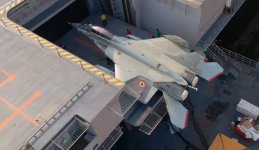
Both have 2 TO positions each. A wider deck for Vikrant means ac can re-arm and taxi to the launch points faster. It appears Vikram's centerline lifts make it necessary for its ac to be armed on deck.

The Vikrant's deck edge config atleast allows for fuel tanks (and perhaps other stores too) to be fitted while in the hangar before the ac gets to the flight deck. Faster turnaround.

indian-navys-mig-29k-on-deck-lift-of-ins-vikrant-915x532-v0-jyrc9mi9x9mc1.jpeg


Media attention and showing off, nothing more.

Vikram's deployment rate and presence at sea is pretty much higher than Vikrant's today.

And the IN doesn't care much about port visits using carriers. Our security situation demands more operational missions. We don't have the kinda money or the number of ships available to show off.


You do realise that Vikram has been in service for a lot longer than Vikrant, don't you?

In peacetime, a carrier's only role is power projection/'showing the flag' at foriegn ports. So called 'carrier diplomacy'.

A carrier that spends most of its time in port, only making cameo appearances during exercises, is a show piece at best.

It's not such a big problem. Steam propulsion has a lot of suppliers and we have a

A long term maintenance contract with the Russians is all we have. I doubt we could overhaul those KVD-3 boilers, associated piping, etc without OEM involvement.

Vikram has pretty much the same electronics as Vikrant, including MF-STAR and Barak 8. The same surveillance radar, the same EW suite, the same comm system.

In fact, Vikram has Barak 1 too, that's something extra over Vikrant, along with 16 extra Barak 8s.

You're joking. Sensors and electronics is one area where the difference between the two is night and day.

The Russians would never allow the MFSTAR/B8 onboard the Vikram. That apart, the 'Lesorub-E' combat mgmt system wouldn't be compatible technically with Western radar.


The opposite. You are recommending mothballing a carrier without a replacement in sight. Vikram maintains 3 carriers until IAC-2 and 4 until IAC-3, followed by replacement with IAC-4, thereby maintaining a 3/4-carrier fleet until 2060. But your plan removes an entire carrier prematurely. There's no money saved here.

To be clear, Vikramaditya could be maintained at a lower state of readiness as a cost saving measure. Redirect the funds to the Vikrant 2 *once construction starts*.
 
Last edited:
Both have 2 TO positions each. A wider deck for Vikrant means ac can re-arm and taxi to the launch points faster. It appears Vikram's centerline lifts make it necessary for its ac to be armed on deck.

The Vikrant's deck edge config atleast allows for fuel tanks (and perhaps other stores too) to be fitted while in the hangar before the ac gets to the flight deck. Faster turnaround.

View attachment 51115

2 short TOs and 1 long, from where it can achieve MTOW.

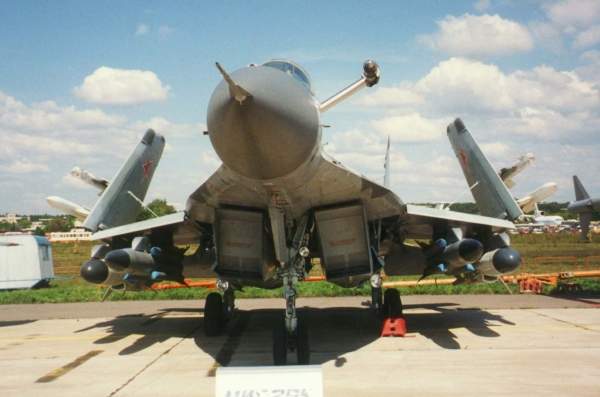
Mig-29K carries weapons in its folded form.

5-underwing-pylons.jpg


1.jpg

You do realise that Vikram has been in service for a lot longer than Vikrant, don't you?

In peacetime, a carrier's only role is power projection/'showing the flag' at foriegn ports. So called 'carrier diplomacy'.

A carrier that spends most of its time in port, only making cameo appearances during exercises, is a show piece at best.

What? No. Its primary job is operations via training and exercises. Port visits are not power projection, that's just showing off. They show off during international fleet reviews instead.

A long term maintenance contract with the Russians is all we have. I doubt we could overhaul those KVD-3 boilers, associated piping, etc without OEM involvement.

Yeah, and I don't see the problem. It's a reliable system. All maintenance is carried out in India.

You're joking. Sensors and electronics is one area where the difference between the two is night and day.

The Russians would never allow the MFSTAR/B8 onboard the Vikram. That apart, the 'Lesorub-E' combat mgmt system wouldn't be compatible technically with Western radar.

Yeah, you're right. Barak 8 and MFSTAR were postponed for Vikramaditya. My bad. It was pushed down the priority list under Modi-1. I guess I got confused with what it was supposed to get previously.

Barak 1s though.
2.jpg

To be clear, Vikramaditya could be maintained at a lower state of readiness as a cost saving measure. Redirect the funds to the Vikrant 2 *once construction starts*.

Why do you think we need to redirect funds? And why maintain at lower state of readiness either?

Vikramaditya taps into the revenue budget, while IAC-2 is funded by the capital budget. Totally different overheads. And when Vikramaditya's MLU is meant to happen, it switches places, as IAC-2 will be operational by then. IAC-3 is competing with Vikramaditya, but it's not a lot. Even a massive 20000 Cr is a cheap price to pay for an extra 20-30 years or a much smaller price for 15 years without rebuilding the underwater hull.
 
TEDBF's first quote of 50 and beyond was media speculation. It was meant to replace the second large order of Mig-29Ks that was expected and aimed to operate in parallel to the original order of 45 for 2 carriers. We had always expected a total Mig-29K fleet of 90 jets. This speculation died with the launch of MRCBF.

The IN's first official TEDBF figure was 145, not counting MRCBF, 'cause the knew they were getting 3 carriers, when IAC-2 was Vishal, and TEDBF was expected to be CATOBAR capable too. ADA ended that dream, but MoD turned IAC-2 instead STOBAR, and the TEDBF requirement stayed at 145 for 3 STOBARs instead.
 
Mig-29K carries weapons in its folded form.

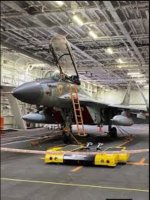
Not before being transported to the flight deck, though. See the pic below. I'm guessing that's because of the amidships position of the lift.

DLtp8b4UIAAA5zd.jpg


FKA9OlYaAAA-chW.jpg

Compare this to the pic below of the Vikrant's lift. 2 DTs are visible underwing.

indian-navys-mig-29k-on-deck-lift-of-ins-vikrant-915x532-v0-jyrc9mi9x9mc1.jpeg

I'm merely inferring this from the pics, of course. Osint and all that :)

Vikramaditya taps into the revenue budget, while IAC-2 is funded by the capital budget. Totally different overheads. And when Vikramaditya's MLU is meant to happen, it switches places, as IAC-2 will be operational by then

No. Only routine refits at predefined intervals are processed as opex. Anything that requires CCS clearance including sub/warship MLUs would come under the capex head, imo.

Even a massive 20000 Cr is a cheap price to pay for an extra 20-30 years or a much smaller price for 15 years without rebuilding the underwater hull.

If the sorry fate of the Kuznetsov is anything to go by, we'll be lucky if Vikram makes it past 2040 unless used sparingly.

The IN should have integrated a couple of MRSAM VLS on Vikramaditya by now.
Fire control could've been provided by CEC-enabled escorts (P-15A/B or P-17A).

Wonder what's going on with that.
 
  • Like
Reactions: batman
Not before being transported to the flight deck, though. See the pic below. I'm guessing that's because of the amidships position of the lift.

View attachment 51123


View attachment 51124

Compare this to the pic below of the Vikrant's lift. 2 DTs are visible underwing.

View attachment 51125

I'm merely inferring this from the pics, of course. Osint and all that :)

Sanitized images for public release.

No. Only routine refits at predefined intervals are processed as opex. Anything that requires CCS clearance including sub/warship MLUs would come under the capex head, imo.


If the sorry fate of the Kuznetsov is anything to go by, we'll be lucky if Vikram makes it past 2040 unless used sparingly.

The IN should have integrated a couple of MRSAM VLS on Vikramaditya by now.
Fire control could've been provided by CEC-enabled escorts (P-15A/B or P-17A).

Wonder what's going on with that.

Look, I don't get the point of your position. All that the decommissioning of Vikram does is weaken the IN. It's not like it's eating away funds for other ships or that it will be directly replaced by another carrier. All that's gonna happen is we will have one less carrier and 45 less jets than planned. IN loses 33% of their carrier capability without any alternative benefit.

So the IN won't let that happen for the sake of saving a few bucks that will just get spent on something else which is also earmarked for spending.

Kuznetsov is facing an entirely different situation. And I won't be surprised if the ship was sabotaged into failure. The crew was also transferred to the Ukrainian frontline, which is most likely a punishment. So something weird's happened there. And they are still missing their floating drydock. So it's related to some kinda systemic failure rather than a problem with the ship itself.