

In op sindoor or during 2019?We have 14 losses, 13 to accidents and 1 shot down.
Future Combat Air System (FCAS) - France/Germany
- Thread starter randomradio
- Start date
You are using an out of date browser. It may not display this or other websites correctly.
You should upgrade or use an alternative browser.
You should upgrade or use an alternative browser.
No losses ofvany manned aircraft during op sindoor.No, nothing's wrong with the jet that was recovered. Or they would have notified it for insurance as it was during peacetime ops.
The US Congress confirmed 3 lost jets without naming any. The French air chief confirmed they were Rafale, M2000, and MKI.
Trappier's comments lead to a Rafale tech loss rather than combat loss, but we are not sure because Dassault distanced themselves from his comments.
French air force chief Gen. Jérôme Bellanger said that he’s seen evidence pointing to just 3 Indian losses — a Rafale, a Russian-made Sukhoi and a Mirage 2000, which is an earlier generation French-made jet.
French intelligence: China used embassies to undermine sales of France's flagship Rafale fighter jet
A French intelligence service says China has used its embassies to promote claims that Chinese-made Pakistani warplanes outperformed French Rafale jets during India-Pakistan clashes in May.apnews.com
An IAF officer confirmed that all combat losses were due to SAMs. So it likely happened during the first set of air strikes and the jets flew into SAM rings. The Mig-29 isn't meant for such strikes, so it wouldn't have gone close enough. My guess is all three jets, even Rafale in case of combat loss, must have used Hammer and SPICE with <60 km range and flew right into the NEZ of SAM sites.
And we have proof that we have 13 crashes but 14 losses.
As for Heron, I know, I was the one to point it out. But that wasn't it.
The Mig-29 wreckage was from 2024.
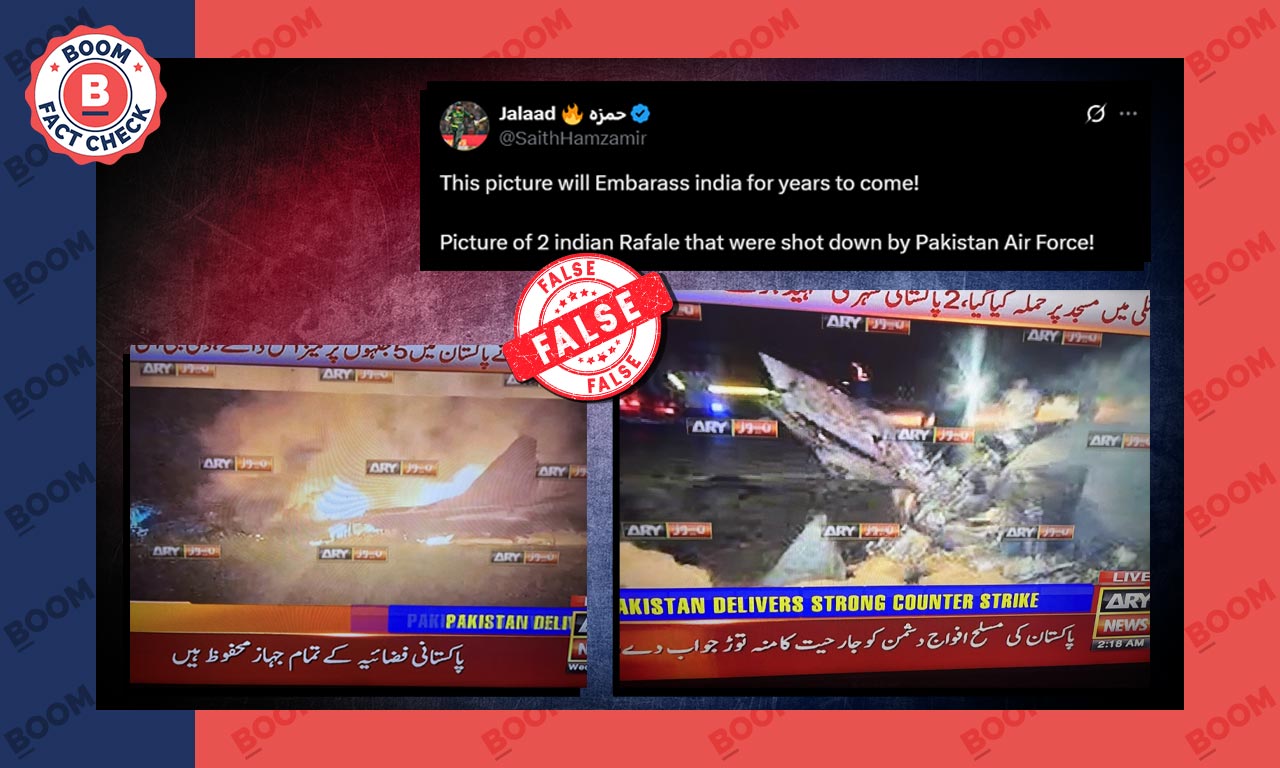
Photos From Old IAF Crashes Peddled As Indian Rafales Shot Down By Pakistan | BOOM
BOOM found that the viral images are from incidents of IAF jet crashes in 2021 and 2024 from Punjab and Rajasthan.www.boomlive.in
3.@hellfire & if i am not wrong @vstol Jockey had said this multiple times earlier.
2.No official acceptance from mod or IAF on losses.
1. This one is the biggest evidence that we didn't have any loss during op sindoor. Asvu said MKI, Rafale & mirage got shot down, then there should be minimum 4 casuality or 4 pow. No such things were reported. Loss of IAF Pilots ( infact PAF pilots) cannothide from public or press for long.
The point 1 is the reason why i am beleiving that we didn't had any kill during 2019.
F6 spec is freezed or still in conceptual stage? What could be the upgrades they gonna get?The Rafale F5/F6 could be a more suitable building block than an overly ambitious NGF as the initial core of the “actual SCAF”.
The war in Ukraine shows that the problem is not simply a matter of having an ultra-stealthy and very expensive platform. The problem is having a system capable of enduring in a saturated, jammed, observed, attritional environment, where drones, electronic warfare, long-range missiles and logistics matter just as much as the piloted airframe itself.
In this context, the Rafale has several advantages.
It is already here. It flies. It is in production. It is exported. It has a MRO chain. It has pilots, mechanics, successive standards, and integrated weapons. It can evolve without waiting twenty years.
It is versatile enough to become a pack leader: it can carry heavy armaments, pods, long-range missiles, communicate with drones, designate targets, conduct electronic warfare, and serve as a tactical command platform. With the F5, the escort drone and the ASN4G, we are already moving towards a ‘system of systems’ approach.
It is also more ‘robust’ in the best sense: less dependent on a fragile overall architecture, easier to maintain, more readily available, and more flexible. Yet Ukraine demonstrates that actual availability, regenerative capacity and industrial sustainability are criteria of paramount importance.
The NGF, for its part, risks falling into the classic trap: an aircraft so ambitious that it becomes scarce, expensive, slow to develop, difficult to maintain and produced in small batches. If it is expected to be simultaneously stealthy, penetrating, nuclear-capable, naval, a drone leader, a super-sensor, a super-jammer, a cloud node, an interceptor, a long-range strike aircraft and capable of surviving in all environments, we risk falling back into the F-35 trap: too many critical functions concentrated in a single platform.
The right architecture might therefore be different:
In other words, perhaps we should not replace the Rafale too quickly with an NGF. Perhaps we should develop the Rafale into the operational core of the system, and relegate the NGF to the role of a specialised component: stealth penetration, future deterrence, very high intensity, advanced coordination. The system would no longer be built around a flagship aircraft, but around a set of building blocks, of which the Rafale would remain the most reliable for a long time to come.
- The Rafale F5/F6 as a robust, piloted building block that is immediately available;
- specialised escort drones as high-risk or expendable building blocks;
- remote sensors;
- remote jammers;
- long-range munitions;
- a resilient but non-essential combat cloud;
- and then, later, an NGF designed only once the right trade-offs are clear.
The Rafale may be too “unfuturistic” for brochures, but it may be far more relevant for real warfare: available, adaptable, sustainable, armed, connected, and capable of gradually incorporating lessons from Ukraine.
The Rafale F5 could be not merely a stopgap solution, but the first credible version of the actual SCAF. The NGF would follow, once we know exactly which functions should be carried out by the piloted aircraft and which should be entrusted to drones, missiles, decoys, remote sensors and electronic warfare.
Mate lets not be delusional, we lost jets. We lost them over Indian territory and this allowed them to eject and be recovered within Indian territory.No losses ofvany manned aircraft during op sindoor.
3.@hellfire & if i am not wrong @vstol Jockey had said this multiple times earlier.
2.No official acceptance from mod or IAF on losses.
1. This one is the biggest evidence that we didn't have any loss during op sindoor. Asvu said MKI, Rafale & mirage got shot down, then there should be minimum 4 casuality or 4 pow. No such things were reported. Loss of IAF Pilots ( infact PAF pilots) cannothide from public or press for long.
The point 1 is the reason why i am beleiving that we didn't had any kill during 2019.
2 jets are practically confirmed with 3rd still in debate. Losing jets is not the end of the world especially considering the stupid restrictions the IAF imposed on itself for political reasons. I mean just look at how the US(A vastly more powerful military) have faired vs a much more poorly equipped Iran.


In op sindoor or during 2019?
Sindoor.
No losses ofvany manned aircraft during op sindoor.
3.@hellfire & if i am not wrong @vstol Jockey had said this multiple times earlier.
2.No official acceptance from mod or IAF on losses.
1. This one is the biggest evidence that we didn't have any loss during op sindoor. Asvu said MKI, Rafale & mirage got shot down, then there should be minimum 4 casuality or 4 pow. No such things were reported. Loss of IAF Pilots ( infact PAF pilots) cannothide from public or press for long.
The point 1 is the reason why i am beleiving that we didn't had any kill during 2019.
We now know we lost 3 aircraft. 2 were definitely shot down. 1 either crashed or was shot down.
Absolutely, but that doesn't means that we should accept whetever nonsenses these Pakistanis ate pouring.Losing jets is not the end of the world

Damn you want us to be scammed for billions of dollars and r&d we could invest in ourselves for a jet doing the bare minimum.In this context, the Rafale has several advantages.
It is already here. It flies. It is in production. It is exported. It has a MRO chain. It has pilots, mechanics, successive standards, and integrated weapons. It can evolve without waiting twenty years.
So flexible that they won't even allow us to put our own weapons and systems per our requirements.It is also more ‘robust’ in the best sense: less dependent on a fragile overall architecture, easier to maintain, more readily available, and more flexible. Yet Ukraine demonstrates that actual availability, regenerative capacity and industrial sustainability are criteria of paramount importance.
Off we should instead go with the 300 million dollar jet which doesn't remotely justify it's price in terms of its capability.The NGF, for its part, risks falling into the classic trap: an aircraft so ambitious that it becomes scarce, expensive, slow to develop, difficult to maintain and produced in small batches. If it is expected to be simultaneously stealthy, penetrating, nuclear-capable, naval, a drone leader, a super-sensor, a super-jammer, a cloud node, an interceptor, a long-range strike aircraft and capable of surviving in all environments, we risk falling back into the F-35 trap: too many critical functions concentrated in a single platform.
No thanksThe right architecture might therefore be different:
In other words, perhaps we should not replace the Rafale too quickly with an NGF. Perhaps we should develop the Rafale into the operational core of the system, and relegate the NGF to the role of a specialised component: stealth penetration, future deterrence, very high intensity, advanced coordination. The system would no longer be built around a flagship aircraft, but around a set of building blocks, of which the Rafale would remain the most reliable for a long time to come.
- The Rafale F5/F6 as a robust, piloted building block that is immediately available;
- specialised escort drones as high-risk or expendable building blocks;
- remote sensors;
- remote jammers;
- long-range munitions;
- a resilient but non-essential combat cloud;
- and then, later, an NGF designed only once the right trade-offs are clear.
The Rafale may be too “unfuturistic” for brochures, but it may be far more relevant for real warfare: available, adaptable, sustainable, armed, connected, and capable of gradually incorporating lessons from Ukraine.
The Rafale F5 could be not merely a stopgap solution, but the first credible version of the actual SCAF. The NGF would follow, once we know exactly which functions should be carried out by the piloted aircraft and which should be entrusted to drones, missiles, decoys, remote sensors and electronic warfare.
Do those clowns really expect us to buy their widow maker on a lipstick?F-35 is absolutely on offer to us, but you need to understand the premise of the deal. USA wants India to first commit to a substantial US 4th gen fleet which meant 114 F-21s for IAF & 57 F/A-18E/F for IN. Only after this condition, US would have allowed limited F-35A/C sales to our air force and naval air-wing.

Nope. Akhnoor had Heron TP wreckage while Ramban clearly had Mig-29UPG looking at smaller airframe and engine size. No MKI was shot down during last year's skirmish. Pictorial evidence doesnt support it. If IAF couldn't hide their crown jewel Rafale's wreckage, then chances of hiding MKI's wreckage is literally zero. Insiders of IAF have also confirmed this.No, nothing's wrong with the jet that was recovered. Or they would have notified it for insurance as it was during peacetime ops.
The US Congress confirmed 3 lost jets without naming any. The French air chief confirmed they were Rafale, M2000, and MKI.
Trappier's comments lead to a Rafale tech loss rather than combat loss, but we are not sure because Dassault distanced themselves from his comments.
French air force chief Gen. Jérôme Bellanger said that he’s seen evidence pointing to just 3 Indian losses — a Rafale, a Russian-made Sukhoi and a Mirage 2000, which is an earlier generation French-made jet.French intelligence: China used embassies to undermine sales of France's flagship Rafale fighter jet
A French intelligence service says China has used its embassies to promote claims that Chinese-made Pakistani warplanes outperformed French Rafale jets during India-Pakistan clashes in May.
An IAF officer confirmed that all combat losses were due to SAMs. So it likely happened during the first set of air strikes and the jets flew into SAM rings. The Mig-29 isn't meant for such strikes, so it wouldn't have gone close enough. My guess is all three jets, even Rafale in case of combat loss, must have used Hammer and SPICE with <60 km range and flew right into the NEZ of SAM sites.
And we have proof that we have 13 crashes but 14 losses.
As for Heron, I know, I was the one to point it out. But that wasn't it.
The Mig-29 wreckage was from 2024.
Photos From Old IAF Crashes Peddled As Indian Rafales Shot Down By Pakistan | BOOM
BOOM found that the viral images are from incidents of IAF jet crashes in 2021 and 2024 from Punjab and Rajasthan.
Nope. Akhnoor had Heron TP wreckage while Ramban clearly had Mig-29UPG looking at smaller airframe and engine size. No MKI was shot down during last year's skirmish. Pictorial evidence doesnt support it. If IAF couldn't hide their crown jewel Rafale's wreckage, then chances of hiding MKI's wreckage is literally zero. Insiders of IAF have also confirmed this.
Mig-29 in Ramban instead of MKI and M2000 in Pampore.
A crash in Bathinda, but likely another drone, or it could be a part of the Rafale. For now we should consider it a Rafale crash site.
But 1 MKI missing in the contract.
And interestingly, the PAF did claim they shot down a Mig-29 and an MKI.
Tom Cooper insists on all 4.
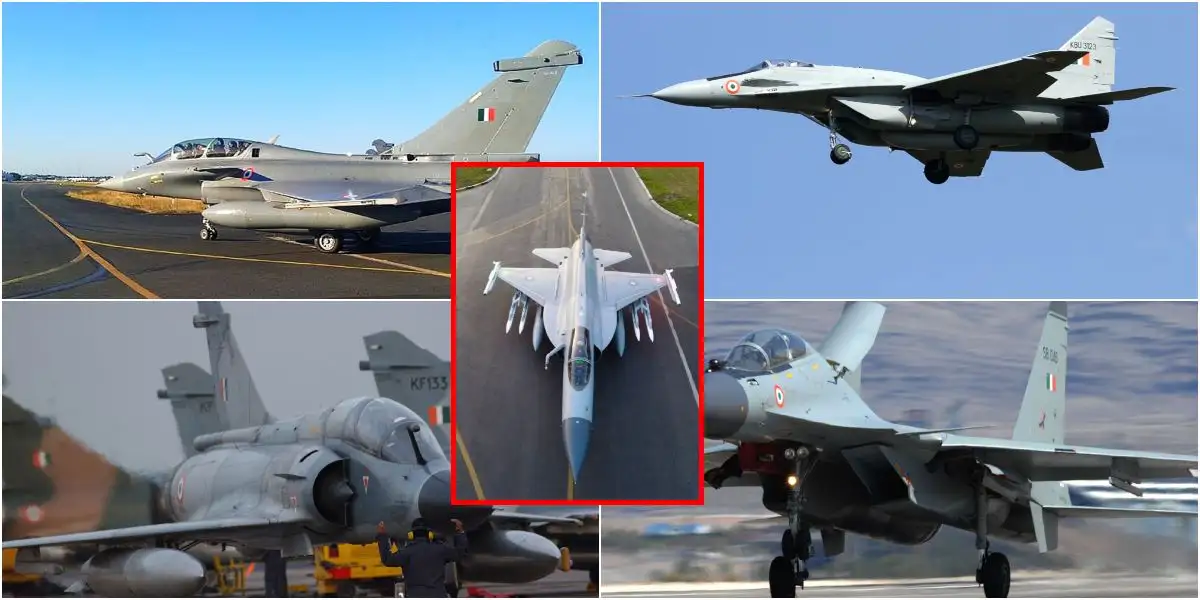
PAF definitely shot down 1 IAF Rafale, 1 MiG-29UPG, 1 Mirage 2000H, 1 Su-30MKI
PAF definitely shot down 1 IAF Rafale, 1 MiG-29UPG, 1 Mirage 2000H, 1 Su-30MKI fighter bomber jet aircraft
 theaviationgeekclub.com
Correct. This is clearly RD-33 scaling against human size:Mig-29 in Ramban instead of MKI and M2000 in Pampore.
Rafale. Drone was in Akhnoor:A crash in Bathinda, but likely another drone, or it could be a part of the Rafale. For now we should consider it a Rafale crash site.
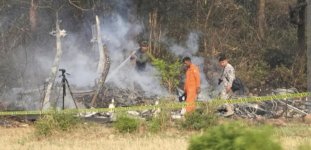
You are way too intelligent to fall for Pak propaganda and it pains me to be involved in this discussion with you. We lost 4 combat planes: 1 Rafale(in Bhatinda), 1 M-2000(in Pampore), 1 Mig-29UPG(in Ramban) and 1 Heron UCAV(in Akhnoor). We have visual evidence of all 4 crashes.But 1 MKI missing in the contract.
And interestingly, the PAF did claim they shot down a Mig-29 and an MKI.
Tom Cooper insists on all 4.
PAF definitely shot down 1 IAF Rafale, 1 MiG-29UPG, 1 Mirage 2000H, 1 Su-30MKI
PAF definitely shot down 1 IAF Rafale, 1 MiG-29UPG, 1 Mirage 2000H, 1 Su-30MKI fighter bomber jet aircraft
Anyways, DAC cleared 12 attrition replacement MKI deal in late 2023(so your premise for only 11 crashed jets and one repaired is not correct) and since then two more have crashed which means total 14 crashes and current fleet strength of 258. Where is any MKI missing?
Anyways, all our reliable OSINT said this:
Still you have any doubt?

Correct. This is clearly RD-33 scaling against human size:
What's there to scale, that is the RD-33 anyway.
Rafale. Drone was in Akhnoor:
Yeah, but the Bhatinda site was too small to be a fighter. So if it was Rafale, then it split up in the air and only a small part of it was pictured.
You are way too intelligent to fall for Pak propaganda and it pains me to be involved in this discussion with you. We lost 4 combat planes: 1 Rafale(in Bhatinda), 1 M-2000(in Pampore), 1 Mig-29UPG(in Ramban) and 1 Heron UCAV(in Akhnoor). We have visual evidence of all 4 crashes.
Anyways, DAC cleared 12 attrition replacement MKI deal in late 2023(so your premise for only 11 crashed jets and one repaired is not correct) and since then two more have crashed which means total 14 crashes and current fleet strength of 258. Where is any MKI missing?
Anyways, all our reliable OSINT said this:
Still you have any doubt?
Yep, 'cause 1 MKI is missing regardless. If it was a peacetime crash, they would have reported it publicly.
As soon as the contract for 258 came out, I checked the list of accidents and realized there were only 13 reported, but the contract has 14 missing. It's the same sort of reveal we had for Rafale, the contract for 35.
Our professional OSINT spread propaganda. Did you forget Hellfire claimed no splashes and only 1 RTB?
And no matter what sort of king of the skies it's hyped up to be, the IAF has repeatedly rejected the Su-57 and are buying Rafales. So that 1 crash/kill didn't make a difference to their plans. Even if it was shot down, we don't know the conditions. Rather the IAF has hyped up the performance of the Rafale during Sindoor instead.
Dodging missiles wasn't a big deal 'cause the IAF confirmed the PL-15s were fired at their max envelope just like during Balakot.
If the Rafale conducted more sophisticated missions and put itself at greater risk than the MKI, then that would signify it held greater importance than the MKI. This is something only the IAF can clarify.
What's interesting to note is both Mig-29 and M2000 crash sites, even Akhnoor, were within the operating range of the HQ-9P and HQ-16 at Kahuta. A forward delployment of a battery or two near the LoC would have done the trick. The PAF even have a 160 km version of HQ-16.
But how do you explain DAC clearing 12 attrition replacement MKIs in Sep 2023? 'Cause as per you only 11 crashes till then right? So the missing puzzle is right there not last year as no MKI was shot down. It's very clear. If despite war scenario, we had access to photos of all 4 crash sites, there was no way MKI crash could have gone unnoticed.What's there to scale, that is the RD-33 anyway.
Yeah, but the Bhatinda site was too small to be a fighter. So if it was Rafale, then it split up in the air and only a small part of it was pictured.
Yep, 'cause 1 MKI is missing regardless. If it was a peacetime crash, they would have reported it publicly.
As soon as the contract for 258 came out, I checked the list of accidents and realized there were only 13 reported, but the contract has 14 missing. It's the same sort of reveal we had for Rafale, the contract for 35.
Our professional OSINT spread propaganda. Did you forget Hellfire claimed no splashes and only 1 RTB?
And no matter what sort of king of the skies it's hyped up to be, the IAF has repeatedly rejected the Su-57 and are buying Rafales. So that 1 crash/kill didn't make a difference to their plans. Even if it was shot down, we don't know the conditions. Rather the IAF has hyped up the performance of the Rafale during Sindoor instead.
Dodging missiles wasn't a big deal 'cause the IAF confirmed the PL-15s were fired at their max envelope just like during Balakot.
If the Rafale conducted more sophisticated missions and put itself at greater risk than the MKI, then that would signify it held greater importance than the MKI. This is something only the IAF can clarify.
What's interesting to note is both Mig-29 and M2000 crash sites, even Akhnoor, were within the operating range of the HQ-9P and HQ-16 at Kahuta. A forward delployment of a battery or two near the LoC would have done the trick. The PAF even have a 160 km version of HQ-16.
Regarding Su-57! For the umpteenth time, you're gonna get surprised mate, just wait and watch

But how do you explain DAC clearing 12 attrition replacement MKIs in Sep 2023? 'Cause as per you only 11 crashes till then right? So the missing puzzle is right there not last year as no MKI was shot down. It's very clear. If despite war scenario, we had access to photos of all 4 crash sites, there was no way MKI crash could have gone unnoticed.
Regarding Su-57! For the umpteenth time, you're gonna get surprised mate, just wait and watch
270 is the standard strength. We ordered 2 extra for attrition, the order for 42, and then 12 more.
Total 13 peacetime crashes, 14 replacements. At the time of the order we had 11 crashes, so we had planned for an extra 3 jets at the time as replacements. Then one crash in 2024 and another a few months ago. So 1 missing.
We will have to order 1 more jet, if it's done again. Or maybe 4 or 5 more to make up for future attrition.
MKI crash site can go unnoticed if it broke up in air, similar to what could be Rafale's crash site. So it wouldn't look like a plane at that point.
Highly unlikely, because MKI being such a gigantic jet, even mid-air disintegration would leave quite a big wreckage area. Anyways, maybe one MKI was handed to HAL & CSIR NAL for FSFT tests or to the former as a flying test bed and is not part of the operational fleet. So 258 operational + 13 losses + 1 test aircraft does give us the definitive 272 number. Case closed.270 is the standard strength. We ordered 2 extra for attrition, the order for 42, and then 12 more.
Total 13 peacetime crashes, 14 replacements. At the time of the order we had 11 crashes, so we had planned for an extra 3 jets at the time as replacements. Then one crash in 2024 and another a few months ago. So 1 missing.
We will have to order 1 more jet, if it's done again. Or maybe 4 or 5 more to make up for future attrition.
MKI crash site can go unnoticed if it broke up in air, similar to what could be Rafale's crash site. So it wouldn't look like a plane at that point.
Last edited:
French threw a hissy fit when TKMS was transferring its submarine tech to India.

 theprint.in
You are expecting these same people to transfer aircraft technologies to India. Aeronautical tech is guarded even more fiercely.
India's strategic engagement with Germans is relatively new compared to French but Germans are far more willing to share their tech as they are impacted far more by China. French on the other hand want more cooperation with China. France is not a suitable partner. Its that simple. If anything, I would prefer India to join the German program that they are going to start anew.
France’s Naval Group criticises German TKMS’s transfer of tech plans, says ‘creating competitors’
Naval Group’s head of strategy, Guillaume Rochard said the French firm takes a more cautious approach to technology sharing to avoid fostering competition, unlike TKMS.
theprint.in
You are expecting these same people to transfer aircraft technologies to India.
Aeronautical tech is guarded even more fiercely.India's strategic engagement with Germans is relatively new compared to French but Germans are far more willing to share their tech as they are impacted far more by China. French on the other hand want more cooperation with China. France is not a suitable partner. Its that simple. If anything, I would prefer India to join the German program that they are going to start anew.
On your points:But if you're saying replacing France just to join other options like Japan/ S.Korea/ Taiwan just to answer the China factor, I think that'll not be wise and I've reasons for that.
(1) We need core know-how on major technologies like Aeroengine( Main ), Sensors, Designing of a 6th generation platform. Those other options are not capable to help us in these domain in know-how.
(2) 6th generation platform development is a very high cost project. Even after 10 years , the Indian Economy will find it difficult to finance such a high end project independently. Apart from Japan, neither of the remaining 2 options of your suggestions are able to be helpful for us there, if we think about replacing France.
(3) France is a permanent member of UNSC + Epicenter of European power. We can't ignore this side too.
(4) The French+ co-development project will be a twin use ( Air force + Navy) system which will also be helpful for us if we're planning for operating large displacement CATOBAR capable Aircraft Carriers in future. Neither of those 3 options will be a good choice there.
(5) Japan is already part of UK's GCAP project, so there is very less chance for any co-development with them seperately. Whereas either S.Korea or, Taiwan are not able to be a reliable development partner on the same ground as France or, Japan.
I'm neither in favour of co-development with France, nor against it. I'm with whatever is in the best of our interests in long term. Let's see how things unfold in near future.
(1) You think France has the capability to develop those??? Even if they could, you think they will share that with us??? Keep in mind India cant even customize Mirage2000.

(2) Its actually the opposite, South Korea & Taiwan have a deep semiconductor supply chain. AI boom is causing a record rise in exports from these semiconductor dependent economies.
(3) Germany is the actual economic center of Europe. France has a UNSC seat, sure, but if UNSC veto is your requirement, then there are far better ways to secure it than to spend $30 billion.
(4) South Korea & Japan have those needs too. I actually think this navy/air force commonality idea is nonsense. It causes design choice compromises on both sides. Also, if Navy/airforce a/c commonality is what you want, then why does AMCA not have a naval version??
(5) GCAP program's outlook is not that rosy either. Brits are dithering on their payments. UK Defence Secretary John Healey and Armed Forces Minister Al Carns resigned due to funding issues.
I agree with you on the first point. But if not France, so is not any other existing options, be it Russia, S. Korea, Japan, UK, Germany or, even USA etc.On your points:
(1) You think France has the capability to develop those??? Even if they could, you think they will share that with us??? Keep in mind India cant even customize Mirage2000.
(2) Its actually the opposite, South Korea & Taiwan have a deep semiconductor supply chain. AI boom is causing a record rise in exports from these semiconductor dependent economies.
(3) Germany is the actual economic center of Europe. France has a UNSC seat, sure, but if UNSC veto is your requirement, then there are far better ways to secure it than to spend $30 billion.
(4) South Korea & Japan have those needs too. I actually think this navy/air force commonality idea is nonsense. It causes design choice compromises on both sides. Also, if Navy/airforce a/c commonality is what you want, then why does AMCA not have a naval version??
(5) GCAP program's outlook is not that rosy either. Brits are dithering on their payments. UK Defence Secretary John Healey and Armed Forces Minister Al Carns resigned due to funding issues.
I'm neither in favour of co-development with France (or, any other option) nor against it. I'm always on the side where the best interest of India is protected at first.
Complete indigenous design and development is the best option, that everyone knows. But in some cases we've observed few roadblocks , to answer those we need some external help/ input.
What do you think are the best and realistic options available for us to go forward considering the potential security challenges in future ?
*N.B: Mirage 2000 , as you mentioned, was neither a project where India was a design+development partner from any angle. France has a well established Aerospace & Aeroengine ecosystem in their land involving a huge domestic labour. They (or any other country ) will never provide anyone a technology that'll not benefit their domestic ecosystem. In FCAS , all will be from scratch, if it happens. From Design to Development, Manufacturing, Labour etc. Don't you think comparing Mirage 2000 with FCAS project is wrong ? ( Again I'm not advocating for any French co-development, just keeping my point of view , please don't tag me as a FRENCH-DALAL ).
Last edited:

Europe’s fighter jet fiasco
In this article, FT essentially argues that France is financially fragile, has urgent needs, and will only be at 2.5% of GDP in 2030, therefore it cannot finance a 6th-generation fighter jet on its own. This is consistent if one assumes that a national program is inherently more expensive than a cooperative one. However, France's experience with the Rafale clearly demonstrates that this assumption is false, or at the very least, highly questionable.
The Rafale program was expensive, of course. But it cost France less than participation in the Eurofighter program would likely have, while delivering an aircraft much better suited to French needs: nuclear deterrence, naval capability, air-to-air/air-to-ground/reconnaissance versatility, operational autonomy, exportability, and upgradeability through successive standards. The Eurofighter cooperation produced a very good interceptor, but at the cost of a significant political and industrial compromise, with multiple national versions, slow integration, high costs, and complex governance.
This is the point the article misses: cooperation only reduces costs if it actually eliminates duplication, conflicting requirements, and coordination overhead. Otherwise, it increases costs. In the Franco-German case, everything indicated that the SCAF (Future Combat Air System) risked becoming more expensive than a purely French national program: artificial industrial sharing, duplication of expertise, ongoing negotiations over intellectual property, political compromises, the demand for "fair return," and the risk of incompatible specifications.
Therefore, saying "France can't pay alone, so it had to cooperate" is too simplistic. The real question is:
Would cooperation with Germany have actually reduced the French cost, or would it have added frictional costs that outweighed the cost savings?
The experience with the A400M, NH90, Eurofighter, Tiger, Eurodrone, and even the difficulties with the MGCS (Main Ground Combat System) suggests that the savings promised by European cooperation are often swallowed up by the complexity of governance.
A national program like the Rafale doesn't just produce military capability; it generates national industrial revenue. France didn't have to share Rafale export production with Germany, the United Kingdom, Italy, or Spain. The contracts with Egypt, Qatar, India, Greece, Croatia, Indonesia, the United Arab Emirates, and others primarily benefit the French ecosystem: Dassault, Safran, Thales, MBDA, SMEs, subcontractors, skilled jobs, trade balance, tax revenue, and skills retention.
This is a feedback loop that Anglo-Saxon budgetary reasoning often underestimates. The state spends to develop a system, but if that system is exported on a massive scale, a substantial portion returns in the form of economic activity, taxes, social security contributions, reduced unemployment, the maintenance of sovereign skills, and trade surpluses. In a shared program, these returns are diluted.
We also need to correct the notion that "Dassault is betting that exports will finance the 6th generation." That's not exactly it. Exports probably won't directly pay for the entire development of a French NGF. But they do allow for three crucial things: maintaining the hot chain, financing part of the Rafale F5/F6 upgrades, keeping design offices active, and creating a customer base likely to contribute to certain future components. It's not magic financing; it's a strategic buffer.
Telenbaum's argument regarding India and the Emirates is stronger: yes, they will demand more transfers than in the past. But the answer is simple: France can share industrialization, maintenance, repair, and overhaul (MRO), certain subsystems, some integrations, and even co-development of components, without sharing the core architecture. What France refused Germany wasn't all cooperation; it was joint leadership of the aircraft architecture with a partner who wanted political parity without equivalent technical responsibility.
With India or the Emirates, the model might be different: financing, orders, partial local production, national armaments, regional support, but with Dassault retaining prime contractor status. This is strategic customer cooperation, not an ungovernable industrial federation.
The most debatable sentence in the excerpt is therefore this: “France had a greater interest than Germany in a joint fighter project in order to reduce costs.” In the short term, perhaps. But in the long term, if the price of cooperation is the loss of control, the dilution of exports, and a more burdensome program, then France might have been better off extricating itself from the trap.
The correct wording would be:
France does not need a partner to make its future aircraft cheaper if that partner makes the program more cumbersome, slower, and less exportable and less sovereign.
This is precisely the lesson of the Rafale. The Rafale was ridiculed as a costly and isolated national program. Thirty years later, it has become an operational, industrial, and export success. The Eurofighter had more partners and larger combined budgets, but it did not give each partner country the same strategic freedom or the same concentrated industrial return.
Therefore, if France cannot finance a next-generation fighter jet (NGF) alone, this does not automatically mean that it could finance it better through cooperation. Poor cooperation can cost more than a well-managed national program. And above all, a national program exported on a massive scale can cost the state much less in net cost than a cooperative program whose benefits are shared.
The concise formula would be:
The relevant cost is not the face cost of development. It is the net cost after sovereignty, exports, jobs, taxation, trade balance, industrial control, and freedom of development. In this respect, the Rafale shows that a well-run national program can be less costly than poorly governed cooperation.
In this article, FT essentially argues that France is financially fragile, has urgent needs, and will only be at 2.5% of GDP in 2030, therefore it cannot finance a 6th-generation fighter jet on its own. This is consistent if one assumes that a national program is inherently more expensive than a cooperative one. However, France's experience with the Rafale clearly demonstrates that this assumption is false, or at the very least, highly questionable.
The Rafale program was expensive, of course. But it cost France less than participation in the Eurofighter program would likely have, while delivering an aircraft much better suited to French needs: nuclear deterrence, naval capability, air-to-air/air-to-ground/reconnaissance versatility, operational autonomy, exportability, and upgradeability through successive standards. The Eurofighter cooperation produced a very good interceptor, but at the cost of a significant political and industrial compromise, with multiple national versions, slow integration, high costs, and complex governance.
This is the point the article misses: cooperation only reduces costs if it actually eliminates duplication, conflicting requirements, and coordination overhead. Otherwise, it increases costs. In the Franco-German case, everything indicated that the SCAF (Future Combat Air System) risked becoming more expensive than a purely French national program: artificial industrial sharing, duplication of expertise, ongoing negotiations over intellectual property, political compromises, the demand for "fair return," and the risk of incompatible specifications.
Therefore, saying "France can't pay alone, so it had to cooperate" is too simplistic. The real question is:
Would cooperation with Germany have actually reduced the French cost, or would it have added frictional costs that outweighed the cost savings?
The experience with the A400M, NH90, Eurofighter, Tiger, Eurodrone, and even the difficulties with the MGCS (Main Ground Combat System) suggests that the savings promised by European cooperation are often swallowed up by the complexity of governance.
A national program like the Rafale doesn't just produce military capability; it generates national industrial revenue. France didn't have to share Rafale export production with Germany, the United Kingdom, Italy, or Spain. The contracts with Egypt, Qatar, India, Greece, Croatia, Indonesia, the United Arab Emirates, and others primarily benefit the French ecosystem: Dassault, Safran, Thales, MBDA, SMEs, subcontractors, skilled jobs, trade balance, tax revenue, and skills retention.
This is a feedback loop that Anglo-Saxon budgetary reasoning often underestimates. The state spends to develop a system, but if that system is exported on a massive scale, a substantial portion returns in the form of economic activity, taxes, social security contributions, reduced unemployment, the maintenance of sovereign skills, and trade surpluses. In a shared program, these returns are diluted.
We also need to correct the notion that "Dassault is betting that exports will finance the 6th generation." That's not exactly it. Exports probably won't directly pay for the entire development of a French NGF. But they do allow for three crucial things: maintaining the hot chain, financing part of the Rafale F5/F6 upgrades, keeping design offices active, and creating a customer base likely to contribute to certain future components. It's not magic financing; it's a strategic buffer.
Telenbaum's argument regarding India and the Emirates is stronger: yes, they will demand more transfers than in the past. But the answer is simple: France can share industrialization, maintenance, repair, and overhaul (MRO), certain subsystems, some integrations, and even co-development of components, without sharing the core architecture. What France refused Germany wasn't all cooperation; it was joint leadership of the aircraft architecture with a partner who wanted political parity without equivalent technical responsibility.
With India or the Emirates, the model might be different: financing, orders, partial local production, national armaments, regional support, but with Dassault retaining prime contractor status. This is strategic customer cooperation, not an ungovernable industrial federation.
The most debatable sentence in the excerpt is therefore this: “France had a greater interest than Germany in a joint fighter project in order to reduce costs.” In the short term, perhaps. But in the long term, if the price of cooperation is the loss of control, the dilution of exports, and a more burdensome program, then France might have been better off extricating itself from the trap.
The correct wording would be:
France does not need a partner to make its future aircraft cheaper if that partner makes the program more cumbersome, slower, and less exportable and less sovereign.
This is precisely the lesson of the Rafale. The Rafale was ridiculed as a costly and isolated national program. Thirty years later, it has become an operational, industrial, and export success. The Eurofighter had more partners and larger combined budgets, but it did not give each partner country the same strategic freedom or the same concentrated industrial return.
Therefore, if France cannot finance a next-generation fighter jet (NGF) alone, this does not automatically mean that it could finance it better through cooperation. Poor cooperation can cost more than a well-managed national program. And above all, a national program exported on a massive scale can cost the state much less in net cost than a cooperative program whose benefits are shared.
The concise formula would be:
The relevant cost is not the face cost of development. It is the net cost after sovereignty, exports, jobs, taxation, trade balance, industrial control, and freedom of development. In this respect, the Rafale shows that a well-run national program can be less costly than poorly governed cooperation.
Highly unlikely, because MKI being such a gigantic jet, even mid-air disintegration would leave quite a big wreckage area. Anyways, maybe one MKI was handed to HAL & CSIR NAL for FSFT tests or to the former as a flying test bed and is not part of the operational fleet. So 258 operational + 13 losses + 1 test aircraft does give us the definitive 272 number. Case closed.
All jets are upgraded, even the ones with other agencies. Other agencies have been assigned multiple MKIs already. DRDO has 2.
Europe’s fighter jet fiasco
In this article, FT essentially argues that France is financially fragile, has urgent needs, and will only be at 2.5% of GDP in 2030, therefore it cannot finance a 6th-generation fighter jet on its own. This is consistent if one assumes that a national program is inherently more expensive than a cooperative one. However, France's experience with the Rafale clearly demonstrates that this assumption is false, or at the very least, highly questionable.
The Rafale program was expensive, of course. But it cost France less than participation in the Eurofighter program would likely have, while delivering an aircraft much better suited to French needs: nuclear deterrence, naval capability, air-to-air/air-to-ground/reconnaissance versatility, operational autonomy, exportability, and upgradeability through successive standards. The Eurofighter cooperation produced a very good interceptor, but at the cost of a significant political and industrial compromise, with multiple national versions, slow integration, high costs, and complex governance.
This is the point the article misses: cooperation only reduces costs if it actually eliminates duplication, conflicting requirements, and coordination overhead. Otherwise, it increases costs. In the Franco-German case, everything indicated that the SCAF (Future Combat Air System) risked becoming more expensive than a purely French national program: artificial industrial sharing, duplication of expertise, ongoing negotiations over intellectual property, political compromises, the demand for "fair return," and the risk of incompatible specifications.
Therefore, saying "France can't pay alone, so it had to cooperate" is too simplistic. The real question is:
Would cooperation with Germany have actually reduced the French cost, or would it have added frictional costs that outweighed the cost savings?
The experience with the A400M, NH90, Eurofighter, Tiger, Eurodrone, and even the difficulties with the MGCS (Main Ground Combat System) suggests that the savings promised by European cooperation are often swallowed up by the complexity of governance.
A national program like the Rafale doesn't just produce military capability; it generates national industrial revenue. France didn't have to share Rafale export production with Germany, the United Kingdom, Italy, or Spain. The contracts with Egypt, Qatar, India, Greece, Croatia, Indonesia, the United Arab Emirates, and others primarily benefit the French ecosystem: Dassault, Safran, Thales, MBDA, SMEs, subcontractors, skilled jobs, trade balance, tax revenue, and skills retention.
This is a feedback loop that Anglo-Saxon budgetary reasoning often underestimates. The state spends to develop a system, but if that system is exported on a massive scale, a substantial portion returns in the form of economic activity, taxes, social security contributions, reduced unemployment, the maintenance of sovereign skills, and trade surpluses. In a shared program, these returns are diluted.
We also need to correct the notion that "Dassault is betting that exports will finance the 6th generation." That's not exactly it. Exports probably won't directly pay for the entire development of a French NGF. But they do allow for three crucial things: maintaining the hot chain, financing part of the Rafale F5/F6 upgrades, keeping design offices active, and creating a customer base likely to contribute to certain future components. It's not magic financing; it's a strategic buffer.
Telenbaum's argument regarding India and the Emirates is stronger: yes, they will demand more transfers than in the past. But the answer is simple: France can share industrialization, maintenance, repair, and overhaul (MRO), certain subsystems, some integrations, and even co-development of components, without sharing the core architecture. What France refused Germany wasn't all cooperation; it was joint leadership of the aircraft architecture with a partner who wanted political parity without equivalent technical responsibility.
With India or the Emirates, the model might be different: financing, orders, partial local production, national armaments, regional support, but with Dassault retaining prime contractor status. This is strategic customer cooperation, not an ungovernable industrial federation.
The most debatable sentence in the excerpt is therefore this: “France had a greater interest than Germany in a joint fighter project in order to reduce costs.” In the short term, perhaps. But in the long term, if the price of cooperation is the loss of control, the dilution of exports, and a more burdensome program, then France might have been better off extricating itself from the trap.
The correct wording would be:
France does not need a partner to make its future aircraft cheaper if that partner makes the program more cumbersome, slower, and less exportable and less sovereign.
This is precisely the lesson of the Rafale. The Rafale was ridiculed as a costly and isolated national program. Thirty years later, it has become an operational, industrial, and export success. The Eurofighter had more partners and larger combined budgets, but it did not give each partner country the same strategic freedom or the same concentrated industrial return.
Therefore, if France cannot finance a next-generation fighter jet (NGF) alone, this does not automatically mean that it could finance it better through cooperation. Poor cooperation can cost more than a well-managed national program. And above all, a national program exported on a massive scale can cost the state much less in net cost than a cooperative program whose benefits are shared.
The concise formula would be:
The relevant cost is not the face cost of development. It is the net cost after sovereignty, exports, jobs, taxation, trade balance, industrial control, and freedom of development. In this respect, the Rafale shows that a well-run national program can be less costly than poorly governed cooperation.
France should convince the Germans to buy into the PANG program to make SCAF's French airframe viable.