Future Combat Air System (FCAS) - France/Germany

It is easy to blame IAF, but you have no idea how frustrated they are with HAL & Company. Delays to UPG. can't solely be attributed to IAF.

MKI is not F-15E. It's a super-fighter. Yeah, the wording may sound like a fanboy speaking but that's the opinion of those who fly it for a living. 'Nuff said.

Its current EW is no joke as not only it had defeated AIM-120C5s in the past but now even AESA seeker equipped PL-15s last year too. MKI, keeps on getting minor incremental updates in its software, ESM etc.

HALs proposal for UPG is in the public domain. Still waiting for IAF/MoD approval before the file goes to CCS. Piecemeal deliveries/tenders for items like RWR, anti-jam GPS are all we've seen over the last few yrs.

MKI is not F-15E. It's a super-fighter. Yeah, the wording may sound like a fanboy speaking but that's the opinion of those who fly it for a living. 'Nuff said.

I bought up the F-15E because it reportedly didn't have MAWS. This would've made them vulnerable to IR manpads over Iran. The last thing we want is an MKI vertical fin in a PAF museum, this time for real.

Its current EW is no

I wouldn't be surprised of the PLAAF had access to SAP-518/14 as an operator of Su-30MKK/Su-35S. In any case, it is a suboptimal solution owing to its size and weight. Reportedly cuts into MKI flight envelope.
 
HALs proposal for UPG is in the public domain. Still waiting for IAF/MoD approval before the file goes to CCS. Piecemeal deliveries/tenders for items like RWR, anti-jam GPS are all we've seen over the last few yrs.
I think it's mostly stuck because of the never ending negotiation process between our Government & Russian government..Irrc we need Russian help to modify certain components of the aircraft..
 
  • Like
Reactions: Rajput Lion
HALs proposal for UPG is in the public domain. Still waiting for IAF/MoD approval before the file goes to CCS. Piecemeal deliveries/tenders for items like RWR, anti-jam GPS are all we've seen over the last few yrs.
Don't discredit the RWR update as only piecemeal as it is a vital tool for MKI's survivability in today's highly dense modern battle-space. DR-118 gives MKI not only an alert against the faintest of LPI AESA signals during TWS mode, but it also possess integrated ESM suite which allows it to geolocate the threat emitter that is even using intermittent frequency hopping low-power signals.
I bought up the F-15E because it reportedly didn't have MAWS which would've made them vulnerable to IR manpads. The last thing we want is an MKI vertical fin in a PAF museum, this time for real.
MKI doesn't fight like that but MAWS will be present in UPG.
I wouldn't be surprised of the PLAAF had access to SAP-518/14 as an operator of Su-30MKK/Su-35S. In any case, it is a suboptimal solution owing to its size and weight. Reportedly cuts into MKI flight envelope.
I don't want to talk too much about it but these Russian pods arent the same which PLAAF has plus MKI also has Israeli ECM pods as well. Only the SAP-14 cuts MKI's flight envelope not SAP-518.
 
Don't discredit the RWR update as only piecemeal as it is a vital tool for MKI's survivability in today's highly dense modern battle-space. DR-118 gives MKI not only an alert against the faintest of LPI AESA signals during TWS mode, but it also possess integrated ESM suite which allows it to geolocate the threat emitter that is even using intermittent frequency hopping low-power signals.

Passive geolocation is a standard feature on most new gen RWR today. CCS approval would've accelerated the R&D of key items like Virupaksha and IRST and kept the Russians out of the running (except for FCS updates, certification, etc)

But the IAF ofcourse would rather sacrifice everything for Rafale 2.0.

I don't want to talk too much about it but these Russian pods arent the same which PLAAF has plus MKI also has Israeli ECM pods as well. Only the SAP-14 cuts MKI's flight envelope not SAP-518.

It's the jugaadu mentality that worries me more. A frontline jet, acquired in 2001, still waiting for a proper MLU (and lacking a half decent MAWS), does not reflect well on the IAF. Heck, a big chunk of the fleet is due to retire in the next few years.

There is just no accountability for poor planning and prioritization within MoD/IAF.
 
Do you have that post?

Here is one more: Operation Sindoor: India Strikes Terroist Camps Inside Pakitsan
Passive geolocation is a standard feature on most new gen RWR today. CCS approval would've accelerated the R&D of key items like Virupaksha and IRST and kept the Russians out of the running (except for FCS updates, certification, etc)
Russians are pushing for a new engine(177S) in MKI MLU.
But the IAF ofcourse would rather sacrifice everything for Rafale 2.0.
It is true that MKI was neglected for Rafale. Not countering that.
It's the jugaadu mentality that worries me more. A frontline jet, acquired in 2001, still waiting for a proper MLU (and lacking a half decent MAWS), does not reflect well on the IAF. Heck, a big chunk of the fleet is due to retire in the next few years.

There is just no accountability for poor planning and prioritization
MKI UPG. is now definitely a top priority. That's what matters most now.
 
  • Like
Reactions: Speedster1
Vsjockey was an air force pilot right? So basically he's saying the rafale's active stealth wasn't as good as claims and its A2G missiles had limited range? If there isn't a advantage in stealth or missile range with Rafale against Su30MKI, makes sense why he would consider the Su30MKI better.
Here is one more: Operation Sindoor: India Strikes Terroist Camps Inside Pakitsan

Russians are pushing for a new engine(177S) in MKI MLU.

It is true that MKI was neglected for Rafale. Not countering that.

MKI UPG. is now definitely a top priority. That's what matters most now.
Then why arent we going with more MKI instead of Rafale? Also don't Pakistan know Rafale's capability by training with Qatar who gave them close access to the Jet?
 
  • Like
Reactions: Rajput Lion
Vsjockey was an air force pilot right?
Indian Navy Sea-Harrier pilot thus the username.
So basically he's saying the rafale's active stealth wasn't as good as claims and its A2G missiles had limited range? If there isn't a advantage in stealth or missile range with Rafale against Su30MKI, makes sense why he would consider the Su30MKI better.
He is not alone. Majority of IAF pilots consider MKI better air-to-air fighter than Rafale. Rafale has better sensors for now, but once we're through with the UPG programme, MKI would be better than Rafale in almost every air-combat aspect. Still, there are some area where Rafale will always remain ahead due to its design(terrain hugging, playing hide n seek over the Himalayas etc.). Since both are complementary and not fighting each other, this discussion is actually moot.
 
found this
HKyUcG-XQAAm7ZT

:love:
 
The Rafale F5/F6 could be a more suitable building block than an overly ambitious NGF as the initial core of the “actual SCAF”.

The war in Ukraine shows that the problem is not simply a matter of having an ultra-stealthy and very expensive platform. The problem is having a system capable of enduring in a saturated, jammed, observed, attritional environment, where drones, electronic warfare, long-range missiles and logistics matter just as much as the piloted airframe itself.

In this context, the Rafale has several advantages.

It is already here. It flies. It is in production. It is exported. It has a MRO chain. It has pilots, mechanics, successive standards, and integrated weapons. It can evolve without waiting twenty years.

It is versatile enough to become a pack leader: it can carry heavy armaments, pods, long-range missiles, communicate with drones, designate targets, conduct electronic warfare, and serve as a tactical command platform. With the F5, the escort drone and the ASN4G, we are already moving towards a ‘system of systems’ approach.

It is also more ‘robust’ in the best sense: less dependent on a fragile overall architecture, easier to maintain, more readily available, and more flexible. Yet Ukraine demonstrates that actual availability, regenerative capacity and industrial sustainability are criteria of paramount importance.

The NGF, for its part, risks falling into the classic trap: an aircraft so ambitious that it becomes scarce, expensive, slow to develop, difficult to maintain and produced in small batches. If it is expected to be simultaneously stealthy, penetrating, nuclear-capable, naval, a drone leader, a super-sensor, a super-jammer, a cloud node, an interceptor, a long-range strike aircraft and capable of surviving in all environments, we risk falling back into the F-35 trap: too many critical functions concentrated in a single platform.

The right architecture might therefore be different:
  • The Rafale F5/F6 as a robust, piloted building block that is immediately available;
  • specialised escort drones as high-risk or expendable building blocks;
  • remote sensors;
  • remote jammers;
  • long-range munitions;
  • a resilient but non-essential combat cloud;
  • and then, later, an NGF designed only once the right trade-offs are clear.
In other words, perhaps we should not replace the Rafale too quickly with an NGF. Perhaps we should develop the Rafale into the operational core of the system, and relegate the NGF to the role of a specialised component: stealth penetration, future deterrence, very high intensity, advanced coordination. The system would no longer be built around a flagship aircraft, but around a set of building blocks, of which the Rafale would remain the most reliable for a long time to come.

The Rafale may be too “unfuturistic” for brochures, but it may be far more relevant for real warfare: available, adaptable, sustainable, armed, connected, and capable of gradually incorporating lessons from Ukraine.

The Rafale F5 could be not merely a stopgap solution, but the first credible version of the actual SCAF. The NGF would follow, once we know exactly which functions should be carried out by the piloted aircraft and which should be entrusted to drones, missiles, decoys, remote sensors and electronic warfare.

 
They didn't want to give ToT, only export. Entering MRFA requires agreeing to ToT terms.

Plus they have some convoluted rule saying they will provide classified intel only after a sale is guaranteed.

And for the F-35 to be operationally useful, unlike F-47, we will have to buy it in large numbers, like 200, which isn't feasible without ToT. So the F-35 was never an option if it wasn't coming on Indian terms.
ToT is not the true reason.

F35 was not offered in the navy MRCA competition, despite being no TOT requirement there. US doesn't want to sell F35 to India.
 
The Rafale F5/F6 could be a more suitable building block than an overly ambitious NGF as the initial core of the “actual SCAF”.

The war in Ukraine shows that the problem is not simply a matter of having an ultra-stealthy and very expensive platform. The problem is having a system capable of enduring in a saturated, jammed, observed, attritional environment, where drones, electronic warfare, long-range missiles and logistics matter just as much as the piloted airframe itself.

In this context, the Rafale has several advantages.

It is already here. It flies. It is in production. It is exported. It has a MRO chain. It has pilots, mechanics, successive standards, and integrated weapons. It can evolve without waiting twenty years.

It is versatile enough to become a pack leader: it can carry heavy armaments, pods, long-range missiles, communicate with drones, designate targets, conduct electronic warfare, and serve as a tactical command platform. With the F5, the escort drone and the ASN4G, we are already moving towards a ‘system of systems’ approach.

It is also more ‘robust’ in the best sense: less dependent on a fragile overall architecture, easier to maintain, more readily available, and more flexible. Yet Ukraine demonstrates that actual availability, regenerative capacity and industrial sustainability are criteria of paramount importance.

The NGF, for its part, risks falling into the classic trap: an aircraft so ambitious that it becomes scarce, expensive, slow to develop, difficult to maintain and produced in small batches. If it is expected to be simultaneously stealthy, penetrating, nuclear-capable, naval, a drone leader, a super-sensor, a super-jammer, a cloud node, an interceptor, a long-range strike aircraft and capable of surviving in all environments, we risk falling back into the F-35 trap: too many critical functions concentrated in a single platform.

The right architecture might therefore be different:
  • The Rafale F5/F6 as a robust, piloted building block that is immediately available;
  • specialised escort drones as high-risk or expendable building blocks;
  • remote sensors;
  • remote jammers;
  • long-range munitions;
  • a resilient but non-essential combat cloud;
  • and then, later, an NGF designed only once the right trade-offs are clear.
In other words, perhaps we should not replace the Rafale too quickly with an NGF. Perhaps we should develop the Rafale into the operational core of the system, and relegate the NGF to the role of a specialised component: stealth penetration, future deterrence, very high intensity, advanced coordination. The system would no longer be built around a flagship aircraft, but around a set of building blocks, of which the Rafale would remain the most reliable for a long time to come.

The Rafale may be too “unfuturistic” for brochures, but it may be far more relevant for real warfare: available, adaptable, sustainable, armed, connected, and capable of gradually incorporating lessons from Ukraine.

The Rafale F5 could be not merely a stopgap solution, but the first credible version of the actual SCAF. The NGF would follow, once we know exactly which functions should be carried out by the piloted aircraft and which should be entrusted to drones, missiles, decoys, remote sensors and electronic warfare.
No matter how much you'll evolve Rafale, it will never ever substitute a true 6th gen design. Yes, Rafale is a superlative jet, yes you French are understandably proud of Rafale but France needs an all new design for NGF(tailless all-aspect stealth with huge payload, sensors and range).

If India becomes a part of SCAF program, then investing billions of dollars to develop a stealth super Rafale won't cut it for us. Period.
 
ToT is not the true reason.

F35 was not offered in the navy MRCA competition, despite being no TOT requirement there. US doesn't want to sell F35 to India.
F-35 is absolutely on offer to us, but you need to understand the premise of the deal. USA wants India to first commit to a substantial US 4th gen fleet which meant 114 F-21s for IAF & 57 F/A-18E/F for IN. Only after this condition, US would have allowed limited F-35A/C sales to our air force and naval air-wing.
 
The Rafale F5/F6 could be a more suitable building block than an overly ambitious NGF as the initial core of the “actual SCAF”.

The war in Ukraine shows that the problem is not simply a matter of having an ultra-stealthy and very expensive platform. The problem is having a system capable of enduring in a saturated, jammed, observed, attritional environment, where drones, electronic warfare, long-range missiles and logistics matter just as much as the piloted airframe itself.

In this context, the Rafale has several advantages.

It is already here. It flies. It is in production. It is exported. It has a MRO chain. It has pilots, mechanics, successive standards, and integrated weapons. It can evolve without waiting twenty years.

It is versatile enough to become a pack leader: it can carry heavy armaments, pods, long-range missiles, communicate with drones, designate targets, conduct electronic warfare, and serve as a tactical command platform. With the F5, the escort drone and the ASN4G, we are already moving towards a ‘system of systems’ approach.

It is also more ‘robust’ in the best sense: less dependent on a fragile overall architecture, easier to maintain, more readily available, and more flexible. Yet Ukraine demonstrates that actual availability, regenerative capacity and industrial sustainability are criteria of paramount importance.

The NGF, for its part, risks falling into the classic trap: an aircraft so ambitious that it becomes scarce, expensive, slow to develop, difficult to maintain and produced in small batches. If it is expected to be simultaneously stealthy, penetrating, nuclear-capable, naval, a drone leader, a super-sensor, a super-jammer, a cloud node, an interceptor, a long-range strike aircraft and capable of surviving in all environments, we risk falling back into the F-35 trap: too many critical functions concentrated in a single platform.

The right architecture might therefore be different:
  • The Rafale F5/F6 as a robust, piloted building block that is immediately available;
  • specialised escort drones as high-risk or expendable building blocks;
  • remote sensors;
  • remote jammers;
  • long-range munitions;
  • a resilient but non-essential combat cloud;
  • and then, later, an NGF designed only once the right trade-offs are clear.
In other words, perhaps we should not replace the Rafale too quickly with an NGF. Perhaps we should develop the Rafale into the operational core of the system, and relegate the NGF to the role of a specialised component: stealth penetration, future deterrence, very high intensity, advanced coordination. The system would no longer be built around a flagship aircraft, but around a set of building blocks, of which the Rafale would remain the most reliable for a long time to come.

The Rafale may be too “unfuturistic” for brochures, but it may be far more relevant for real warfare: available, adaptable, sustainable, armed, connected, and capable of gradually incorporating lessons from Ukraine.

The Rafale F5 could be not merely a stopgap solution, but the first credible version of the actual SCAF. The NGF would follow, once we know exactly which functions should be carried out by the piloted aircraft and which should be entrusted to drones, missiles, decoys, remote sensors and electronic warfare.

This appears to be a problem specific to France, the IAF is probably not looking at meeting IN's requirements.

I mean, the IAF knows what you know, have AMCA, and have still raised a requirement for a 6th gen JV rather than wait an additional 10 years for ADA to deliver one. There's definitely more to this.
 
ToT is not the true reason.

F35 was not offered in the navy MRCA competition, despite being no TOT requirement there. US doesn't want to sell F35 to India.

The IN specifically asked for operationally proven jets with two engines. And the Americans don't like the deep Russian presence in the IN.
 
We are missing 1 MKI. It should be 259, not 258.
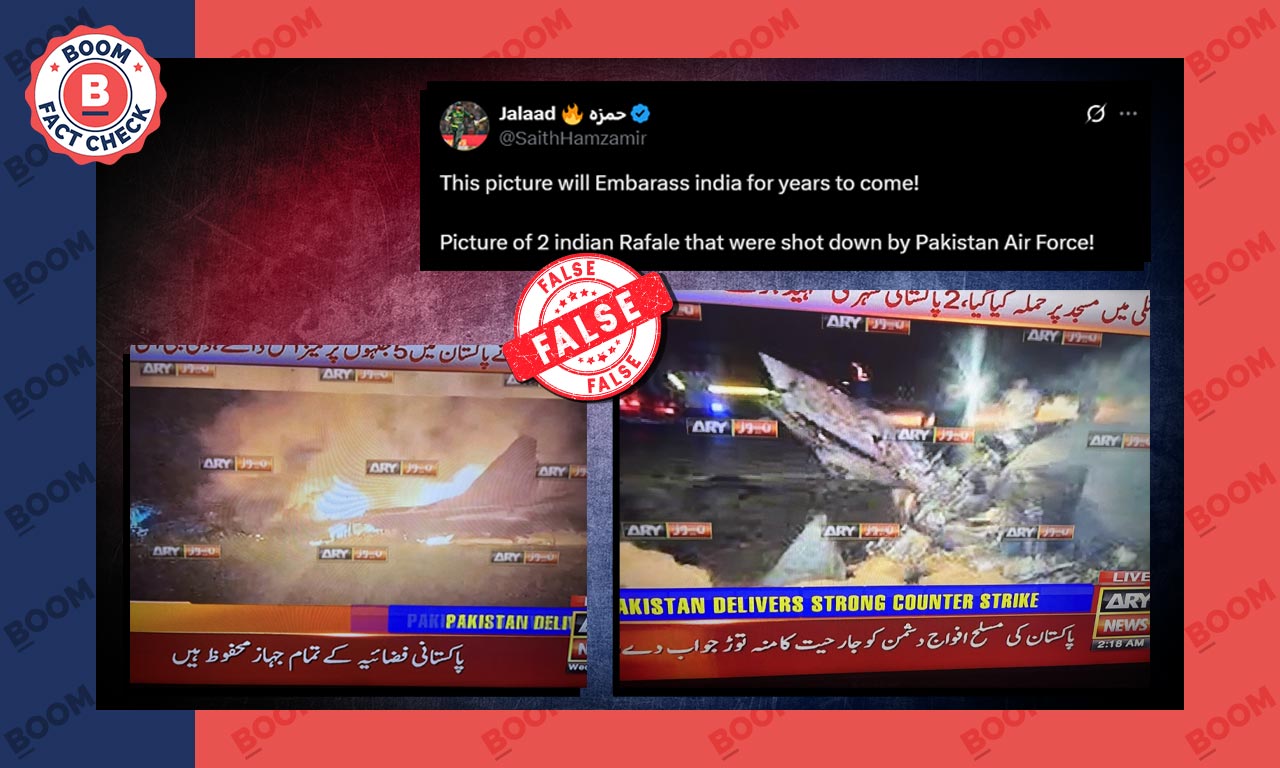
Maybe the earlier repaired one couldn't sustain combat duty for long and hence taken out. During last year Ops, we saw supposedly MKI wreckage at Ramban & Akhnoor. The first one was Mig-29UPG as wreckage of RD-33 was very clear. Second one was of Heron TP drone. Its twin rudders confused Pakistani OSINT guys to take it as MKI.

It's very hard to cover up wreckage of MKI within India(especially in Kashmir).
 
  • Like
Reactions: PhotonVish
No matter how much you'll evolve Rafale, it will never ever substitute a true 6th gen design. Yes, Rafale is a superlative jet, yes you French are understandably proud of Rafale but France needs an all new design for NGF(tailless all-aspect stealth with huge payload, sensors and range).

If India becomes a part of SCAF program, then investing billions of dollars to develop a stealth super Rafale won't cut it for us. Period.
For a long time, the situation was relatively favourable for France: France designed its weapons to stand up to Russia, and as China was still largely following a catch-up strategy modelled on Russia, these weapons were also very well suited to India. The Rafale, the Scalp, the MICA/Meteor, the Thales sensors, the Safran systems, the submarines – all of this fitted into a single logic: to counter a Russian-style threat or one derived from Russia.

But if China becomes the true benchmark at the high end, it is no longer the same problem.

Russia remains dangerous, particularly due to its sheer size, nuclear capabilities, missiles, strategic depth and the experience gained in Ukraine. But industrially, China now has a much broader base, a considerable military budget, greater autonomy in electronics, massive naval and aeronautical production capacity, and a technological momentum that could surpass Russia in several areas. Open-source data supports this view: SIPRI estimates China’s military expenditure in 2025 at around $336 billion, compared with around $190 billion for Russia; and the revenues of major Chinese arms conglomerates already place China second in the world behind the United States.

This changes India’s requirements. India is no longer seeking merely to counter an adversary equipped with Russian or Pakistani hardware. It must prepare for a China capable of fielding integrated systems, large numbers of stealth aircraft, long-range missiles, a dense air defence network, satellites, drones, AI, electronic warfare, a very powerful navy and an industry capable of rapid production. In this situation, simply buying “top-quality French” equipment is no longer necessarily enough. The French system must be adapted to the Indian theatre and the Chinese threat.

If India wants future French systems to remain relevant to its needs, it will have to enter into genuine cooperation, not just buy off-the-shelf equipment with a few adaptations.

For Indian requirements are not exactly the same as French ones. France thinks first and foremost of deterrence, nuclear strike capability, the European theatre, the Mediterranean, the Atlantic, the Sahel, expeditionary projection, and a relatively compact but high-quality combat aviation force. India focuses on the Himalayas, the Chinese hinterland, Pakistan, the Indian Ocean, mass, dispersed bases, high altitude, protracted warfare, industrial sovereignty, and interoperability with its own networks, missiles and radars.

Therefore, meaningful cooperation should enable these Indian constraints to be incorporated into the design: autonomy, range, internal/external payload, electronic warfare against Chinese systems, compatibility with Indian weaponry, Indian data links, local maintenance, mass production, suitable engines, numerous escort drones, and resilience to a war of attrition.

But this will come at a cost. Not just a financial cost, although that will be substantial. A political cost too: accepting that Dassault retains overall control of the architecture if that is the condition for success. An industrial cost: funding test benches, trials, prototypes, engines, sensors, software and production lines. A doctrinal cost: clearly defining what India really wants, rather than demanding at once a national aircraft, a French aircraft, maximum technology transfer, a reasonable price and a generation’s lead.

As long as China was catching up with Russia, French weapons designed against Russia naturally suited India. If China overtakes Russia, then India can no longer be content with simply buying French: it must co-finance a French development also designed to counter China.

This is probably the real crux of the Franco-Indian issue. France can act as India’s technological accelerator, but it cannot simply transform its future combat system into one optimised for Indian requirements for free. If India wants the successor to the Rafale or the “real SCAF” to be relevant against China in the 2040s, it will have to pay up front, not later.
 
  • Like
Reactions: Rajput Lion
France is in talks with the United Arab Emirates as its defence projects with Germany fall apart

https://www.ft.com/content/ba5407fb-bbff-4606-ace7-c0664bebb2cd?sharetype=blocked

Paris’s negotiations with the Gulf come after Berlin abandoned the joint fighter jet project and as the tank programme faces delays

France has stated that it is in talks with the United Arab Emirates regarding a defence partnership centred on its Rafale fighter jet, following the failure of the next-generation fighter jet project with Germany.

French Defence Minister Catherine Vautrin said on Monday that Paris was in talks with the United Arab Emirates regarding a “collaboration” on the next evolution of its flagship Rafale fighter jet, manufactured by Dassault Aviation and scheduled for 2030 onwards.

This evolution of the Rafale will not replace the now-abandoned Franco-German Future Combat Air System (FCAS), as it will not feature certain characteristics such as stealth, which were part of the original project’s objectives.

Berlin terminated the FCAS due to irreconcilable differences between Dassault and the German aerospace division of Airbus.

Another Franco-German project, that for an advanced battle tank, which Vautrin described as severely delayed, is also unlikely to come to fruition — a further sign of the slowdown in defence cooperation between the European Union’s two largest powers, at a time when Berlin is pursuing a broader rearmament drive in response to the Russian threat and the waning of US commitment to the defence of the continent.

A successful partnership with the United Arab Emirates centred on a modernised Rafale would strengthen France’s position in favour of alternative cooperation arrangements, as Paris seeks ways to finance and develop a new fighter jet on its own for the 2040s and beyond. The United Arab Emirates already owns and operates Rafale aircraft.

“My counterpart was in Paris a fortnight ago,” Vautrin said of the discussions in an interview with the newspaper Les Échos, adding that the UAE would be a “major customer” for the future Rafale F5.

She did not specify the nature of the partnership. However, the UAE could provide further funding for the aircraft’s development as well as purchase commitments, in exchange for contracts for local companies. The updated French military spending plans up to 2030, currently being finalised, already include funding for the new Rafale.

Vautrin also stated that she had met on several occasions with MBZ, the President of the United Arab Emirates, Sheikh Mohamed bin Zayed Al Nahyan, as well as the Emirati defence firm Edge.

France and the Emirates had already discussed such a partnership last year, but the talks broke down because Dassault was not in favour of sharing sensitive technologies with another manufacturer, according to people familiar with the matter. These concerns were also at the heart of the failure of the German agreement on the FCAS, the €100 billion fighter jet programme.

Dassault declined to comment.

The war with Iran and attacks on Gulf states have, however, strengthened defence ties between France and the region; Paris has notably deployed Rafale jets to assist with air defence.

France ideally needs partnerships to finance a new aircraft, given its tight budgetary constraints and the need to reduce its public deficit. Vautrin indicated that discussions regarding a record sale of around 114 Rafale jets to India — often cited as another potential partner — were progressing well and could be concluded by the end of the year.

Both France and Germany are also said to have sought to persuade the Swedish group Saab, according to sources close to the matter.
 
Maybe the earlier repaired one couldn't sustain combat duty for long and hence taken out. During last year Ops, we saw supposedly MKI wreckage at Ramban & Akhnoor. The first one was Mig-29UPG as wreckage of RD-33 was very clear. Second one was of Heron TP drone. Its twin rudders confused Pakistani OSINT guys to take it as MKI.

It's very hard to cover up wreckage of MKI within India(especially in Kashmir).

No, nothing's wrong with the jet that was recovered. Or they would have notified it for insurance as it was during peacetime ops.

The US Congress confirmed 3 lost jets without naming any. The French air chief confirmed they were Rafale, M2000, and MKI.

Trappier's comments lead to a Rafale tech loss rather than combat loss, but we are not sure because Dassault distanced themselves from his comments.

French air force chief Gen. Jérôme Bellanger said that he’s seen evidence pointing to just 3 Indian losses — a Rafale, a Russian-made Sukhoi and a Mirage 2000, which is an earlier generation French-made jet.

An IAF officer confirmed that all combat losses were due to SAMs. So it likely happened during the first set of air strikes and the jets flew into SAM rings. The Mig-29 isn't meant for such strikes, so it wouldn't have gone close enough. My guess is all three jets, even Rafale in case of combat loss, must have used Hammer and SPICE with <60 km range and flew right into the NEZ of SAM sites.

And we have proof that we have 13 crashes but 14 losses.

As for Heron, I know, I was the one to point it out. But that wasn't it.

The Mig-29 wreckage was from 2024.
 
  • Informative
Reactions: PhotonVish