
LMAO what WE see doesn't matter in the slightest mate. None of us here are part of the MoD or the DAC or the IAF. If they feel like dassault's offer is good enough they will bite, if not we will probably go for the GCAPI think some of you guys are starting to see through these French fairy tales, there is clarity
Dassault themselves are saying 2050 if the Germans and Spanish agreed last December, Cancelling and starting with new partners will only push this timeline
No doubt if they lose the sensors/computer stuff from the partnership, The French will use the Rafales tech and put it in a new frame and call it 6th gen, That is how the mirage became the rafale
Future Combat Air System (FCAS) - France/Germany
- Thread starter randomradio
- Start date
You are using an out of date browser. It may not display this or other websites correctly.
You should upgrade or use an alternative browser.
You should upgrade or use an alternative browser.


2040 6th gen is not too bad but i hope we can have one by 2036-38. Would be game changing
Maybe only the US and Chinese can achieve that, ie, a fully qualified 6th gen jet in 2036.
2040 for the Europeans and 2050 for India, if we pursue an independent program.
Mig-41 is going to be a very interesting aircraft. In order to achieve its specs, it's going to be a very big aircraft. So the expected range is 11000 km with a sizable A2A payload.
To get to this, they claim it will have a 50T class OEW and 100T MTOW.
The propulsion system for the initial version is known, an Item 30 engine combined with a ramjet.
We need this jet to do mach 3.2 at 40 km when supercruising, top speed of mach 4.3 in short bursts for combat or repositioning at 45-50 km, and a loiter time of 8-10 hours in the subsonic regime while carrying at least 8 R-37M class missiles or 4 R-37M along with 2 special missiles; essentially an internal payload of about 4T in two 6mx2m bays. A more dedicated missile design can improve things even more.
The Russians need 11000 km or 8-10 hours of loiter to cover the Arctic and their own landmass. It essentially allows them to fly to the North Pole and patrol it for many hours.
We can assume this jet is 45T empty, carries 50T of fuel, and 2 engines deliver 200 kN each (both turbine and regular ramjet) with 120-130 kN dry. Variable inlets are necessary. TWR would be 0.4. This gives us a range of 11000 km. The length of this class of jet would be about 33-35 m, which is about 12+ m more than the Mig-31.
In the future, we could see the ramjet upgraded to a dual mode ramjet. Dual mode ramjet sits between ramjet and scramjet. Ramjet stops being efficient after mach 3.5 and theoretically maxes out at mach 6, so you manage subsonic to supersonic transition of air via caliberated fuel injections. This ensures stable and efficient operation beyond mach 6. A DMR can operate realistically at mach 10, with a theoretical limit of mach 12. Zircon is one such system, we are developing Brahmos 2 with the same goal. An aircraft with DMR can supercruise at mach 6-7, top out at mach 9-10 with some additional inlet optimization compared to regular ramjet.
If we are to achieve spacefighter status, it will need a combined cycle engine; turbo-DMR + rocket. But the aircraft will become much larger and heavier in order to carry hydrogen. It will essentially double MTOW to 200T or greater. It's not realistic within acceptable timeframes yet. But the turboramjet and turbo-DMR designs are well within 5-10 years of fruition.
We can build much smaller aircraft too, for a range of 4000-4500 km. We can design it around AMCA's future 95/140 kN engines. It will be about 17 m in length and max out at 28-30T while giving mach 3.2 supercruise and mach 4 top speed at service ceiling of 40-45 km while providing air superiority level performance. This is achievable and will be normal for everyone by 2050-55.
@Picdelamirand-oil
To get to this, they claim it will have a 50T class OEW and 100T MTOW.
The propulsion system for the initial version is known, an Item 30 engine combined with a ramjet.
We need this jet to do mach 3.2 at 40 km when supercruising, top speed of mach 4.3 in short bursts for combat or repositioning at 45-50 km, and a loiter time of 8-10 hours in the subsonic regime while carrying at least 8 R-37M class missiles or 4 R-37M along with 2 special missiles; essentially an internal payload of about 4T in two 6mx2m bays. A more dedicated missile design can improve things even more.
The Russians need 11000 km or 8-10 hours of loiter to cover the Arctic and their own landmass. It essentially allows them to fly to the North Pole and patrol it for many hours.
We can assume this jet is 45T empty, carries 50T of fuel, and 2 engines deliver 200 kN each (both turbine and regular ramjet) with 120-130 kN dry. Variable inlets are necessary. TWR would be 0.4. This gives us a range of 11000 km. The length of this class of jet would be about 33-35 m, which is about 12+ m more than the Mig-31.
In the future, we could see the ramjet upgraded to a dual mode ramjet. Dual mode ramjet sits between ramjet and scramjet. Ramjet stops being efficient after mach 3.5 and theoretically maxes out at mach 6, so you manage subsonic to supersonic transition of air via caliberated fuel injections. This ensures stable and efficient operation beyond mach 6. A DMR can operate realistically at mach 10, with a theoretical limit of mach 12. Zircon is one such system, we are developing Brahmos 2 with the same goal. An aircraft with DMR can supercruise at mach 6-7, top out at mach 9-10 with some additional inlet optimization compared to regular ramjet.
If we are to achieve spacefighter status, it will need a combined cycle engine; turbo-DMR + rocket. But the aircraft will become much larger and heavier in order to carry hydrogen. It will essentially double MTOW to 200T or greater. It's not realistic within acceptable timeframes yet. But the turboramjet and turbo-DMR designs are well within 5-10 years of fruition.
We can build much smaller aircraft too, for a range of 4000-4500 km. We can design it around AMCA's future 95/140 kN engines. It will be about 17 m in length and max out at 28-30T while giving mach 3.2 supercruise and mach 4 top speed at service ceiling of 40-45 km while providing air superiority level performance. This is achievable and will be normal for everyone by 2050-55.
@Picdelamirand-oil

I don't see any benefit in joining the FCAS, we wont get most of the critical tech, we have to be dependent on others and have to spend much more than the benefit we would get, if we learn to make a good 4th/5th generation jet engine, there is no reason for us to join this program. These generation words are mostly gimmicks, IAF's Su57 and AMCA mk2 will be 5.5 gen aircrafts themselves, we should just join the GCAP as a observer to learn about the design requirements and tech they are gonna employ in the GCAP and make a 6th generation jet ourselves. The tejas program has put our aerospace industry much further than any licensed manufacture or tot deal so far, only by doing the r&d, testing, certifying and production by ourselves would we become a great power in this field.
I don't see any benefit in joining the FCAS, we wont get most of the critical tech, we have to be dependent on others and have to spend much more than the benefit we would get, if we learn to make a good 4th/5th generation jet engine, there is no reason for us to join this program. These generation words are mostly gimmicks, IAF's Su57 and AMCA mk2 will be 5.5 gen aircrafts themselves, we should just join the GCAP as a observer to learn about the design requirements and tech they are gonna employ in the GCAP and make a 6th generation jet ourselves. The tejas program has put our aerospace industry much further than any licensed manufacture or tot deal so far, only by doing the r&d, testing, certifying and production by ourselves would we become a great power in this field.
If all we are gonna do is pay the bills, then never mind the fact that it won't be acceptable, the IAF will simply not go for it. Alternatively, the French do the heavy-lifting, and we enter the program as a smaller partner rather than 50-50, like what Indonesia is doing in KF-X.
The IAF doesn't believe ADA can deliver 6th gen within a reasonable timeframe though, so an import is necessary. While it's true that the generation monikers don't have as much value, the AMCA is still a tailed design and that presents limitations in terms of stealth in some bands.

Future Photonics based radars would render any kind of stealth(even ELO of 6th gen) obsolete. By 2040, all major countries will have such radars fully operational.If all we are gonna do is pay the bills, then never mind the fact that it won't be acceptable, the IAF will simply not go for it. Alternatively, the French do the heavy-lifting, and we enter the program as a smaller partner rather than 50-50, like what Indonesia is doing in KF-X.
The IAF doesn't believe ADA can deliver 6th gen within a reasonable timeframe though, so an import is necessary. While it's true that the generation monikers don't have as much value, the AMCA is still a tailed design and that presents limitations in terms of stealth in some bands.
again photonics radar wont beat stealth, it will just give us better precision and extend range. It will also allow us to spot stealth jets that would otherwise become useless noise. It wont beat stealth as a whole. PLS drill this into the brain.Future Photonics based radars would render any kind of stealth(even ELO of 6th gen) obsolete. By 2040, all major countries will have such radars fully operational.
radar vs stealth is a constant cat and mouse game that will go on and on for ages

It will provide firing solution to radars from 200-300 kms away, taking away the VLO advantage of attacking targets with "Stand in" weapons.again photonics radar wont beat stealth, it will just give us better precision and extend range. It will also allow us to spot stealth jets that would otherwise become useless noise. It wont beat stealth as a whole. PLS drill this into the brain.
radar vs stealth is a constant cat and mouse game that will go on and on for ages
Future Photonics based radars would render any kind of stealth(even ELO of 6th gen) obsolete. By 2040, all major countries will have such radars fully operational.
Photonics would render shaping-based stealth + RAM of the F-22 and the F-35 moot.
Next gen stealth capabilities, like metamaterials used on the J-35, will still be stealthy.

Basically, B-2 will become obsolete, but B-21 will stay stealthy.
There are also different kinds of metamaterials providing different effects, so incorporating that into the aircraft's airframe will be the next step.


You guys aren't taking into account SBS . The US has a complete ecosystem out there. I doubt there's a single jet which can escape their notice if they focus their entire system on that nation.It will provide firing solution to radars from 200-300 kms away, taking away the VLO advantage of attacking targets with "Stand in" weapons.
How exactly do you guys think the US + Israel are hitting all those TELs in Iran. The situation is such that while Iran still has an extensive inventory of BMs they've practically run out of launchers .
China's probably in the same league or thereabouts. No clue where Russia or France is at the moment. However India's regressing. Our NAVIC system is practically dead & unless we rectify that as well as launch the entire set of 52 satellites we've planned under the SBS project within the next 2-3 years we're screwed .
Since I see no signs of either happening we're indeed screwed.
Agreed. US is planning to put a constellation of satellites in low-earth orbit powered by solar energy with radars and big IR/EO sensors with proper AMTI ability getting operational in early 2030s.You guys aren't taking into account SBS . The US has a complete ecosystem out there. I doubt there's a single jet which can escape their notice if they focus their entire system on that nation.
How exactly do you guys think the US + Israel are hitting all those TELs in Iran. The situation is such that while Iran still has an extensive inventory of BMs they've practically run out of launchers .
China's probably in the same league or thereabouts. No clue where Russia or France is at the moment. However India's regressing. Our NAVIC system is practically dead & unless we rectify that as well as launch the entire set of 52 satellites we've planned under the SBS project within the next 2-3 years we're screwed .
Since I see no signs of either happening we're indeed screwed.
It's going to be very difficult for stealth fighters like F-35 to survive the future battlespace, that's why speed and kinematics will matter more to survive than just airframe shaping.
Right now, AMTI in space is still in the experimental stage.
Even the US is yet to build their first constellation.

 breakingdefense.com
The first big launches for this is post 2028.
The Chinese have some up, reportedly, but not even regional, forget planet-wide.
Most effort right now is on aircraft take offs and landings via GMTI from air bases, but even here the constellations are small. Some hyperspectral satellites do have GMTI, so this is how they use it.
We are all roughly building this capability for post-2035.
Even after such a satellite system is set up, the platform's own sensors will still remain important for the endgame. Completely hands-off capabilities may need 2+ decades. So when I bring it up for AMCA, we are talking about the 2040s.
It can replace AWACS by the mid-2030s though, as long as it's set up by then. India will need until 2040 anyway. And a few more years to actually get the jets capable of using said capabilities organically. So, maybe 10-15 years for the US and China, and 20 years for India.
Even the US is yet to build their first constellation.
AMTI ASAP: Space Force readying multi-source acquisition for satellites to track aircraft - Breaking Defense
"So the focus is going to be on delivering AMTI [airborne moving target indication] capability very quickly," Air Force Secretary Troy Meink said.
The first big launches for this is post 2028.
The Chinese have some up, reportedly, but not even regional, forget planet-wide.
Most effort right now is on aircraft take offs and landings via GMTI from air bases, but even here the constellations are small. Some hyperspectral satellites do have GMTI, so this is how they use it.
We are all roughly building this capability for post-2035.
Even after such a satellite system is set up, the platform's own sensors will still remain important for the endgame. Completely hands-off capabilities may need 2+ decades. So when I bring it up for AMCA, we are talking about the 2040s.
It can replace AWACS by the mid-2030s though, as long as it's set up by then. India will need until 2040 anyway. And a few more years to actually get the jets capable of using said capabilities organically. So, maybe 10-15 years for the US and China, and 20 years for India.

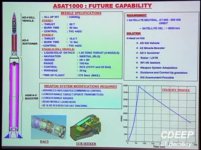
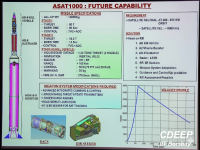
Iirc, PDV can handle threats from nearly 5,000 km away that is ICBM class. I dont see the value of getting S500 and I hope India doesn't get it. That money could be spent improving PDV and working on ADAHOur BMD (P1/2) is built to defeat SRBMs, MRBMs, and IRBMs. S-500 has been built to defeat ICBMs.
We will need a phase 4 program (P3 is for hypersonic missiles). If we pursue ICBM killers, then the gap between development and maturity can be met by the S-500.

Iirc, PDV can handle threats from nearly 5,000 km away that is ICBM class. I dont see the value of getting S500 and I hope India doesn't get it. That money could be spent improving PDV and working on ADAH
Attachments
Iirc, PDV can handle threats from nearly 5,000 km away that is ICBM class. I dont see the value of getting S500 and I hope India doesn't get it. That money could be spent improving PDV and working on ADAH
PDV is for MRBMs up to 3000 km. What you are looking for is the AD-2.
It may have been slightly exaggerated. The anti-ICBM is a fringe capability, not a dedicated one for AD-2. And it's not two-tier either. So we need AD-1 and 2 upgraded to have higher red lines in order to place anti-ICBM capabilities in the middle of those red lines instead of the fringes. So we will need faster SAMs, and if not done already, even the BMD radar must be upgraded to handle a larger number of countermeasures and warheads.
again photonics radar wont beat stealth, it will just give us better precision and extend range. It will also allow us to spot stealth jets that would otherwise become useless noise. It wont beat stealth as a whole. PLS drill this into the brain.
radar vs stealth is a constant cat and mouse game that will go on and on for ages
While it's a cat and mouse game, your argument doesn't apply to the current standards of deployed stealth.
And photonics isn't simply a more sensitive system, GaN aleady achieves that, it's the way the higher sensitivity is achieved that makes things different.
When up against a photonics radar, the pilot himself becomes a critical weakness 'cause the radar can see through the glass and the HMDS. It can look into the inside of the aircraft through metal and composites as well. So we will need stealth both outside and inside the aircraft. We will need to cover up the cockpit. We will need to block the insides of the wings and fuselage and so on. It makes the cat and mouse game all the more expensive.
Lack of use of electronic materials inside and outside is why we cannot simply go for vanilla versions of stealth anymore, and it's also the reason why a modernized F-22 wasn't created.
Of course, cognitive electronic warfare, active cancelation, and other forms of active and passive absorbtive, destructive, and deflective means using electronics will continue to act as countermeasures.
Why go for the fcas then when we can just be an observer of GCAP and buy from them? UK and Japan are monsters when it comes to material science and jet engines and we also have Italy in the mix, its gonna be a really good jet and most likely better than the FCAS so why bother with the FCAS in the first place?If all we are gonna do is pay the bills, then never mind the fact that it won't be acceptable, the IAF will simply not go for it. Alternatively, the French do the heavy-lifting, and we enter the program as a smaller partner rather than 50-50, like what Indonesia is doing in KF-X.
We should invest more and bring in experts like when we did for Kurt Tank and George William Benjamin when we built the hal marut if we currently lack capability in any such department. The FCAS is also gonna take a long time to be deliver if we actually think of joining this program, I'll say we have pretty sufficient technical capability and knowledge and fill in the gap with enough investments and bringing in experts if required.The IAF doesn't believe ADA can deliver 6th gen within a reasonable timeframe though, so an import is necessary. While it's true that the generation monikers don't have as much value, the AMCA is still a tailed design and that presents limitations in terms of stealth in some bands.
Also if you look at most 6th gen designs which are at concept stages or has been unveiled, most of them like tempest or fcas have an vertical stabilizer for it, a tailless design isn't an absolute must. if you look at most of the design requirements for 6th gen, the Su57 is closest to it, it has small vertical stabalizers unlike the bill board sized ones in f22, it has a really flat body unlike the fat f35, even though supermanuverability isnt a requriment, it is more agile, maneuverable and superior air dominance fighter than j20 or f22 because of its 3d thrust vectoring, large lifting body, advanced aerodynamic contol surfaces etc, it also has wide blended wing-body like future 6th gen designs, it also has the best radar coverage(imagine how op it will be with our utham radar for its frontal section, its range in frontal section will be even greater than f22), it also has the biggest combat range like next gen requirements and has a big internal weapons bay, not to mention the new powerful and efficient engine along with a body designed for less drag allowing easier supercruise than others, it can also use AI and act as command center to control swarm of drones by a copilot in the plane itself in the twin seat version.
nWhy go for the fcas then when we can just be an observer of GCAP and buy from them? UK and Japan are monsters when it comes to material science and jet engines and we also have Italy in the mix, its gonna be a really good jet and most likely better than the FCAS so why bother with the FCAS in the first place?
We should invest more and bring in experts like when we did for Kurt Tank and George William Benjamin when we built the hal marut if we currently lack capability in any such department. The FCAS is also gonna take a long time to be deliver if we actually think of joining this program, I'll say we have pretty sufficient technical capability and knowledge and fill in the gap with enough investments and bringing in experts if required.
Also if you look at most 6th gen designs which are at concept stages or has been unveiled, most of them like tempest or fcas have an vertical stabilizer for it, a tailless design isn't an absolute must. if you look at most of the design requirements for 6th gen, the Su57 is closest to it, it has small vertical stabalizers unlike the bill board sized ones in f22, it has a really flat body unlike the fat f35, even though supermanuverability isnt a requriment, it is more agile, maneuverable and superior air dominance fighter than j20 or f22 because of its 3d thrust vectoring, large lifting body, advanced aerodynamic contol surfaces etc, it also has wide blended wing-body like future 6th gen designs, it also has the best radar coverage(imagine how op it will be with our utham radar for its frontal section, its range in frontal section will be even greater than f22), it also has the biggest combat range like next gen requirements and has a big internal weapons bay, not to mention the new powerful and efficient engine along with a body designed for less drag allowing easier supercruise than others, it can also use AI and act as command center to control swarm of drones by a copilot in the plane itself in the twin seat version.
The advantage is due to the familiarity gained through the Rafale deal. The British are motivated a lot more by politics than the French as well, so the French focus on strategic autonomy is more helpful to India.
We don't have a manpower issue, only our industry is yet to catch up, which will happen over the next 5-10 years as indigenous programs start delivering alongside the civil industry.
The Su-57 needs a lot of work before it can compete with next gen aircraft. Right now both Su-57 and Su-57M1 are pretty standard for 5th gen. They are working on a new version that is expected to actually meet the standards of 5th gen, so let's see where that takes us.
Like I said, what advantage does the fcas provide which we already cant get from the AMCA mk2 or Su57m2? Its much better to perfect the AMCA Mk2 and Su57m2 with Indian tech than to rely on the FCAS. Also, doing an indigenous 6th jet with the right investment and experts consulted if necessary is gonna push our r&d and industry forward than any FCAS deal is gonna ever do. Also, if an 6th gen is an absolute requirement at the earliest, Like I said, join the GCAP as an observer and buy it and understand the general tech and principles behind its design and make one which fits our requirement.The advantage is due to the familiarity gained through the Rafale deal. The British are motivated a lot more by politics than the French as well, so the French focus on strategic autonomy is more helpful to India.
Different country's have different standards, america and russia are the leaders of fighter jets and there they can categories it however they deem it so like apple can call their phones as next gen if it has a newer processor while Samsung can call their phones as next gen if it has newer display, both are right in their own way. Even though there is no universal agreement for 5th gen, lets look at some of the general considerations.The Su-57 needs a lot of work before it can compete with next gen aircraft. Right now both Su-57 and Su-57M1 are pretty standard for 5th gen. They are working on a new version that is expected to actually meet the standards of 5th gen, so let's see where that takes us.
Stealth: Su57 has angeled surface, blended wing-body, radar blockers on inlet, advanced ram coating and internal weapons capacity.
Super-Maneuverability: It outclasses even the f22 with ease, so no point explaining.
Supercruise: Its flat body, advanced control surfaces and advanced engine allows easy supercruise which a so called 5th gen f35 lacks.
Advanced-Avionics: N036 Byelka AESA (X-band main + L-band, side-looking cheek arrays). Side radars (unique to Su-57) provide 360° coverage. 101KS Atoll IRST gives it passive hunting ability of 4th and 5th gen jets, electronic countermeasures (Himalayas), and selective-frequency domes. It provides 360 coverage with superior awareness unlike the forward mounted ones in f22 or f35.
Network Data fusion: Full sensor fusion (radar, IRST, ECM, side arrays) into one cockpit picture via the "e-pilot"/integrated avionics.
6. Multi-Role Capabilities: Its also a true multi role jet unlike the f22 which cant do proper ground strike and f35 which cant do proper air superiority.
6th gen is basically retaining the features of 5th gen while also adding some 6th gen requirements of its own like
1. Loyal wingman/drone control: The Felon is the only fighter jet in world right now which can control UCAS like S-70. Not to mention ability to control swarm of drones for scouting, jamming or strikes. This manned-unmanned system is exactly the central pillar of 6th gen tech the west is desperately trying to develop for the future. The twin seat version offered to us might take the capability even further ahead.
2. AI/Advanced-Automation: E-pilot" sensor fusion and threat triage already reduce workload (future AI upgrades for 6th-gen level). Side + L-band arrays give inherent 360° awareness beyond typical 5th-gen.
3. C3 node role: It commands mixed formations (drones + 4th/5th-gen jets + ground systems), acting as a battlefield hub.
4. Long Range: Even though no country has an operational jet with VCE yet, the Su57 and Su57M1 has vastly superior combat radius than f22 and f35 although I don't have the exact range as of yet.
Like I said, what advantage does the fcas provide which we already cant get from the AMCA mk2 or Su57m2? Its much better to perfect the AMCA Mk2 and Su57m2 with Indian tech than to rely on the FCAS. Also, doing an indigenous 6th jet with the right investment and experts consulted if necessary is gonna push our r&d and industry forward than any FCAS deal is gonna ever do. Also, if an 6th gen is an absolute requirement at the earliest, Like I said, join the GCAP as an observer and buy it and understand the general tech and principles behind its design and make one which fits our requirement.
Su-57 has been made for permissive airspace. AMCA is being made for contested airspace. SCAF is being made for denied airspace.
If the IAF wants to take the fight deeper into enemy territory after 2040, merely Ghatak won't be enough.
Su-57 has become largely irrelevant to us, they made the jet for a different set of requirements compared to us. And we can make-do with the AMCA until its direct successor comes in, but the SCAF is necessary for more complex operations. That's why I've always held the position that we would need 2-3 squadrons of a 6th gen jet as a stopgap by 2040 before we get a better jet of our own by the mid-2050s.
But it seems the IAF wants to skip the wait and go for a program they will have some say over with a larger order.
A 6th gen import is definitely necessary though.
Different country's have different standards, america and russia are the leaders of fighter jets and there they can categories it however they deem it so like apple can call their phones as next gen if it has a newer processor while Samsung can call their phones as next gen if it has newer display, both are right in their own way. Even though there is no universal agreement for 5th gen, lets look at some of the general considerations.
Stealth: Su57 has angeled surface, blended wing-body, radar blockers on inlet, advanced ram coating and internal weapons capacity.
Super-Maneuverability: It outclasses even the f22 with ease, so no point explaining.
Supercruise: Its flat body, advanced control surfaces and advanced engine allows easy supercruise which a so called 5th gen f35 lacks.
Advanced-Avionics: N036 Byelka AESA (X-band main + L-band, side-looking cheek arrays). Side radars (unique to Su-57) provide 360° coverage. 101KS Atoll IRST gives it passive hunting ability of 4th and 5th gen jets, electronic countermeasures (Himalayas), and selective-frequency domes. It provides 360 coverage with superior awareness unlike the forward mounted ones in f22 or f35.
Network Data fusion: Full sensor fusion (radar, IRST, ECM, side arrays) into one cockpit picture via the "e-pilot"/integrated avionics.
6. Multi-Role Capabilities: Its also a true multi role jet unlike the f22 which cant do proper ground strike and f35 which cant do proper air superiority.
While the sensors are good, the sensor fusion is not yet up to par, it's currently only on the surface level. Plus their export grade sensors will be inferior anyway. So we can't simply import, we will have to MKIze it.
Then there's the problem with the airframe. They have designed it for speed and long range when we want stealth and endurance. The issue with that is the Su-57's stealth changes with aspect that works for the Russians but is counterproductive to India. They want to engage from greater distance than we want, so the opfor radar will see the more distant jet differently from the jet that's much closer. It's all about look up/down angles and bank angles from specific ranges. They plan on flying 100 km in front of their 400-600-km SAM while equipped with 300-400 km AAMs, the MKI can do the same thing for the IAF without bothering about stealth.
The airframe itself uses now outdated structures and practically obsolete electrical RAS materials. We want new composites or at the very least new electronic RAS like laser-printed metamaterials which is now becoming normal on Chinese jets.
That's why the Russians are working on a new derivative that's more stealthy, more advanced, and more practical for the export market, and with two seats. We have to wait for such changes before we make a decision. Then let's see if the IAF stays on course wth SCAF or divert to this new Su-57 while trusting ADA to make up for the difference.
6th gen is basically retaining the features of 5th gen while also adding some 6th gen requirements of its own like
1. Loyal wingman/drone control: The Felon is the only fighter jet in world right now which can control UCAS like S-70. Not to mention ability to control swarm of drones for scouting, jamming or strikes. This manned-unmanned system is exactly the central pillar of 6th gen tech the west is desperately trying to develop for the future. The twin seat version offered to us might take the capability even further ahead.
2. AI/Advanced-Automation: E-pilot" sensor fusion and threat triage already reduce workload (future AI upgrades for 6th-gen level). Side + L-band arrays give inherent 360° awareness beyond typical 5th-gen.
3. C3 node role: It commands mixed formations (drones + 4th/5th-gen jets + ground systems), acting as a battlefield hub.
4. Long Range: Even though no country has an operational jet with VCE yet, the Su57 and Su57M1 has vastly superior combat radius than f22 and f35 although I don't have the exact range as of yet.
Airframe technologies like multispectral, broadband stealth (tailless, blended wings, electronic RAS), morphing wings, advanced cooling systems, smart skins, internal DEW, self-healing nanomaterials, more optimized internal estate for new electronics hardware etc.