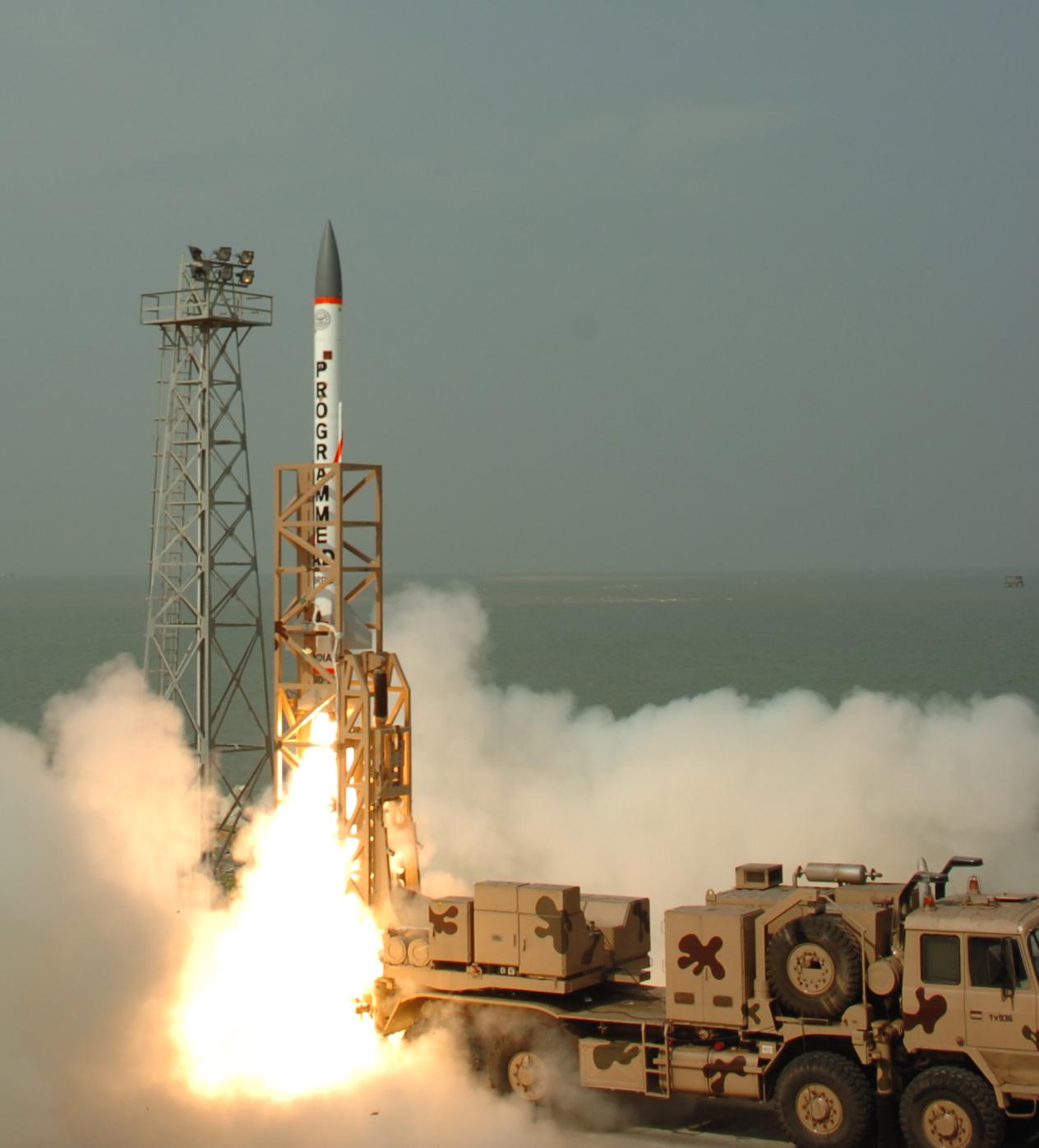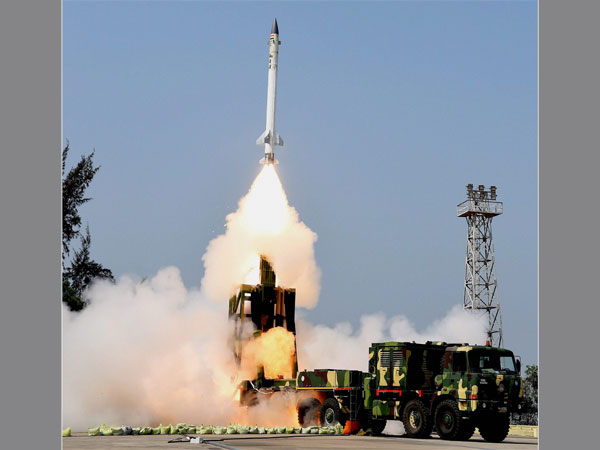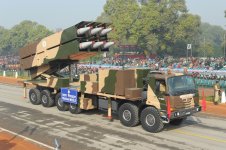

Not at all. It is a proper program meant for operational use. It's been deployed operationally. At least the widespread deployment of TELs is starting this year (2022!!!). Until now it was all stuff developed for testing purposes. P1 even has its own MFCR.
Please do share the reports as this is news to me.
That infographic is misleading. It says AD-1 is more than 1500Km and AD-2 is more than 3000Km because AAD and PDV are below 1500Km and 3000Km respectively.
Also, BMD missiles are specific to the BM type. For example, AAD and PDV are more effective in countering SRBMs and MRBMs than AD-1 and AD-2, because the latter have been developed to operate against a different type. Now, while AD-1 might get away with shooting down an SRBM/MRBM because it's within the atmosphere, although it may struggle, AD-2 will be completely useless against SRBMs and MRBMs because its trajectory is meant for a whole different target.
For example, if you are trying to throw a ball from the ground to a friend on the third floor versus another friend on the first floor, you would need different amounts of force and throwing actions for both floors. Missiles are the same. But the difference between your throwing arm and the missile is you can make the adjustment necessary to use the right amount of force, but a missile using a solid rocket motor cannot do the same. It cannot throttle up or down, so you need a whole new missile to deal with a different target coming in at a different angle and speed.
Point being, P1 and P2 are complementary and both are necessary to protect a target. One protects a target from SRBMs and MRBMs and the other deals with IRBMs.
AD-1 and AD-2 together are designed to counter the entire range of theatre-level ballistic missile threats, all the way from SRBMs to IRBMs, with the AD-1 taking care of the lower-range threats and AD-2 being reserved for higher range ones.
The technologies of P1 are simply not sufficient enough to deliver operational capabilities. We only ever tested either of the AAD or PDV against liquid-fueled Prithvi-based SRBM targets. This type of missile (kinematic equivalent of early SCUDs) has already been phased out by the Chinese and replaced with higher-energy Solid-fuel types (equivalents of Iskander or our Pralay) and the only Pakistani liquid-fuel missile in service is the Ghauri, which anyway is a different class of missile (MRBM). The ascent or terminal characteristics of any of these missiles are vastly different to that of any Prithvi.
We simply never tested the P1 against the type of BM threats we actually face today. We cannot say on the basis of anything we tested that any BMD based on P1 has 'operational' capabilities. The only things we really tested were proofs-of-concept that we can actually track incoming target and guide the interceptor onto said target. Nothing else of operational consequence was really demonstrated,. And without any actual test data, P1 is basically useless against the types of BMs we will actually face.
In fact we will only gain the capability to test against full-range BM threats (all the way from Solid-fuel SRBMs to IRBMs) once we operationalize the DRDO Open Sea Test Range comprising the INS Anvesh with its on-board LRMFR radar (aka ship-based version of IAF's upcoming HPR) + missile launchers for both AD-1 & AD-2, alongside the INS Dhruv performing telemetry tracking to validate the results.
Without such tests being conducted, any claim of a BMD shield being 'operational' is a joke. Imagine if the US were to only test AEGIS/AEGIS Ashore BMD against something the likes of the old liquid-fueled MGM-52 Lance, but declaring it operational against likes of Iskander. Just doesn't work.
The S-400 has little to do with the BMD program, it's meant for a specific IAF requirement driven by the lack of fighter squadrons, Operation Copium-400. I'd say its BMD capability is complementary to the DRDO's as it features far greater tactical mobility and survivability, not necessarily capability. Plus it's proven. I guess the faster induction helps too. The S-400 is still the IAF's coping mechanism. It's primarily about transferring the small number of fighters left to offensive missions and employing a high-risk method of defence instead. If the USAF openly says they have lost conventional deterrence against China, then you can imagine how bad it is for us.
The LRTR meant for P1 was less capable. Due to delays, the LRTR meant for P2 became the main version for both phases.
P1 'deployment' is the coping mechanism. S-400 wasn't meant to deliver BMD capabilities, but the capabilities it does deliver are roughly equivalent if not superior to the AAD i.e. a similar stand-in for the lack of a dedicated system such as PAC-3/THAAD. It's little more than a "better than nothing" situation, not very different to the P1 in that regard.
China has already tested the S-400 in a simulated BMD application, which means more than likely it will be used against the likes of our Pralay SRBM.

China successfully tests Russia's S-400 missile air defence system
China's People's Liberation Army Rocket Force last month tested the S-400 Triumf air defence system successfully shooting down a "simulated ballistic target" almost 250 kilometre away and moving at the supersonic speed of 3 kilometre per second, Hong-Kong based South China Morning Post reported.