
Man Portable Anti-Tank Guided Missile (MPATGM) Developments : Updates & Discussions
- Thread starter ni8mare
- Start date
-
- Tags
- drdo indian army mpatgm
You are using an out of date browser. It may not display this or other websites correctly.
You should upgrade or use an alternative browser.
You should upgrade or use an alternative browser.


BDL competition to MPATGM
BDL Amogha-3 ATGM
Any details about this system?
This page Indian Missiles and Munitions DiscussionBDL Amogha-3 ATGM
Any details about this system?




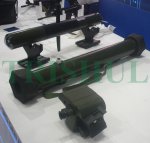



No more imports, army kick starts process to order anti-tank guided missiles from Indian industry
By Manu Pubby
Last Updated: Feb 11, 2020, 10.24 AM IST
The army has promised the industry an assured order of 101 launchers and 2330 missiles if the trials are successful but the potential orders in the coming decade could be ten times this number. For example, just last year the army cleared the purchase of 5,000 of the older generation Milan 2T missiles to replenish stocks.

A 10 Assam Infantry Battalion soldier checking out the Anti-Tank Missile Launcher.(Representative image)
NEW DELHI: Seeking to cut down the import bill, the army has kicked started a process to order new anti-tank guided missiles (ATGM) from the Indian industry, preferring the domestic route for over 2,000 missiles, a number that could grow exponentially given its requirements.
The third generation ATGM project, which will replace thousands of Milan and Konours missiles that are currently in service, is being looked at keenly by the private sector, with some companies in advanced stages of prototype development.
The army has asked Indian companies – both private and public sector players like Bharat Dynamics Limited – to submit their `expression of interest’ in the program, which will be followed by the tendering process, trials and evaluations and commercial negotiations.
Spelling out its requirements, the army has said that the present anti tank capabilities have been in service for more than three decades and there is a need to catch up with other armed forces across the world that have third generation missiles.
“These systems have better accuracy, enhanced lethality, a higher kill probability, day and night operation capability and ensure better survivability for the operating crew,” an army document on the requirement says, inviting Indian vendors to develop a prototype to offer for testing.
While there are a handful of Indian companies that claim to have the technology, the army is open to them having a foreign collaborator as long as there is a minimum of 40% indigenous content (IC) as the contract will be processed under the Indigenous Designed and Manufactured (IDDM) category.
The army has promised the industry an assured order of 101 launchers and 2330 missiles if the trials are successful but the potential orders in the coming decade could be ten times this number. For example, just last year the army cleared the purchase of 5,000 of the older generation Milan 2T missiles to replenish stocks.
To meet immediate needs, the army has placed an emergency order for third generation missiles on Israel’s Rafael. The order is for 210 missiles and a dozen launchers and is being processed on the fast track basis.
Indian companies like the Kalyani Group and VEM Technologies have already initiated work on the systems, with others like Solar Industries also in the reckoning. Not to be left behind, the state owned BDL, which has manufactured the Milan series of missiles in India, too is ready with an offering. BDL launched its ‘Amogha III’ ATGM at the just concluded DefExpo in Lucknow.
No more imports, army kick starts process to order anti-tank guided missiles from Indian industry
By Manu Pubby
Last Updated: Feb 11, 2020, 10.24 AM IST
The army has promised the industry an assured order of 101 launchers and 2330 missiles if the trials are successful but the potential orders in the coming decade could be ten times this number. For example, just last year the army cleared the purchase of 5,000 of the older generation Milan 2T missiles to replenish stocks.
A 10 Assam Infantry Battalion soldier checking out the Anti-Tank Missile Launcher.(Representative image)
NEW DELHI: Seeking to cut down the import bill, the army has kicked started a process to order new anti-tank guided missiles (ATGM) from the Indian industry, preferring the domestic route for over 2,000 missiles, a number that could grow exponentially given its requirements.
The third generation ATGM project, which will replace thousands of Milan and Konours missiles that are currently in service, is being looked at keenly by the private sector, with some companies in advanced stages of prototype development.
The army has asked Indian companies – both private and public sector players like Bharat Dynamics Limited – to submit their `expression of interest’ in the program, which will be followed by the tendering process, trials and evaluations and commercial negotiations.
Spelling out its requirements, the army has said that the present anti tank capabilities have been in service for more than three decades and there is a need to catch up with other armed forces across the world that have third generation missiles.
“These systems have better accuracy, enhanced lethality, a higher kill probability, day and night operation capability and ensure better survivability for the operating crew,” an army document on the requirement says, inviting Indian vendors to develop a prototype to offer for testing.
While there are a handful of Indian companies that claim to have the technology, the army is open to them having a foreign collaborator as long as there is a minimum of 40% indigenous content (IC) as the contract will be processed under the Indigenous Designed and Manufactured (IDDM) category.
The army has promised the industry an assured order of 101 launchers and 2330 missiles if the trials are successful but the potential orders in the coming decade could be ten times this number. For example, just last year the army cleared the purchase of 5,000 of the older generation Milan 2T missiles to replenish stocks.
To meet immediate needs, the army has placed an emergency order for third generation missiles on Israel’s Rafael. The order is for 210 missiles and a dozen launchers and is being processed on the fast track basis.
Indian companies like the Kalyani Group and VEM Technologies have already initiated work on the systems, with others like Solar Industries also in the reckoning. Not to be left behind, the state owned BDL, which has manufactured the Milan series of missiles in India, too is ready with an offering. BDL launched its ‘Amogha III’ ATGM at the just concluded DefExpo in Lucknow.
No more imports, army kick starts process to order anti-tank guided missiles from Indian industry
Is Indian anti tank missile more powerful than Israel’s Spike?
The test shot was carried out on October 23 at the test site of the Pokhran field field, in the western state of Rajasthan. The missile destroyed the target with extremely high accuracy in both desert terrain and rugged frontier hills.“This is the final test and the NAG program will begin to be deployed to all units in the military,” the Indian Defense Ministry said in a statement.
NAG is a product of the Defence Research and Development Organisation Agency of India (DRDO). The missile equipped with an advanced passive navigation system with the ability to precisely destroy the target. It is designed to destroy modern tanks and heavy armored targets. It also has night strike capabilities.
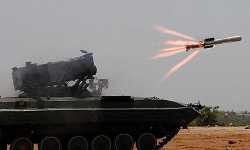
The missile can be launched from a ground-based launch pad or an airbase. The ground version can now be mounted on NAMICA (BMP-2 platform) using NAG missiles. The platform can fire six missiles with a gap of 20 seconds.
The NAG was developed under the Indian Integrated Guided Missile Development Program (IGMDP) program developed by the Ministry of Defense, involving four other types of missiles, including Agni, Akash, Trishul, and Prithvi.
The first test of the NAG was carried out in October 1990, but it was not until 2002 that there were initial successes. Testing of anti-tank NAG missiles against stationary and mobile targets took place from 2007 to 2016.
During the test in January 2016, a NAG missile successfully destroyed a thermal weapons system (TTS) at a range of 4 km at the Pokhran range. This anti-tank missile has undergone the last of the practical tests in different weather conditions this year.
According to DRDO, NAG is a line of anti-armored weapon guided missiles built of lightweight and highly durable composite materials. It has a high combat ability and can evade the enemy’s defenses.
The missile is installed with 4 penguins, spread and length 1.85, diameter 0.20m, wingspan of 0.4m and weighs 43kg. The missile is fitted with a targeting guidance system, while the middle body contains many compact sensors and warheads.
Is Indian anti tank missile more powerful than Israel’s Spike? - Defence News India

Short answer No,Is Indian anti tank missile more powerful than Israel’s Spike?
Long answer, are you joking?
Nag is a too little too late solution.

Only Spike ER is comparable to Nag. All smaller versions are comparable to MPATGAM.Is Indian anti tank missile more powerful than Israel’s Spike?
The test shot was carried out on October 23 at the test site of the Pokhran field field, in the western state of Rajasthan. The missile destroyed the target with extremely high accuracy in both desert terrain and rugged frontier hills.
“This is the final test and the NAG program will begin to be deployed to all units in the military,” the Indian Defense Ministry said in a statement.
NAG is a product of the Defence Research and Development Organisation Agency of India (DRDO). The missile equipped with an advanced passive navigation system with the ability to precisely destroy the target. It is designed to destroy modern tanks and heavy armored targets. It also has night strike capabilities.
View attachment 18596
The missile can be launched from a ground-based launch pad or an airbase. The ground version can now be mounted on NAMICA (BMP-2 platform) using NAG missiles. The platform can fire six missiles with a gap of 20 seconds.
The NAG was developed under the Indian Integrated Guided Missile Development Program (IGMDP) program developed by the Ministry of Defense, involving four other types of missiles, including Agni, Akash, Trishul, and Prithvi.
The first test of the NAG was carried out in October 1990, but it was not until 2002 that there were initial successes. Testing of anti-tank NAG missiles against stationary and mobile targets took place from 2007 to 2016.
During the test in January 2016, a NAG missile successfully destroyed a thermal weapons system (TTS) at a range of 4 km at the Pokhran range. This anti-tank missile has undergone the last of the practical tests in different weather conditions this year.
According to DRDO, NAG is a line of anti-armored weapon guided missiles built of lightweight and highly durable composite materials. It has a high combat ability and can evade the enemy’s defenses.
The missile is installed with 4 penguins, spread and length 1.85, diameter 0.20m, wingspan of 0.4m and weighs 43kg. The missile is fitted with a targeting guidance system, while the middle body contains many compact sensors and warheads.
Is Indian anti tank missile more powerful than Israel’s Spike? - Defence News India
Spike failed in extreme hot conditions in indian desert. New Nag sensor is especially modified to work in those conditions. Thus Nag is 'better' for India.
Err... Spike LR II has a range of 5.5 KM. Further its a tripod mounted portable system.Only Spike ER is comparable to Nag. All smaller versions are comparable to MPATGAM.
Spike failed in extreme hot conditions in indian desert. New Nag sensor is especially modified to work in those conditions. Thus Nag is 'better' for India.
Spike ER, NLOS etc are way out of league.
Lastly, given that Army bought a few of spikes, I am fairly sure it performs enough. Besides, its a system is working while Nag has been in testing for 30 years + now and no sign of it entering production.
Spike LR is portable but Nag is not !. They are different classes of missiles. LR is an evolution of the original 14 kg Spike thus comparable to MPATGAM. Not Nag which is ~45 kg missile.Err... Spike LR II has a range of 5.5 KM. Further its a tripod mounted portable system.
Spike ER, NLOS etc are way out of league.
ER version of Spike is a missile with a bigger diameter. Its 34 kg for the missile and 30 kg for the launcher.
NLOS version is an entirely new missile that weighs 70 kg. The comparable system is our SANT (Which is yet to have a land version). The army is yet to show a requirement for such long-range system.
Basically, Spike is a family with 3-4 different missiles (If you include mini-spike) with common sharing systems. Here, we call it by different missile names like NAG, SANT, and MPATGM.
A billion-dollar contract for 8000+ Spike was canceled because of maturity in the development of MPATGM, not Nag. Nag class of missile requirement is limited to <500.Lastly, given that Army bought a few of spikes, I am fairly sure it performs enough. Besides, its a system is working while Nag has been in testing for 30 years + now and no sign of it entering production.
A contract for a few hundred Spike-MR was given under fast track procedure as the stopgap till MPATGM enters production. Nag has cleared all user trials and DAC has approved the final order.
The trouble with NAG and its siblings/children is that none of them are deployed in any good number. Like all DRDO projects they are essentially science projects which have not seen any service. Spike meanwhile is in service in not just Israel's army but elsewhere as well.Basically, Spike is a family with 3-4 different missiles (If you include mini-spike) with common sharing systems. Here, we call it by different missile names like NAG, SANT, and MPATGM.
Good point, when compared to LRII, MPATGAM is not only heavier but has less than half the range of Spike LR II when launched from ground. Actually MPATGAM is more likely to be comparable with Spike MR. Spike LR is much better than it.Spike LR is portable but Nag is not !. They are different classes of missiles. LR is an evolution of the original 14 kg Spike thus comparable to MPATGAM. Not Nag which is ~45 kg missile.
Spike ER II has a range of 15 KM. Nag has much higher mass (43 KG missile) and it only has a range of 4 KM.ER version of Spike is a missile with a bigger diameter. Its 34 kg for the missile and 30 kg for the launcher.
The amount of back and forth dancing shows that Army is not totally sure that MPATGM is going to arrive any time soon. Its a DRDO project so another 20 years is not at all unheard of.A billion-dollar contract for 8000+ Spike was canceled because of maturity in the development of MPATGM, not Nag. Nag class of missile requirement is limited to <500.
A contract for a few hundred Spike-MR was given under fast track procedure as the stopgap till MPATGM enters production. Nag has cleared all user trials and DAC has approved the final order.
Because Israel has a head start of 15 years in developing various parts of ATGMs. We are directly jumping to third generation of ATGMs. There is a serious learning curve.The trouble with NAG and its siblings/children is that none of them are deployed in any good number. Like all DRDO projects they are essentially science projects which have not seen any service. Spike meanwhile is in service in not just Israel's army but elsewhere as well.
The Nag project gave way for multiple projects from Helina to SANT. Which will all reach production in the next five years.
That's why I said LR is the evolution of the original Spike aka MR. There will be subsequent longer-ranged versions of MPATGM.Good point, when compared to LRII, MPATGAM is not only heavier but has less than half the range of Spike LR II when launched from ground. Actually MPATGAM is more likely to be comparable with Spike MR. Spike LR is much better than it.
No, LR is heavier than MPATGM.
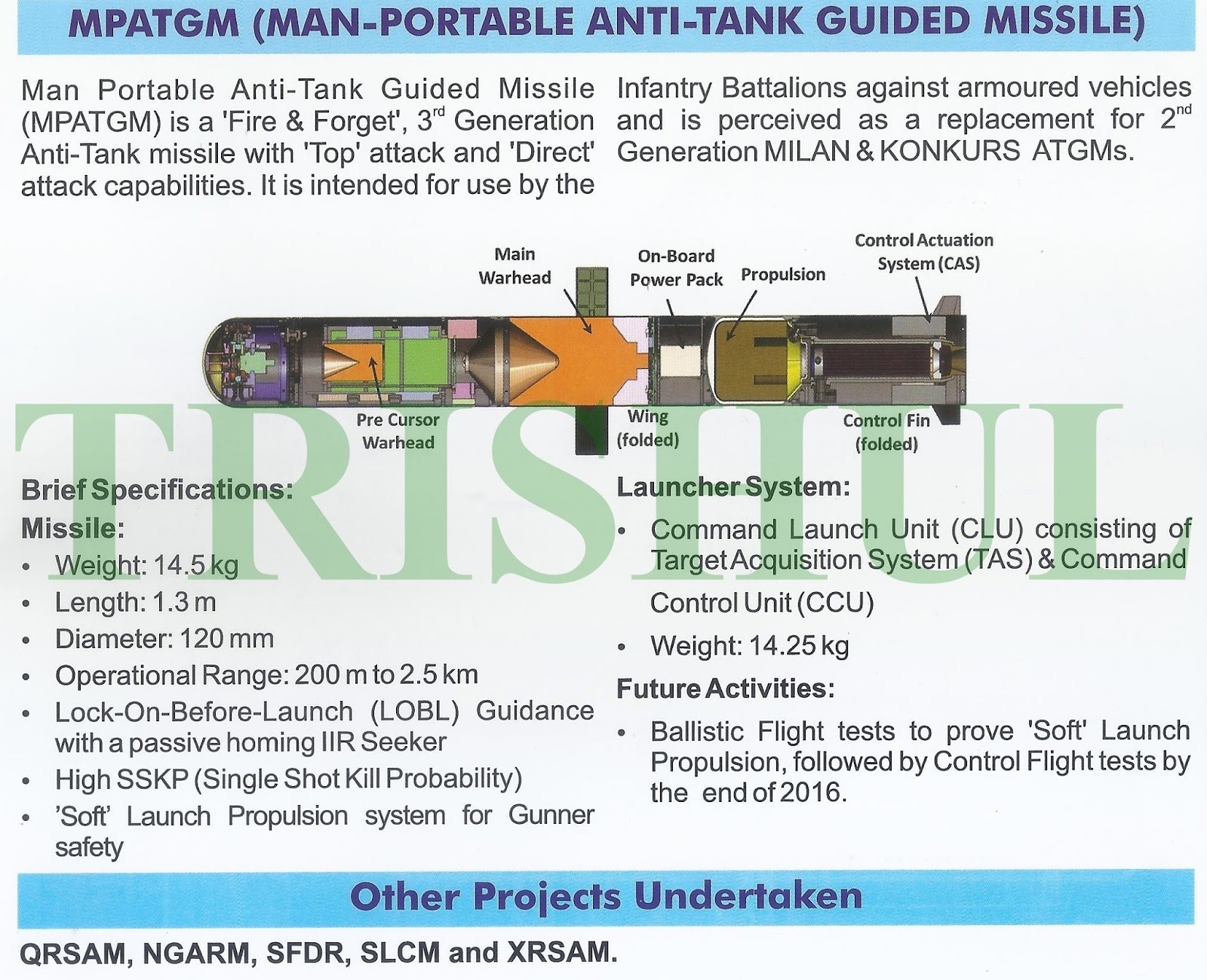
MPATGM and LR both are 14 kg missiles. But with the launcher, the complete system is 45 kg and 29kg for LR and MPATGM respectively. It is the cost of a longer range. LRII which you became aware of the magic of google is just 2 years old development and its yet to be tested indian army. It would be still heavier with longer range.
Spike ER II has a range of 15 KM. Nag has much higher mass (43 KG missile) and it only has a range of 4 KM.
The amount of back and forth dancing shows that Army is not totally sure that MPATGM is going to arrive any time soon. Its a DRDO project so another 20 years is not at all unheard of.
It's because of the heavier warhead. These specifications are based on the requirement of the user. It can be optimized for range if we are competing for exports against spike. In fact, Nag locked on a target at 5km as back as 2010.
15 km of ER2 is from helicopters with the use of two-way RF data link which we do not have a requirement. Which can be achieved if we want to. In fact, Nag variants come with Mmw seeker for accuracy which is not available on spike. Which is going in the direction of even advanced multi-mode brimestone.
Nag would be the last to enter production from the Integrated Guided Missile Development Programme (IGMDP). Last five years it was trying to improve IIR seeker to work on impossible conditions of desert heat. IA could have ordered it in batches if they want it to. But they didn't !. If you observe the last few years of missile development. The development of every class of missiles has fastened up because we now have the technological base. New members of the ATGM family MPATGM and SANT has been tested 3-4 times in last few years. The same goes for SAMs, QRSAM is completing trials fast with regular trials. They had a test even today as i write this.
Comparing apples to oranges and assuming everything Indian as sub per is the basic Instinct of many. Additional points if its from an NRI. Remember these snarky comments about being late or outdated, time is running out.
@hellbent @Gautam
I disagree..No, LR is heavier than MPATGM.
MPATGM and LR both are 14 kg missiles. But with the launcher, the complete system is 45 kg and 29kg for LR and MPATGM respectively. It is the cost of a longer range. LRII which you became aware of the magic of google is just 2 years old development and its yet to be tested indian army. It would be still heavier with longer range.
Spike missile LR : 13 KG
Spike Firing station : 9 KG
Battery : 1 KG
Tripod : 3 KG
Total man portable system mass : 26 KG for Spike LR. Range 4 KM. Range Spike LR II is 5.5.
Ok, Here is the spec: Quoting <45 kg (2009) which i was referring from wiki. Here is a newer 2017 Euro spike quoting 27kg. So, You could be right here.I disagree..
Spike missile LR : 13 KG
Spike Firing station : 9 KG
Battery : 1 KG
Tripod : 3 KG
Total man portable system mass : 26 KG for Spike LR. Range 4 KM. Range Spike LR II is 5.5.
But again, Missile mass is the same as 14kg for MPATGM and MR/LR. As I said multiple times, target acquisition can be added to MPATGM thus increasing the range. Currently, what's under development is analogous to MR. Its not possible to increase range without adding cost and overall system weight.
There will be never and newer version of the system like that of LR II. We are currently trying to catch up to the contemporary standard so that we can mass-produce it. The canceled tender was for MR version. Thus the comparison to LR is not that relevant.
My issue with DRDO and Indian MIC is usually that they tend to do a lot of "science projects" but their products seldom hit the market.But again, Missile mass is the same as 14kg for MPATGM and MR/LR. As I said multiple times, target acquisition can be added to MPATGM thus increasing the range. Currently, what's under development is analogous to MR. Its not possible to increase range without adding cost and overall system weight.
There will be never and newer version of the system like that of LR II. We are currently trying to catch up to the contemporary standard so that we can mass-produce it. The canceled tender was for MR version. Thus the comparison to LR is not that relevant.
Take Nag. It started in 1988 and till date there is almost nothing to show. I am not sure if there is a single missile system (NAMICA and missiles) deployed with Indian Army.
Contrast this with Spike, its design started in late 1970s. Some variants entered production in 1980s.
Right now we are talking about SANT, Nag MPATGAM, HELINA and NAMICA mounted version. Its like work on NAG Mk2 has started and first one has been tested without even HELINA (I guess now called Dhruvastra) entering production.

Because Israel has a head start of 15 years in developing various parts of ATGMs. We are directly jumping to third generation of ATGMs. There is a serious learning curve.
The Nag project gave way for multiple projects from Helina to SANT. Which will all reach production in the next five years.
That's why I said LR is the evolution of the original Spike aka MR. There will be subsequent longer-ranged versions of MPATGM.
No, LR is heavier than MPATGM.
MPATGM and LR both are 14 kg missiles. But with the launcher, the complete system is 45 kg and 29kg for LR and MPATGM respectively. It is the cost of a longer range. LRII which you became aware of the magic of google is just 2 years old development and its yet to be tested indian army. It would be still heavier with longer range.
It's because of the heavier warhead. These specifications are based on the requirement of the user. It can be optimized for range if we are competing for exports against spike. In fact, Nag locked on a target at 5km as back as 2010.
15 km of ER2 is from helicopters with the use of two-way RF data link which we do not have a requirement. Which can be achieved if we want to. In fact, Nag variants come with Mmw seeker for accuracy which is not available on spike. Which is going in the direction of even advanced multi-mode brimestone.
Nag would be the last to enter production from the Integrated Guided Missile Development Programme (IGMDP). Last five years it was trying to improve IIR seeker to work on impossible conditions of desert heat. IA could have ordered it in batches if they want it to. But they didn't !. If you observe the last few years of missile development. The development of every class of missiles has fastened up because we now have the technological base. New members of the ATGM family MPATGM and SANT has been tested 3-4 times in last few years. The same goes for SAMs, QRSAM is completing trials fast with regular trials. They had a test even today as i write this.
Comparing apples to oranges and assuming everything Indian as sub per is the basic Instinct of many. Additional points if its from an NRI. Remember these snarky comments about being late or outdated, time is running out.
@hellbent @Gautam
You reply was good , nothing for me to add
Except for the unsolicited advise to ignore western coolies.
I have noticed the same in other forum , seems to be orchestrated .
Edit : Israel has access to latest American technology and test data , hence they are able to plan a entire family of systems with commonality from the start eg spike family. India had to go through a lengthy test regime missile by missile till it had the requisite bank of test data upon which it can have a family of derivatives. Reason why Nag took long , after that helina which also took a bit of time but Mpatgm , dhruvastra , clgm , sant , mlpgm came rather quickly one after another. Matter of fact we will see land based long range versions of these missiles or their derivatives before long , drdo is working on fibre optic guidance for NLOS missiles equipped with IIR seeker. Mlpgm info is being closely guarded it seems , as it part of a missile system comparable to strategic missiles in importance.
Anyways some info directly from drdo

Last edited:
Somehow India never gets diplomacy right (No access to anyone's technology, except some outdated soviet crap) and nor it gets science right for several decades.Edit : Israel has access to latest American technology and test data , hence they are able to plan a entire family of systems with commonality from the start eg spike family. India had to go through a lengthy test regime missile by missile till it had the requisite bank of test data upon which it can have a family of derivatives. Reason why Nag took long , after that helina which also took a bit of time but Mpatgm , dhruvastra , clgm , sant , mlpgm came rather quickly one after another. Matter of fact we will see land based long range versions of these missiles or their derivatives before long , drdo is working on fibre optic guidance for NLOS missiles equipped with IIR seeker. Mlpgm info is being closely guarded it seems , as it part of a missile system comparable to strategic missiles in importance.
Only thing we get right are excuses.
Here is a brief comparison between Spike development and Indian Nag development :
Main Source

 nationalinterest.org
Spike :
1. Need Felt after 1973 conflict with tank columns rolling onto Israel.
2. By 1981 Tammuz (Spike-NLOS) was operational with Pereh vehicle. This was first surface to surface use of TV-Guided missile. It was so successful that even UK, Germany and South Korea imported it in both ATGM and anti artillery roles.
Nag:
1. Design started in 1988. First tested in 1990.
2. Till date neither Nag nor NAMICA has entered production. NO variant of Nag (AFAIK) are operational. No export made, obviously.
Spike :
1. In 1992, Spike MR was tested for first time.
2. In 2000, Spike MR was exported to Finland.
Nag :
1. In 2018, MPATAGM was tested.
2. Devil knows when it will see any induction. Lets not even talk about export.
Spike:
1. In 2010, Spike ER was imported by italy for use on A129 helicopters.
Helina:
2. Till 2020, HELINA/Dhruvastra is still not operational after devil knows how many tests. HELINA's range is also less than Spike.
Main Source
Dead Tanks: Why Israel's Spike Missile Is so Good
Key point: Ever since it was first used, the Spike missile has made its name known. Here’s why it outclasses so many other anti-tank systems. On October 6, 1973, over eight hundred tanks from three mechanized infantry divisions poured over the Israeli border into the Golan Heights. The sheer...
nationalinterest.org
Spike :
1. Need Felt after 1973 conflict with tank columns rolling onto Israel.
2. By 1981 Tammuz (Spike-NLOS) was operational with Pereh vehicle. This was first surface to surface use of TV-Guided missile. It was so successful that even UK, Germany and South Korea imported it in both ATGM and anti artillery roles.
Nag:
1. Design started in 1988. First tested in 1990.
2. Till date neither Nag nor NAMICA has entered production. NO variant of Nag (AFAIK) are operational. No export made, obviously.
Spike :
1. In 1992, Spike MR was tested for first time.
2. In 2000, Spike MR was exported to Finland.
Nag :
1. In 2018, MPATAGM was tested.
2. Devil knows when it will see any induction. Lets not even talk about export.
Spike:
1. In 2010, Spike ER was imported by italy for use on A129 helicopters.
Helina:
2. Till 2020, HELINA/Dhruvastra is still not operational after devil knows how many tests. HELINA's range is also less than Spike.