
Pralay and Shaurya: Conventional Strike Surface-to-Surface Missiles
- Thread starter Ashwin
- Start date
You are using an out of date browser. It may not display this or other websites correctly.
You should upgrade or use an alternative browser.
You should upgrade or use an alternative browser.

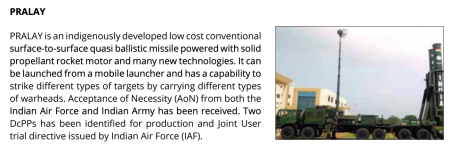


So not yet ordered? That's sad. 370 missiles will take a long time to be produced.
Pralay part no orders were getting released by BDL few months ago, fair few items. All under limited bidding so was not possible to judge.
No one knows, the article which confirmed the AoN said the missiles are being mass produced.So not yet ordered? That's sad. 370 missiles will take a long time to be produced.
Hope so but MoD report only mentions AoN and selection of DcPP for trials. 370 of them will need CCS clearance no?No one knows, the article which confirmed the AoN said the missiles are being mass produced.
Its not ordered only AoN. Same status for LRLACM.No one knows, the article which confirmed the AoN said the missiles are being mass produced.

Flight trial of 2-3 Pralay done, PR-370 went vroom vroom vrom
soon PR-700

soon PR-700

DRDO successfully conducts salvo launch of two Pralay missiles in quick succession
Posted On: 31 DEC 2025 3:55PM by PIB DelhiDefence Research & Development Organisation (DRDO) has successfully conducted salvo launch of two Pralay missiles in quick succession from the same launcher off the coast of Odisha at about 1030 hrs on December 31, 2025. The flight-test was conducted as part of user evaluation trials. Both the missiles followed the intended trajectory meeting all flight objectives as confirmed by tracking sensors deployed by the Integrated Test Range, Chandipur. The terminal events were confirmed by Telemetry systems installed onboard ship, deployed near the impact points.
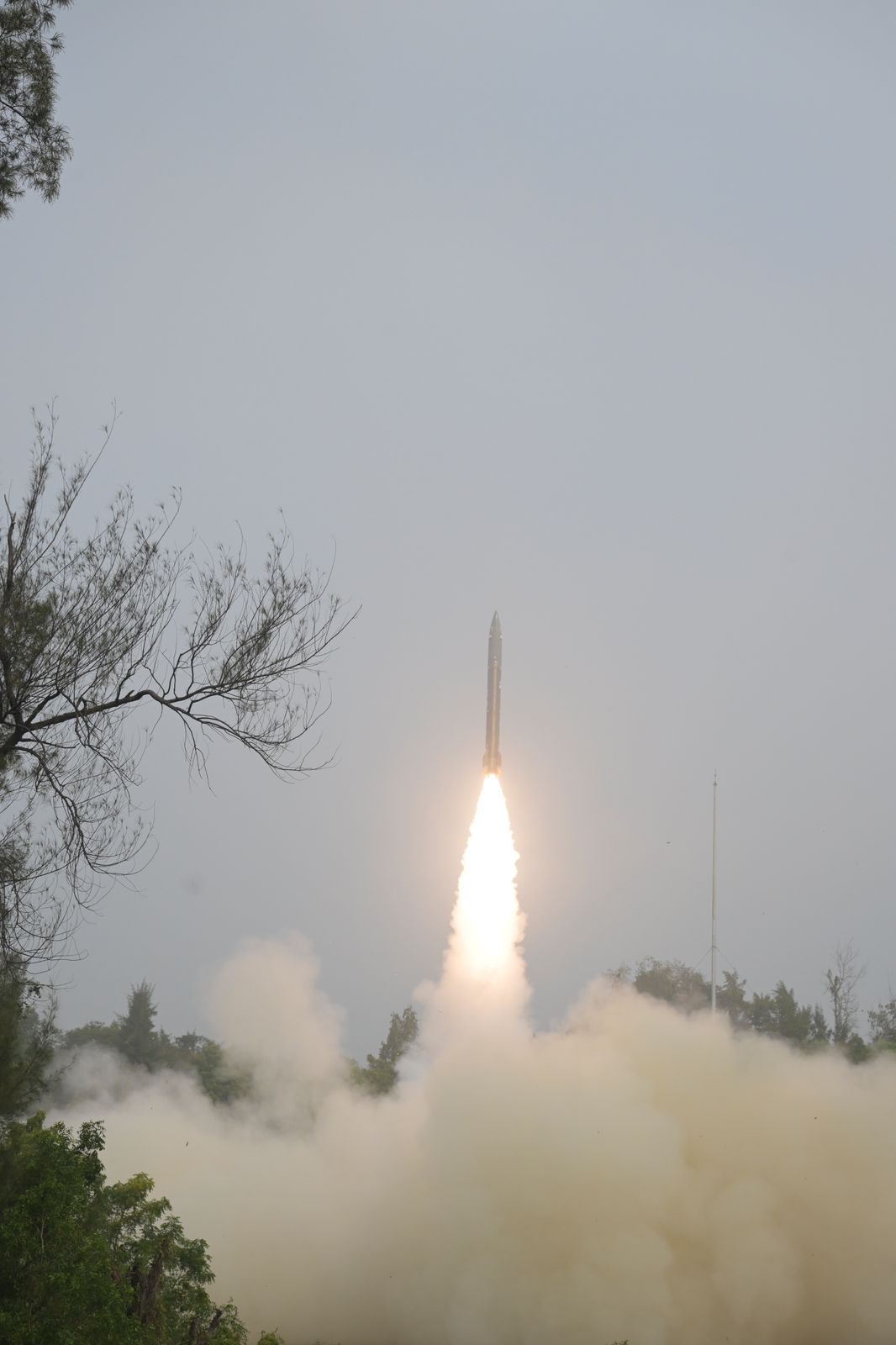
Pralay is an indigenously developed solid propellant quasi-ballistic missile employing state-of-the-art guidance and navigation to ensure high precision. The missile is capable of carrying multiple types of warheads against various targets.
The missile has been developed by Research Centre Imarat, Hyderabad in collaboration with other DRDO laboratories - Defence Research and Development Laboratory, Advanced Systems Laboratory, Armament Research and Development Establishment, High Energy Materials Research Laboratory, Defence Metallurgical Research Laboratory, Terminal Ballistics Research Laboratory, Research & Development Establishment {Engineers} and Integrated Test Range), Development-cum-Production Partners (Bharat Dynamics Limited & Bharat Electronics Limited) and other Indian industries. For the tests, the systems were integrated by the two Development-cum-Production Partners. The tests were witnessed by senior scientists of DRDO, representatives of users from the Indian Air Force and the Indian Army as well as industry representatives including the Development-cum-Production Partners.
Raksha Mantri Shri Rajnath Singh has complimented DRDO, Indian Air Force, Indian Army, DPSUs and the industry on the successful launch of the missiles in quick succession. The successful completion of the salvo launch of the Pralay missile has established the reliability of the missile, he said.
Secretary, Department of Defence R&D and Chairman DRDO Dr Samir V Kamat has congratulated the DRDO teams involved in the successful flight-tests and stated that the achievement indicates imminent readiness of induction of the system with the users.


@marich01 @Rajput Lion @Ashwin how capable do you reckon Chinese HQ19 is in terms of intercepting our Pralays? As for HQ9B I doubt it can intercept even Prithvis flying in quasi ballistic trajectory.

I have no idea tbh. Missiles often fail than get intercepted. Actual story proven via various means of proof rarely exist. It is quite hard to intercept something that is flying near parallel to earth surface than something coming towards the earth surface from above space in an easily calculated trajectory.@marich01 @Rajput Lion @Ashwin how capable do you reckon Chinese HQ19 is in terms of intercepting our Pralays? As for HQ9B I doubt it can intercept even Prithvis flying in quasi ballistic trajectory.
Its a 5 ton missile. Meaning you can carry only one with 8x8. If the user asks they can easily do it.Does the plan for 8x8 TEL still exist ?

You guys notice the weird launch trajectory? It looked like it did some sort of “manoeuvre” upon launch (thrust vectoring?). Why would that be required right at the time of launch?

Chinese systems are very capable. HQ19 is their dedicated BMD and ASAT system. However, without going into specifics I would just say that Pralay is an extremely difficult missile to intercept. Just leave it at that@marich01 @Rajput Lion @Ashwin how capable do you reckon Chinese HQ19 is in terms of intercepting our Pralays? As for HQ9B I doubt it can intercept even Prithvis flying in quasi ballistic trajectory.

Ah @hellbent would have explained that precisely.You guys notice the weird launch trajectory? It looked like it did some sort of “manoeuvre” upon launch (thrust vectoring?). Why would that be required right at the time of launch?
I wonder if its doing the old pruthvi flight trajectory shaping via aerodynamic control by deploying control actuation. So instead of a pure ballistic flight, it will fly in a non-ballistic flight path. So even if some battlefield radar picks it up, it will be able to track it but the AD system will not be able to engage it, due to every possible calculated interception point becoming invalid thereafter due to this trajectory shaping. This way the missile is able to defeat both the direct interception as well as cross-over interception attempt (ie salvo AD firing of 2, we all have seen such videos) and have an increased range.
A nice summary of what we did before heading into 2026. Our missile tech is a glaring example of what we can achieve if we really start and iterate!